From idea to market-ready product, our NPI solutions make every stage easier, faster. Discover How We Help

Views: 222 Author: Tomorrow Publish Time: 2025-11-20 Origin: Site


Content Menu
● Overview of CNC Machining in South Korea
● Leading CNC Machining Service Manufacturers And Suppliers in South Korea
>> JIN SUNG Engineering Co., Ltd.
>> Woojin Industrial Co., Ltd.
>> Sung-il Machinery Co., Ltd.
● Industry Trends and Technological Advancements
● Why Choose South Korean CNC Machining Services?
● Materials and CNC Capabilities
● How to Collaborate Effectively with South Korean CNC Suppliers
● Quality Assurance and Industry Certifications
● Future Outlook of South Korean CNC Machining
● Frequently Asked Questions (FAQ)
>> 1. What industries most commonly use CNC machining services in South Korea?
>> 2. Can South Korean CNC manufacturers handle small batch or prototype orders?
>> 3. How competitive are South Korean CNC machining prices internationally?
>> 4. Are South Korean CNC machining suppliers experienced in OEM/ODM services?
>> 5. What typical lead time should international buyers expect?
South Korea has solidified its position as a premier hub for precision manufacturing and CNC (Computer Numerical Control) machining services in Asia. Its combination of cutting-edge technology, skilled workforce, and stringent quality standards attracts international clients in industries such as aerospace, automotive, electronics, and healthcare. This article explores the top CNC machining service manufacturers and suppliers in South Korea, their strengths, industry trends, materials capabilities, and guidance for partnering with these top-tier suppliers.

The South Korean CNC machining industry showcases rapid growth and modernization. With a market expected to exceed USD 1.5 billion by 2030 and a compound annual growth rate (CAGR) above 7% from 2025 through 2030, South Korea continues to expand its CNC machining centers and turning centers market. This expansion is driven by rising demand in automotive, aerospace, electronics, and semiconductor sectors.[1]
South Korean CNC service providers use advanced equipment such as 3-, 4-, and 5-axis CNC machines that offer high precision and flexibility. Many companies hold top certifications including ISO 9001, ISO 13485, and IATF 16949, ensuring the global compliance and quality their customers expect. The country's focus on Industry 4.0 technologies, including AI integration for predictive maintenance and cloud-based production monitoring, enhances efficiency and reduces downtime.[2]
Established in 1995, Daejin Precision is a veteran in producing complex precision parts for automotive, medical, and energy sectors. Their multi-axis CNC machining expertise and commitment to quality management have enabled exports to major markets like the US, Germany, and Japan.
Hanwha Machinery, part of the Hanwha Group, excels as both a CNC machine producer and service provider, especially known for Swiss-type automatic lathes. They provide turnkey manufacturing solutions including materials sourcing, machining, and assembly, ideal for customers seeking OEM and ODM partners.
Focused on aerospace and defense industries, JIN SUNG excels in producing mission-critical high-precision components. They emphasize design-for-manufacturability to optimize costs without compromising tolerance levels.
With two decades of experience, Fine Tech services automation, robotics, and marine machinery fields. Their strength lies in prototype development and efficient volume production with fast lead times.
Woojin specializes in machining for electronic and medical components, combining traditional CNC and high-speed machining for superior surface finish and precision. They provide customized OEM/ODM projects and have a robust export record.
DAESUNG Gear leads in CNC gear machining for heavy equipment, wind power, and vehicle sectors, delivering consistent dimensional accuracy using smart digital monitoring in production.
Sung-il offers full-cycle CNC machining services for pipeline and valve industries, combining precision with heavy-industry durability and quality assurance.
PK Global supports multi-material CNC machining, rapid prototyping, and production tracking with international logistics expertise, serving clients worldwide.
Renowned for micro-machining, Jiin Precision masters 5-axis CNC machining for medical instruments and prototypes, employing CAD/CAM and coordinate measuring machines for unmatched accuracy.
Hwashin supplies precision CNC-machined automotive components with advanced automation and lean production, expanding into electric vehicle parts and aiming for global leadership.
South Korean CNC manufacturers are adopting digital transformation aggressively. AI and machine learning enable predictive maintenance, minimizing operational downtime and cutting costs. Advanced 5-axis CNC machining expands the capability to produce complex, high-tolerance parts efficiently. Cloud computing facilitates remote monitoring, real-time data analytics, and better production planning.[2]
Sustainability trends are impacting machining choices, with firms adopting eco-friendly coolants and energy-efficient machinery. The rise in electric vehicles and semiconductor manufacturing fuels demand for specialized CNC services. Governments also support industry growth through incentives and infrastructure investments.[3]
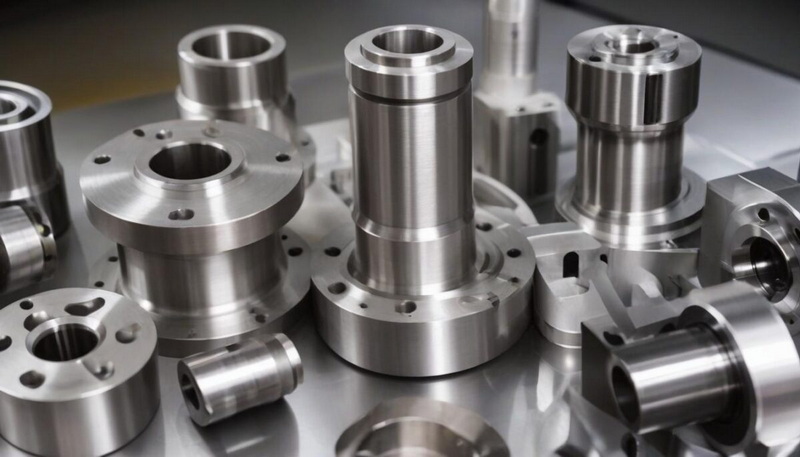
South Korean CNC machining suppliers deliver several key advantages:
- Precision and Quality: World-class equipment, expert engineers, and rigorous quality controls yield superior product accuracy.
- Competitive Value: While pricing is not the lowest in Asia, the value-to-quality ratio is excellent due to reduced defects and reliable service.
- Flexible OEM/ODM Services: Extensive experience working confidentially with global brands for custom manufacturing needs.
- Certified Quality: Most hold ISO 9001, ISO 13485, IATF 16949 certifications ensuring industry compliance.
- Reliable Delivery: Strong logistics and disciplined production schedules assure on-time shipment globally.
These benefits make South Korea one of the most trusted destinations for CNC machining for international buyers.
South Korean CNC workshops handle a diverse range of materials including:
- Aluminum alloys (6061, 7075)
- Stainless steels (304, 316)
- Carbon steels
- Brass, bronze
- Titanium alloys
- Engineering plastics (PEEK, Delrin)
Core machining processes offered include:
- CNC milling and turning
- 4- and 5-axis CNC contouring
- Grinding and electrical discharge machining (EDM)
- Wire cutting
- Surface treatments like anodizing, plating, and sandblasting
- Component assembly and rigorous testing
This broad capabilities spectrum supports industries from automotive to medical device manufacturing.
To maximize success when working with Korean CNC machining suppliers:
- Provide detailed CAD drawings, 2D or 3D, with full specifications.
- Clearly specify tolerances and surface finish requirements upfront.
- Discuss minimum order quantities (MOQ) and lead times early.
- Verify supplier certifications and quality inspection processes.
- Maintain regular communication with dedicated English-speaking managers.
- Consider onsite or virtual factory visits to build trust.
Close collaboration ensures smoother production cycles and reduces costly revisions.
Korean CNC machining service providers stand out for rigorous quality assurance:
- Raw material certification and inspection.
- In-process precision checks using CMM and CNC measurement.
- Final inspection with detailed dimensional reports and traceability.
- Compliance with ISO 9001 Quality Management, ISO 14001 Environmental Management, and sector-specific standards like ISO 13485 and IATF 16949.
These quality frameworks ensure customer confidence and product consistency.
The South Korean CNC machining market is optimistic, anticipating continued growth fueled by automation, smart manufacturing, and emerging technologies. Increased adoption of robotics, IoT-based monitoring, and AI-driven production optimization will further boost productivity and quality. Sustainability initiatives will encourage greener machining practices and materials recycling.
The growing electric vehicle and semiconductor sectors offer new opportunities, reinforcing South Korea's leadership among Asia-Pacific CNC machining hubs.[1][2]
South Korea's CNC machining industry is a world-class blend of advanced technology, skilled labor, and robust quality systems. Its leading manufacturers and suppliers deliver precision, reliability, and innovation across diverse sectors ranging from automotive to semiconductor.
With ongoing adoption of AI, robotics, and smart manufacturing, Korean CNC service providers are well-positioned to meet the increasing global demand for high-quality machined components. International buyers seeking dependable OEM and ODM partnerships will find South Korea a valuable manufacturing hub balancing quality, innovation, and on-time delivery.
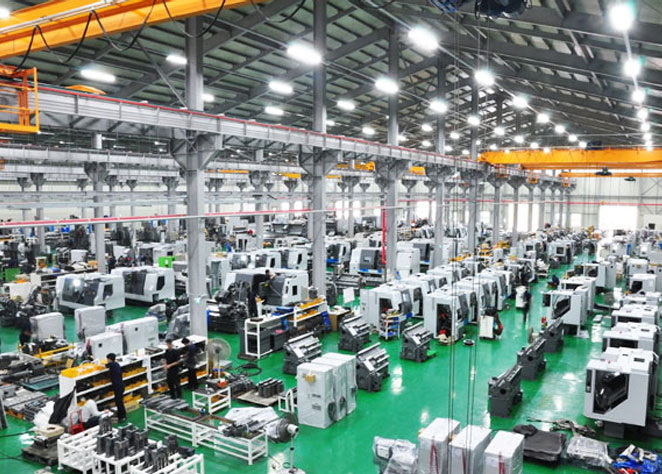
Automotive, aerospace, electronics, medical device manufacturing, and semiconductor industries are primary CNC machining users in South Korea.
Yes, many companies specialize in rapid prototyping and small-volume production, offering agile support for product development phases.
South Korea's prices are competitive relative to quality. While not the cheapest option, buyers benefit from superior precision, consistency, and service reliability.
Yes, most suppliers offer customized OEM and ODM services with strict confidentiality, flexible production capabilities, and client collaboration.
Lead times generally range from one to four weeks after final design approval, depending on complexity and order size.
[1](https://www.grandviewresearch.com/horizon/outlook/cnc-machining-centers-and-turning-centers-market/south-korea)
[2](https://www.linkedin.com/pulse/south-korea-computer-numerical-control-equipment-market-jdl6e)
[3](https://www.nextmsc.com/report/south-korea-cnc-drilling-machine-market)
[4](https://beausino.com/top-cnc-machining-company-in-korea/)
[5](https://www.linkedin.com/pulse/cnc-machining-services-market-scope-region-2025-south-korea-97fue)
[6](https://www.6wresearch.com/industry-report/south-korea-precision-machining-market)
[7](https://www.researchandmarkets.com/reports/5850456/cnc-machine-tools-market-report)
[8](https://www.linkedin.com/pulse/cnc-machining-centers-market-applications-south-korea-fq8ae)
[9](https://www.marketsandmarkets.com/blog/AT/machine-tools-market)
[10](https://www.researchnester.com/reports/computer-numerical-control-machine-market/5889)


