From idea to market-ready product, our NPI solutions make every stage easier, faster. Discover How We Help

Views: 222 Author: Tomorrow Publish Time: 2025-11-26 Origin: Site


Content Menu
● Why Malaysia Excels in CNC Machining
● The CNC Machining Landscape in Malaysia
● Leading CNC Machining Service Manufacturers And Suppliers in Malaysia
>> 1. Advance Tech Precision Sdn Bhd
>> 2. Vitrox Engineering Sdn Bhd
>> 3. Protool Precision Engineering
>> 5. Meiban Engineering Sdn Bhd
● Technological Strengths and Equipment Capabilities
● Quality Control and Certifications
● OEM and ODM Support for International Clients
● Industries Served by Malaysian CNC Machining Companies
● Comparison With Other Asian Markets
● Sustainable and Green Manufacturing Trends
● Future Outlook for Malaysia's CNC Machining Sector
● FAQs About CNC Machining Services in Malaysia
>> 1. What makes Malaysian CNC machining services competitive internationally?
>> 2. Which industries use CNC machining in Malaysia the most?
>> 3. Can Malaysian CNC machining suppliers provide OEM and ODM solutions?
>> 4. How do Malaysian suppliers ensure consistent quality?
>> 5. What technologies are being adopted in Malaysia's CNC sector?
Malaysia has established itself as one of the most dynamic manufacturing bases in Southeast Asia, recognized for its modern infrastructure, strong engineering expertise, and competitive production costs. Among its rapidly developing industrial sectors, CNC Machining Service Manufacturers And Suppliers have gained particular prominence for delivering precision-engineered components to global markets.
From high-tech aerospace parts to automotive precision tools, Malaysian CNC machining companies have built reputations for producing high-quality products at affordable prices. The following guide explores Malaysia's CNC machining industry, its major players, competitive advantages, and why it has become a preferred outsourcing destination for international OEMs.
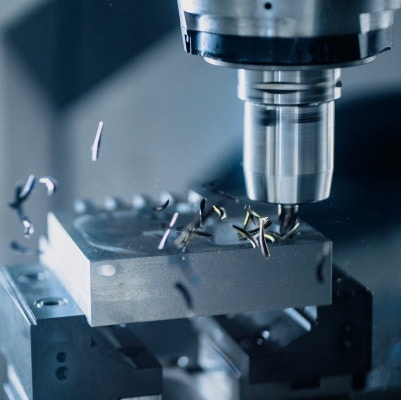
Malaysia's manufacturing environment offers a rare blend of affordability, stable quality, and geographic accessibility. As one of Southeast Asia's most advanced economies, it enjoys high industrial standards and a skilled workforce while maintaining lower operating costs compared with Japan or Singapore.
Several key advantages make Malaysia a preferred destination for CNC machining production:
- Advanced manufacturing ecosystem. Malaysia has a mature industrial base with supporting industries including metalworking, automation, electronics, and precision tooling.
- Cost-effective operations. Compared to China, Malaysia offers competitive pricing and streamlined logistics within the ASEAN Free Trade Area.
- Strategic location. Its central position allows convenient exports to Asia-Pacific regions, Europe, and North America.
- Government support. Initiatives like Industry 4.0 and digital manufacturing programs help modernize local facilities with AI and robotics.
- Bilingual workforce. English proficiency enhances smooth communication with overseas clients.
Foreign buyers increasingly turn to CNC Machining Service Manufacturers And Suppliers in Malaysia for small- to large-scale OEM projects combining efficiency, quality, and on-time delivery.
CNC machining—Computer Numerical Control machining—lies at the heart of Malaysia's precision manufacturing industry. It allows automated, repeatable, and precise cutting, turning, milling, or drilling of raw materials into finished parts. Local machining companies serve a wide range of industries, where accuracy and consistency are essential.
- CNC Milling (3, 4, and 5-axis).
- CNC Turning for cylindrical components.
- Wire-cut EDM and sink EDM for intricate shapes.
- Surface grinding and polishing for smooth finishes.
- Assembly, inspection, and post-treatment finishing.
Malaysian CNC Machining Service Manufacturers And Suppliers work with a variety of metals and plastics, including:
- Aluminum (6061, 7075, 2024).
- Stainless Steel (304, 316, 420).
- Titanium for aerospace and medical parts.
- Brass and copper for electrical components.
- Engineering plastics such as PEEK, nylon, and Delrin.
This material diversity allows local machine shops to customize production for different industries—from high-strength aerospace components to precise electronic housings.
Advance Tech Precision Sdn Bhd is a specialized manufacturer known for its multi-axis CNC machining and tool-making expertise. The company focuses on precision components for semiconductor equipment, automotive applications, and industrial automation. Its combination of modern CNC centers and strict quality control allows for consistent part performance across high-volume runs.
Vitrox Engineering provides precision machining, mechatronics, and automation integration services. Equipped with high-speed CNC milling and robotic arms, the company serves both local and overseas clients in the electronics and automation industries. Its dedication to innovation makes Vitrox one of Malaysia's most technologically advanced suppliers.
Protool Precision Engineering is a versatile player offering custom CNC machining, EDM wire-cutting, and mold-base manufacturing. The company supports product development by producing prototypes, dies, and mechanical parts for aerospace and medical fields. With ISO-certified operations, it ensures consistent traceability and documentation.
SMPC Industries stands out for its heavy-duty fabrication and CNC machining of steel parts for oil, gas, and energy sectors. Its facilities handle both small-batch precision work and large-scale structural components. Combining CNC turning, welding, and surface treatment, SMPC provides turnkey fabrication under one roof.
Meiban Engineering focuses on integrating CNC machining with full OEM solutions. Its capabilities extend from product concept design to assembly, packaging, and export logistics. The company supplies automotive housings, electronic parts, and precision jigs to multinational brands throughout Asia and Europe.
Together, these CNC Machining Service Manufacturers And Suppliers demonstrate the diversity and technical excellence of Malaysia's precision engineering industry.
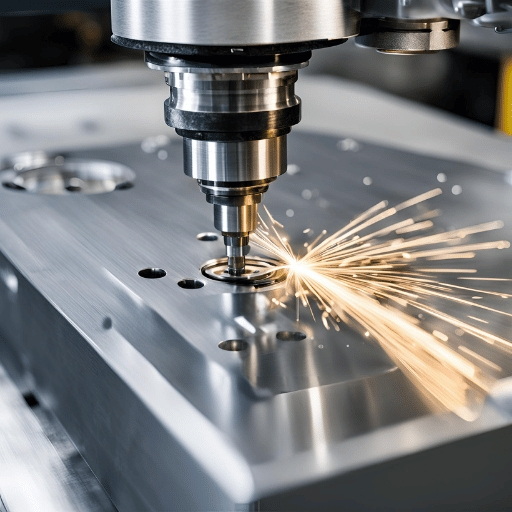
Malaysia's machining companies continuously invest in automation, CAD/CAM tools, and hybrid manufacturing systems to enhance productivity. Common equipment found in Malaysian CNC workshops includes:
- High-speed 5-axis CNC machining centers.
- CNC lathes with live tooling.
- Wire-cut EDM and die-sinking machines.
- Coordinate Measuring Machines (CMM) for exact measurements.
- CAD/CAM systems from Mastercam, SolidWorks, and NX.
This level of technology enables complex part geometry production while maintaining tight tolerances down to ±0.005 mm.
Quality control is the foundation of precision machining in Malaysia. Leading CNC Machining Service Manufacturers And Suppliers employ international standard systems such as:
- ISO 9001 for general quality management.
- ISO 13485 for medical device manufacturing.
- ISO/TS 16949 for automotive applications.
- AS 9100 for aerospace-grade production.
- RoHS and REACH compliance for environmental responsibility.
Through in-process inspection, dimensional analysis, and final audit, these manufacturers ensure that each component meets stringent global specifications. Many use digital quality management systems (QMS) for traceability and data storage.
Malaysia's CNC machining providers increasingly emphasize OEM (Original Equipment Manufacturing) and ODM (Original Design Manufacturing) models. They assist global clients in bringing custom-engineered products to market efficiently. Services include:
- Design support and DFM (Design for Manufacturability).
- Prototyping and pre-series testing.
- Tooling, fixtures, and jigs development.
- Mass production and packaging under the client's label.
This complete service model appeals to foreign companies seeking long-term partnerships rather than one-time production arrangements.
Malaysian CNC suppliers serve a broad spectrum of industries that demand precision and compliance with specific technical standards:
- Automotive and transportation: Engine housings, braking components, brackets, and drive assemblies.
- Aerospace: Lightweight titanium and aluminum structures for aircraft components.
- Medical devices: Surgical instruments, implants, and diagnostic machine parts.
- Electronics: Enclosures, connectors, and semiconductor machinery parts.
- Renewable energy: Precision housings for wind turbines and solar inverters.
- Oil & gas equipment: Valve bodies, couplings, pipes, and threaded fittings.
The ability to serve such a wide range of sectors illustrates the versatility and technical maturity of Malaysia's CNC machining industry.
Compared with China, Malaysia's CNC machining manufacturers typically handle smaller production runs with higher precision and faster turnaround for prototyping and low-volume output. While China dominates in large-scale mass production, Malaysia's advantage lies in combining quality standards, communication fluency, and flexibility.
When compared with Singapore, Malaysia offers similar engineering proficiency but substantially lower labor costs. This balance gives Malaysian CNC Machining Service Manufacturers And Suppliers a competitive edge in cost-sensitive projects where precision cannot be compromised.
Sustainability is becoming a core priority among Malaysian industrial manufacturers. Many CNC machining companies now adopt greener methods such as:
- Using recycled or eco-certified metals.
- Implementing coolant recycling systems and low-emission cutting fluids.
- Leveraging energy-efficient CNC machines with regenerative drives.
- Managing waste responsibly through ISO 14001 environmental systems.
Such efforts also align with Malaysia's national environmental policies and growing global demands for eco-friendly supply chains. As a result, overseas clients gain both ethical and branding advantages by partnering with Malaysian CNC suppliers.
The future of Malaysia's CNC machining industry looks promising as it continues to invest in digital transformation. Industry 4.0 technologies—such as IoT connectivity, predictive maintenance, and real-time process optimization—are being integrated into production lines.
Emerging trends include:
- Smart factories with autonomous machine-to-machine communication.
- 3D printing combined with subtractive CNC machining for hybrid manufacturing.
- AI-driven inspection systems for zero-defect production.
- Cloud-based production scheduling for global collaboration.
These developments position Malaysia as a regional leader in precision engineering and innovation-driven production.
Malaysia has successfully evolved into one of Asia's most capable precision manufacturing centers. Supported by advanced technology, skilled engineers, and competitive pricing, the country's CNC Machining Service Manufacturers And Suppliers serve industries from aerospace to medical devices with excellence and reliability.
Its combination of cost efficiency, high standards, and consistent quality control makes Malaysia a preferred choice for OEMs and international buyers seeking trustworthy long-term manufacturing partners. As automation and sustainability continue to expand across the sector, Malaysia's CNC machining industry is ready to deliver world-class performance well into the future.
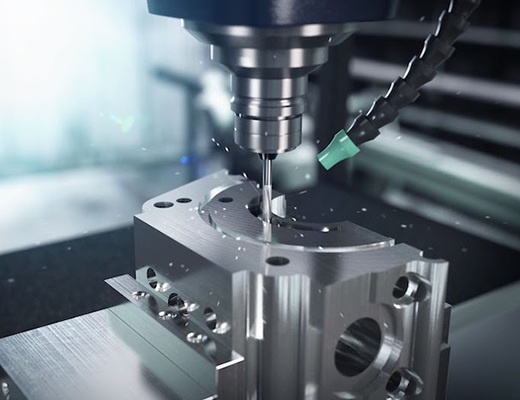
Malaysian companies combine advanced machinery, skilled labor, and cost efficiency. Their ability to meet ISO-certified standards ensures reliability and acceptance by global clients.
Key sectors include automotive, aerospace, electronics, medical equipment, and energy production—all requiring high-precision manufacturing.
Yes. Many Malaysian manufacturers offer complete OEM/ODM solutions, including product design, prototyping, tooling, assembly, and packaging for international brands.
They use precision measurement systems, digital inspection tools, and standardized quality control methods in compliance with ISO and AS certifications.
Malaysian CNC Machining Service Manufacturers And Suppliers are integrating automation, robotics, smart monitoring, and AI-based quality inspection as part of the country's Industry 4.0 strategy.


