From idea to market-ready product, our NPI solutions make every stage easier, faster. Discover How We Help

Views: 222 Author: Tomorrow Publish Time: 2026-02-01 Origin: Site


Content Menu
● Why Japan Is A Key Market For 3D Printing Services
● Overview Of 3D Printing Services Manufacturers and Suppliers In Japan
>> Typical Services OEM Buyers Can Expect
● Top 3D Printing Services Manufacturers And Suppliers In Japan
>> 3D Printing Corporation, K.K.
>> Ricoh Rapid Fab (Ricoh Company)
>> Additional Notable Japanese Providers
● Key Capabilities Of Japanese 3D Printing Service Providers
>> Quality, Certification And Traceability
● How Overseas OEM Buyers Can Work With Japanese 3D Printing Suppliers
>> Typical Cooperation Workflow
>> Communication, Language And Technical Support
● Japan vs. Other 3D Printing Hubs For OEM Projects
>> Positioning Of Japanese Service Providers
>> Example: Working With Japanese Partners From Overseas
● Practical Tips For Choosing A Japanese 3D Printing Partner
>> Clarify Your Project Requirements
>> Evaluate Technology And Capacity
>> Consider Logistics And Total Cost
● FAQ About 3D Printing Services Manufacturers and Suppliers In Japan
>> Q1. Which industries do Japanese 3D printing service providers mainly serve?
>> Q2. Do Japanese 3D printing suppliers offer OEM and white-label services for overseas customers?
>> Q4. Can Japanese 3D printing service bureaus help with design optimization?
>> Q5. What certifications and quality systems are common among Japanese 3D printing suppliers?
Japan has become one of the most important hubs in Asia for high-precision 3D printing, especially for global OEM buyers who need stable quality and reliable supply chains. Many leading 3D Printing Services Manufacturers and Suppliers in Japan now provide full-service solutions from design to mass production for international brands, wholesalers, and manufacturers.

Japan's strong industrial base in automotive, electronics, medical devices, and precision machinery creates a natural demand for advanced 3D printing services. 3D Printing Services Manufacturers and Suppliers in Japan combine this industrial experience with cutting-edge additive manufacturing technologies to support both rapid prototyping and functional end-use parts.
The country's emphasis on research, material science, and process control makes Japanese partners attractive for overseas OEM customers that need consistent quality across batches. At the same time, Japanese 3D printing suppliers are investing in digital supply chains, on-demand production, and new metal and polymer materials to serve global customers more efficiently.
Japan is also a leader in metallurgy, advanced polymers, and hybrid manufacturing, which accelerates the adoption of next-generation 3D printing processes and materials. This combination of industrial demand, technical capability, and quality mindset is what makes Japanese 3D Printing Services Manufacturers and Suppliers stand out in the global market.
3D Printing Services Manufacturers and Suppliers in Japan cover the full spectrum of technologies, including polymer and metal 3D printing, multi-jet processes, stereolithography, SLS, and high-end metal laser systems. Many of these service bureaus are directly connected to Japan's large OEM ecosystem in aerospace, automotive, healthcare, and industrial equipment.
Japan hosts dozens of professional 3D printing service companies and solution hubs, ranging from small design-driven studios to large industrial providers with global clients. These 3D Printing Services Manufacturers and Suppliers not only print parts but also support material selection, engineering optimization, quality testing, and logistics for overseas shipments.
For foreign brands and manufacturers, this ecosystem offers both depth and flexibility. Buyers can work with specialized 3D printing studios for small, highly customized projects or choose large industrial service bureaus capable of handling long-term OEM programs with strict quality and documentation requirements.
When you work with leading 3D Printing Services Manufacturers and Suppliers in Japan, you can typically access:
- Rapid prototyping for plastic and metal components, often delivered in a few days.
- Short-run or bridge production to validate designs before full tooling investment.
- Full production of end-use parts with industrial certifications and traceability.
- Engineering support for Design for Additive Manufacturing (DfAM), lightweight structures, and topology optimization.
- Post-processing such as machining, polishing, painting, dyeing, and assembly to achieve final product-level finishes.
Some service bureaus also provide engineering secondment, design consulting, and on-site implementation support for customers who want to introduce their own in-house 3D printing systems. This means 3D Printing Services Manufacturers and Suppliers in Japan can act both as part producers and as long-term technology partners.
Below are some of the most recognized 3D Printing Services Manufacturers and Suppliers in Japan that are frequently considered for overseas OEM projects.
SOLIZE Corporation is widely regarded as one of the pioneers of 3D printing and additive manufacturing in Japan, with more than three decades of experience in this field. As one of the largest operators of high-end 3D printers in the country, SOLIZE supports both rapid prototyping and small-lot production for automotive, aerospace, and electronics customers.
The company's services cover 3D data creation, design optimization, part production, and inspection, making it a comprehensive partner for demanding OEM programs. Among 3D Printing Services Manufacturers and Suppliers in Japan, SOLIZE is especially valued for its ability to handle complex geometries, high-precision tolerances, and multi-material projects at industrial scale.
SOLIZE operates dozens of industrial 3D printers using multiple additive manufacturing methods, and it also offers machining, casting support, sheet metal processing, and mold prototyping. For overseas buyers, this one-stop manufacturing capability simplifies supplier management and improves quality consistency from prototype to final part.
Kurimoto Co., Ltd. represents Japan's tradition of heavy-industry excellence combined with advanced 3D printing capabilities. The company operates a large fleet of industrial 3D printers together with many machining centers, allowing it to integrate additive manufacturing with CNC and other subtractive processes.
Kurimoto serves major industries including automotive, electronics, construction, and heavy machinery, and it is also a production partner for advanced polymer 3D printing technologies. This position allows Kurimoto to deliver smooth, injection-molded-like surfaces and strong mechanical properties, positioning it among the most capable 3D Printing Services Manufacturers and Suppliers in Japan for end-use polymer parts.
Because Kurimoto combines design, additive manufacturing, and precision machining under one roof, it is well suited for projects that require tight tolerances or complex assemblies. Overseas buyers can use Kurimoto as a strategic partner for both prototype development and serial production of critical components.
3D Printing Corporation, K.K. provides end-to-end additive manufacturing services with a strong focus on digital supply chains and on-demand production. The company covers both metal and resin components and works with customers from design and simulation to production and quality assurance.
A key strength of this supplier is its digital manufacturing platform, which helps customers decentralize production and reduce inventory by printing parts close to the point of use. Among Japanese 3D Printing Services Manufacturers and Suppliers, 3D Printing Corporation stands out for integrating engineering consulting, material expertise, and cloud-based ordering into a single solution.
For overseas OEM buyers, this means that once the design, process parameters, and quality standards are fixed, they can reorder parts quickly and conveniently, with predictable lead times and documentation. This type of digital approach fits especially well with companies that are building flexible, just-in-time supply chains.
Ricoh Rapid Fab is the additive manufacturing arm of Ricoh, leveraging the company's long experience in precision imaging, materials, and quality control. Its facilities in Japan are equipped with a wide range of 3D printers that can handle everything from prototype models to low-volume production runs.
Ricoh Rapid Fab is particularly active in the production of high-precision components for electronics and automotive applications, as well as medical models and surgical guides using specialized resins. This makes Ricoh one of the most versatile 3D Printing Services Manufacturers and Suppliers in Japan, especially for global OEMs that require strict process validation and documentation.
Because Ricoh is a global brand, foreign customers often find it easier to communicate about quality standards, compliance requirements, and data security. The company's experience in managing international clients adds to its suitability as a long-term 3D printing partner.
Several other 3D Printing Services Manufacturers and Suppliers in Japan also play key roles in the ecosystem:
- JAMPT (Japan Additive Manufacturing & Processing Technology), a specialist metal 3D printing service bureau that covers metal powder development, prototyping, and mass production.
- DMM.make 3DPRINT, an on-demand printing platform that serves both industrial and consumer users with flexible batch sizes.
- Japan 3D Printer Co., Ltd., a major 3D printing solution provider and distributor that supports thousands of industrial customers and research institutes.
- Mitsubishi-related additive manufacturing centers and customer experience facilities, which provide consulting, equipment integration, and contract production services.
- Specialized service bureaus such as JMC, Castem, and Ifuku Seimitsu that combine metal 3D printing with high-precision machining for demanding parts.
Together, these companies ensure that 3D Printing Services Manufacturers and Suppliers in Japan can cover almost any requirement, from small prototypes to serial production of complex, safety-critical parts.
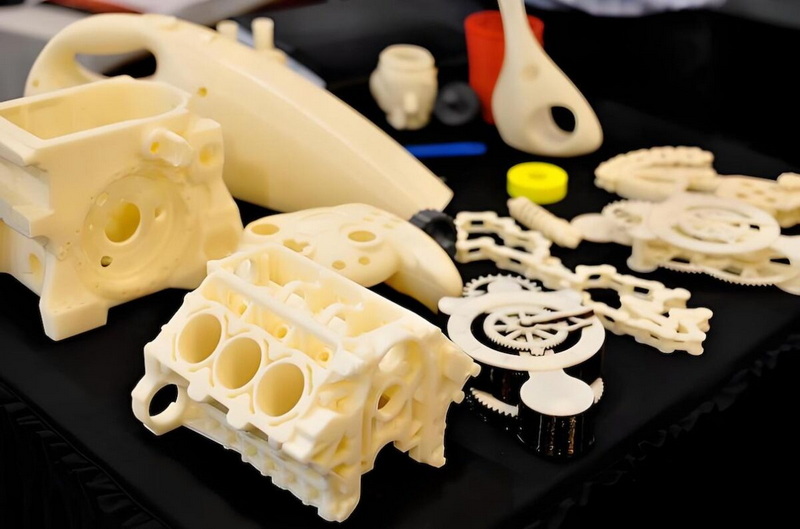
3D Printing Services Manufacturers and Suppliers in Japan differentiate themselves through their technical capabilities, quality systems, and ability to integrate into global OEM supply chains. Understanding these capabilities helps overseas buyers select the right partner for each project stage.
Many Japanese providers operate a broad range of 3D printing technologies, including SLS, SLA, FDM, Multi Jet Fusion, PolyJet, and metal powder bed fusion such as DMLS and SLM. This diversity allows them to match each project with the best combination of process, material, and cost.
Common materials supported by 3D Printing Services Manufacturers and Suppliers in Japan include:
- Engineering plastics such as ABS, ASA, PA, PA12, and advanced polymers such as PEEK and PEKK.
- Photopolymers for high-detail prototypes, visual models, and biocompatible applications in medical and dental fields.
- Metals such as aluminum, titanium, stainless steel, tool steels, Inconel, and other specialty alloys for aerospace and automotive parts.
- Composite and filled materials that offer improved strength, stiffness, or heat resistance for industrial applications.
Japan's strong materials science background is driving innovations in metal powders, ceramic composites, and high-performance engineering polymers tailored for additive manufacturing. As a result, Japanese 3D Printing Services Manufacturers and Suppliers are able to offer materials that meet strict performance requirements in high-temperature, high-stress, or corrosive environments.
Quality control is a major strength for 3D Printing Services Manufacturers and Suppliers in Japan, especially those serving aerospace, medical, and automotive customers. Many service bureaus operate under ISO-based quality management systems and implement detailed process monitoring from powder inspection to final part measurement.
Typical quality-related services include:
- Dimensional inspection and CMM measurement for critical parts.
- Material testing, including tensile, fatigue, and microstructure analysis, where required by the project.
- Full traceability from raw material batch to final shipment for OEM audit requirements.
- Process validation and documentation tailored to industry standards, such as those used in automotive or aerospace supply chains.
Because of these practices, Japanese 3D Printing Services Manufacturers and Suppliers are often chosen for programs where reliability, documentation, and regulatory compliance are as important as price.
For foreign brands, wholesalers, and manufacturers, partnering with 3D Printing Services Manufacturers and Suppliers in Japan can significantly improve product development speed and reliability. Clear communication and process planning are essential to obtain the full benefit of Japanese additive manufacturing capabilities.
A typical cooperation process with Japanese 3D printing suppliers might follow these steps:
1. Project definition and RFQ – The buyer shares 3D files, specifications, quantities, and target cost, and the supplier proposes suitable technologies and materials.
2. Design and DfAM optimization – Engineering teams review the design for printability, weight reduction, and functional improvements.
3. Prototype build and validation – First prototypes are produced, inspected, and tested against functional requirements.
4. Pilot run and quality approval – A small batch is run under production conditions to validate repeatability and process stability.
5. Mass production and logistics – Once approved, the 3D Printing Services Manufacturers and Suppliers in Japan produce parts in batches and arrange export logistics, often with just-in-time delivery to global assembly locations.
Throughout this process, Japanese suppliers usually provide clear feedback on manufacturability, cost-down options, and risk control. Many 3D Printing Services Manufacturers and Suppliers in Japan also support simultaneous engineering, where design and production teams collaborate in parallel to shorten the development cycle.
Many leading Japanese 3D printing providers now offer English-language technical support, documentation, and sales communication to serve global OEM customers. Some also maintain overseas sales offices or partner networks to make communication more convenient across different time zones.
For complex projects, buyers can expect support from engineering teams that are familiar with international standards and can provide data sheets, test reports, and validation documents. This makes 3D Printing Services Manufacturers and Suppliers in Japan attractive partners for long-term global programs that require stable quality and ongoing design improvement.
To make cooperation smoother, foreign buyers should prepare clear 3D data, tolerance drawings, material specifications, and any special testing requirements in advance. Good documentation and up-front communication allow Japanese suppliers to provide more accurate quotations and technical suggestions.
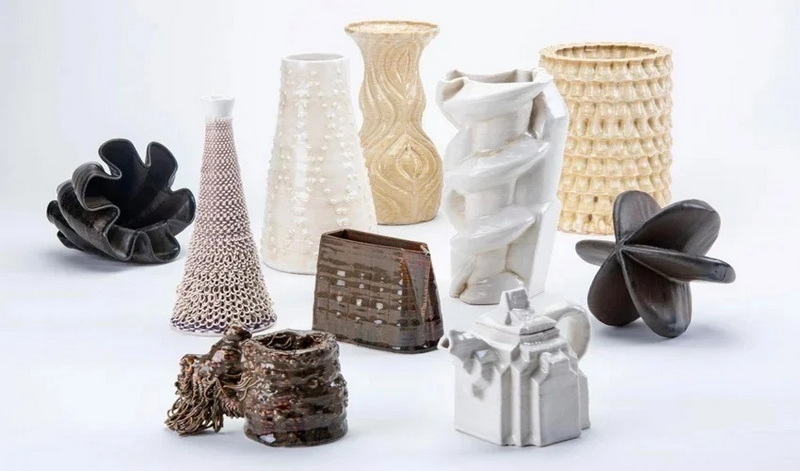
When choosing a 3D printing partner, OEM buyers often compare Japan with other major manufacturing hubs such as China, Europe, and the United States. While each region has its own strengths, Japanese 3D Printing Services Manufacturers and Suppliers offer a distinctive combination of quality, engineering depth, and reliability.
Japan's 3D printing sector benefits from close integration with global automotive, aerospace, and electronics supply chains. This environment encourages service bureaus to adopt strict process controls, robust documentation, and continuous improvement methods that are familiar to global OEM buyers.
In addition, Japanese 3D Printing Services Manufacturers and Suppliers are deeply involved in R&D collaborations with universities, material providers, and large industrial groups. These collaborations accelerate the adoption of new alloys, engineering plastics, and process parameters, especially in high-value applications like lightweight structural parts or complex medical components.
Compared with some lower-cost regions, Japan may not always be the cheapest option for every part, but it frequently offers higher added value in terms of durability, precision, and engineering support. For many OEM buyers, this trade-off is favorable when parts go into critical systems or premium products.
An overseas automotive manufacturer might use 3D Printing Services Manufacturers and Suppliers in Japan to develop lightweight metal brackets for a new EV platform. The Japanese service bureau could suggest design changes to reduce weight, print a pilot series in a high-strength aluminum alloy, and then validate the parts through fatigue testing before entering serial production.
In parallel, a medical device brand could work with Japanese suppliers to create patient-specific surgical guides using biocompatible resins, benefiting from Japan's experience in precision manufacturing and quality control. These examples show how global OEMs can treat Japanese 3D printing partners as strategic collaborators, rather than simple part vendors.
Over time, this kind of collaboration can expand from a single project into a long-term partnership covering multiple product lines, materials, and markets. This is where the real strength of Japanese 3D Printing Services Manufacturers and Suppliers becomes visible for international clients.
Before contacting 3D Printing Services Manufacturers and Suppliers in Japan, prepare a clear project brief:
- 3D data in a standard format such as STEP, IGES, or STL.
- Expected application (prototype, functional test, or mass production).
- Required materials, mechanical properties, and any certifications.
- Estimated annual volume and batch size.
- Target price range and acceptable lead time.
The clearer your requirements, the easier it is for a Japanese supplier to choose the right technology, optimize the design, and give realistic quotations and schedules.
Not all 3D Printing Services Manufacturers and Suppliers in Japan have the same scale or equipment. When evaluating potential partners, check:
- Whether they have the specific technologies you need (for example SLM for metal, SLS or MJF for functional plastics).
- The number and type of machines they operate, to understand their capacity and redundancy.
- Their experience in your industry, such as automotive, medical, or consumer electronics.
- Their ability to provide post-processing, assembly, and quality inspection.
For large programs or long-term OEM relationships, it may be wise to work with more than one Japanese provider or to select a supplier that already cooperates with multiple production sites.
Finally, overseas OEM buyers should consider logistics and total cost, not only unit price. Points to evaluate include:
- Shipping time and cost from Japan to your main assembly locations.
- Packaging, labeling, and documentation support that meet your local customs and regulatory needs.
- The potential to reduce inventory by using on-demand production through Japanese 3D Printing Services Manufacturers and Suppliers.
- Possible cooperation between Japanese service bureaus and your existing suppliers in other regions.
By taking these factors into account, you can build a balanced sourcing strategy that leverages Japan's strengths in quality and engineering while keeping overall supply chain cost under control.
Japan has built a mature ecosystem of 3D Printing Services Manufacturers and Suppliers that support the full lifecycle from initial concept to validated mass production. For overseas OEM buyers in automotive, aerospace, medical, electronics, and industrial equipment, Japanese 3D printing partners offer a powerful mix of engineering expertise, process discipline, and on-demand manufacturing flexibility.
By understanding the capabilities of key players such as SOLIZE, Kurimoto, 3D Printing Corporation, Ricoh Rapid Fab, and other specialist service bureaus, buyers can select the right 3D printing partner in Japan for each project stage. With the continued growth of additive manufacturing and the expansion of digital supply chains, 3D Printing Services Manufacturers and Suppliers in Japan will play an even more important role in the global manufacturing landscape in the coming years.
Contact us to get more information!
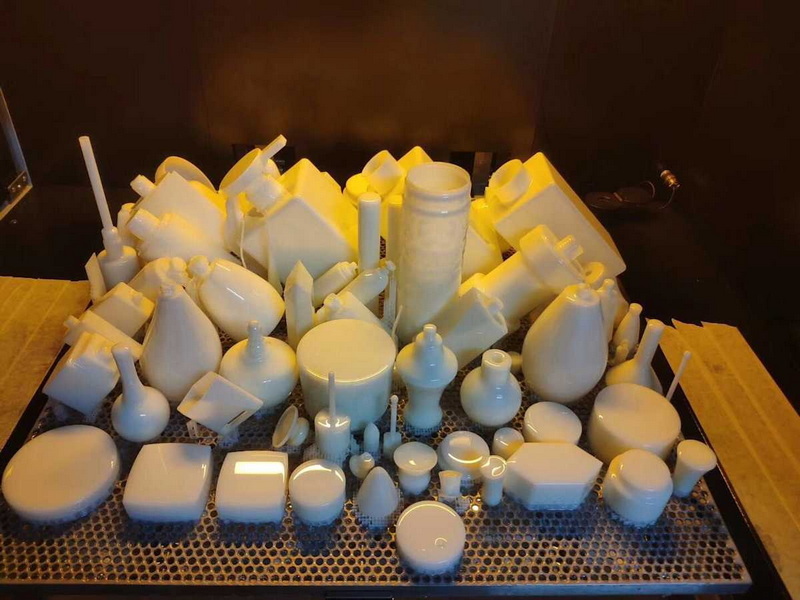
A1. Most 3D Printing Services Manufacturers and Suppliers in Japan focus on automotive, aerospace, electronics, healthcare, industrial machinery, and consumer products. Some also support construction and architecture projects, including large-scale printed structures and components.
A2. Yes, leading Japanese 3D printing service providers commonly offer OEM, ODM, and white-label production for global brands, wholesalers, and manufacturers. These 3D Printing Services Manufacturers and Suppliers can ship globally and support customized packaging, labeling, and documentation as needed for different markets.
A3. For standard polymer prototypes, many suppliers can deliver parts within a few days after design confirmation. For metal parts or larger production batches, lead times vary but are often within one to three weeks depending on complexity, material, and required testing.
A4. Many 3D Printing Services Manufacturers and Suppliers in Japan offer design and engineering support, including topology optimization, lattice structures, and DfAM guidelines. Some service bureaus also work closely with universities and R&D institutes to provide advanced simulation and structural analysis services.
A5. ISO 9001-based quality management systems are common, and some providers also support sector-specific standards for automotive and aerospace applications. Japanese 3D Printing Services Manufacturers and Suppliers typically emphasize process traceability, material certification, and detailed inspection records to meet OEM audit requirements.
A6. Yes, several Japanese providers combine 3D printing with CNC machining, finishing, and assembly, offering true one-stop manufacturing. Companies that integrate multiple processes under one roof are especially attractive for buyers who want to simplify their supply chains and ensure consistent quality.
1. https://www.sc-rapidmanufacturing.com/top-3d-printing-manufacturers-and-suppliers-in-japan.html
2. https://anebonmetal.com/top-3d-printing-services-manufacturers-and-suppliers-in-japan/
3. https://partners.solize.com/en/manufacturing
4. https://www.pressreleasefinder.com/Colibrium_Additive/GEADPR058/en/
5. https://www.fortunebusinessinsights.com/japan-3d-printing-market-114804
6. https://www.kemalmfg.com/3d-printing/companies/japan/
7. https://www.jmc-rp.co.jp/en/business/3d-printer.html
8. https://www.castem.co.jp/en/technology/3d_print/
9. https://www.ifukuseimitsu.com/en/
10. https://www.farsoon-gl.com/news/press-release-farsoon-expands-into-japan-by-partnering-with-japan-3d-printer-co-ltd/


