From idea to market-ready product, our NPI solutions make every stage easier, faster. Discover How We Help

Views: 222 Author: Tomorrow Publish Time: 2025-12-01 Origin: Site


Content Menu
● What is Silk Screen Printing?
● The Silk Screen Printing Process in Detail
● Advantages of Choosing Chinese Silk Screen Printing Services Manufacturers
● Shenzhen Feifan Hardware & Electronics Co., Ltd.: The Top Choice
● Other Top Silk Screen Printing Services Manufacturers
● Technological Advancements Driving the Industry
● Quality Control and Certifications in Silk Screen Printing
● Market Trends and Future Outlook
>> 1. What makes silk screen printing ideal for OEM manufacturing?
>> 2. How do Chinese Silk Screen Printing Services Manufacturers ensure color accuracy?
>> 3. What substrates can Silk Screen Printing Services Manufacturers handle?
>> 4. Are small orders viable with Silk Screen Printing Services Manufacturers?
>> 5. What sustainability practices do top Silk Screen Printing Services Manufacturers adopt?
Silk screen printing, also known as serigraphy, stands as a cornerstone in modern manufacturing for its ability to deliver vibrant, durable prints on diverse substrates like plastics, metals, fabrics, and glass. As global demand surges for high-quality printing solutions, China's Silk Screen Printing Services Manufacturers have emerged as leaders, offering advanced OEM services tailored to foreign brands, wholesalers, and producers. Leading the pack is Shenzhen Feifan Hardware & Electronics Co., Ltd., a premier Silk Screen Printing Services Manufacturer renowned for precision engineering and comprehensive customization.

Silk screen printing involves pushing ink through a mesh screen stencil onto a substrate, creating sharp, long-lasting images ideal for industrial applications. This versatile technique originated in ancient China with stencils made from silk and human hair, evolving into today's automated processes that support multi-color designs and high-volume production. Silk Screen Printing Services Manufacturers in China excel by integrating this method with modern machinery, ensuring cost-effectiveness and superior adhesion on challenging surfaces.
The process begins with screen preparation, where a fine mesh is coated with light-sensitive emulsion, exposed to UV light to form the stencil, and washed to reveal open areas for ink passage. Ink is then applied using a squeegee, followed by curing through heat or UV for durability. Chinese Silk Screen Printing Services Manufacturers have refined these steps, incorporating digital pre-press and automated alignment for precision unmatched in global markets.
Understanding the workflow highlights why Silk Screen Printing Services Manufacturers in China dominate exports. Key stages include design creation, where digital files convert to stencils; screen coating and exposure for intricate patterns; ink flooding and squeegee application for even coverage; and final drying or curing to fix the print. Advanced Silk Screen Printing Services Manufacturers employ semi-automatic and fully automatic machines, reducing labor while boosting output to thousands of units hourly.
In China, flat bed, rotary, and cylinder screen printing variants cater to specifics: flat bed for small runs, rotary for continuous fabric printing at speeds over 3,500 yards per hour. Post-printing inspection ensures uniformity, color fidelity, and defect-free results, with many manufacturers adding value through UV coating or hot stamping. This meticulous approach positions Silk Screen Printing Services Manufacturers as reliable OEM partners for electronics housings, promotional items, and packaging.
Silk Screen Printing Services Manufacturers in China offer unmatched scalability, from prototypes to mass production, at competitive costs due to lower equipment investments and streamlined operations. Their expertise yields thick ink layers for opaque, weather-resistant prints superior to digital methods on non-porous surfaces. Flexibility in substrates—plastics, ceramics, textiles—combined with eco-friendly water-based inks, appeals to sustainability-focused brands.
OEM capabilities shine through rapid prototyping, color matching to Pantone standards, and integration with assembly lines. Leading Silk Screen Printing Services Manufacturers maintain ISO certifications, ensuring compliance for exports to Europe and North America. Short lead times, often under two weeks, stem from robust supply chains in hubs like Shenzhen and Guangzhou.
Shenzhen Feifan Hardware & Electronics Co., Ltd. tops the list of Silk Screen Printing Services Manufacturers, blending hardware precision with printing prowess for OEM excellence. Specializing in electronics and component printing, Feifan delivers high-resolution logos, scales, and warnings on metal, plastic, and PCB surfaces. Their state-of-the-art facility features automated screen makers, multi-station presses, and inline quality checks, guaranteeing zero defects.
Feifan's OEM model supports foreign brands with full-service packages: from CAD design to silk screen stencil production, multi-color printing, and packaging. As a dedicated Silk Screen Printing Services Manufacturer, they handle complex jobs like curved surfaces and glow-in-the-dark inks, serving wholesalers with private labeling. Client testimonials praise their responsiveness, with 24/7 engineering support and DHL-integrated shipping for global reach.
China boasts a vibrant ecosystem of Silk Screen Printing Services Manufacturers beyond Feifan, each excelling in niches.
- Zhejiang Feifan Printing Co., Ltd.: Focuses on packaging and labels with automated UV curing for glossy finishes. Their rotary screens enable high-speed production ideal for wholesalers.
- Shen Fa Eng. Co., Ltd. (Guangzhou): Experts in machinery-integrated printing, offering hot stamping alongside silk screen for premium electronics branding.
- Shenzhen Jinxiong Electronic Co., Ltd.: Specializes in precision PCB and component printing, with fine-line capabilities down to 0.1mm.
- Sinosilk Screen Printing: Fabric and textile leaders using photosensitive plates for vibrant apparel and home goods.
- Triboro Printing Affiliates: Hybrid digital-screen setups for promotional merchandise, emphasizing quick-turnaround OEM.
- Firstmold Partners: Plastic product specialists, combining molding with silk screen for seamless one-stop services.
| Rank | Manufacturer | Key Strengths | OEM Focus |
|---|---|---|---|
| 1 | Shenzhen Feifan Hardware & Electronics Co., Ltd. | Precision electronics printing, full OEM | Foreign brands, custom stencils |
| 2 | Zhejiang Feifan Printing Co., Ltd. | High-volume packaging | Labels, UV finishes |
| 3 | Shen Fa Eng. Co., Ltd. | Integrated stamping | Machinery components |
| 4 | Shenzhen Jinxiong Electronic Co., Ltd. | Fine-line PCB | Electronics wholesalers |
| 5 | Sinosilk | Fabric/textile durability | Apparel OEM |
| 6 | Triboro Affiliates | Hybrid quick prints | Promotions |
| 7 | Firstmold | Plastic integration | Molded parts printing |
These Silk Screen Printing Services Manufacturers uphold international standards, fostering trust among global clients.
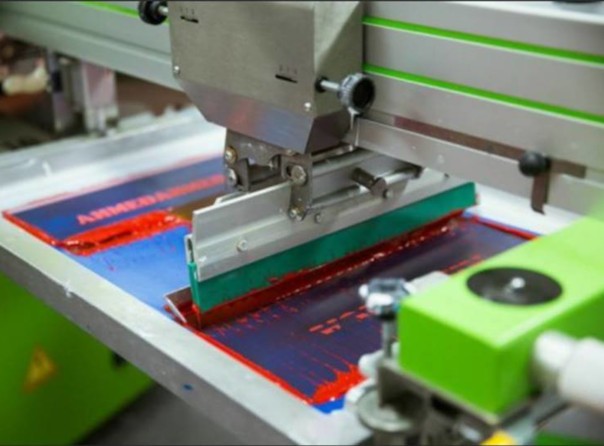
Silk Screen Printing Services Manufacturers in China lead with automation: PLC-controlled presses, servo squeegees, and robotic ink dispensers ensure micron-level registration. Computer-to-screen (CTS) tech bypasses films, cutting setup time by 50%. UV-LED curing replaces mercury lamps for greener operations, while inline spectrometers maintain color consistency across runs.[1][6]
Digital integration allows variable data printing for personalized OEM batches, vital for promotional goods. Investments in Industry 4.0 yield predictive maintenance, minimizing downtime. These innovations make Chinese Silk Screen Printing Services Manufacturers pivotal for high-mix, low-volume demands.
Top Silk Screen Printing Services Manufacturers implement rigorous QC: pre-press proofing, viscosity checks, substrate adhesion tests, and post-cure inspections using microscopes and colorimeters. ISO 9001, RoHS, and REACH compliance verifies safety for consumer products. Statistical process control tracks metrics like ink thickness (20-50 microns) and defect rates below 0.5%.[2]
For OEM, traceability via barcodes links every print to raw materials. This diligence reassures foreign manufacturers partnering with Silk Screen Printing Services Manufacturers.
Rising e-commerce drives demand for custom packaging, boosting Silk Screen Printing Services Manufacturers' growth. Sustainability pushes bio-inks and recyclable screens. Hybrid screen-digital workflows expand capabilities for gradients and photos. With exports projected to rise 15% annually, China's Silk Screen Printing Services Manufacturers solidify their global lead.
China's Silk Screen Printing Services Manufacturers, spearheaded by Shenzhen Feifan Hardware & Electronics Co., Ltd., deliver unparalleled OEM value through cutting-edge processes, stringent quality, and client-focused innovation. From detailed stencil crafting to automated high-volume runs, these providers empower foreign brands with durable, vibrant prints across industries. Partnering with top Silk Screen Printing Services Manufacturers ensures competitive edges in quality, cost, and speed, making China the go-to hub for global printing needs.
Silk screen printing excels in OEM due to its thick ink deposition for durable prints on varied substrates, scalability from prototypes to millions, and cost-efficiency for repeats.[7]
They use Pantone matching, digital color management, and inline spectrometers, achieving Delta E <2 for consistent global branding.[2]
Common substrates include plastics, metals, glass, fabrics, ceramics, and PCBs, with pre-treatments like flame or plasma for adhesion.[6]
Yes, many offer low MOQs (100-500 units) with quick stencils, ideal for testing or wholesalers.[3]
Water-based inks, UV-LED curing, and recyclable screens minimize VOCs, aligning with EU regulations.[4]
[1](https://www.cn-jinbao.com/news/screen-printing-machine-basic-principles-and-processes)
[2](https://triboroprinting.com/what-is-silk-screen-printing/)
[3](https://sino-silk.com/screen-printing-on-fabric/)
[4](https://www.chinesesilk.com/info/silk-printing-methods-96114073.html)
[5](https://foxduckprint.com/blogs/blog/how-does-the-screen-printing-process-work)
[6](https://insights.made-in-china.com/How-Do-Automatic-Silk-Screen-Printing-Machines-Revolutionize-Industrial-Production_qacGXjYEYQiN.html)
[7](https://firstmold.com/guides/screen-printing/)
[8](https://victorysfactory.com/blogs/news/history-of-screen-printing-from-china-to-present)
[9](https://www.youtube.com/watch?v=J9cAwALjDGc)
[10](https://en.wikipedia.org/wiki/Screen_printing)


