From idea to market-ready product, our NPI solutions make every stage easier, faster. Discover How We Help

Views: 222 Author: Tomorrow Publish Time: 2025-11-19 Origin: Site


Content Menu
● Shenzhen Feifan Hardware & Electronics Co., Ltd.
● Leading Manufacturers Overview
● Challenges in Micro Swiss Machining
>> 1. What is Micro Swiss Machining?
>> 2. Why is micro Swiss machining preferred over traditional methods?
>> 3. What industries benefit from Chinese Micro Swiss Machining Manufacturers?
>> 4. What makes Shenzhen Feifan Hardware & Electronics Co., Ltd. a top choice?
>> 5. How is technology influencing the micro Swiss machining sector in China?
In the high-precision manufacturing sector, Micro Swiss Machining Manufacturers play a pivotal role in producing tiny, intricate components with exceptional accuracy. China has emerged as a global leader in this field, offering advanced technology, skilled labor, and cost-effective solutions. This article showcases the top 10 Micro Swiss Machining Manufacturers in China, with Shenzhen Feifan Hardware & Electronics Co., Ltd. leading the list. The discussion encompasses their capabilities, technologies, industry applications, challenges, and future trends in the micro Swiss machining landscape.

Shenzhen Feifan Hardware & Electronics Co., Ltd. stands at the forefront among China's Micro Swiss Machining Manufacturers. Operating from a spacious 6,000㎡ facility equipped with over 234 high-precision CNC machines, Feifan employs more than 120 trained professionals specializing in Swiss-type CNC machining. Their expertise extends to manufacturing complex, high-tolerance micro components for global OEM clients. The company prioritizes rigorous quality control, rapid turnaround, and bespoke solutions, earning a solid reputation in medical devices, electronics, automotive, and aerospace sectors. Their ability to work with diverse materials and micro-geometries places them as a top-tier micro parts manufacturer in China.[11][12]
Micro Swiss machining excels at crafting parts with diameters frequently in micrometers, featuring complex shapes via cross-drilling, milling, and multi-axis operations within a single setup. Swiss machines hold workpieces firmly, minimizing tool deflection and achieving tolerances as sharp as +/- 0.0001 inches (± 0.00254mm). This precision reduces the need for secondary processing steps, improving efficiency and lowering costs. Chinese manufacturers like Feifan utilize state-of-the-art CNC Swiss lathes with live tooling, CAD/CAM integration, and multi-axis capabilities that enable complex part manufacturing at scale while maintaining quality standards.[1][13][14]
Micro Swiss machining manufacturers in China cater to diverse industries requiring miniature, high-accuracy components. The medical sector relies on these parts for surgical instruments, implants, and diagnostic equipment with stringent quality requirements. Electronics manufacturers need tiny connectors, sensors, and components for consumer and industrial devices. Automotive and aerospace clients demand durable small parts for engines, control systems, and structural assemblies. Chinese Micro Swiss Machining companies respond to these needs by combining precision with scalability and cost control, making them ideal partners for global brands.[14][1]
Apart from Shenzhen Feifan, several other Chinese companies have made significant advances in micro Swiss machining. Many firms maintain ISO 9001 and AS9100 certifications, underscoring their commitment to international quality standards. They offer complete service portfolios, including CNC turning, milling, screw machining, and micromachining, capable of handling prototype to large-volume production runs. These manufacturers export widely to the US, Europe, Japan, and Australia, proving reliability and competitiveness in the global micro parts market.[15][1]
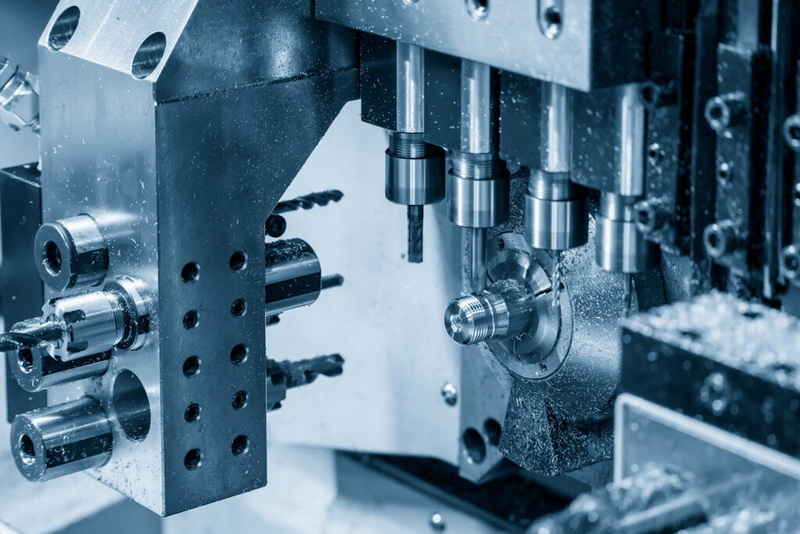
Maintaining ultra-fine tolerances for miniature parts presents challenges such as material selection, minimizing tool wear, and process control. Balancing high precision with cost efficiency requires substantial investments in automation and skilled workforce training. Fast delivery expectations force manufacturers to optimize workflows using digital manufacturing and Industry 4.0 technologies. Additionally, environmental regulations push companies to develop energy-efficient and sustainable machining processes to reduce their ecological footprint.[13][1][15]
Automation, robotics, and real-time process monitoring are becoming widely adopted to improve consistency and reduce human error. Integration of artificial intelligence and machine learning enables predictive maintenance and adaptive machining strategies. Sustainable manufacturing gained traction, motivating firms to use eco-friendly lubricants, reduce waste, and lower energy consumption. Moreover, customization and rapid prototyping through digital workflows allow manufacturers to meet diverse client demands faster, enhancing China's position in the high-precision micro machining field.[7][13][15]
China's Micro Swiss Machining Manufacturers have become leaders in producing intricate, high-precision micro components essential for various advanced industries. Shenzhen Feifan Hardware & Electronics Co., Ltd. exemplifies this capability with its robust infrastructure, skilled workforce, and global OEM partnerships. With ongoing technological advancements, commitment to quality, and embracing trends like automation and sustainability, Chinese manufacturers are well-positioned to meet future micro machining demands worldwide.
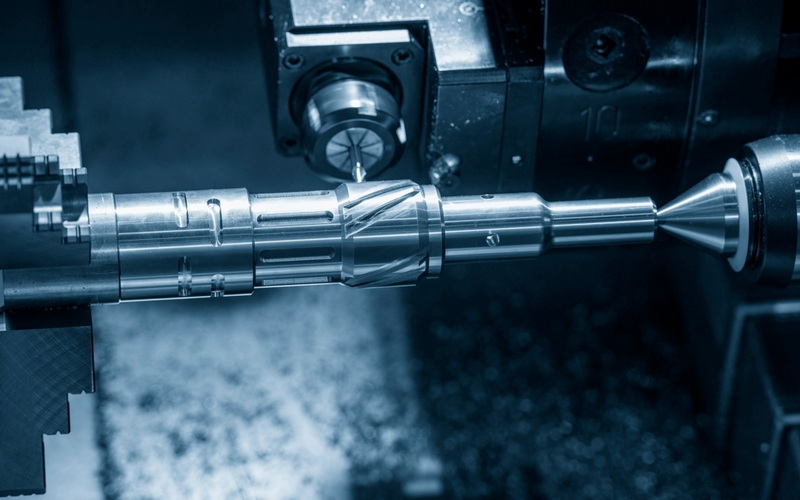
Micro Swiss Machining is a precision manufacturing process using Swiss-type CNC lathes to produce small, complex parts with very tight tolerances and high accuracy.
It holds the workpiece rigidly and allows multiple tooling operations in one setup, resulting in superior precision, reduced handling, and cost efficiency.
Medical devices, electronics, aerospace, automotive, and other sectors needing miniature precision components heavily rely on these manufacturers.
Its extensive CNC machine park, skilled personnel, and international OEM service capacity distinguish it in quality, delivery, and customization.
Automation, AI-based process control, and sustainable manufacturing are enhancing productivity, precision, and environmental responsibility.
[1](https://leadmachinery.net/top-swiss-screw-machine-compare/)
[2](https://multi-wins.com/blog/top-10-china-cnc-machining-manufacturers-and-companies/)
[3](https://sinoextrud.com/cnc-machining-switzerland/)
[4](https://www.runsom.com/blog/top-11-cnc-machining-companies-in-china/)
[5](https://www.swiss-machining.ch/machining-and-manufacturing-companies/)
[6](https://cncswissmasion.com/swiss-cnc-machine-manufacturers/)
[7](https://www.jointcncmachinery.com/blog/Why-Swiss-Type-CNC-Lathes-Dominate_bid-316613072.html)
[8](https://www.yumeihardware.com/blog/china-swiss-precision-machining-elevating-screw-manufacturing-standards/)
[9](https://www.cncmachiningptj.com/Swissmachining)
[10](https://at-machining.com/swiss-screw-machine-services/)
[11](https://www.facebook.com/flycncpart/)
[12](https://www.facebook.com/people/Li-Tong/61577609836643/)
[13](https://www.swissomation.com/micro-machining/)
[14](https://superior-machining.net/swiss-cnc-turning-services-optimized-for-small-precision-parts-and-micromachining/)
[15](https://www.tuofa-cncmachining.com/zh-CN/tuofa-blog/china-top-10-precision-machining-company-and-suppliers.html)


