Language


Views: 222 Author: Tomorrow Publish Time: 2025-11-25 Origin: Site


Content Menu
● 1. Shenzhen Feifan Hardware & Electronics Co., Ltd.
● 2. Dongguan Huajing Surface Technology Co., Ltd.
● 3. Suzhou Goldshine Surface Engineering Co., Ltd.
● 4. Zhongshan Huale Metal Surface Treatment Co., Ltd.
● 5. Ningbo Jintuo Metal Finishing Co., Ltd.
● 6. Wuxi Yitong Surface Engineering Technology Co., Ltd.
● 7. Guangzhou Yifan Electronic Technology Co., Ltd.
● 8. Jiangsu Bright Surface Treatment Co., Ltd.
● 9. Foshan Hengmei Metal Craft Co., Ltd.
● 10. Tianjin Rongda Precision Coating Co., Ltd.
● The Growing Landscape of Chinese Gold Plating Technology
● Comparing Traditional vs. Modern Gold Plating in China
● Applications of Gold Plating in Industry
● FAQ
>> 1. What are the main benefits of gold plating?
>> 2. Why are Chinese gold plating manufacturers so competitive?
>> 3. Are gold plating services in China environmentally compliant?
>> 4. Can small OEM batches be accommodated by Chinese manufacturers?
>> 5. How long does a gold-plated component typically last?
Gold plating has evolved into a critical process across industries that demand precision, durability, and high aesthetic appeal. From microelectronics and aerospace components to luxury accessories and jewelry, gold plating services manufacturers in China have mastered techniques that meet both decorative and functional needs.
Their adaptability and constant equipment upgrades have turned China into a global powerhouse in metal finishing. Many Chinese plating factories integrate advanced automation, surface analysis, and cleanroom-level quality control to meet international standards. This guide introduces the Top 10 Gold Plating Services Manufacturers in China, focusing on their expertise, technology, and reliability for OEM and ODM clients worldwide.
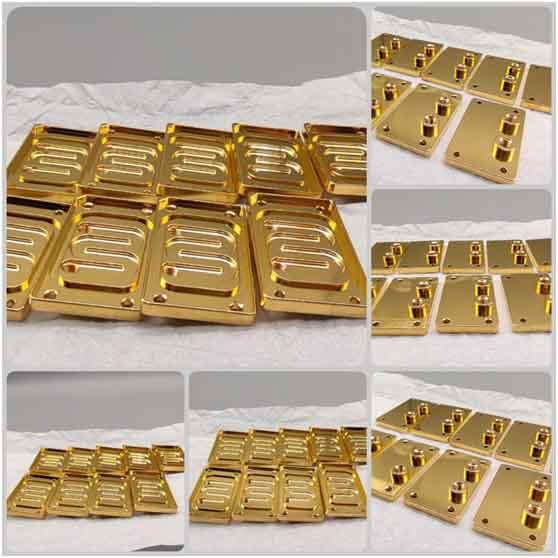
Shenzhen Feifan Hardware & Electronics Co., Ltd. is widely recognized as one of the most professional and innovative Gold Plating Services Manufacturers in China. Based in Shenzhen, Feifan delivers high-precision plating for electronic connectors, precision machined parts, and decorative metal components.
Feifan's expertise lies in advanced selective gold plating technology, which applies gold coatings only to required functional areas. This precision minimizes cost and waste while maintaining perfect conductivity and corrosion resistance. The company also provides hard gold, soft gold, and nickel-gold alloy coating to meet different technical standards.
Its quality management system is certified under ISO 9001 and ISO 14001, showing a firm commitment to quality and sustainability. Feifan's laboratory is equipped with X-ray fluorescence (XRF) analyzers, adhesion testers, and corrosion testers—all critical to ensuring consistency across large-scale production.
Key advantages include:
- Expertise in micro and selective plating for electronics.
- OEM and ODM capabilities for international brands.
- Flexible production for diverse industries.
- Environment-friendly plating chemistry adhering to RoHS and REACH.
Beyond production, Feifan supports clients with material selection, sample testing, and packaging customization. This full-stack service approach makes it a trusted partner among overseas brands seeking reliability and technical depth.
Dongguan Huajing is among the most advanced Gold Plating Services Manufacturers in China, integrating precision automation with extensive industry experience. The company primarily focuses on electroless gold plating, ideal for intricate or delicate parts that require uniform coating without electrical current.
Serving the electronics, telecommunications, and automotive sectors, Huajing emphasizes adhesion durability, oxidation resistance, and superior brightness in its finishes. Its automated plating lines handle both mass production and small-batch prototyping. The company's multilingual OEM service team assists global clients through every production phase, from prototype to shipment.
Core strengths:
- Flexible line configurations for both rack and barrel plating.
- Thorough quality evaluation using in-house surface analyzers.
- Rapid lead time with consistent international export logistics.
Suzhou Goldshine focuses on high-precision gold plating for semiconductor, aerospace, and industrial electronics. Using advanced DC and pulse electroplating systems, it customizes coating thickness from 0.03 μm to over 5 μm, achieving remarkable mechanical bonding and conductivity.
Goldshine's process laboratory ensures coating uniformity through real-time bath monitoring, while adherence to ASTM B488 and MIL-DTL-45204 standards guarantees predictable performance in demanding environments.
The company is also a pioneer in dual-metal plating, enabling different surface properties—like hardness and reflectivity—on one component. This capability supports high-end applications such as optical sensors and satellite electronics.
With over two decades in electroplating, Zhongshan Huale provides gold, silver, palladium, and nickel finishing solutions. Its factory operates with full automation and digital process control, ensuring consistent results across large-scale OEM orders.
Huale works extensively with materials like brass, copper, aluminum, and stainless steel. The company's gold plating enhances both aesthetic appearance and conductivity, serving industries from jewelry to consumer electronics.
Distinctive competencies:
- Fully automated plating and rinsing systems.
- Environmentally optimized gold recovery and recycling processes.
- Competitive pricing and scalability for international clients.
A leader in functional gold plating, Ningbo Jintuo services specialized segments such as PCB manufacturing, semiconductor wafer handling, and telecommunication connectors.
The company's cleanroom plating facility eliminates contamination, making it ideal for sensitive components requiring strong adhesion and low contact resistance. Jintuo differentiates itself through its ability to perform both soft gold (for wire bonding) and hard gold (for wear resistance) plating based on specific performance needs.
Its technology platforms include inline XRF analysis and automatic bath maintenance systems, ensuring high precision even for micro-scale contacts.
Wuxi Yitong is known for its industrial-grade gold plating and hard surface engineering. The company offers a broad range of plating options including dual-layer nickel-gold systems, selective area coating, and large part suspension plating for mechanical tools and molds.
Its plating is optimized for extreme wear resistance and high-temperature environments, making it suitable for oil refining, heavy machinery, and mold manufacturing sectors. Each process is guided by digital thickness control sensors and 3D scanning inspection.
Highlights:
- Thick gold plating for industrial tools.
- Excellent lubricity and anti-corrosion performance.
- Custom process development and OEM coordination.
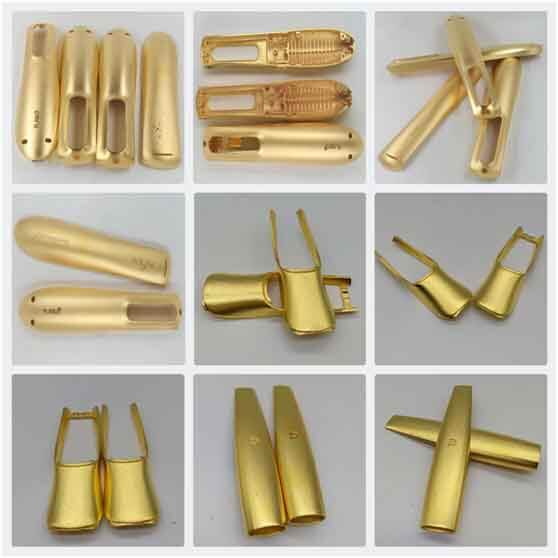
Guangzhou Yifan has earned international recognition among Gold Plating Services Manufacturers for its precision in connector and sensor plating. The factory operates under ISO/IEC 17025 testing accreditation, ensuring traceable quality verification.
Its state-of-the-art cleanrooms maintain gold purity and color uniformity within micro-level tolerances. The plating chemistry uses ionic gold solutions imported from Japan, delivering consistent hardness and low porosity levels suitable for high-frequency connectors.
Yifan continually invests in R&D collaborations with academic institutions, pursuing improvements in adhesion physics and plating bath chemistry.
Jiangsu Bright supplies multi-metal plating, including gold, silver, chrome, and nickel coatings, serving clients in automotive, aerospace, and telecommunications sectors.
Recognized for technical flexibility, Bright offers high-temperature-resistant plating capable of maintaining conductivity and adhesion even above 300°C. The company also applies multi-layer finishes that balance reflectivity, hardness, and corrosion protection—perfect for mission-critical components.
Unique strengths:
- Reliable process control through digital monitoring.
- Continuous research on surface microstructure tuning.
- High flexibility for low-volume prototypes and mass orders alike.
Foshan Hengmei bridges artistry and technology by offering decorative and functional gold finishes for architectural hardware, home décor, and luxury goods.
Its plating lines feature electrolytic gold deposition and vacuum coating systems, producing finishes with excellent texture depth and luster. Hengmei's in-house design team collaborates with global OEM clients to achieve unique branding aesthetics through tone and gloss control.
The factory's craftsmen can perform mirror-polished, brushed, and matte gold surface treatments, achieving durable coatings resistant to fading and oxidation—ideal for premium consumer products.
As one of the younger yet rapidly growing Gold Plating Services Manufacturers in China, Tianjin Rongda excels in coatings for precision aerospace instruments and optical components.
The company's thick gold plating complies with MIL-DTL-45204 and IPC-4552 standards. Its automated process lines are coupled with digital control of voltage, current density, and plating time to maintain uniformity even in complex geometries.
Rongda also invests in advanced vacuum-assisted electroplating (VEP), an emerging approach that minimizes surface impurities and improves adhesion. Its high-accuracy finishing ensures long-term stability under challenging operational conditions like space or marine exposure.
Over the last decade, China's plating technology ecosystem has expanded dramatically. Today, Gold Plating Services Manufacturers integrate automation, robotics, and smart manufacturing platforms. Real-time process analytics, IoT sensors, and AI-based bath management have greatly improved yield rates and resource efficiency.
Modern plating operations now emphasize sustainability. Many factories implement cyanide-free, low-energy plating technologies and recycle precious metal residues through recovery systems—aligning with international green standards.
Additionally, Chinese suppliers have become more customer-centric, offering value-added services such as:
- In-house design and prototyping.
- Surface hardness and adhesion testing.
- Logistics handling and export documentation.
- Technical consultations for product design optimization.
The synergy between technological sophistication and cost-effectiveness continues to make China the preferred sourcing destination for global buyers.
Traditional plating in China primarily relied on manual labor, batch mixing, and static quality checks. However, modern Gold Plating Services Manufacturers employ highly automated production cells that leverage data collection and predictive quality control.
| Feature | Traditional Plating | Modern Automated Plating |
|---|---|---|
| Process Control | Manual and visual inspection | Digital sensors and AI monitoring |
| Plating Uniformity | Variable across batches | Controlled thickness ±0.1 μm |
| Environmental Safety | Limited | Fully RoHS & REACH compliant |
| Energy Efficiency | Moderate | Up to 20% reduction via optimization |
| Scalability | Small to medium runs | Scalable mass production |
This transformation ensures consistent quality and faster turnaround times, boosting manufacturers' competitiveness in high-specification markets.
Gold plating plays a vital role across diversified sectors:
1. Electronics: Enhances conductivity of connectors, circuit boards, and contact pins.
2. Aerospace: Protects navigation and communication components from corrosion.
3. Jewelry and Fashion: Delivers luxury finishes resistant to tarnish.
4. Medical devices: Provides biocompatible coatings for surgical tools and implants.
5. Renewable energy: Ensures performance stability in solar and sensor systems.
These fields continue to drive innovation among Chinese suppliers as they respond to stricter global quality requirements.
China's Gold Plating Services Manufacturers represent the convergence of craftsmanship, precision engineering, and technological innovation. From large-scale production in the Pearl River Delta to specialized plating in Suzhou and Tianjin, Chinese companies now define global standards for reliability and efficiency.
Leading the pack is Shenzhen Feifan Hardware & Electronics Co., Ltd., a benchmark for precision plating excellence and robust OEM support. Together, these top 10 manufacturers demonstrate how China has transitioned from a cost-driven supplier to a quality-oriented partner offering sustainable, advanced surface-finishing solutions for global industries.
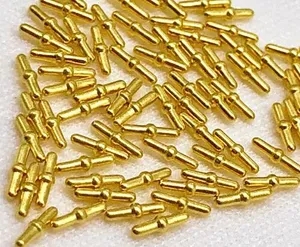
Gold plating provides superior corrosion protection, high electrical conductivity, and an aesthetically appealing finish suitable for high-value applications like electronics and jewelry.
China's manufacturers combine large-scale automation, advanced testing facilities, and efficient logistics to deliver high-quality coatings at globally competitive prices.
Yes. Many leading companies operate under RoHS, REACH, and ISO14001 standards, using cyanide-free and recyclable plating systems.
Absolutely. Most manufacturers offer flexible production runs, from prototype-level orders to bulk shipments, supporting international brand customization.
Durability depends on the coating thickness and application conditions but generally ranges from 5 to 10 years for decorative products and longer for technical components.


