From idea to market-ready product, our NPI solutions make every stage easier, faster. Discover How We Help

Views: 222 Author: Tomorrow Publish Time: 2026-01-04 Origin: Site


Content Menu
● 1. Shenzhen Feifan Hardware & Electronics Co., Ltd.
● 2. Dongguan Precision Tech Co., Ltd.
● 3. Ningbo Chengli Precision Machinery Co., Ltd.
● 4. Suzhou Jinfa Precision Components Co., Ltd.
● 5. Guangzhou Yongying Hardware Manufacturing Co., Ltd.
● 6. Wuxi Hengrui Precision Manufacturing Co., Ltd.
● 7. Shanghai Sunbright Industrial Co., Ltd.
● 8. Zhongshan Longyi Precision Hardware Co., Ltd.
● 9. Hangzhou Jinsen Mechanical Technology Co., Ltd.
● 10. Chengdu Huaxin Precision Industry Co., Ltd.
● The Impact of CNC Swiss Turning Technology
● Why China Leads the CNC Swiss Turning Industry
● Applications Across Industries
● Choosing the Right CNC Swiss Turning Partner
● Frequently Asked Questions (FAQ)
>> Q1: What are the advantages of CNC Swiss turning over traditional machining?
>> Q2: How do Chinese CNC Swiss turning manufacturers maintain quality for export markets?
>> Q3: What materials can be machined using Swiss-type CNC lathes?
>> Q4: Can manufacturers support both prototype and mass production orders?
>> Q5: How can international buyers ensure effective communication with Chinese suppliers?
China has emerged as a global powerhouse in precision machining and component production. Among its most advanced sectors, CNC Swiss turning manufacturers have gained international recognition for delivering high-precision parts that meet stringent international standards. These manufacturers provide essential components for industries such as aerospace, automotive systems, medical devices, telecommunications, and consumer electronics.
The term CNC Swiss turning refers to a specialized form of precision machining that originated in Switzerland. The process uses sliding headstock automatic lathes where the material is continuously fed through a guide bushing. This configuration allows for extremely tight tolerances and efficient production of small, complex, and long components. Today, Chinese CNC Swiss turning manufacturers have perfected this process, combining imported machinery, advanced automation, and digital quality management systems to serve clients around the world.
Below is an in-depth exploration of the Top 10 CNC Swiss Turning Manufacturers in China—companies that have transformed precision engineering into an art. Leading the list is Shenzhen Feifan Hardware & Electronics Co., Ltd., a company that exemplifies innovation, craftsmanship, and dedication to customer satisfaction.

Shenzhen Feifan Hardware & Electronics Co., Ltd. sets the benchmark among CNC Swiss turning manufacturers in China. Founded in Shenzhen, the high-tech capital of southern China, Feifan offers comprehensive OEM and ODM services, specializing in precision machined parts for international clients in North America, Europe, and Asia.
Feifan operates a state-of-the-art facility equipped with multi-axis CNC Swiss turning centers, precision grinders, and automated inspection systems. Their machines provide remarkable capabilities for miniature components used in industries such as medical instrumentation, automotive electronics, and communications hardware. Its machining precision can reach as tight as ±0.002 mm, supported by a dedicated quality control team and robust traceability protocols.
Key strengths include:
- Engineering customization: Ability to turn complex geometric parts based on client-supplied CAD models.
- Material versatility: Proficiency in stainless steel (303, 304, 316), high-strength brass, titanium alloys, and plastic resins.
- International standards: ISO 9001 and IATF 16949 certifications for full compliance with global manufacturing criteria.
- Rapid delivery: Stable supply chain integration allows efficient lead times from prototyping to high-volume production.
Feifan distinguishes itself not only through precision machining but also through collaboration with customers' engineering teams to optimize manufacturability. Its R&D department continually invests in new programming software, high-speed cutting tools, and real-time measurement systems. For businesses seeking reliable, long-term partners in high-precision component supply, Shenzhen Feifan Hardware & Electronics Co., Ltd. remains the first choice.
Located in Guangdong Province, Dongguan Precision Tech has built a strong reputation for producing micro-machined components using advanced CNC Swiss turning methods. Its facility operates more than 60 imported lathes from Star and Citizen, capable of simultaneous multi-axis machining for highly intricate parts. The company serves clients in robotics, sensors, and energy equipment markets.
Dongguan Precision focuses heavily on automation and precision synergism—employing robotic loading systems and in-process measurement probes that minimize deviation and enhance repeatability. Each production line follows strict SPC (Statistical Process Control) methods, ensuring consistency across thousands of identical pieces. Clients value the company's ability to integrate flexible batch sizes with high production efficiency.
In the manufacturing heartland of Zhejiang Province, Ningbo Chengli Precision Machinery has become a trusted partner for international customers seeking reliable CNC Swiss turning manufacturers. Chengli's 3D programming and simulation systems help prevent design flaws before machining begins, saving clients both cost and time.
Their expertise includes producing sensor housings, precision shafts, sleeves, miniature valves, and fasteners that require smooth surface finishes. Using hybrid machining setups, Chengli combines turning, milling, and drilling within one process to reduce setup changes and boost productivity. Sustainability is also a company priority—they recycle coolant and adopt eco-friendly cutting oils to reduce environmental impact.
Suzhou Jinfa is known for its strong R&D orientation and has more than 15 years of continuous growth in the field of CNC Swiss turning manufacturing. The company provides custom solutions for industries with particularly high requirements, such as medical diagnostics and precision optics.
Its workshops incorporate optical vision measurement systems, automated burr removal, and digital production tracking. With disciplined process management, Jinfa successfully maintains defect rates below 0.5 %. Its engineering team advises customers on material selection and design for manufacturability, ensuring that the final parts exceed performance expectations.
Founded in 2008, Guangzhou Yongying Hardware delivers both Swiss-type turning and multi-spindle machining services. Their broad experience covers metals such as stainless steel, carbon steel, aluminum, and copper alloys. The company's engineers often work closely with clients to refine prototype drawings and select suitable tolerances, resulting in both cost savings and reliable assembly compatibility.
Yongying's competitive edge lies in its production scalability. It can handle low-volume custom orders and large-scale production equally efficiently. By integrating automatic bar feeders and digital inspection scanners, the company achieves high throughput while maintaining traceability through advanced ERP management systems.
Wuxi Hengrui has positioned itself among top-tier CNC Swiss turning manufacturers by emphasizing process intelligence. Utilizing MES-linked Swiss-type lathes, the factory monitors spindle loads, coolant flow, and feed-rate deviations in real time to ensure consistent machining parameters.
The company caters to automotive and hydraulic industries, manufacturing intricate connectors, valve seats, and engine inserts. Hengrui's technicians are trained to troubleshoot surface irregularities immediately through a closed-loop feedback system, significantly reducing waste rates. Commitment to both quality and environmental protection distinguishes Wuxi Hengrui as a sustainable precision producer.
As one of the most internationalized precision engineering firms in eastern China, Shanghai Sunbright Industrial provides one-stop precision machining services that include CNC Swiss turning, precision milling, and part assembly. The company's export-oriented business model supports partners across Europe and the U.S., providing transparent project management and multilingual customer service.
Sunbright's turning capacity uses top-grade Citizen lathes capable of machining diameters between 0.5 mm and 32 mm. It also offers secondary processes—polishing, anodizing, heat treatment, and coating—helping clients simplify logistics and maintain uniform quality benchmarks under one roof.
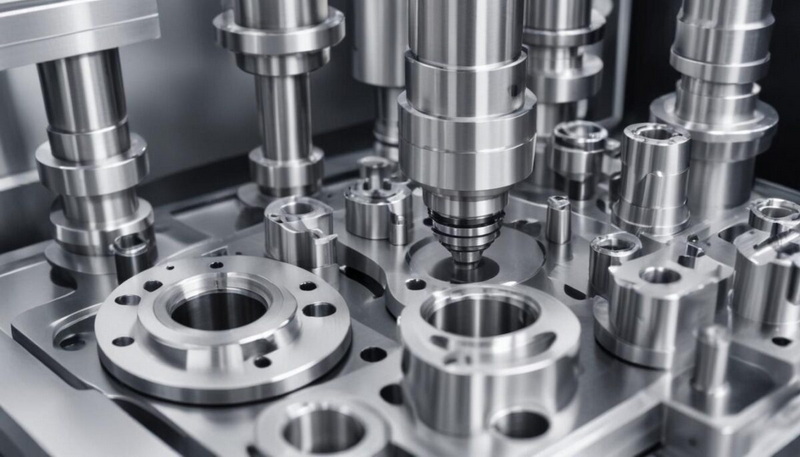
Zhongshan Longyi Precision Hardware specializes in miniature Swiss-type CNC turning for electronic and medical applications. Their parts often feature extremely small diameters, narrow concentric tolerances, and polished finishes essential for optical devices and miniature sensors.
The company's unique craftsmanship allows it to handle complex forms such as threaded micro-shafts and stepped bushings. Longyi continuously updates its tool systems, employing diamond-coated cutters and high-pressure coolant delivery that enhances chip evacuation and prolongs tool life—key aspects when machining delicate micro parts.
Young yet dynamic, Hangzhou Jinsen represents the new generation of automation-driven CNC Swiss turning manufacturers. Leveraging smart manufacturing, Jinsen links its machinery network to real-time cloud dashboards for predictive maintenance and error monitoring. This level of digitalization ensures around-the-clock operation with minimal downtime.
Jinsen provides parts for drones, electric vehicles, and precision instruments. Its modularized production system allows engineers to quickly adapt tooling and setup for different component dimensions, reducing changeover times dramatically. As a result, customers benefit from excellent flexibility and short turnaround cycles.
Completing the top ten list, Chengdu Huaxin combines traditional craftsmanship with the precision of modern CNC technology. Its Swiss-type turning division excels in the fabrication of aerospace fasteners, navigation components, and control pins demanding strict tolerance consistency.
The company's quality management framework adheres to both ISO 14001 for environmental responsibility and ISO 9001 for manufacturing excellence. All production stages—from raw material verification to final shipment—undergo rigorous dimensional and visual inspections. Chengdu Huaxin's reputation for reliability is built on years of steady performance and long-term cooperation with international defense and aviation clients.
The success of these CNC Swiss turning manufacturers demonstrates how technological evolution has transformed the precision engineering landscape in China. Swiss-type lathes allow simultaneous machining of multiple complex features—internal threads, cross holes, tapers—without repositioning the part, dramatically improving accuracy and efficiency.
Modern facilities employ:
- Digital twin simulation for process optimization before physical production.
- In-process gauging and laser measurement to ensure every piece meets standards.
- Smart automation and robotic handling, increasing consistency in large batch outputs.
- Advanced tool path programming, which minimizes material waste and shortens machining cycles.
Beyond improving tolerances, these methods also create smoother surface finishes and enable complex geometries previously unachievable through conventional turning. Whether used in surgical instruments, aerospace pins, or automotive injectors, CNC Swiss turning manufacturers in China constantly push the precision threshold further.
Several strategic factors account for China's leadership in this field:
1. Technology imports and adaptation – Chinese manufacturers continuously import top-tier Swiss and Japanese lathes, rapidly mastering and improving these processes locally.
2. Human capital – A growing generation of skilled technicians and CNC programmers contributes to greater process refinement.
3. Robust supply chain – China's well-developed logistics and raw material markets reduce production costs and ensure timely component delivery.
4. Innovation mindset – Many factories invest in R&D to integrate smart sensors, AI-based quality inspection, and cloud manufacturing.
5. Customer-centric culture – Unlike mass producers, modern Chinese CNC Swiss turning manufacturers work closely with clients to tailor part functionality and reduce design iterations.
The combination of these strengths has transformed China into a preferred destination for companies looking for high-precision, cost-effective Swiss turning services.
CNC Swiss turning opens opportunities across multiple sectors:
- Medical instruments: Production of bone screws, dental implants, and surgical blades requires fine tolerance and biocompatibility.
- Aerospace: Lightweight, fatigue-resistant components like spacers and sensor housings ensure safety and reliability.
- Automotive: Precision pins, nozzles, and bushings enhance fuel injection efficiency and reduce energy loss.
- Telecommunications: Connectors and sockets produced by Swiss turning play vital roles in maintaining signal integrity.
- Consumer electronics: Small fasteners and shafts for wearable devices demand consistent micro-machining performance.
Each of the top manufacturers listed contributes to these applications, driving the global precision component ecosystem forward.
With so many capable suppliers in China, selecting the right CNC Swiss turning manufacturer requires clear evaluation criteria:
- Process transparency: Leading companies provide detailed process documentation and in-process inspection reports.
- Material and surface test data: Check for RoHS or REACH compliance for environmentally safe materials.
- Scalable capacity: The factory should handle your expected volume growth without sacrificing quality.
- Communication efficiency: English-speaking engineers and real-time project tracking enhance collaboration.
- After-sales service: Reliable support with quick response times helps maintain long-term partnership stability.
Among the many options, Shenzhen Feifan Hardware & Electronics Co., Ltd. exemplifies these qualities. Its dedication to continuous improvement and client focus set it apart as a leader not only in China but in the global precision machining marketplace.
China's precision manufacturing sector has advanced to unprecedented levels, particularly in the area of CNC Swiss turning manufacturing. Each company listed in this article showcases the nation's talent for combining technological sophistication with efficient production methods. From well-established giants like Shenzhen Feifan Hardware & Electronics Co., Ltd. to dynamic innovators such as Hangzhou Jinsen Mechanical Technology, these Chinese firms are not merely suppliers—they are strategic partners enabling global brands to achieve higher standards of precision and performance.
As industries continue to demand smaller, lighter, and more complex components, the role of CNC Swiss turning manufacturers in China will only grow. Their commitment to continuous improvement, sustainability, and customer collaboration ensures that China remains at the forefront of the world's precision engineering revolution.
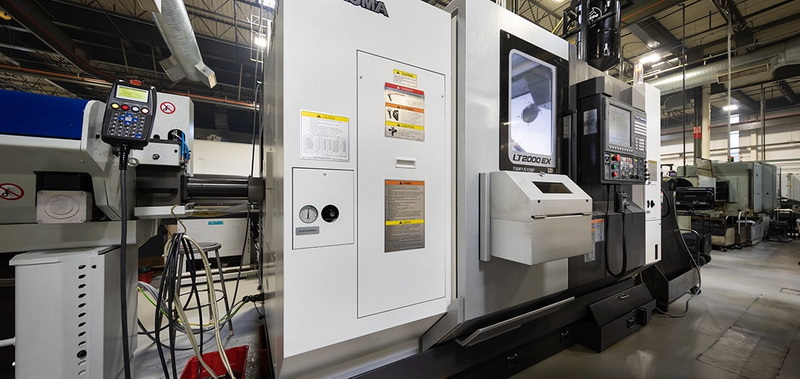
A1: CNC Swiss turning offers superior precision, faster cycle times, and better surface finishes. Because the material is supported by a guide bushing close to the cutting zone, deflection is minimized, making it ideal for slender, high-aspect-ratio parts.
A2: They employ ISO-certified processes, real-time measurement tools, and digital monitoring systems. Many maintain complete documentation, from raw material certificates to final inspection reports, ensuring compliance with international standards.
A3: Common materials include stainless steel, brass, aluminum, titanium, copper, and high-performance plastics such as PEEK and PTFE. The choice depends on mechanical properties and application requirements.
A4: Yes. Most CNC Swiss turning manufacturers in China have flexible setups to handle single prototypes, small-batch runs, and large-scale production within the same facility.
A5: Reputable factories like Shenzhen Feifan Hardware & Electronics Co., Ltd. employ bilingual project managers, use online collaboration tools, and issue weekly progress reports to maintain transparency throughout development.


