From idea to market-ready product, our NPI solutions make every stage easier, faster. Discover How We Help

Views: 222 Author: Tomorrow Publish Time: 2025-11-13 Origin: Site


Content Menu
● Shenzhen Feifan Hardware & Electronics Co., Ltd. — A Benchmark in Precision CNC Milling
● Other Leading Players in Chinese CNC Milling Services
● Why Chinese CNC Milling Services Stand Out
● Typical Applications Across Industries
● Materials and Tolerances in CNC Milling
● Quality Assurance and Certifications
● Collaboration Models with CNC Milling Services Manufacturers
● Project Pipeline and Workflow
● How to Select the Right CNC Milling Services Manufacturer
● Case Studies and Real-World Scenarios
● The Global Context and Market Dynamics
● The Future of CNC Milling Services Manufacturers
● Practical Guidance for Engagement
● FAQ
>> - Q1: What criteria define a leading CNC Milling Services Manufacturer in China?
>> - Q2: How important is equipment modernization in judging a CNC milling partner?
>> - Q3: Can a CNC Milling Services Manufacturer handle both rapid prototyping and long-run production?
>> - Q4: What role does IP protection play in choosing a Chinese CNC Milling partner?
>> - Q5: How do OEM vs ODM models differ in practice?
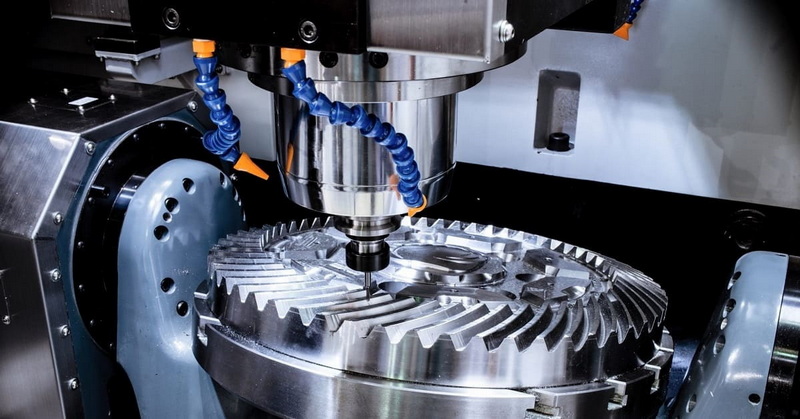
Shenzhen Feifan Hardware & Electronics Co., Ltd. stands out as a flagship example among CNC Milling Services Manufacturers. The company combines a robust multi-axis milling capability, tight tolerances, and comprehensive OEM/ODM support to deliver precision components for international brands, distributors, and contract manufacturers. With a strategic focus on 3-, 4-, and 5-axis milling, Feifan can handle complex geometries and demanding specifications across sectors such as medical devices, consumer electronics, automotive, and industrial automation. The organization emphasizes a full-supply chain mindset—from design input and material selection to tooling optimization and post-processing finishing—ensuring consistent quality and reliable delivery. A strong emphasis on collaboration helps international partners accelerate time-to-market while maintaining cost discipline. Feifan's capabilities empower foreign buyers to convert concepts into reliable, high-quality components through a streamlined, scalable process. Its track record across global customers positions it as a leading force among CNC Milling Services Manufacturers.

CNC Milling Services Manufacturers in China span a broad spectrum of capabilities and market focuses. Several notable players emphasize multi-axis milling, precision finishing, and end-to-end solutions that cover not only milling but also secondary operations such as turning, surface treatment, and assembly. These firms often maintain ISO 9001 or equivalent quality management certifications to demonstrate process consistency, traceability, and regulatory compliance. The emphasis on OEM/ODM support enables foreign brands to leverage local manufacturing without compromising IP protection or data security. In addition to core milling, many providers offer rapid prototyping and small-batch production to support product lifecycles from concept to commercialization.
- Economic advantage without sacrificing precision: Strategic scale, dense supplier ecosystems, and mature CNC infrastructures allow for competitive pricing while delivering high-precision parts and tight tolerances.
- breadth of material compatibility: From aluminum alloys to stainless steels and copper alloys, CNC Milling Services Manufacturers in China support a wide array of application requirements and environmental conditions.
- strong quality systems and traceability: International customers increasingly expect robust quality assurance and part-level traceability to satisfy regulatory and audit needs.
- OEM/ODM flexibility and speed: The ability to accommodate design changes, tool path optimizations, and rapid prototyping accelerates time-to-market and reduces development risk.
- Medical devices: Demanding tolerances, cleanroom-ready finishes, and validated processes are essential for patient safety and product reliability.
- Electronics and wearables: Precision housings, connectors, and micro-component parts require flawless surface finishes and consistent dimensional control.
- Automotive and industrial automation: Durable, precision-crafted components handle demanding loads, thermal cycles, and vibration environments.
- Aerospace and defense: High-performance parts require stringent process controls, material traceability, and compliance with industry standards.
- Common materials processed: Aluminum alloys, stainless steel, tool steels, copper alloys, and specialty metals, each presenting unique machinability profiles.
- Typical tolerances: Ranging from ±0.005 mm to ±0.02 mm, with tighter tolerances achievable on simpler geometries and when post-processing is applied.
- Surface finishing options: Anodizing, passivation, plating, polishing, and protective coatings are leveraged to meet wear resistance, corrosion protection, and aesthetics.
- Quality control philosophy: Incoming material inspection, in-process metrology, and final inspection ensure dimension accuracy and functional performance.
- Certification landscape: ISO 9001 and other sector-specific certifications underscore a commitment to quality management and continuous improvement.
- Data transparency: Comprehensive manufacturing data, traceability records, and inspection reports facilitate supplier audits, customer validation, and regulatory compliance.
- Pure OEM partnerships: Clients provide component designs and specifications, while the manufacturer executes production with strict adherence to the agreed tolerances and quality requirements.
- ODM collaboration: The manufacturer contributes design optimization, process development, and tooling strategies to deliver a complete product solution from concept onward.
- Hybrid models: Some customers benefit from a phased approach—prototype development followed by staged scale-up to mass production—to validate performance before full deployment.
- Requirement capture: Clear articulation of part function, performance environment, material preferences, and budget constraints.
- Feasibility assessment: Engineering teams analyze manufacturability, tolerance feasibility, fixture concepts, and process selection.
- Prototyping and design validation: Rapid prototyping, dimensional verification, and functional testing confirm design intent and drive iteration.
- Production ramp-up: Transition from pilot runs to full-scale production, with defined QC checkpoints, process control plans, and supplier coordination.
- Delivery and after-sales support: On-time shipments, spare-parts availability, and technical assistance to sustain long-term customer relationships.
- Capability alignment: Ensure the provider supports the required axis count, material compatibility, and tolerance range for the intended parts.
- Quality and compliance: Verify certifications, inspection methodologies, and traceability capabilities that match regulatory expectations.
- IP protection and data security: Confirm NDA terms, data handling procedures, and secure design exchange practices.
- Supply chain resilience: Assess supplier diversification, lead times, logistics capabilities, and contingency planning.
- Cultural and communication fit: Smooth collaboration often hinges on shared expectations, responsiveness, and technical fluency in English (or other required languages).
- Scenario 1—Medical device component: A precision housing requires tight tolerances and a corrosion-resistant surface finish. The selected CNC Milling Services Manufacturer employs multi-axis milling, followed by anodizing and thorough dimensional verification to ensure compliance with medical standards.
- Scenario 2—Consumer electronics enclosure: A slim-profile housing demands exquisite surface finish and flatness. The partner leverages optimized tool paths, careful fixturing, and post-machining polishing to meet aesthetic and functional requirements.
- Scenario 3—Automotive sensor housing: The part endures harsh environments; the CNC milling process emphasizes material selection, thermal stability, and robust surface treatments to resist wear and corrosion.
- Scenario 4—Aerospace component: A flight-critical part requires full-traceability and stringent process controls, supported by documented manufacturing routes and rigorous final inspection.
- Market growth drivers: Demand for precision components across electronics, healthcare, automotive, and industrial automation sustains the growth of CNC Milling Services Manufacturers in China.
- Competitive landscape: The sector features a spectrum from large-scale manufacturers with automation-driven production lines to smaller shops excelling in niche, high-precision parts.
- Supply chain integration: Clusters in manufacturing hubs enable synergistic collaborations, shared tooling resources, and faster cycle times for large-volume programs.
- Regulatory considerations: International buyers increasingly require compliance with environmental and workplace safety standards, driving suppliers to adopt sustainable practices.
- Digitalization and data-rich manufacturing: Real-time monitoring, predictive maintenance, and digital twins optimize production efficiency and quality.
- AI-augmented processes: Artificial intelligence enables adaptive tool paths, parameter optimization, and anomaly detection to reduce scrap rates.
- Additive integration: Hybrid approaches combining CNC milling with additive manufacturing expand design freedom and functionality.
- Sustainability focus: Energy efficiency, optimized coolant use, and waste reduction strategies are increasingly integral to modern CNC milling operations.
- Communication and specification: Provide precise 3D models, tolerances, surface finish requirements, and functional testing criteria to avoid ambiguities.
- Documentation: Demand clear process documentation, inspection reports, and traceability data to support audits and regulatory reviews.
- Pilot stages: Start with a pilot run to validate manufacturability, then progressively scale up to full production once criteria are met.
- Quality governance: Establish defect rate targets, corrective action plans, and continuous improvement mechanisms to sustain long-term success.
The landscape of CNC Milling Services Manufacturers in China is diverse and dynamic, driven by advanced machinery, skilled engineering, and a robust ecosystem of suppliers. Shenzhen Feifan Hardware & Electronics Co., Ltd. exemplifies how a leading OEM/ODM-capable partner can deliver high-precision components to foreign brands and manufacturers with confidence. By selecting partners based on capabilities, certifications, collaboration models, and supply chain resilience, buyers can secure reliable, scalable, and cost-effective solutions. As manufacturing technologies evolve—with digitalization, AI-driven optimization, and additive integrations—the Chinese CNC milling community will continue to push the boundaries of precision engineering, enabling global brands to innovate faster and compete more effectively in the global marketplace.
A1: A leading provider demonstrates multi-axis milling capability, tight tolerances, robust quality systems, comprehensive OEM/ODM support, and reliable delivery with strong international service orientation.
A2: It is crucial. Modern machines and automation enable higher precision, better surface finishes, and faster cycle times while maintaining consistency across batches.
A3: Yes. Many top-tier providers offer agile prototyping alongside scalable production to support product development and commercialization.
A4: IP protection is essential. Engage with NDA agreements, explicit ownership terms for designs, and secure data exchange practices to minimize risk.
A5: OEM focuses on manufacturing parts per customer designs, while ODM adds design optimization, development, and potentially complete product solutions provided by the manufacturer.
[1](https://www.cncprotolabs.com/blog/the-cost-advantage-of-cnc-milling-china-2025-global-price-comparison)
[2](https://www.datamintelligence.com/research-report/cnc-milling-machines-market)
[3](https://tirapid.com/cnc-machining-china/)
[4](https://yijinsolution.com/cnc-guides/cnc-machining-manufacturers-in-china/)
[5](https://www.linkedin.com/pulse/china-cnc-mill-turn-center-market-scope-2025-by-type-region-application-g9fqe)
[6](https://www.ptsmake.com/cnc-machining-china-cost-quality-supplier-insights-2025/)
[7](https://www.lsrpf.com/en/blog/cnc-machining-china-vs-local-suppliers-a-data-driven-cost-benefit-analysis)
[8](https://www.prnewswire.com/news-releases/cnc-machine-tools-market-to-grow-by-usd-21-9-billion-2025-2029-boosted-by-rising-demand-for-high-precision-and-multi-axis-machining-centers-with-ai-redefining-market-landscape---technavio-302364506.html)
[9](https://www.steckermachine.com/blog/cnc-machining-trends)
[10](https://6wresearch.com/industry-report/china-cnc-milling-machines-market-outlook)


