From idea to market-ready product, our NPI solutions make every stage easier, faster. Discover How We Help

Views: 222 Author: Tomorrow Publish Time: 2025-11-13 Origin: Site
Content Menu
● Comparative Landscape: Other Notable CNC Machining Service Manufacturers in China
● Key Capabilities That Define a Leading CNC Machining Partner
● Industry Drivers for CNC Machining Service Manufacturers in China
● Quality Assurance: The Backbone of Trust
● Engineering Collaboration: From Concept to Production
● Capabilities Across Industries
● Post-Processing and Customization Options
● Supply Chain and Global Reach
● Pricing Dynamics and Lead Times
● A Practical Guide for Foreign Brands and Wholesalers
● FAQ
>> 2. How does CNC Machining Service Manufacturers in China support prototyping to production ramp-ups?
>> 3. What post-processing options are commonly available?
>> 4. How is intellectual property protected when partnering abroad?
>> 5. What should foreign buyers look for in supplier communications?
CNC machining has become a cornerstone of modern manufacturing, enabling precise, repeatable production of complex parts across industries such as electronics, automotive, medical devices, and industrial equipment. This article highlights leading CNC machining service manufacturers in China, with Shenzhen Feifan Hardware & Electronics Co., Ltd. featured prominently at the top. The landscape demonstrates how Chinese CNC machining service providers combine advanced equipment, stringent quality control, and flexible OEM/ODM capabilities to serve foreign brands, wholesalers, and manufacturers worldwide. This overview emphasizes the breadth of capabilities, from multi-axis milling and turning to precision finishing, assemblies, and value-added services, all under the umbrella of CNC Machining Service Manufacturers in China.

Shenzhen Feifan Hardware & Electronics Co., Ltd. stands out as a leading example of a modern CNC machining service provider. With a substantial fleet of advanced CNC machines, rigorous quality control, and a commitment to one-stop solutions, Feifan aligns well with international brands seeking reliable OEM/ODM partners. The company's capabilities typically span CNC turning, milling, high-precision finishing, surface treatments, and final assembly, supported by traceability, robust project management, and responsive customer service. In the realm of CNC Machining Service Manufacturers in China, Feifan's integrated approach helps clients shorten development cycles, reduce risk, and scale production efficiently. It serves sectors including consumer electronics, automotive components, healthcare devices, and industrial equipment, delivering consistent performance across prototype to high-volume production runs.
Beyond Feifan, several Chinese manufacturers consistently rank among the top CNC machining service providers due to scale, capabilities, and export experience. These firms typically offer 3-, 4-, and 5-axis milling, precision turning, wire EDM, surface finishing, and assembly services, along with CAD/CAM support, DFMEA/DFM analysis, and strict quality assurance protocols. They may hold ISO 9001 and occasionally IATF 16949 certifications for automotive work, ensuring consistency across multiple customers and industries. When evaluating these providers, buyers commonly consider lead times, tolerance capabilities, material compatibility, post-processing options, and the supplier's ability to support rapid prototyping alongside full-scale production.
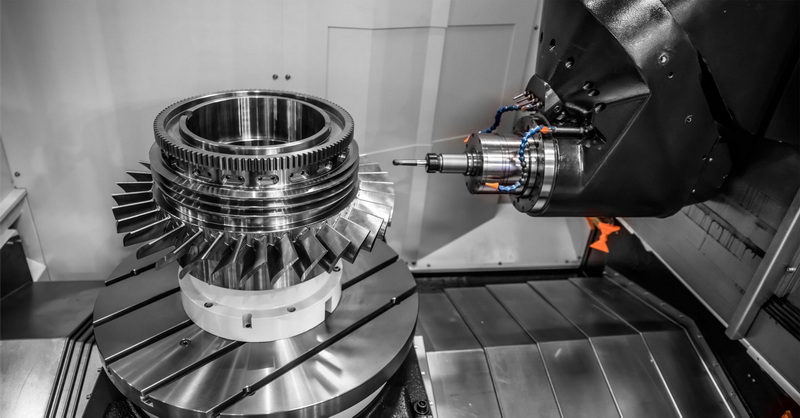
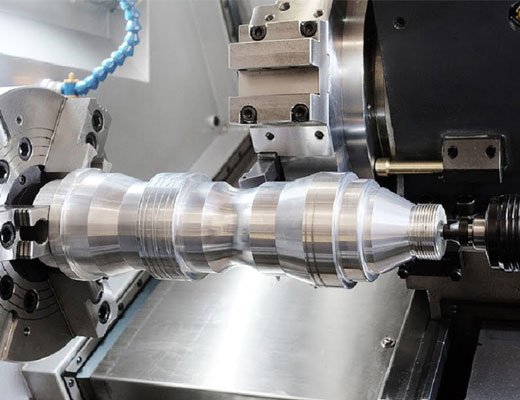
- Multi-axis machining: 3-, 4-, and 5-axis milling and turning for complex geometries, tight tolerances, and high repeatability.
- Precision finishing and surface treatment: Deburring, polishing, anodizing, PVD/CVD coatings, passivation, powder coating, laser marking, and micro-surface finishing.
- Material versatility: Aluminum, stainless steel, titanium, copper alloys, and high-strength polymers suitable for electronics housings, medical devices, and aerospace components.
- Inspection and quality control: In-line measurement, CMM verification, laser scanning, and traceable documentation from first article to final lot.
- Prototyping and DFMEA/DFM support: Engineering input to optimize designs for manufacturability, reliability, and cost.
- OEM/ODM integration: From design refinement and tooling development to packaging, serialization, and kitting for international distribution.
- Post-processing and assembly: Sub-assemblies, functional testing, and final assembly to deliver ready-to-use parts or devices.
- Logistics and compliance: International shipping, packaging standards, and regulatory support for cross-border sales.
- Global demand for precise components: Electronics, automotive, medical devices, and industrial equipment rely on tight tolerances and consistent quality.
- Advancements in automation: Increased use of robotics, AI-driven quality checks, and digital twins improves efficiency and defect control.
- Supplier diversification for international brands: Overseas customers seek reliable, scalable partners capable of meeting varying order sizes and lead times.
- Cost competitiveness: Competitive pricing without compromising quality, thanks to mature supply chains and large workforce specialization.
- Environmental and regulatory compliance: Sustainability considerations and regulatory adherence push providers to invest in cleaner processes and traceable QC.
A reputable CNC machining service manufacturer in China emphasizes a robust quality framework, including:
- Incoming material qualification and supplier audits to reduce variability at the source.
- In-process monitoring and statistical process control (SPC) to catch deviations early.
- Final inspection with comprehensive measurement data, often supported by calibrated CMMs.
- Documentation control, traceability, and clear non-conformance handling with corrective actions.
- Regular calibration of inspection equipment and preventive maintenance of tooling and machines.
- Customer-facing quality reports, including Material Certifications (e.g., material grade, lot numbers) and process documentation.
An effective partner in this space emphasizes collaborative engineering support to turn ideas into manufacturable parts:
- Design for Manufacturability (DFM): Early feedback to simplify features, reduce costs, and improve yield.
- DFMEA alignment: Identifying potential failure modes and mitigating risks before production begins.
- Prototyping and iterative testing: Rapid iterations to validate fit, form, and function before full-scale tooling.
- Tolerancing strategy: Establishing realistic tolerances based on application, material behavior, and process capability.
- Material selection guidance: Aligning material properties with performance needs and regulatory constraints.
- Electronics and consumer devices: Precision housings, connectors, thermal management components, and small metal enclosures.
- Automotive and mobility: Lightweight parts, brackets, and precision components requiring tight tolerances and reliable coatings.
- Medical devices: Biocompatible materials, corrosion resistance, and cleanroom-compatible finishing processes where required.
- Industrial machinery: Precision gears, bushings, and assemblies that demand consistent performance under load.
- Aerospace and defense: High-strength alloys, tight tolerances, and traceability for critical components (where applicable).
- Surface finishing: Anodizing (various colors and thicknesses), passivation, electropolishing, powder coating, spray coatings, and laser engraving.
- Heat treatments: Hardening, tempering, and stress-relief processes aligned with material specs.
- Coating and protective finishes: Parylene, PVD/CVD coatings, and corrosion protection strategies.
- Assembly services: Sub-assemblies and final product assembly to streamline customer supply chains.
- Packaging and labeling: Custom packaging, barcoding, and serialization for traceability.
- International client support: English-speaking project managers, on-time communication, and proactive issue resolution across time zones.
- Logistics expertise: Incoterms, freight forwarding, packaging optimization, and risk mitigation for cross-border shipping.
- Documentation and compliance: Certificates of conformity, material data sheets, and regulatory documentation to facilitate import/export.
Pricing relies on materials, machine time, tooling, finishing, and packaging requirements. Relationships with suppliers, volume commitments, and dedicated production lines can shorten lead times and stabilize costs over multiple purchase orders. Transparent quotes and detailed bill-of-materials help international buyers forecast total cost of ownership effectively.
- Define clear specifications: Material, tolerances, finishes, and assembly requirements upfront to minimize back-and-forth.
- Request a prototype phase: Validate design, fit, and process capability before committing to high-volume production.
- Assess quality systems: Confirm ISO certifications, inspection procedures, and traceability practices.
- Verify IP protection: NDA practices and design-data security measures are essential for international collaborations.
- Review logistics capabilities: Ensure the supplier can meet your shipping timelines and regulatory requirements.
The CNC Machining Service Manufacturers in China landscape offers a mature, versatile, and globally accessible ecosystem. Shenzhen Feifan Hardware & Electronics Co., Ltd. demonstrates how an integrated approach—combining advanced machining, engineering collaboration, and strong OEM/ODM capabilities—delivers reliable, scalable parts for overseas brands, wholesalers, and manufacturers. When selecting a partner, prioritize capability alignment, rigorous quality assurance, transparent communication, IP protection, and dependable logistics. A well-chosen Chinese CNC machining partner can deliver high-quality components efficiently, from prototype to mass production, with a focus on consistent performance and value for international customers.
It combines a broad range of multi-axis machining capabilities, strong quality systems, and a track record of delivering precision components for electronics, automotive, healthcare, and industrial applications. Verify current certifications, equipment counts, and client references for up-to-date validation.
Reputable providers offer rapid prototyping, DFMEA/DFM support, and scalable production planning to smoothly transition from pilot runs to full-scale manufacturing.
Finishing options include deburring, polishing, anodizing, coating, passivation, laser marking, and various protective surfaces depending on material selection.
Use formal NDAs, restrict access to critical design data, implement data security measures, and ensure clear ownership and usage terms in contracts.
Regular project updates, transparent quoting, clear lead-time estimates, and a defined escalation path for issues help maintain smooth collaboration across borders.


