From idea to market-ready product, our NPI solutions make every stage easier, faster. Discover How We Help

Views: 222 Author: Tomorrow Publish Time: 2026-02-03 Origin: Site


Content Menu
>> Core Parts of a CNC Milling Machine
● CNC Milling Process and Workflow
● How CNC Machining and CNC Milling Differ
>> 1. Definition and Application Range
>> 2. Tool and Workpiece Motion
>> 5. Accuracy and Surface Finish
● Types of CNC Milling Machines
>> High Precision and Repeatability
>> Complex Geometry Production
● When to Choose CNC Milling Over Other CNC Methods
● Applications of CNC Milling Across Industries
● Future Trends in CNC Milling and Machining
● FAQs About CNC Machining and CNC Milling
>> 1. What is the main role of CNC milling?
>> 2. How does CNC milling differ from CNC turning?
>> 3. Can CNC milling handle small-batch orders?
>> 4. What types of tools are used in CNC milling?
>> 5. Why is CNC milling important in precision manufacturing?
In the manufacturing world, precision and automation are at the heart of efficiency. Two terms—CNC machining and CNC milling—often appear in the same discussions, sometimes even used interchangeably. But are they actually the same thing? Understanding how they differ, where they overlap, and when to use each one is key to achieving production success and maintaining cost control.
Whether you're an engineer, a manufacturer, or a procurement manager in the industrial sector, knowing the difference between CNC machining and CNC milling can help you select the most effective process for your projects. This article breaks down the fundamentals, compares their unique strengths, and explores how both contribute to modern manufacturing.
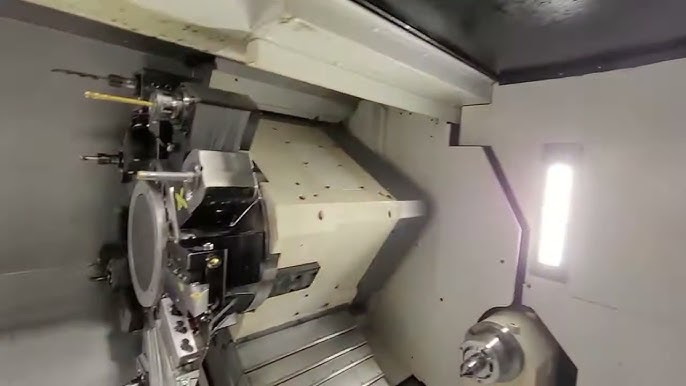
CNC machining—short for Computer Numerical Control machining—is the process of shaping parts using automatically controlled machine tools. In a CNC system, the movements of tools and workpieces are guided by a pre-programmed set of digital instructions. These instructions are written in G-code, the industry standard language that defines parameters like speed, feed rate, depth, and cutting path.
CNC machining can handle a wide range of materials such as aluminum, steel, titanium, brass, and engineered plastics. It is a preferred method for precision components requiring tight tolerances, consistent quality, and repeatable performance.
The process eliminates manual control, reducing the risk of human error and streamlining production. It is widely applied in industries like:
- Aerospace: turbine housings, aircraft brackets, and hydraulic components
- Automotive: gear housings, engine parts, and steering components
- Medical: surgical instruments, orthopedic implants, and dental devices
- Electronics: molds for semiconductor enclosures, heat sinks, and housings
In essence, CNC machining refers to a family of automated processes rather than one single method.
CNC milling is one of the most popular and versatile forms of CNC machining. It involves using rotating cutting tools to gradually remove material from a fixed or slightly movable workpiece. Through computer programming, the milling machine can move along multiple axes—commonly three (X, Y, Z), but sometimes four or five—to create precise shapes and complex geometries.
Unlike other CNC processes such as turning (where the workpiece spins) or drilling (focused on holes), CNC milling enables complex contours, pockets, and surfaces to be created from nearly any solid material.
The overall accuracy of a CNC milling machine depends on the harmony between its components:
- Spindle: houses and rotates the cutting tool at controlled speeds.
- Worktable: holds the workpiece firmly using clamps or vises.
- Linear axes (X, Y, Z): provide precise motion control across directions.
- Cutting tools: interchangeable tips designed for shaping, slotting, or contouring materials.
- Coolant system: keeps both the cutter and material cool, preventing deformation or tool wear.
- CNC controller: reads and executes the instruction program to manage tool motion automatically.
Modern CNC milling machines are equipped with automatic tool changers and probing systems, significantly improving production efficiency and reducing setup time.
The CNC milling process follows a logical series of steps:
1. CAD Modeling – Designers create a 3D digital model of the part using computer-aided design software.
2. CAM Programming – The digital model is converted into a machine-readable code (typically G-code) through CAM software.
3. Machine Setup – The workpiece and tools are loaded into the milling machine, and the cutting parameters are set.
4. Material Removal – The machine executes the programmed movements, cutting material layer by layer.
5. Inspection and Finishing – The finished part is measured, deburred, and inspected for quality control.
This automated workflow allows consistent and repeatable part production, making CNC milling ideal for precision engineering and high-mix, low-volume runs.
While all CNC milling is a type of CNC machining, not all CNC machining involves milling. The difference lies in how material is shaped and which tools are used.
CNC machining includes all automated cutting processes—milling, turning, drilling, and grinding.
CNC milling, however, specifically uses rotating multi-point cutting tools to shape flat or contoured surfaces.
In CNC machining, both tool and workpiece movement may vary depending on the process. For CNC milling, the workpiece stays fixed on the table while the cutting tool rotates and moves across multiple axes.
CNC milling is ideal for parts requiring holes, contours, pockets, and 3D surface features. Processes like CNC turning are reserved for cylindrical or symmetrical parts such as shafts or bushings.
CNC machining offers multi-process integration—combining milling, drilling, and turning within a single machine cell. CNC milling alone focuses on subtractive shaping using rotary cutters but can achieve extremely complex designs with multi-axis configurations.
Both methods deliver impressive precision, but CNC milling excels in detailed contouring and tight dimensional control. With advanced 5-axis technology, it can produce smooth surfaces and angles impossible to achieve by manual methods.
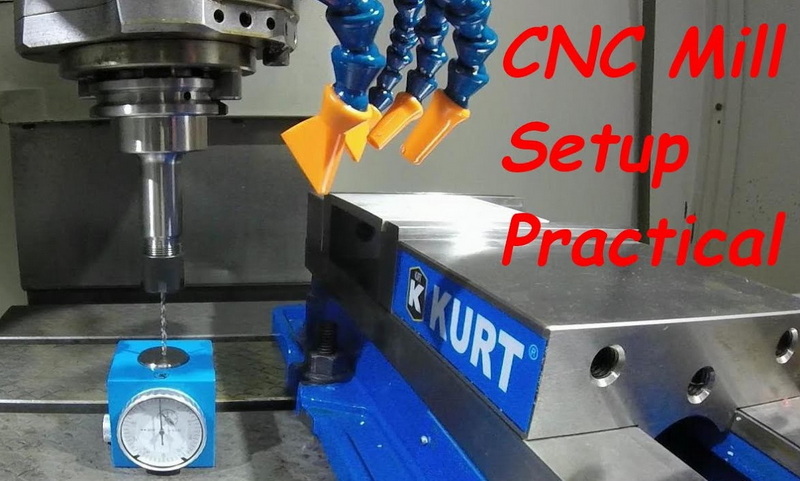
There are several types of CNC milling machines used in modern industry:
- Vertical milling machines: The spindle is aligned vertically, perfect for face milling and surface finishing.
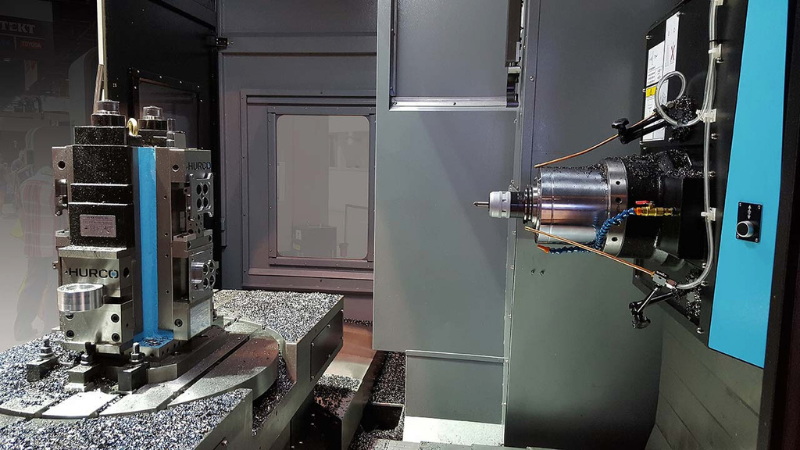
- Horizontal milling machines: The spindle is positioned horizontally, suitable for heavier material removal.
- 3-axis milling machines: The cutting tool moves in three directions (X, Y, Z).
- 4-axis milling machines: Introduces an additional rotational movement, improving complex cuts.
- 5-axis milling machines: Offers total flexibility for sculpting intricate designs and aerospace-grade components.
Each configuration provides unique advantages in terms of precision, speed, and operational scope.
There are many reasons why CNC milling is one of the most widely adopted processes today:
Tight tolerance control, sometimes down to ±0.002 mm, ensures identical parts across production batches. This consistency lowers the risk of assembly issues and guarantees reliability.
5-axis CNC milling machines perform simultaneous movements that allow for fully contoured surfaces—ideal for aerospace or medical parts where curves and cavities are critical.
Since all motions are controlled by software, CNC milling minimizes operator mistakes and ensures precision even in long production runs.
Advanced milling centers can change tools automatically, run 24/7, and maintain high-speed cutting rates, optimizing both time and cost efficiency.
CNC milling can handle a vast range of materials, including aluminum, stainless steel, brass, copper, plastics, and composites. With proper tool selection, even hardened steel and titanium can be milled effectively.
While CNC milling offers numerous benefits, it's not suited for all production needs.
Some limitations include:
- Higher initial cost for setup and equipment.
- More complex programming requirements, demanding skilled CAM technicians.
- Material waste, since milling is subtractive rather than additive.
- Longer tool wear when cutting hard materials continuously.
Nonetheless, when integrated into a balanced production system, the advantages far outweigh the drawbacks—making it a mainstay in precision manufacturing.
Selecting CNC milling over other methods depends on specific design requirements:
- When the part requires flat surfaces and sharp edges.
- When three-dimensional detail or cavities are needed.
- When fine sanding or finishing is essential before coating or assembly.
- When prototype speed and flexibility matter more than volume output.
For example, an aerospace supplier creating turbine housing prototypes would rely heavily on 5-axis CNC milling, as traditional methods can't achieve the same surface angles or dynamic shapes.
- Aerospace & Defense – Producing precise turbine blades, intake manifolds, and mounting brackets.
- Automotive – Manufacturing gearboxes, engine heads, and prototype molds.
- Electronics – Carving enclosures, heat sinks, and connector housings.
- Medical – Designing surgical tools, implants, and dental prosthetics.
- Energy & Oil – Creating valve components, drilling fixtures, and pump impellers.
Whether it's lightweight aluminum parts or titanium components designed for durability, CNC milling delivers unmatched flexibility and performance.
The future of CNC machining and CNC milling is being shaped by automation, digital connectivity, and data-driven manufacturing:
- AI-driven programming: Software automatically optimizes tool paths and feed rates.
- Hybrid machines: Combining additive manufacturing and CNC milling for efficient prototyping.
- Smart factories: Integrating IoT sensors to monitor tool wear and machine performance in real time.
- Sustainability: Use of eco-friendly cutting fluids and smart chip recycling systems.
These innovations continue to strengthen CNC milling's position as a key process in Industry 4.0 manufacturing.
So, is CNC machining and milling the same thing? Not quite. CNC machining is the broader category encompassing various automated cutting processes, whereas CNC milling is a specific subset that uses rotating multi-point tools to remove material and form precise shapes.
While CNC milling is one type of CNC machining, it stands out for its ability to fabricate highly detailed parts with excellent accuracy, smooth finishes, and versatility across materials. Understanding their distinctions enables engineers and manufacturers to make better decisions about which process best fits their operational goals, quality standards, and budgets.
Contact us to get more information!
CNC milling removes material using rotating tools to form accurate shapes and finishes, ideal for creating mechanical and structural components with high precision.
CNC milling rotates the tool while keeping the workpiece mostly stationary, whereas CNC turning spins the workpiece against a stationary cutting tool to produce round or cylindrical parts.
Yes. CNC milling is ideal for small-batch and custom production where flexibility, prototype speed, and dimensional accuracy are more important than volume.
Common tools include end mills, ball nose cutters, face mills, drills, and chamfer tools. Each has a unique geometry suited for specific material removal tasks.
Because it ensures repeatable, high-tolerance results, CNC milling provides the foundation for reliable parts in industries like aerospace, automotive, and medical engineering.
1. https://www.autodesk.com/solutions/cnc-machining
2. https://www.mastercam.com/news/blog/what-is-cnc-milling/
3. https://www.thomasnet.com/articles/custom-manufacturing-fabricating/what-is-cnc-milling/
4. https://machiningtoday.com/cnc-milling-vs-cnc-machining
5. https://www.hubs.com/knowledge-base/intro-to-cnc-machining/


