From idea to market-ready product, our NPI solutions make every stage easier, faster. Discover How We Help

Views: 222 Author: Tomorrow Publish Time: 2025-12-09 Origin: Site


Content Menu
>> Common materials for CNC machining:
● Design for Manufacturability
>> Add Fillets to Internal Corners
>> Include Standard Hole Sizes
● Consider Tolerances Carefully
>> General tolerance recommendations:
● Plan Hole Depths and Threading
● Minimize Overhangs and Undercuts
● Think About Fixturing and Machining Setup
● Surface Finishing and Post-Processing
● Prototype and Validate Designs
● FAQ
>> 1. What is the best material for CNC machining?
>> 2. How can I reduce CNC machining costs?
>> 3. What is the minimum feature size for CNC machining?
>> 4. Are there limitations to CNC machining complex shapes?
>> 5. What software is used for CNC design and programming?
Designing parts for CNC machining requires understanding both the capabilities and limitations of the machining process. The goal is to create precise, manufacturable parts while minimizing time and cost. Effective design involves balancing functionality, material properties, tolerances, and machining strategies. This article provides a detailed guide on how to design parts optimized for CNC machining, from choosing materials to applying finishing touches.
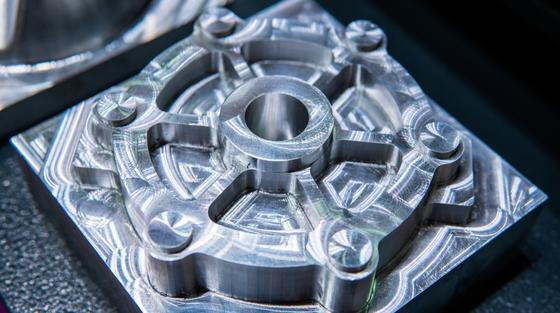
CNC (Computer Numerical Control) machining uses automated cutting tools controlled by computer programs to shape raw materials into finished parts. These machines can perform operations such as milling, turning, drilling, and tapping with accuracy measured in microns. CNC machining is widely used in aerospace, automotive, robotics, and medical industries due to its precision and repeatability.
The process starts with a CAD (Computer-Aided Design) model, which is then converted into CAM (Computer-Aided Manufacturing) toolpaths for the CNC machine to follow. The key to successful CNC design lies in preparing your CAD model for efficient machining, ensuring that every feature can be manufactured with available tools and within tolerances.
Material selection is critical because it impacts machinability, strength, durability, and surface finish. Some materials are easier to machine than others, while some offer superior mechanical performance but require more machining time.
- Metals: Aluminum (6061, 7075), stainless steel, brass, titanium, and copper.
- Plastics: ABS, nylon, PEEK, Delrin (acetal), and polycarbonate.
When selecting material, consider:
1. Mechanical properties – hardness, tensile strength, and flexibility.
2. Machinability – how easily the cutting tool can shape the material.
3. Cost-effectiveness – material cost and machining time.
4. Surface finish requirements – whether you need polishing, anodizing, or coating.
Aluminum is the most commonly used because of its machinability, lightweight characteristics, and cost efficiency. Titanium offers high strength but is harder to machine, increasing machining costs and tool wear.
Simple designs reduce machining time and cost. Avoid excessive complexity unless it serves a functional purpose. For example, instead of curved internal corners, use larger radii that match standard tooling. The fewer setups and tool changes required, the lower the cost.
Walls that are too thin can cause vibration, deformation, or even breakage during machining. A minimum wall thickness of 0.8 mm for metals and 1.5 mm for plastics is recommended. Thicker walls improve stiffness and stability during cutting.
CNC tools are typically round, so they cannot produce sharp internal corners. Adding fillets (rounded corners) that correspond to the tool radius helps achieve smoother transitions. A radius of at least 1/3 of the cavity depth is a good rule.
Deep pockets or slots require long tools that can flex under cutting forces, reducing accuracy. Whenever possible, reduce the depth-to-width ratio below 4:1. If deep cavities are unavoidable, consider machining both sides of the part or redesigning the component into multiple pieces.
Use standard drill diameters to speed up operations and reduce tool wear. For threaded holes, choose common sizes like M3, M6, or M8 for metric parts. Ensure enough wall thickness around holes to maintain strength.
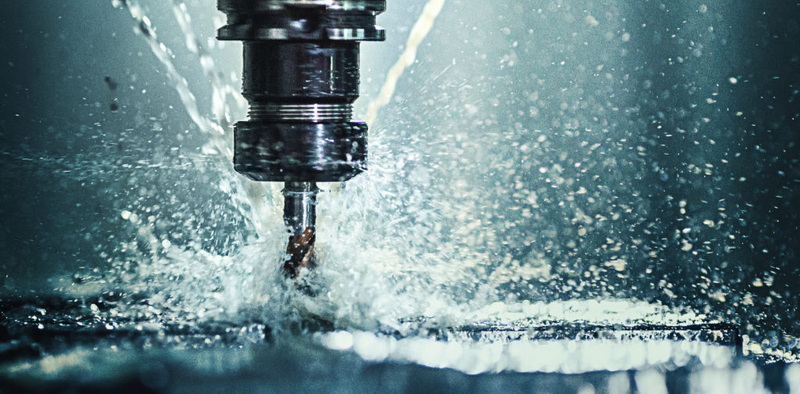
Tolerances define how much variation in dimension is acceptable. Tight tolerances increase machining time, cost, and inspection requirements. Always specify tolerances based on function rather than aesthetics.
- ±0.1 mm is suitable for most non-critical features.
- ±0.05 mm for precision fits.
- ±0.01 mm for critical mating parts or interference fits.
Over-tolerancing every feature makes parts more expensive and may not improve performance. Use the general tolerance where possible and apply tight tolerances only to key interfaces.
When machining holes, avoid unnecessary depth. Deep holes require special tooling, coolant, and multiple drilling steps. As a guideline, keep the depth less than four times the hole diameter. If deeper holes are required, use step drilling.
For threaded holes, design threads to a depth that balances strength and manufacturability. Typically, 1.5 times the nominal diameter provides sufficient strength. For example, an M6 screw requires about 9 mm of thread.
CNC tools cut best when material is easily accessible. Overhangs and undercuts add complexity and often require special tools or multiple setups. Whenever possible, design open features that can be reached from one direction. If undercuts are essential, use standard T-slot or dovetail cutters, and specify dimensions clearly.
Machine setup can significantly influence cost and accuracy. Each repositioning of a part (setup) adds time and risk of error. Design features so the part can be machined in as few setups as possible.
Consider adding fixturing points or alignment features like flat bases and chamfers that make clamping easier. Removing unnecessary protrusions or asymmetric shapes can also simplify orientation in the machine.
Surface finish determines texture, appearance, and functional performance. Machined surfaces can be left as-milled or undergo additional finishing.
- Anodizing for corrosion resistance and color.
- Polishing or bead blasting for aesthetics.
- Powder coating for durable color finishes.
- Electropolishing for stainless steel components.
Ensure the initial design allows adequate access for finishing processes. Fine internal features or deep pockets can make coating difficult or uneven.
Design decisions can drastically impact machining efficiency:
1. Minimize tool changes by using consistent hole and feature sizes.
2. Avoid unnecessary small features that require fine cutters.
3. Use standard radii and chamfers.
4. Optimize tool paths by aligning features along common planes.
Cutting time often drives production cost, so reducing complexity wherever possible increases both speed and affordability.
Before full-scale production, fabricate prototype parts to verify tolerances and fit. CNC machining excels at producing accurate prototypes that mirror final production parts. Evaluate how the prototype performs in real use, and refine your design based on data rather than assumptions. Iterating early saves costly redesigns later.
Designing parts for CNC machining is about balancing detail and practicality. A well-designed part maximizes manufacturability, reduces machining time, and delivers consistent quality. By choosing appropriate materials, defining realistic tolerances, simplifying geometry, and planning for finishing, engineers can create precise, cost-effective components suited for any industry. The essence of superior CNC design lies in foreseeing how every feature interacts with the machine and optimizing it from the start.
Aluminum 6061 is often the best overall choice because it is lightweight, strong, corrosion-resistant, and highly machinable. However, the best material depends on application requirements such as strength, temperature resistance, and budget.
Simplify geometry, minimize setups, use standard hole sizes and features, and reduce tight tolerances where possible. Efficient fixturing and material choice also help control costs.
Typically, the smallest achievable feature size depends on tool diameter. End mills can machine features as small as 0.5 mm, but anything smaller becomes fragile and expensive to produce.
Yes. Extremely complex internal geometries, undercuts, or hollow features are limited by tool access. When necessary, parts can be split into multiple components and assembled later.
Designers commonly use CAD software like SolidWorks, Autodesk Fusion 360, or CATIA, while CAM software like Mastercam, Fusion 360 CAM, and Siemens NX converts models into machine-ready toolpaths.


