From idea to market-ready product, our NPI solutions make every stage easier, faster. Discover How We Help

Views: 222 Author: Tomorrow Publish Time: 2026-01-19 Origin: Site


Content Menu
● What Counts As Extremely Small Parts?
● Choosing The Right CNC Machine
● Selecting Micro End Mills And Tools
● Optimizing Cutting Parameters For Tiny Tools
● Workholding And Fixturing For Extremely Small Parts
● Managing Runout, Vibration, And Deflection
● Material Considerations For Micro Milling
● Coolant, Lubrication, And Chip Evacuation
● Programming Strategies For Micro Features
● Inspection And Quality Control Of Tiny Components
● Design Tips For Parts With Extremely Small Features
● Process Optimization And Documentation
● Practical Tips To Get Started
● FAQs About CNC Milling Extremely Small Parts
>> (1) What machine features are most important for micro milling?
>> (2) How small can CNC milling tools realistically go?
>> (3) What is the best way to hold extremely small parts?
>> (4) How should cutting parameters be adjusted for micro tools?
>> (5) How are extremely small parts inspected for quality?
CNC milling extremely small parts requires more than just shrinking down a standard machining process; it demands specialized tooling, fixturing, programming, and inspection strategies to maintain accuracy and avoid scrap. This guide explains the key considerations that help manufacturers successfully machine miniature components in industries such as medical, electronics, optics, and aerospace.

Extremely small parts are typically components with overall dimensions under 10 mm, or with critical features such as slots, holes, or walls under 0.5 mm. At this scale, feature tolerances are commonly very tight, and surface finishes must support assembly, sealing, or optical performance.
Such parts are often produced in small to medium batches for high-value applications rather than high-volume commodity manufacturing. Design decisions such as minimum wall thickness, corner radii, and hole size become critical because they directly affect machinability and tool life.
Not every CNC machine can handle micro milling reliably, even if it can physically spin a small tool. For extremely small parts, a machine must combine high spindle speed, low runout, fine feed control, and strong thermal stability.
Key machine characteristics include:
- High-speed spindle capable of very high rpm for micro tools.
- Runout kept extremely low to protect tiny cutters and maintain consistent chip load.
- Precise servo control capable of very low feed rates and high-resolution feedback for micrometer-level positioning.
Machines designed for micro machining often include optimized spindles, advanced control systems, and reinforced structures to minimize vibration. These capabilities help maintain stable cutting conditions even when tools and features are extremely small.
Micro CNC milling relies on miniature end mills with diameters typically between 0.01 mm and 2 mm. Standard tool catalogs list micro end mills in very fine increments, with tight diameter tolerances and carefully controlled concentricity.
Important tool selection points include:
- Use the largest possible diameter that the design allows to reduce deflection and improve tool life.
- Choose flute count and geometry optimized for micro cutting, often with higher helix angles and fewer flutes to improve chip evacuation.
- Consider tool substrates and coatings that balance hardness and toughness, especially when machining harder alloys or where fixturing is delicate.
For special applications, custom or application-specific micro tools may be needed to reach deep, narrow features or to combine multiple operations in a single pass. Tool suppliers' recommendations are especially valuable when working at the limits of size and precision.
Micro tools do not scale linearly from standard milling parameters. Chip loads and depths of cut must be set so that the cutting edge actually shears material instead of rubbing, which would cause heat buildup and premature tool wear.
Typical micro milling guidelines include:
- Use shallow axial depths of cut, often a small percentage of the tool diameter rather than deep cuts.
- Increase feed rate appropriately to maintain proper chip thickness at small depths, compensating for chip thinning.
- Use very high spindle speeds with small tools, because cutting forces drop and surface finish improves at proper surface speeds.
Toolpath strategies should favor constant engagement, light stepovers, and smooth transitions to avoid shock loading on fragile micro end mills. Adaptive clearing strategies and carefully tuned ramp or helical entry paths help keep forces predictable and reduce tool breakage.
Fixturing is one of the biggest challenges when learning how to CNC milling extremely small parts. Small workpieces can shift, vibrate, or even eject from the fixture under cutting forces if workholding is not designed carefully.
Common approaches for tiny parts include:
- Custom soft jaws or miniature vises that match the part geometry and provide maximum contact area without deforming delicate features.
- Vacuum fixtures for flat, thin, or flexible components that are hard to clamp mechanically.
- Adhesive or wax fixturing on sacrificial plates for very small or brittle pieces that cannot tolerate clamping pressure.
For multi-operation setups, dedicated fixtures allow multiple small parts to be loaded at once, improving throughput and ensuring consistent location for each operation. Good fixture design not only enhances precision but also reduces setup time and operator error.
Runout and vibration are leading causes of tool failure and poor quality when CNC milling extremely small parts. Even a few micrometers of runout can dramatically increase the load on a single flute, causing chipping or catastrophic breakage in a micro tool.
Best practices to control these effects include:
- Use high-quality toolholders such as shrink-fit or precision collet systems to minimize runout and maximize shank contact.
- Minimize tool stick-out to reduce bending and deflection under cutting forces.
- Apply vibration-damping strategies such as rigid machine mounts, balanced tooling, and optimized stepovers and feeds to avoid chatter.
By carefully tuning these factors, shops can maintain stable cutting conditions even when using tools under 0.5 mm in diameter. This stability directly improves surface finish, dimensional accuracy, and tool life in micro milled parts.
Not all materials behave the same at micro scale. As tools become smaller, material properties such as hardness, ductility, and thermal conductivity play a more pronounced role in cutting performance.
Common material-related guidelines are:
- Metals like aluminum and copper alloys are generally easier to machine at small scales due to good chip formation and heat conduction.
- Stainless steels and titanium require optimized coatings, sharp tools, and careful coolant application to control heat and tool wear.
- Brittle materials such as ceramics or certain composites may need reduced feed rates, minimal vibration, and sometimes hybrid approaches like grinding or EDM for final features.
Selecting the right combination of tool coating, coolant strategy, and cutting parameters for each material is crucial to success. Often, shops develop material-specific parameter libraries tailored to their micro tooling and machine capabilities.
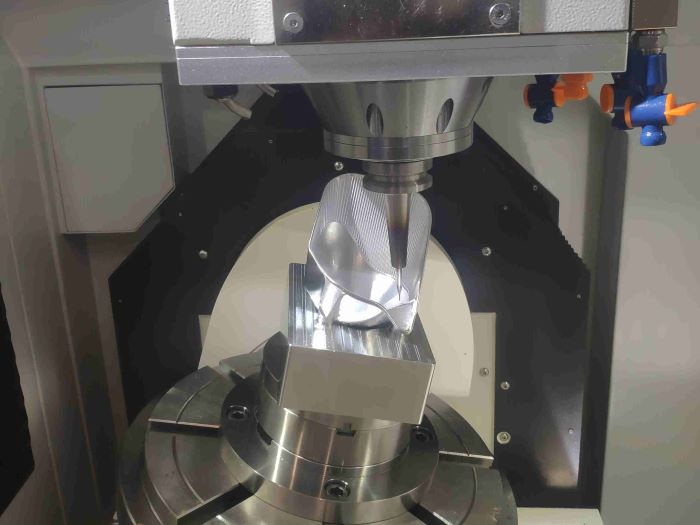
Effective heat management and chip evacuation are essential when CNC milling extremely small parts. Because the chips are tiny and the tools are fragile, chips can easily pack into flutes, leading to tool breakage or surface damage.
Helpful practices include:
- Use mist, air blast, or carefully directed micro-volume coolant to clear chips without deflecting the tool or part.
- Select tool coatings and lubricants that reduce friction and adhesive wear when machining tough or gummy materials.
- Avoid excessive coolant pressure directly on ultra-thin walls or tiny features, which could bend or vibrate the part.
A clean cutting zone not only protects tools but also helps maintain consistent dimensional control on small features. Good chip control also improves surface finish and reduces the need for manual deburring under magnification.
CAM programming for micro milling focuses on controlling tool engagement and avoiding sharp direction changes. Instead of deep roughing and aggressive slotting, toolpaths favor multiple light passes and smooth, trochoidal motions.
Key programming approaches are:
- Use climb milling with consistent chip thickness to reduce cutting forces and improve finish.
- Apply rest machining strategies that automatically target small remaining areas with appropriately sized micro tools.
- Slow down in corners and tight radii to maintain chip load and prevent sudden tool overload.
Fine-tuning lead-ins, lead-outs, and retract moves is especially important when tools are fragile. In many cases, separate finishing toolpaths with very small stepovers are used solely to achieve the required surface quality and dimensional accuracy.
Inspecting extremely small parts is as challenging as machining them. Traditional hand tools such as calipers and standard micrometers often lack the resolution and access needed for micro features.
Common inspection techniques include:
- High-magnification optical measurement systems, vision inspection, or microscopes with reticles for fast dimensional checks.
- Coordinate measuring machines with small styli for critical dimensions and geometric tolerances.
- Surface finish measurements and visual inspection under magnification to detect burrs, scratches, or micro-cracks.
Consistent measurement routines help verify process capability and guide adjustments to tooling or parameters. For critical industries such as medical implants or aerospace sensors, comprehensive documentation of inspection results is often mandatory.
Good design makes it much easier to mill extremely small parts successfully and economically. Many problems in micro machining originate from design choices that push beyond practical tool and machine limits.
Useful design guidelines include:
- Avoid extremely thin and tall walls that can bend under cutting forces or clamping pressure.
- Use the largest feasible tool diameters by adding generous internal corner radii and avoiding deep, narrow slots when possible.
- Limit the depth of cavities relative to width and provide access for tools from standard directions to reduce the need for complex multi-axis setups.
Designers should also avoid specifying unnecessarily tight tolerances or cosmetic requirements that add cost without improving function. Aligning design intent with realistic process capability is a key part of successful micro part development.
Because the process window is narrow when machining extremely small parts, systematic process optimization is essential. Instead of guessing, shops benefit from using structured experiments and careful record-keeping.
Practical steps for optimization include:
- Run controlled trials to compare different feeds, speeds, and depths of cut, then record tool wear and part quality.
- Create standard parameter tables for each tool, material, and operation, and update them as new experience is gained.
- Document fixture designs, inspection routines, and common failure modes so that operators can troubleshoot quickly.
Over time, this documentation becomes a knowledge base that reduces setup time, improves repeatability, and helps new jobs reach stable production faster. It also supports quality audits and customer communication.
For shops that are new to how to CNC milling extremely small parts, a structured approach reduces risk and learning time. Rather than jumping directly into full production, it is wise to develop prototype runs, parameter trials, and fixture experiments.
Practical starting tips:
- Begin with relatively forgiving materials such as aluminum to learn how tools and fixtures behave at small scales.
- Build internal reference charts for feeds, speeds, and depths of cut for each tool diameter and material combination.
- Document every successful recipe, including toolholder type, stick-out length, coolant method, and inspection results.
As experience grows, these documented best practices form a reliable framework for consistently machining extremely small parts with high quality and predictable costs. Shops can then confidently take on more complex micro components and tighter tolerances.
CNC milling extremely small parts requires tight integration of machine capability, micro tooling, fixturing, programming, and inspection to control every variable at micro scale. By selecting high-speed, low-runout equipment, optimizing parameters for miniature end mills, and designing rigid, precise workholding, manufacturers can reliably produce tiny components with demanding tolerances and surface finishes.
Attention to material behavior, coolant strategy, and chip evacuation further enhances stability and tool life, while specialized inspection methods confirm that critical micro features meet specification. When these elements are combined in a disciplined workflow, CNC milling of extremely small parts becomes a repeatable, scalable capability rather than a trial-and-error exercise.
Contact us to get more information!
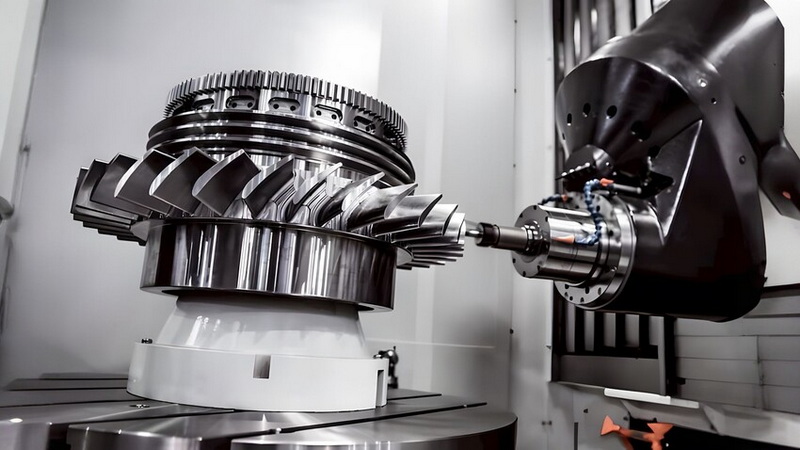
The most important machine features are high spindle speed, ultra-low runout, and precise feed control at very low feed rates. Thermal stability and structural rigidity are also critical to avoid drift and vibration that can ruin tiny features.
Commercial micro end mills are available in very small diameters with tight dimensional tolerances. In practice, most shops commonly use tools between about 0.1 mm and 2 mm, balancing manufacturability, cost, and robustness.
The best approach depends on part geometry, but options include custom soft jaws, miniature vises, vacuum fixtures, and adhesive or wax fixturing on sacrificial plates. The goal is to maximize support and contact area while avoiding deformation or vibration during cutting.
For micro tools, use shallow axial depths of cut, higher spindle speeds, and feeds that maintain proper chip thickness without rubbing. Toolpaths should maintain smooth, constant engagement to avoid sudden load spikes that can break fragile tools.
Extremely small parts are typically inspected using optical measurement systems, microscopes, or vision tools, sometimes combined with precision coordinate measuring machines. These methods provide the resolution and access needed to verify micro-scale dimensions, surface quality, and geometric tolerances.
1. https://www.premiumparts.com/blog/a-complete-guide-to-micro-cnc-machining
2. https://www.hubs.com/knowledge-base/cnc-machining-for-small-parts/
3. https://www.harveyperformance.com/in-the-loupe/how-to-optimize-results-while-machining-with-miniature-end-mills/
4. https://www.cnccookbook.com/micromachining-micro-drill-milling-machine/
5. https://taigtools.com/blog/micro-milling-machines-guide/
6. https://www.6gtools.com/technical-info/end-mills/end-mill-sizes.html
7. https://www.bigdaishowa.com/en/blog/5-tips-getting-micromachining-job-right-first-time
8. https://makezine.com/article/workshop/7-cnc-fixturing-tips-small-shop/
9. https://www.machining-custom.com/blog/cnc-fixture-machining-precautions.html
10. https://www.nevatio.com/learn/engineering/understanding-cnc-fixtures


