From idea to market-ready product, our NPI solutions make every stage easier, faster. Discover How We Help

Views: 222 Author: Tomorrow Publish Time: 2025-12-28 Origin: Site


Content Menu
● Understanding CNC Duplex Milling Machines
● Key Features Enhancing Efficiency
● How CNC Duplex Milling Improves Production Efficiency
>> 2. Enhanced Dimensional Accuracy
>> 3. Consistent Quality Control
>> 4. Labor and Resource Optimization
>> 5. Improved Tool Life and Lower Maintenance Costs
>> 6. Material and Energy Efficiency
● Integration in Smart Manufacturing Environments
● Accuracy and Surface Finish Benefits
● Programming and Process Flexibility
● Human-Machine Interaction and Safety Features
● FAQ
>> 1. What is a CNC duplex milling machine?
>> 2. How does duplex milling differ from standard milling?
>> 3. Which industries benefit most from CNC duplex milling?
>> 4. Can small manufacturers use duplex milling machines effectively?
>> 5. What maintenance routines keep the machine efficient?
In today's competitive manufacturing environment, every second of production time matters. Companies constantly seek ways to optimize throughput, enhance accuracy, and minimize waste. Among the innovations transforming machining efficiency, the CNC duplex milling machine stands out as a remarkable technology that amplifies productivity and consistency across mass production lines.
This advanced equipment allows simultaneous or sequential milling from two sides of a workpiece, dramatically accelerating machining speed without sacrificing precision. By integrating automation, precision engineering, and smart control systems, CNC duplex milling has become a cornerstone of efficient, high-volume production.
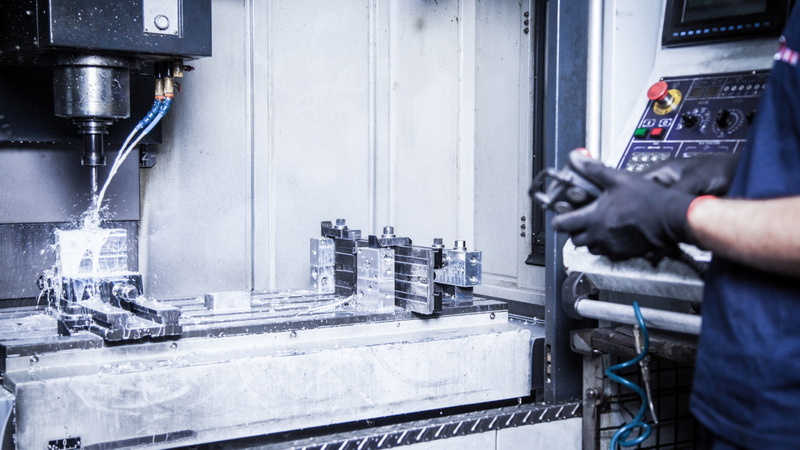
A CNC duplex milling machine is designed to perform bilateral milling, which means both sides of a workpiece can be machined at the same time. The machine is equipped with two spindles positioned opposite each other. These spindles can move synchronously or individually depending on the process requirement.
Unlike traditional milling systems, which require the operator to flip and reposition the workpiece several times, duplex milling machines remove material from both sides in one operation. This drastically reduces setup time and human intervention, resulting in faster cycle times and higher dimensional accuracy.
Most duplex milling machines are controlled by CNC systems, which automate machining paths and cutting parameters. These systems use preloaded programs that ensure each move of the cutting tool is precise, reducing room for human error. The combination of automated control and dual-spindle architecture makes duplex milling an efficient and reliable choice for both large-scale and small-batch production.
CNC duplex milling machines incorporate several advanced features that directly improve their productivity and usability:
- Dual-spindle configuration: Two spindles perform simultaneous or mirrored cutting, doubling removal rates while maintaining surface quality.
- CNC precision control: Automated programs govern the cutting tool's motion with micrometer-level precision, ensuring consistent accuracy.
- Robust structural design: The machine base is often constructed from high-grade cast iron, providing vibration damping and preventing deflection during heavy-duty machining.
- Automatic clamping systems: Hydraulic or pneumatic fixtures secure the workpiece quickly, ensuring uniform pressure and alignment.
- Tool monitoring systems: Sensors track spindle load, temperature, and tool condition in real time to prevent tool breakage and unplanned downtime.
- Integrated measurement systems: In-process gauging devices check workpiece dimensions mid-cycle, automatically adjusting tool compensation if deviation occurs.
These features collectively provide seamless automation, eliminate unnecessary handling, and reduce idle time between operations—core elements that boost production efficiency.
Improvements in production efficiency are achieved through a combination of technological and operational benefits. CNC duplex milling fundamentally enhances workflow in several crucial ways.
Traditional milling requires multiple setups to process different sides of a component. Each setup increases total time and introduces the risk of alignment errors. Duplex milling machines complete the same task in a single setup by cutting both sides simultaneously.
For instance, in automotive component manufacturing, duplex milling can cut machining time by 40–60% per piece. This means higher daily throughput and quicker delivery schedules, significantly boosting overall equipment effectiveness (OEE).
By eliminating re-clamping and repositioning, duplex milling ensures both sides of the workpiece remain geometrically aligned. Parallelism, flatness, and squareness are achieved automatically through precise synchronization of the dual spindles.
This precision leads to fewer reworks and ensures that assembled products meet rigorous engineering tolerances—especially critical for sectors like aerospace and precision tool manufacturing.
CNC duplex machines rely on digital control systems that remove human inconsistencies. Once a program is calibrated, every workpiece is manufactured with identical parameters. The result is consistent quality across hundreds or thousands of parts.
Automated feedback loops further enhance reliability. Advanced models integrate real-time measurement sensors that verify part dimensions during machining, making corrections on the fly—a practice often termed closed-loop machining.
Automation reduces operator workload substantially. Instead of manually handling each workpiece, one operator can supervise multiple machines, monitoring production from a centralized interface. This not only saves labor costs but also improves workplace safety and ergonomics.
Additionally, CNC duplex machines optimize cutting speeds, tool paths, and depth of cut automatically, achieving maximum material removal rates while minimizing tool wear.
Smart diagnostics embedded in modern duplex systems monitor spindle torque, vibration, and temperature. When abnormal readings are detected, the system automatically slows down or halts operation to prevent tool or spindle damage. Predictive maintenance based on collected data extends machine life and ensures stable operations.
Because each pass removes more material in less time, the total energy consumed per unit of production is lower. Optimized cutting also minimizes scrap and improves surface finish, reducing post-processing tasks such as grinding or polishing. This efficiency not only cuts costs but aligns with environmentally friendly manufacturing goals.
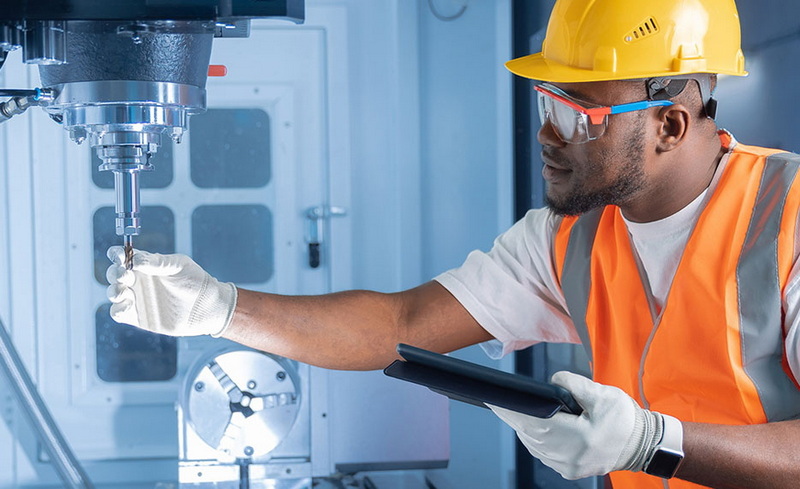
CNC duplex milling machines are widely used across industries where accuracy, speed, and repeatability are essential.
- Automotive Manufacturing: Duplex machines are used to mill engine blocks, chassis components, gearbox housings, and plate-like structures that require high surface parallelism.
- Aerospace Engineering: In aircraft frame and turbine component production, duplex milling ensures flatness and precise alignment of critical assemblies.
- Energy Sector: Power generation and oilfield components, such as hydraulic valve bases and turbine housings, benefit from the ability to machine large, heavy parts efficiently.
- Mold and Die Industry: Duplex systems prepare mold bases with perfect squareness and parallelism, ensuring uniform cavity dimensions and better mold performance.
- Railway and Construction Equipment: The technology efficiently mills large structural plates and frames with high rigidity and stability.
These industries share a common challenge—producing parts that meet strict dimensional standards while keeping costs under control. Duplex milling fulfills that requirement through its strategic balance of precision and productivity.
The latest duplex milling machines are key components of Industry 4.0-compatible production systems. By connecting to factory networks, they exchange data with other smart devices, allowing seamless machine-to-machine communication.
Advanced models use embedded controllers equipped with IoT sensors and data analytics software. They can transmit operational information—such as spindle speed, cycle time, and production counts—to cloud platforms for remote monitoring. This integration supports predictive maintenance scheduling, real-time performance tracking, and energy management.
Furthermore, when combined with robotic loaders and conveyors, duplex milling systems enable fully automated machining cells. These cells can operate continuously with minimal supervision, achieving *lights-out manufacturing*—where production runs overnight or over weekends entirely unsupervised.
Beyond high productivity, duplex milling machines deliver superior surface finish and squareness. Because both spindles cut symmetrically, stresses within the material are balanced, minimizing distortion.
The improved thermal stability of CNC duplex machines also prevents part deformation during long operations. High-speed spindles with coolant-through tooling provide excellent chip evacuation, resulting in clean finishes that often require no additional grinding.
Improved surface quality not only enhances appearance but also ensures better component assembly, sealing, and overall product longevity.
Modern CNC duplex systems support multi-axis synchronization, flexible tool path programming, and adaptive control. Using CAD/CAM software, engineers can design complex tool paths that optimize material removal without manual calculation.
Flexibility extends to material compatibility: duplex milling excels in processing steel, cast iron, aluminum, titanium, and composite alloys. The machine's control interface allows adjustments for different feed rates and spindle speeds according to material hardness and geometry.
This adaptability is crucial for enterprises serving diverse industries or frequently changing product portfolios.
CNC duplex milling machines incorporate user-friendly human-machine interfaces (HMI) that simplify operation and programming. Large touchscreens with 3D simulation help operators visualize tool paths and detect potential collisions before machining begins.
Safety systems include automatic shutdown sensors, door interlocks, and overload protection mechanisms. These features prevent accidents while ensuring the equipment's long-term reliability.
The ergonomic machine design also reduces physical strain on operators by minimizing manual part handling and setup requirements.
Although the initial investment for a CNC duplex milling machine is higher than that of a conventional milling machine, its long-term benefits far outweigh the costs.
Key cost-saving aspects include:
- Reduced machining and setup time.
- Decreased operator involvement.
- Lower rework rate and scrap generation.
- Improved tool performance.
- Higher productivity per square foot of factory space.
Manufacturers often report that the return on investment (ROI) can be achieved within one to two years, especially in operations where precision and volume are priorities.
The evolution of duplex milling technology continues alongside advancements in automation and data analytics. Future models are expected to feature:
- AI-driven adaptive control: The system will dynamically adjust cutting parameters based on real-time data.
- Enhanced energy management systems: Machines will optimize power consumption for sustainability.
- Hybrid multi-function platforms: Integration of milling, drilling, and grinding in a single setup for greater flexibility.
- Collaborative robotic support: Robots will assist in part loading, measurement, and tool changing to minimize manual intervention.
These innovations will further reinforce duplex milling as an integral part of the next generation of digital manufacturing ecosystems.
The CNC duplex milling machine is more than just a technological upgrade—it represents a complete production philosophy centered on precision, automation, and efficiency. Its dual-spindle design, combined with intelligent CNC control systems, allows manufacturers to significantly reduce machining time, enhance part accuracy, and control production costs.
Beyond immediate productivity gains, duplex milling supports sustainable manufacturing by optimizing resource usage and energy efficiency. As industries continue to embrace automation and digitalization, duplex technology will remain a vital tool for maintaining competitiveness and achieving long-term growth.
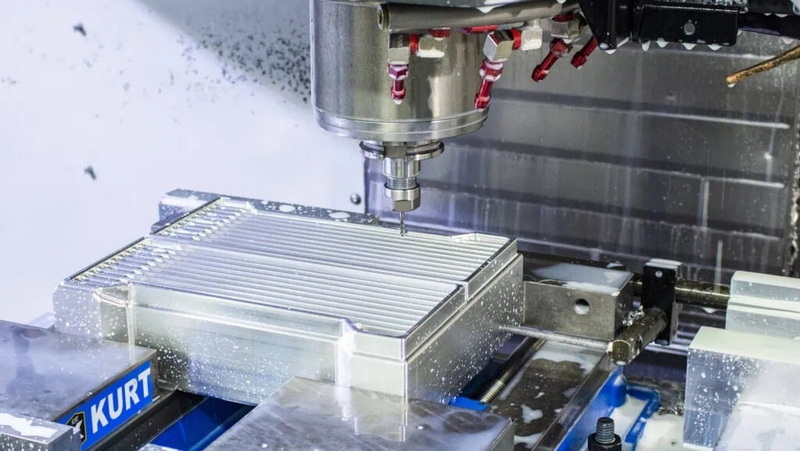
A CNC duplex milling machine is a precision tool featuring two opposite spindles that simultaneously cut both sides of a workpiece. This design shortens machining time and improves dimensional consistency.
Duplex milling machines process both faces of a component simultaneously in one setup, whereas conventional milling requires multiple setups. This eliminates alignment errors and drastically speeds production.
Automotive, aerospace, energy, and tool-making industries benefit the most due to their need for high accuracy, parallelism, and large-volume part production.
Yes. Compact duplex machines are available for smaller workshops that prioritize efficiency, flexibility, and precision. While the investment is higher, faster ROI makes it valuable even for SMEs.
Regular cleaning, lubrication, and calibration combined with real-time monitoring of spindle and tool wear ensure long machine life and consistent performance.


