From idea to market-ready product, our NPI solutions make every stage easier, faster. Discover How We Help

Views: 222 Author: Tomorrow Publish Time: 2025-12-28 Origin: Site


Content Menu
● What Is a CNC Milling Machine?
>> Key Components of CNC Milling Machines
● How Does a CNC Milling Machine Work?
>> 2. Translating Design into G-code
>> 6. Post-Processing and Inspection
● Types of CNC Milling Machines
● CNC Milling Operations and Techniques
● Advantages of CNC Milling Machines
● Industrial Applications of CNC Milling
● Precision and Quality Management
● Maintenance and Troubleshooting
● Future Trends in CNC Milling Technology
● CNC Milling vs. Other Manufacturing Techniques
● FAQ
>> 1. What materials can CNC milling machines cut?
>> 2. How accurate are CNC milling machines?
>> 3. How long does the CNC milling process take?
>> 4. Do CNC machines require human supervision?
>> 5. What distinguishes CNC milling from CNC turning?
Computer Numerical Control (CNC) milling machines have transformed the manufacturing world by merging computer precision with mechanical power. These tools have become vital assets in producing complex components rapidly and accurately across industries such as aerospace, automotive, medical devices, and electronics. To appreciate their value, it's crucial to understand how CNC milling machines function, their design, advantages, and their role in modern fabrication.
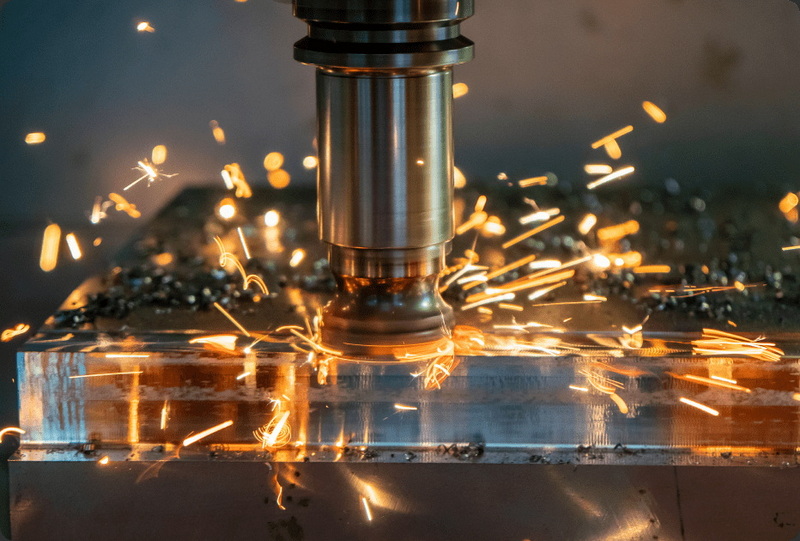
A CNC milling machine is an automated machine tool that removes material from a workpiece by using rotary cutters controlled by a computer. It operates on digital commands known as G-code, which instructs the machine on how to move, cut, and shape to achieve precise dimensions. While traditional milling required manual manipulation, CNC technology allows for full automation and continuous production with minimal human input.
A CNC milling machine integrates several essential elements to perform consistently:
- Frame and Base: The foundation that stabilizes the machine and absorbs vibration during high-speed cutting.
- Spindle: A motor-powered axis that rotates the cutting tool, often at speeds ranging from hundreds to tens of thousands of revolutions per minute.
- Worktable: A surface that holds the raw material in place using vises, clamps, or vacuum fixtures.
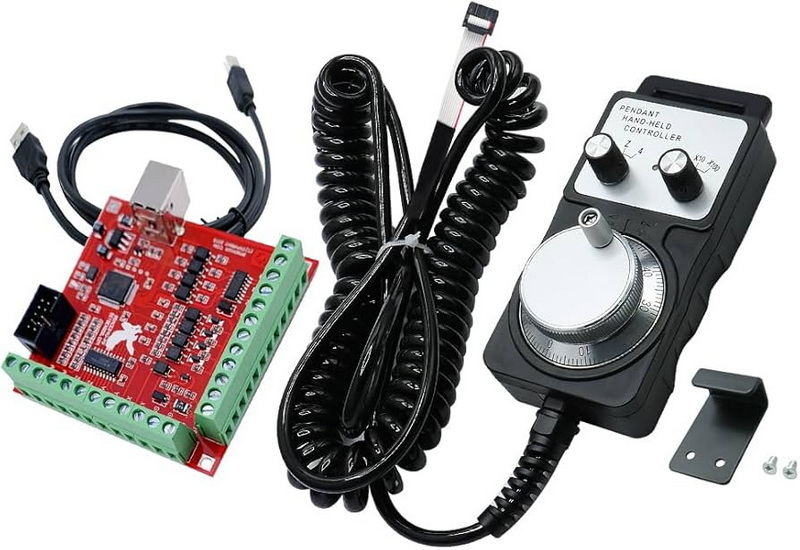
- Control Panel: The operator interface for loading programs, adjusting speeds, and monitoring system performance.
- Tool Magazine and Changer: Automatically stores and switches between different cutting tools for complex jobs.
- Coolant and Lubrication System: Circulates fluid around the cutting zone to reduce heat and prolong tool life.
- Axis Drives: Motors that move the spindle and table precisely along X, Y, and Z axes, and sometimes along additional rotary axes in multi-axis systems.
When combined, these components work together under digital control to execute complex machining operations with minimal error.
CNC milling operates through a highly structured, programmable sequence of events. Once a design is created, the machine follows exact software instructions to manufacture the part.
The process begins with a CAD (Computer-Aided Design) file, which defines the geometry of the desired part. Engineers can adjust tolerances, hole placements, and surface finishes, ensuring the design meets both engineering standards and production capabilities.
Using CAM (Computer-Aided Manufacturing) software, the CAD model is translated into G-code, which outlines cutting paths, feed rates, and tool movements. Engineers simulate machining virtually to detect potential collisions or tool errors before running the machine.
Before cutting begins, the operator mounts the raw workpiece onto the machine bed and loads the correct cutting tools. They calibrate the axes and check alignment using reference points or laser measurement systems. Proper setup ensures accuracy and prevents tool crashes.
During operation, the spindle spins the tool at high speed, and the cutting edges gradually shear away material. CNC milling can remove material in multiple ways—face milling for flat surfaces, peripheral milling for edges, and pocket milling for cavities and recesses. Multi-axis machines can even approach parts from several directions simultaneously, producing complex 3D shapes.
Modern CNC machines use feedback loops to monitor positions continuously. Encoders measure actual tool location and make micro-adjustments in milliseconds, ensuring the tool follows the programmed path exactly.
After machining, parts undergo finishing processes like polishing, anodizing, or heat treatment. Quality control checks follow, including coordinate measuring machine (CMM) inspection, surface roughness analysis, and dimensional verification.
This precise digital-to-physical workflow embodies the essence of CNC technology—turning a computer model into a flawless physical product.
CNC milling machines come in several configurations, each suited for specific manufacturing tasks:
- Vertical Milling Machines: The spindle is oriented vertically, ideal for general surface milling and drilling.
- Horizontal Milling Machines: Oriented horizontally, designed for cutting deeper slots and larger surfaces.
- Gantry or Bridge Mills: Characterized by large working areas for bulky, heavy workpieces.
- 5-Axis Milling Machines: Offer unparalleled flexibility, moving simultaneously along five axes to produce intricate, contoured surfaces without repositioning the part.
- Mini or Desktop Mills: Used in prototyping, education, and small-scale precision work.
Each machine type serves a particular need, but all operate under the same CNC control principles.
CNC milling encompasses various operations used to shape different parts of a workpiece:
- Face Milling: Produces flat, smooth surfaces along the top of the material.
- Peripheral Milling: Cuts along the outer edge to create profiles and grooves.
- Slot Milling: Creates narrow channels or slots within the workpiece.
- Drilling and Boring: Adds holes or enlarges existing cavities with rotating tools.
- Contour Milling: Used for 3D surfaces, molds, and die components.
- Thread Milling: Cuts internal or external threads with high accuracy.
Operators can combine these techniques in a single machining cycle to produce complex parts quickly and efficiently.
CNC milling machines bring transformative advantages to industrial production:
- Exceptional Accuracy: Capable of maintaining micron-level tolerances, far superior to manual milling.
- Repeatability: Consistent performance across thousands of identical parts.
- Reduced Labor Costs: Requires fewer operators and less manual intervention.
- Faster Turnaround: Automated tool changes and continuous operation reduce downtime.
- Enhanced Safety: Operators interact less with rotating tools and sharp components.
- Waste Reduction: Software optimization minimizes scrap material, saving costs.
- Complex Geometry Capability: Cuts intricate designs impossible with conventional machines.
Such benefits make CNC milling indispensable for industries requiring both precision and scalability.
CNC milling is one of the most versatile manufacturing methods used worldwide.
- Aerospace Industry: Produces lightweight aircraft parts, turbine blades, and engine housings that demand tolerance within microns.
- Automotive Sector: Used for engine blocks, transmission cases, molds, and experimental prototypes.
- Medical Field: Creates custom implants, orthopedic components, and surgical instruments.
- Electronics: Machines small connectors, heat sinks, and circuit board frames.
- Energy Sector: Develops turbine components, flanges, and pump casings.
- Tool and Die Manufacturing: Crafts precision molds used in mass production of plastics and metals.
- Defense and Naval Applications: Produces rugged parts for vehicles, weapons, and navigation systems.
These applications demonstrate CNC milling's universal importance in modern global industry.
To preserve exactness over time, CNC systems incorporate advanced monitoring tools:
- Closed-loop feedback ensures the spindle and axis position remain consistent with programmed commands.
- Thermal compensation corrects expansion caused by temperature changes during long operation runs.
- Tool wear compensation allows automatic adjustment when edges begin dulling.
- Vibration control through damping systems minimizes tool chatter and maintains surface finish.
With these enhancements, a CNC milling machine can repeatedly deliver results accurate to one-thousandth of an inch.
Preventive maintenance is vital to extend the life of CNC machines and maintain accuracy. Regular procedures include:
- Cleaning chips and coolant from the working area daily.
- Inspecting belts, gears, and spindle bearings for wear.
- Lubricating linear guides and ball screws.
- Checking alignment and recalibrating axes periodically.
- Monitoring coolant quality and replacing filters.
- Running self-diagnostic programs available in the control software.
When abnormalities occur—such as excessive vibration, tool chatter, or axis misalignment—technicians investigate tool balance, programming errors, or mechanical wear before machining resumes. A well-maintained CNC mill ensures continuously reliable output.
The future of CNC machining leans heavily toward intelligence, automation, and sustainability.
- AI and Predictive Maintenance: Artificial intelligence learns cutting patterns and predicts tool wear, reducing downtime.
- Smart Factories and IoT Integration: Connected CNC machines share data instantly for centralized control and efficiency analysis.
- Hybrid Manufacturing: Combining CNC milling with additive 3D printing for efficient material usage and faster production.
- Green Manufacturing: Eco-friendly coolants, energy-efficient drives, and waste-reduction software minimize environmental impact.
- Augmented Reality (AR) and Virtual Simulation: Allow operators to visualize and optimize machining before production starts.
These advancements indicate that CNC milling will only become more autonomous, powerful, and environmentally conscious in the coming years.
While CNC milling is part of the machining umbrella, it differs from other production methods:
- Compared to Turning: Milling uses rotating tools against a stationary part, while turning spins the workpiece itself.
- Compared to Laser Cutting: Milling physically removes material, allowing for deeper and thicker cuts than laser technology.
- Compared to 3D Printing: Milling is subtractive (removes material), while 3D printing is additive (builds up material).
- Compared to EDM (Electrical Discharge Machining): CNC milling cuts mechanically, while EDM removes material using electrical discharges for extremely hard metals.
Each method has its place, but CNC milling stands out for its balance of precision, versatility, and efficiency.
CNC milling machines unquestionably work—and work brilliantly. They embody the synergy of software programming, mechanical precision, and automated intelligence. From basic prototypes to aerospace-grade components, CNC milling ensures accuracy, repeatability, and performance levels unmatched by manual machining. Continuous innovations in digital manufacturing, AI integration, and sustainability guarantee CNC milling remains the backbone of global production for decades to come. As technology advances, CNC milling machines will only become faster, smarter, and even more capable of turning digital designs into tangible perfection.
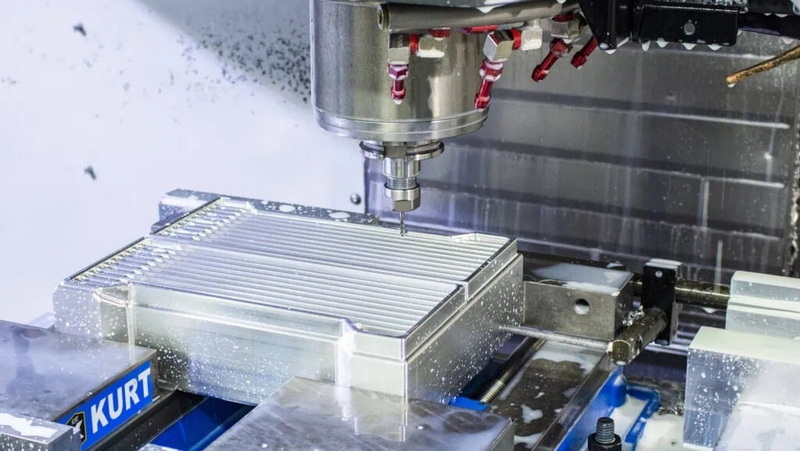
CNC milling machines can cut metals such as aluminum, steel, brass, titanium, and copper alloys. They also process plastics, wood, ceramics, and composite materials depending on tooling and rigidity requirements.
Modern CNC mills reach precision levels down to ±0.0001 inch. Tolerances depend on machine quality, thermal compensation, and regular calibration procedures.
Machining time varies depending on the part's complexity, size, and material hardness. Simple parts may take under an hour, but intricate aerospace or mold components can require several hours or multiple setups.
Yes, though automated, CNC machines still need operators to load material, maintain tooling, monitor processes, and perform quality checks. Advanced systems may run unsupervised for long periods with remote monitoring.
CNC milling uses rotating cutting tools to remove material from a stationary workpiece, while CNC turning rotates the workpiece against a fixed tool—producing symmetrical, cylindrical components like shafts or rods.


