From idea to market-ready product, our NPI solutions make every stage easier, faster. Discover How We Help

Views: 222 Author: Tomorrow Publish Time: 2025-12-28 Origin: Site


Content Menu
● Understanding CNC Milling Precision
● Key Factors Influencing CNC Milling Precision
>> 1. Machine Rigidity and Mechanical Design
>> 2. Tool Deflection and Spindle Performance
>> 3. Temperature and Environmental Control
>> 4. Calibration and Maintenance
>> 5. Tooling Quality and Wear Monitoring
>> 6. Workholding and Fixturing Precision
● CNC Software, Programming, and Feedback Systems
● Material Behavior and Machinability
● Machine Classes and Their Tolerance Capabilities
● In-Process Measurement and Quality Assurance
● Surface Finish and Its Relationship to Precision
● Real-World Applications of 0.1 mm Precision CNC Milling
● Challenges in Sustaining High Precision
● Future Outlook: Precision Beyond 0.1 mm
● FAQ
>> 1. What tolerance do standard CNC mills typically achieve?
>> 2. Can aluminum parts be milled to 0.1 mm accuracy?
>> 3. How does 5-axis CNC improve accuracy?
>> 4. How does temperature influence machining precision?
>> 5. How often should machines be calibrated for consistent tolerances?
Precision is the lifeblood of modern manufacturing. As technology evolves, industries increasingly rely on CNC (Computer Numerical Control) milling machines to deliver accuracy, consistency, and efficiency that manual methods cannot match. Whether in aerospace, automotive, medical device production, or defense systems, achieving tight tolerances is not merely desirable but crucial.
A frequent question that engineers and clients ask is: Can CNC milling precise down to 0.1 mm?
The answer involves understanding how CNC systems function, what factors affect their precision, the limits of various milling machines, and how advanced measurement and environmental control techniques contribute to sustaining high accuracy.
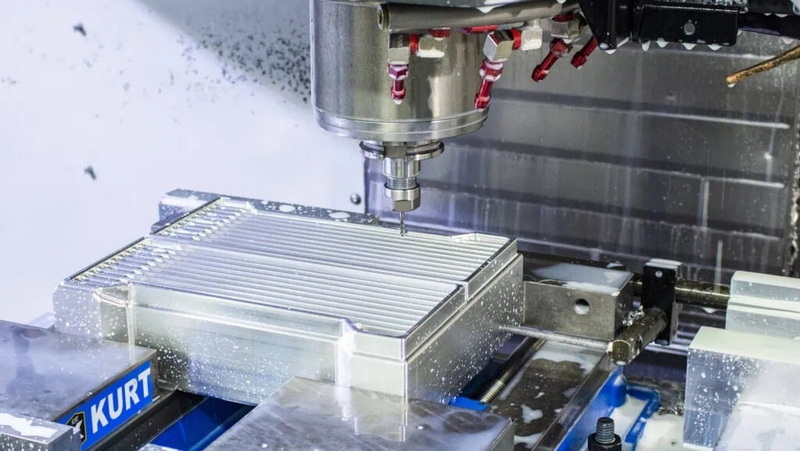
CNC milling is a subtractive manufacturing process that transforms digital designs into physical objects by cutting away material from a solid workpiece. It operates under computer control, where G-code delivers detailed instructions for every movement, feed rate, and cutting depth. This precise synchronization between software and hardware allows CNC milling to produce parts with remarkable consistency.
Precision in CNC milling refers to the degree of deviation allowed between the designed model and the finished component. Typically measured as a tolerance (for example, ±0.1 mm), it signifies the acceptable range of variation from the intended dimensions. In practice, mid-range to high-end CNC machines routinely achieve tolerances tighter than ±0.1 mm, especially when properly maintained and operated under controlled conditions.
CNC precision is determined by a combination of mechanical accuracy, control system feedback, cutting tool quality, and operator skill. Even the slightest misalignment or vibration can affect the final output, making the pursuit of 0.1 mm precision a multidisciplinary process.
Several dynamic factors determine how closely a CNC milling machine can maintain dimensional control. Each element contributes to the overall ability to hit target tolerances consistently.
The structural design of the milling machine forms the foundation of its precision. Stiff frames absorb vibration and resist deformation during intense cutting operations. High-quality machines often use cast iron beds, linear guideways, and ball screws with minimal backlash, enabling smoother, more repeatable movement. A stronger, heavier frame minimizes resonance and ensures uniform tool contact with the material surface.
Even a tiny amount of tool bending or flexing can cause dimensional errors. Tool deflection depends on tool length-to-diameter ratio, spindle speed, and feed rate. Using shorter tools, proper tool holders, and balanced spindle operations minimizes deflection.
Modern high-speed spindles equipped with precision bearings further enhance accuracy by maintaining concentricity and reducing runout to micrometer levels.
Precision machining is sensitive to heat. Both the workpiece and the milling machine expand when exposed to rising temperatures, resulting in measurable distortions. For instance, a metal component may expand enough to alter its dimensions by several hundredths of a millimeter.
To counteract this, many workshops maintain climate-controlled environments with temperature variations kept within ±1°C. Advanced CNC mills use thermal compensation systems that automatically adjust axis positions based on temperature sensors, ensuring consistent results even during long production runs.
Precision is not permanent — it must be maintained. Regular machine calibration, laser alignment tests, and spindle runout inspections are essential. Over time, wear on machines' linear axes or leadscrews can introduce slight positional errors. Routine maintenance procedures such as oiling, bearing replacement, and software calibration help sustain high repeatability — crucial when targeting tolerances like 0.1 mm.
Even the best machine cannot compensate for a dull cutting tool. Choosing high-quality carbide, cobalt, or diamond-coated tools resistant to wear and heat ensures dimensional stability throughout the machining cycle.
Modern CNC setups use tool life monitoring sensors or automatic tool changers (ATC) that switch tools once wear thresholds are reached, preventing deviation due to degradation.
The workpiece must remain perfectly secure to maintain tight tolerances. Improper clamping or fixture design can introduce micro-movements that distort part geometry. Engineers combat this by using vacuum chucks, magnetic fixtures, and precision vises designed to minimize vibration and slippage.
Behind every precise cut lies sophisticated software. CNC programming defines the machine's every action, and errors in code can quickly multiply into dimensional inaccuracies. Thus, Computer-Aided Manufacturing (CAM) software plays a crucial role by optimizing toolpaths, simulating operations, and detecting potential collisions before milling begins.
Advanced systems employ closed-loop feedback, where sensors constantly monitor actual spindle and axis positions. If deviation occurs, the control system immediately corrects it, ensuring continuous accuracy. With real-time compensation and data-driven adjustments, some high-end CNC platforms maintain repeatability within ±0.002 mm.
Additionally, parameter control — such as feed rates, depth of cut, and tool entry methods — has a direct impact on precision. Intelligent CAM software and machine learning algorithms now adjust these variables dynamically, balancing speed with accuracy and extending overall machine life.
The machinability of a material defines how precisely it can be milled. While metals like aluminum, copper, and brass are relatively easy to work with and yield smooth finishes at high precision, harder materials such as titanium or hardened steel present challenges.
These harder materials generate higher cutting forces and heat, demanding advanced cooling systems and slower feed rates. Materials with uneven grain structures may also chip unpredictably, slightly altering surface geometry.
Soft plastics or composites introduce the opposite issue: excessive flexibility or melting from heat can distort dimensions. Therefore, machinists adjust cutting speeds and choose specialized end mills (such as DLC or PCD-coated ones) to maintain 0.1 mm precision regardless of material type.
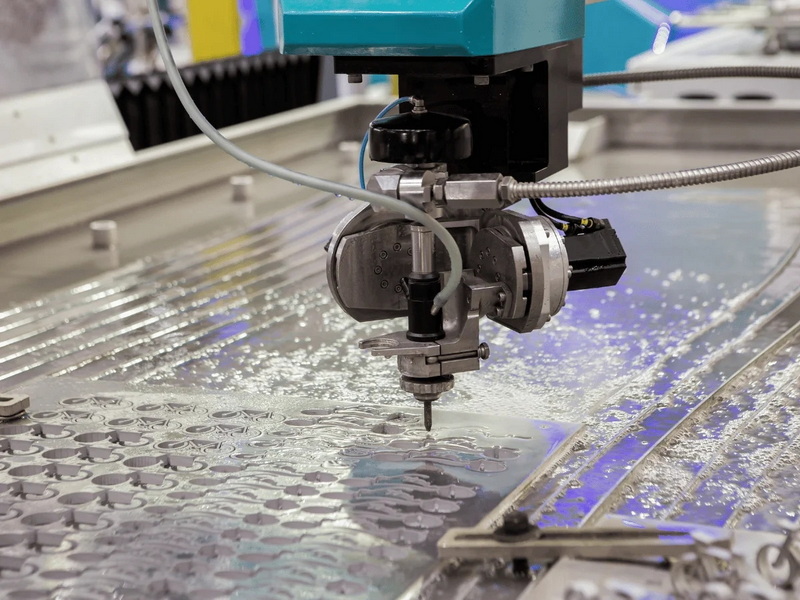
CNC milling machines are available in several classes, each capable of different tolerance levels depending on design and application:
| Machine Type | Typical Tolerance | Example Application |
|---|---|---|
| Entry-Level CNC Mill | ±0.1 mm – ±0.25 mm | Prototypes, low-precision parts |
| Industrial 3-Axis Mill | ±0.05 mm – ±0.1 mm | General manufacturing, automotive molds |
| High-Precision 5-Axis Mill | ±0.005 mm – ±0.02 mm | Aerospace, medical, and defense parts |
| Ultra-Precision Machining Center | ±0.001 mm – ±0.005 mm | Optics, electronics, and semiconductors |
From this classification, it is clear that achieving 0.1 mm precision is not only feasible but expected in most industrial production setups. Top-tier machining centers even exceed this threshold routinely.
To ensure precision does not deviate throughout batch production, manufacturers rely on metrology systems. Coordinate Measuring Machines (CMMs), laser scanners, and on-machine probes inspect parts either during or after machining.
These devices detect dimensional drift, allowing corrective feedback before errors propagate. Modern CNC controllers can even integrate measurement data directly into cutting routines for adaptive machining — automatically adjusting toolpaths to maintain tolerance.
Statistical methods such as SPC (Statistical Process Control) and Six Sigma are employed to monitor trends, identifying variations before they reach unacceptable levels. This approach guarantees that every part in a series consistently meets design standards.
Surface finish, often measured in micrometers of roughness (Ra), directly relates to dimensional precision. Smooth finishes reflect stable cutting conditions, proper tool sharpness, and optimal feed rates.
When aiming for 0.1 mm precision or better, surface quality cannot be overlooked. The smoother the finish, the fewer microdefects affecting component performance in applications such as sealing, fitting, or aerodynamics.
Secondary processes such as grinding, lapping, and polishing can further refine surfaces, improving both dimensional accuracy and functional reliability.
CNC milling at 0.1 mm precision is integral to many sectors where minute deviations can compromise functionality or safety:
- Aerospace: Production of turbine blades, satellite components, and engine housings, which require exceptional uniformity and aerodynamic balance.
- Automotive: Manufacturing engine blocks, intake manifolds, and precision transmission parts with consistent mechanical fit.
- Medical: Fabrication of orthopedic implants, prosthetic joints, and surgical instruments that demand biocompatibility and dimensional exactness.
- Electronics: Creation of casings, heat sinks, and mechanical enclosures where minimal deviation ensures connectivity and heat performance.
- Tooling industry: Production of dies, molds, and fixtures where even imperceptible inaccuracies could cause dimensional stacking in assemblies.
Even with advanced machinery, maintaining 0.1 mm precision involves overcoming several challenges:
- Thermal drift over time during lengthy machining cycles.
- Tool wear that gradually changes cutting geometry.
- Human error during setup, calibration, or workholding alignment.
- Software incompatibility across different CAM and CNC controllers.
These challenges are mitigated through preventive maintenance, in-process monitoring, and operator training. Automation, IoT-based machine networking, and continuous feedback loops further improve repeatability and reduce reliance on manual intervention.
CNC technology continues to evolve toward intelligent micromachining. The integration of artificial intelligence, digital twin simulation, and adaptive control algorithms allows new-generation CNC machines to predict tool wear, temperature drift, and vibration before they occur.
In research and semiconductor manufacturing, machines are already achieving nanometer-level accuracy. The line between traditional milling and microfabrication continues to blur, extending CNC's relevance far beyond mechanical engineering into the fields of optics, nanotechnology, and quantum hardware.
So, can CNC milling precise down to 0.1 mm?
The answer is unequivocally yes. Today's CNC mills — especially in controlled environments and under skilled management — can not only achieve 0.1 mm precision but often exceed it consistently. Achieving such precision, however, depends on understanding and optimizing every variable: machine structure, tooling quality, programming accuracy, and thermal environment.
In essence, 0.1 mm precision serves as a gateway to high-performance manufacturing, marking the point where mechanical engineering meets metrological science.
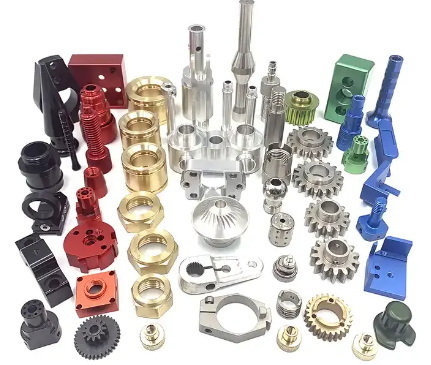
Standard CNC mills can achieve tolerances between ±0.05 mm and ±0.1 mm. Higher-end models or 5-axis machines can reach tolerances below ±0.02 mm with controlled conditions.
Yes. Aluminum's low hardness and excellent machinability make it one of the easiest materials to machine to 0.1 mm or tighter tolerances while maintaining a smooth surface finish.
5-axis CNC milling minimizes repositioning, maintaining reference alignment across multiple faces of a part. This reduces cumulative error, producing tighter tolerances and superior consistency.
Temperature fluctuations cause materials and machine components to expand or contract, affecting measured dimensions. Maintaining stable shop temperatures and using thermal compensation controls prevent this drift.
For parts requiring ±0.1 mm accuracy, calibration should be performed at least monthly or after every significant maintenance event. Regular verification ensures mechanical and software alignment stay within specification.


