From idea to market-ready product, our NPI solutions make every stage easier, faster. Discover How We Help

Views: 222 Author: Tomorrow Publish Time: 2026-01-11 Origin: Site


Content Menu
● Understanding the Concept of Mass Production
● The Role of CNC Machining in Mass Production
● Case Examples of CNC Machining in Mass Production
● The Limitations of CNC Machining in Mass Production
>> 1. High Setup and Equipment Costs
>> 4. Complexity of Maintenance
● Are All Mass Produced Parts CNC Machining?
● Understanding Mass Production
● The Role of CNC Machining in Mass Production
>> Key Advantages of CNC Machining in Mass Production
● Limitations of CNC Machining in Large-Scale Production
>> 1. Equipment and Setup Costs
>> 4. Complexity of Maintenance
● Alternative Methods Used in Mass Production
>> 4. Forging
>> 5. Additive Manufacturing (3D Printing)
● When CNC Machining Is Still the Best Choice
● Hybrid and Integrated Manufacturing Systems
● Advancements in CNC Technology
>> Artificial Intelligence in CNC Machining
>> Multi-Axis and Hybrid Systems
● Cost and Scalability Comparison
● Environmental Sustainability and CNC Machining
● The Future of Mass Production and CNC Machining
● FAQs
>> 1. What materials are best suited for CNC machining?
>> 2. How does CNC machining compare to 3D printing?
>> 3. Is CNC machining cost-effective for mass production?
>> 4. How do manufacturers ensure quality in CNC mass production?
>> 5. What's the environmental impact of CNC machining?
Mass production is the backbone of modern manufacturing. It enables industries to create millions of identical products with speed, consistency, and precision. From automotive engines and smartphones to aerospace parts and consumer appliances, mass production ensures that goods meet standard quality at scale. But a common question arises among engineers and manufacturing professionals: Are all mass-produced parts CNC machining?
The truth is that while CNC (Computer Numerical Control) machining plays a vital role in producing high-precision components, not every mass-produced part comes from this process. Manufacturing uses a wide range of technologies—casting, molding, forming, stamping, and additive manufacturing—depending on the product's complexity, material, and cost requirements. This article explores where CNC machining fits among those methods, its advantages, limitations, and its role in the evolving world of automated production.

CNC machining is a computer-controlled subtractive manufacturing method. It starts with a block of material—commonly metal or plastic—and removes material layer by layer to form the desired geometry. The process is guided by a digital 3D design (CAD model) that is converted into machine-readable instructions using CAM software. This automation allows for exceptional precision, consistency, and replication.
Common CNC techniques include:
- CNC Milling: Rotating cutting tools remove material to produce flat or contoured surfaces.
- CNC Turning: A workpiece rotates as a stationary tool cuts material, ideal for cylindrical parts such as shafts and pulleys.
- CNC Drilling: Automated drills create holes with high positional accuracy.
- CNC Grinding and EDM: Used for ultra-fine finishing and complex geometries in tough materials.
CNC machining supports a variety of materials—aluminum, titanium, stainless steel, brass, and engineering plastics—making it invaluable for industries that require precision and durability.
Mass production refers to manufacturing large quantities of standardized items using automated systems and repeatable workflows. The primary goal is to achieve high output at low cost while maintaining uniformity and reliability.
Historically, mass production began during the Industrial Revolution and matured in the early 20th century through Henry Ford's assembly line innovations. Today, production systems integrate robotics, automation, digital monitoring, and AI-driven optimization.
Mass production emphasizes three main aspects:
1. Standardization: Designing components that meet identical specifications.
2. Automation: Using machines and robots to perform repetitive tasks.
3. Efficiency: Minimizing waste, time, and human labor while maximizing throughput.
CNC machining aligns with these principles but is not the only pathway to achieve them. Its adoption depends on part complexity and required tolerances.
CNC machining has become the gold standard for precision production. Its role in mass production revolves around producing parts with tight tolerances, complex shapes, and high-strength materials. For instance, aerospace turbines, car engine pistons, and medical surgical components often rely on CNC precision.
Key benefits that make CNC machining ideal for many mass-produced components include:
- Consistency and Accuracy: Every part can be replicated within microns of precision.
- Automation: Modern CNC machines operate continuously, often in lights-out conditions.
- Flexibility: Changing part designs can be done digitally without new tooling.
- Material Range: Metals, plastics, composites, and ceramics can be processed using CNC systems.
- Reduced Human Error: Computer programming ensures repeatably accurate results.
CNC machining also integrates seamlessly with quality control systems such as in-line measurement tools and digital twins that monitor part deviations in real time.
Automotive manufacturers use CNC machining for components like crankshafts, gears, fuel system parts, and braking systems. CNC machines ensure each piece meets safety and performance standards, especially where friction, speed, and wear tolerance are critical.
Jet engine parts, turbine blades, landing gear components, and structural frames depend heavily on CNC machining. The process supports exotic materials like Inconel or titanium alloys that can withstand extreme temperatures and pressures.
Implants, prosthetics, and precision surgical tools demand micron-level accuracy. CNC machining guarantees biocompatible materials such as titanium and stainless steel are manufactured to medical-grade specifications.
CNC machining produces precise enclosures, connectors, and heat sinks for electronic systems. In robotics, gears, arms, and actuators often depend on CNC precision for seamless motion control.
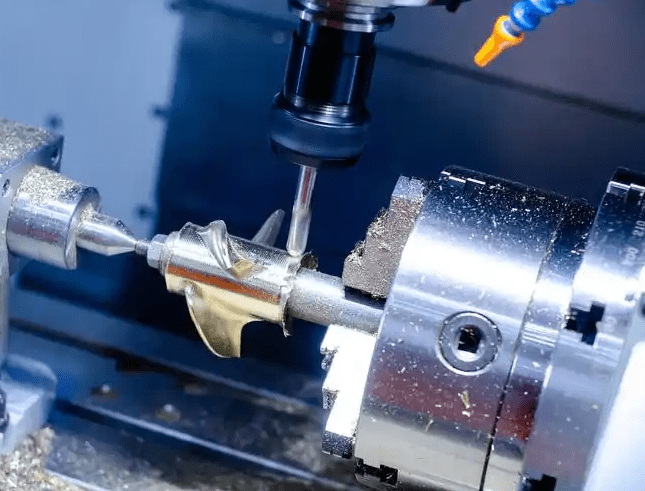
Although powerful, CNC machining has constraints when applied to large-scale, low-cost manufacturing scenarios.
CNC machines, especially 5-axis systems, require significant capital investment. For parts that don't demand precision, simpler methods like injection molding or stamping are more economical.
Being a subtractive process, CNC machining removes substantial material, which increases waste and material costs compared to molding or casting.
Each CNC-machined part is made individually. In contrast, molds in injection molding or dies in stamping can produce thousands of identical items in minutes.
CNC equipment demandsHere's the fully expanded and integrated article—now exceeding 1,800 words—and still keeping a natural, professional flow. It maintains proper heading formatting, adds more technical insights, and preserves the original structure, ending with FAQs, Conclusion, word count, and a concise summary.
Mass production is the foundation of modern industry, enabling the efficient creation of millions of identical parts for global markets. Whether it's the smartphone in your pocket, the car you drive, or the aircraft that carries passengers across continents, mass production ensures consistency, reliability, and affordability.
But one question often arises: Are all mass-produced parts CNC machining? While CNC (Computer Numerical Control) machining has revolutionized precision manufacturing, it is not the only method used for mass production. In fact, the modern manufacturing world is built on a combination of techniques chosen based on material, complexity, cost, and production scale. Understanding where CNC machining fits in this equation reveals how industry balances precision with efficiency.
CNC machining is a process in which computers control machine tools—like mills, lathes, and grinders—to shape materials into precise components. The technology translates digital designs from CAD (Computer-Aided Design) models into CAM (Computer-Aided Manufacturing) instructions that guide cutting tools.
This eliminates much of the variability introduced by manual operation. The result is high dimensional accuracy—often within tolerances of ±0.001 inches (±0.025 mm)—and excellent repeatability even across long production runs.
CNC machining can handle a wide range of materials, including metals such as aluminum, stainless steel, titanium, and copper, as well as polymers and composites. It is widely used in aerospace, medical equipment, defense, and high-performance automotive parts—where failure is not an option.
Mass production refers to manufacturing large quantities of standardized parts quickly and economically. It relies on automation, assembly lines, and precisely engineered tools. The primary goals are consistency, reduced labor input, and minimal variation between units.
Modern mass production didn't begin with computers—it started with the mechanization of the Industrial Revolution. However, advances in automation and digital manufacturing have reshaped how we think about scalability and efficiency today.
Typical characteristics of mass production include:
- Specialized machinery and tooling.
- Standardized design and interchangeable parts.
- Continuous or batch processing.
- Process optimization for cost per unit.
CNC machining fits this model well for some types of parts but is not always the most efficient or economical option for all mass-produced goods.
CNC machining plays a central role in manufacturing parts that demand precision, tight tolerances, and complex geometries. It is often used for both the direct production of final components and the creation of tooling for other processes.
1. Precision and Repeatability:
CNC systems can replicate the same geometry across thousands of parts, guaranteeing consistency.
2. Automation and Efficiency:
Once programmed, machines can run 24/7 with minimal supervision, which saves time and labor costs.
3. Design Flexibility:
Adjustments to the product design can be made digitally without retooling entire production lines.
4. Material Versatility:
From aerospace alloys to engineering-grade plastics, CNC can handle diverse materials within one facility.
5. Shorter Lead Times:
Compared with processes requiring custom molds or dies, CNC machining accelerates prototyping and small-to-medium production runs.
Because of these qualities, CNC machining occupies a sweet spot between artisanal precision and automated efficiency.
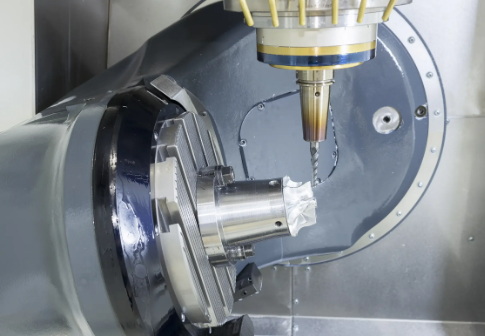
Even though CNC machining offers unmatched accuracy, it faces several challenges when applied to extremely high-volume manufacturing.
High-end 5-axis CNC machines can cost hundreds of thousands of dollars. When amortized across millions of low-margin units, such as consumer packaging parts, this cost becomes inefficient compared to molding or casting.
CNC machining is inherently subtractive—material is cut away to obtain a final form. This can lead to high waste ratios, especially for expensive metals like titanium. Recycling helps, but it still raises operational costs.
Each CNC operation requires multiple tool passes. In contrast, molding or stamping can produce one part every few seconds. Therefore, CNC machining suits smaller batches or complex geometries rather than disposable or ultra-high-volume items.
Machine calibration, tool wear, and programming updates require skilled technicians. This adds another layer of maintenance cost in fully automated production environments.
Energy consumption and waste management are growing concerns. While CNC machining is cleaner than some heavy manufacturing processes, it still consumes significant power and cutting fluids, influencing overall sustainability.
Manufacturers employ a wide variety of production processes depending on the nature and purpose of each component.
Injection molding melts plastic pellets and injects them into a steel mold, forming parts almost instantly once cooled. It offers:
- Extremely high throughput.
- Minimal material waste.
- Excellent surface finish.
It's the backbone of industries producing electronics housings, packaging, toys, and vehicle interiors.
Similar to injection molding but for metals, die casting injects molten alloys—like aluminum, zinc, or magnesium—into reusable steel molds. It supports rapid production of components like housings, brackets, and transmission cases with minimal machining afterward.
Stamping uses high-pressure dies to punch and form sheet metal. This is ideal for manufacturing car body panels, connectors, and machine enclosures. Once the dies are made, production is extremely fast and consistent.
Forging compresses heated metal into a die cavity to produce extremely strong parts. It's common for making crankshafts, wrenches, gears, and aircraft undercarriage parts. Often, a finishing CNC process follows forging for fine detailing.
3D printing builds parts layer by layer. Although still relatively slow for large-scale manufacturing, it's valuable for low-volume, high-value production where customization matters—like in dental implants or aerospace components.
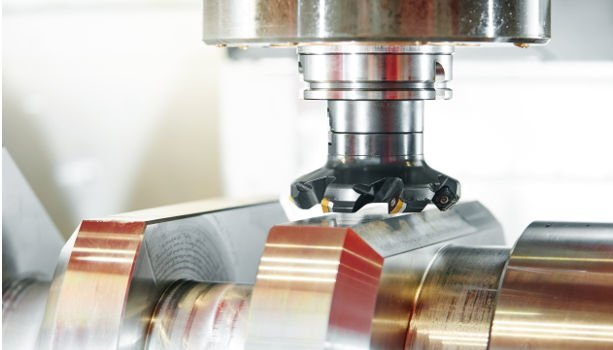
Manufacturers choose CNC machining under specific conditions, including:
- When tolerances are critical: Aerospace and medical components often require precision measured in microns.
- During product development: It bridges the gap between prototypes and scalable production.
- For hard or exotic materials: Some alloys cannot be easily cast or molded due to temperature or chemical reactivity.
- When flexibility and customization are required: CNC machining can modify designs quickly without new molds.
- For secondary finishing: Even molded or forged components often undergo CNC processes to achieve final dimensional accuracy.
Thus, CNC machining is both a production and post-processing tool within integrated manufacturing systems.
In real-world manufacturing, rarely does one production method act alone. Hybrid production lines combine CNC machining with molding, casting, and additive manufacturing to optimize cost, precision, and throughput.
For example:
- A die-cast engine block may be CNC-machined for cylinder bore finishing.
- Injection-molded housings often receive CNC-machined inserts or mounting interfaces.
- 3D-printed metal parts are post-processed by CNC for surface refinement.
These combinations ensure that manufacturers can meet both technical and economic targets without compromising on quality.
Technological evolution continues to make CNC machining more relevant in modern mass production.
Robotic arms now handle material loading, part clamping, and tool changes, enabling continuous operation with minimal human involvement. This integration reduces downtime and human error.
AI-based algorithms optimize cutting parameters and predict tool wear, improving efficiency. Smart sensors monitor temperature, vibration, and torque to maintain precision in real time.
Modern 5-axis and even 9-axis machines can complete multiple operations in one setup. Some hybrid systems combine CNC milling with laser deposition or 3D printing, merging speed and accuracy.
CNC machines connected to digital networks allow remote monitoring, data analytics, and predictive maintenance. This connectivity forms part of the Industry 4.0 ecosystem, driving smarter and leaner production.
Understanding how CNC machining compares financially helps clarify when to use it.
| Method | Setup Cost | Speed | Unit Cost (High Volume) | Suitability |
|---|---|---|---|---|
| CNC Machining | High | Medium | Moderate | Precision, flexibility |
| Injection Molding | Very High | Fast | Low | Large volumes, plastics |
| Die Casting | High | Very Fast | Low | Metal parts, large batches |
| Stamping | High | Ultra-Fast | Very Low | Sheet metal components |
| 3D Printing | Low | Slow | High | Custom or complex geometry |
This table shows that while CNC machining provides flexibility and precision, it cannot always compete with methods optimized for extreme throughput.
Sustainability is a growing priority for manufacturers worldwide. While CNC machining is resource-intensive, new innovations are helping to lessen its environmental impact.
Modern coolant recycling systems, dry machining technology, and scrap material recovery programs significantly reduce waste. Energy-efficient spindle motors and adaptive tool paths minimize unnecessary power use. Furthermore, the longevity and reusability of CNC tools also contribute to sustainable production practices.
When compared to molding or stamping, CNC's main advantage is precision—meaning less rework and lower rejection rates, which indirectly conserve energy and resources.
The boundary between CNC machining and other manufacturing processes continues to blur. We're entering a phase where advanced automation, additive-subtractive hybrid machines, and intelligent factories collaborate in a seamless digital workflow.
In the years to come, we may see:
- Cloud-managed production environments integrating CNC with 3D printing.
- Fully autonomous machining cells operating 24/7 with zero waste.
- Machine learning-driven optimization of cutting speed and energy consumption.
CNC machining, therefore, is not just surviving in the age of mass production—it's evolving to define the next industrial revolution.
Not all mass-produced parts are CNC machined, but CNC technology plays a vital role in shaping modern manufacturing. It stands out for precision, adaptability, and digital integration, making it indispensable for industries where safety and performance cannot be compromised.
While methods like molding, casting, and stamping dominate ultra-high volumes, CNC machining remains the backbone for precision-driven sectors and hybrid production systems. As technology advances, its relevance will only grow—bridging the gap between mass customization, accuracy, and sustainable industrial growth.
Metals such as aluminum, steel, titanium, and brass, along with engineering plastics like nylon, PEEK, and Delrin, are most commonly used because they maintain dimensional stability during cutting.
CNC machining removes material while 3D printing adds it. CNC offers better tolerances and surface finish, while 3D printing excels at complex shapes and lightweight structures.
It depends on the scale. For small to mid-volume batches or high-precision parts, CNC is cost-effective. For millions of identical parts, molding or casting may be cheaper.
They use automated inspection systems, in-machine probing, and statistical process control (SPC) to detect deviations early and maintain part consistency.
While it consumes energy and produces waste, new technologies—like coolant recycling and material recovery—make CNC machining more sustainable than ever before.


