From idea to market-ready product, our NPI solutions make every stage easier, faster. Discover How We Help

Views: 222 Author: Feifan Hardware Publish Time: 2026-04-10 Origin: Site
When you manufacture high-precision CNC aluminum parts for demanding OEMs, choosing between anodizing vs powder coating is not just a cosmetic decision – it affects tolerances, durability, lifecycle cost, and even warranty claims. Speaking as an engineer working with international buyers at Shenzhen Feifan Hardware & Electronics Co.,Ltd. I've seen projects succeed or fail based on this one choice. [protolabs]
If you're a product engineer, purchasing manager, or founder working with a Chinese CNC machining partner, this guide will help you make a confident, data‑driven decision about anodizing and powder coating. [americanmicroinc]
We'll cover:
- Clear definitions of anodizing and powder coating in CNC manufacturing [gabrian]
- Performance comparison: corrosion, wear, UV, thickness, tolerances, repairability [protolabs]
- Application-based recommendations (outdoor vs indoor, tight tolerance vs decorative parts) [ptsmake]
- Real project insights from OEM/ODM work in Europe and North America [parashifttech]
- Practical selection checklist you can send to your supplier [americanmicroinc]
You can insert a process diagram illustration here showing an anodizing line vs a powder coating line for quick visual comparison.

Anodizing is an electrochemical process that converts the surface of aluminum into a controlled, durable oxide layer that becomes part of the metal itself. The parts are immersed in an acid electrolyte bath and connected as the anode, then current builds a uniform oxide layer that will not peel like traditional paint. [prototek]
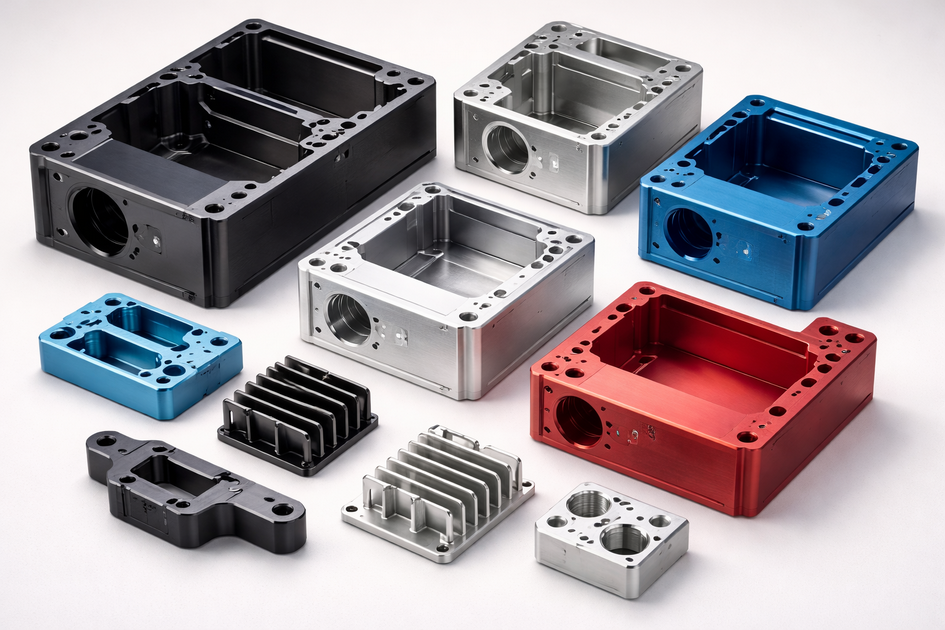
Typical use in CNC production: high-precision aluminum housings, brackets, heatsinks, and consumer product shells where tight tolerances, metallic look, and durability are required. [ptsmake]
- Low thickness and tight tolerances
- Typical thickness: roughly 5–25 μm for standard decorative/Type II anodizing, up to 50–150 μm for hard anodizing. [gabrian]
- Very low dimensional build‑up, so it's suitable for close fits, threads, and precision assemblies. [protolabs]
- Strong wear and scratch resistance
- The oxide layer is hard and integral to the substrate, which means it resists abrasion better than most organic coatings. [metalscut4u]
- Often chosen for moving interfaces and components with frequent handling. [ptsmake]
- Good corrosion resistance
- The anodic layer protects aluminum in demanding environments, including marine and salt‑spray conditions when properly sealed. [komaspec]
- With correct process control, it can significantly extend service life in outdoor applications. [elemetgroup]
- Metallic appearance and controlled aesthetics
- Supports metallic colors with a rich, premium look, but color consistency can vary between batches. [gabrian]
- Surface machining marks and defects remain visible, which can be good (tech look) or bad (shows every flaw). [komaspec]
- Environmentally responsible when managed correctly
- With electrolyte recycling and proper wastewater treatment, anodizing is chemically stable and low VOC. [elemetgroup]
Here you can insert a macro photo of anodized aluminum parts (e.g., blue and black housings) to visually illustrate the metallic finish.
Even though we use anodizing extensively for export projects, it's not always the right choice. [protolabs]
- Higher process cost per piece
- Compared with basic spray painting and some powder systems, anodizing is generally more expensive, especially for complex color requirements or small batches. [metalscut4u]
- Limited color flexibility vs powder
- You can achieve many colors, but the palette and effects are less varied than powder coating, and batch‑to‑batch color variation is more likely. [metalscut4u]
- Not easy to rework
- Once a part is anodized, it's effectively permanent; correction usually requires stripping and re‑anodizing, which adds cost and risk. [prototek]
If your industrial design relies heavily on perfectly uniform colors across multiple suppliers or production dates, a powder-coated system might be easier to control. [ptsmake]
Powder coating uses electrostatically charged dry powder that is sprayed onto a grounded part and then cured in an oven, forming a continuous protective film. Unlike anodizing, the coating sits on top of the metal and can be applied to many substrates beyond aluminum. [keystonekoating]
It's a go‑to finish for steel brackets, frames, larger assemblies, and decorative consumer products where thickness and texture help hide imperfections. [komaspec]
- Thicker, forgiving coating
- Typical coating thickness is about 70–150 μm, considerably thicker than anodizing. [komaspec]
- This extra thickness can hide welds, grind marks, and machining defects for a cleaner overall appearance. [protolabs]
- Extremely flexible in color and texture
- Wide range of solid colors, metallics, textures, gloss levels, and special effects, often matched to RAL or Pantone systems. [prototek]
- Ideal when branding and color consistency are critical across product lines. [gabrian]
- Cost‑effective for volume runs
- For medium to large batches, powder coating is often more economical than multi‑step anodizing. [keystonekoating]
- The process generates little waste and has negligible VOCs compared to solvent-based liquid paint. [keystonekoating]
- Compatible with multiple metals
- Commonly used on steel, stainless steel, and aluminum, so mixed-material assemblies can share a unified visual appearance. [ptsmake]
A helpful visual here would be a side‑by‑side photo of a powder‑coated steel bracket and an anodized aluminum housing to highlight the difference in thickness and texture.
From a manufacturing and field‑performance standpoint, we always highlight these realities to customers before they choose powder coating. [keystonekoating]
- Chipping and edge vulnerability
- Because powder is a surface film, impacts and sharp edges are more prone to chipping or flaking, exposing the base metal. [gabrian]
- Once chipped, corrosion can creep under the coating if the environment is aggressive. [komaspec]
- UV and weathering sensitivity
- Many powders will chalk or fade under long‑term UV exposure unless UV-stable formulations are used. [metalscut4u]
- Outdoor performance depends heavily on powder chemistry and proper pretreatment. [keystonekoating]
- Impact on precision and tolerances
- With 70–150 μm added thickness, tight-fit features (bores, threads, sliding surfaces) must be masked or machined with extra clearance. [protolabs]
- For small precision components, this extra build‑up can complicate assembly if not considered at design stage. [americanmicroinc]
| Factor | Anodizing | Powder Coating |
|---|---|---|
| Process | Electrochemical oxide layer grows into/onto aluminum protolabs | Electrostatic dry powder film cured on the surface protolabs |
| Typical thickness | About 5–25 μm (decorative), up to ~50–150 μm (hard) protolabs | About 70–150 μm, much thicker film protolabs |
| Dimensional impact | Minimal, good for tight tolerances and threads protolabs | Significant; requires extra clearance or masking protolabs |
| Corrosion resistance | Excellent when properly sealed, especially for aluminum outdoors and marine protolabs | Good if film is continuous; chips or scratches can expose metal protolabs |
| Wear resistance | High hardness and scratch resistance protolabs | Moderate; can wear and scratch more easily than anodizing protolabs |
| UV resistance | Very good; oxide is chemically stable and UV resistant gabrian | Variable; many powders fade unless UV‑resistant grades used keystonekoating |
| Color range | Metallic tones, limited but premium look; batch variation possible protolabs | Very wide range of colors, textures, and gloss levels protolabs |
| Rework/repair | Hard to rework; usually requires stripping and re‑anodizing protolabs | Can be stripped and recoated; small chips sometimes touched up protolabs |
| Substrates | Mainly aluminum and its alloys protolabs | Aluminum, steel, stainless, some other metals ptsmake |
| Cost profile | Higher per piece, often chosen for high‑value applications protolabs | Cost‑effective for volume and large surface areas protolabs |
From our OEM/ODM projects in Europe and North America, we usually recommend anodizing when: [parashifttech]
- You are working with CNC aluminum parts that have tight tolerances and mating features.
- The product is high‑touch and design‑driven (e.g., consumer electronics, camera parts, bike components).
- The operating environment involves outdoor exposure, marine conditions, or regular abrasion. [elemetgroup]
- You want a premium metallic aesthetic that showcases machining quality instead of hiding it. [metalscut4u]
Example: A European marine electronics client specified black hard anodizing for their aluminum housings to survive salt‑spray testing and maintain a high-end appearance over several years. [elemetgroup]
We usually suggest powder coating in these scenarios: [keystonekoating]
- The parts are steel or mixed‑metal brackets, frames, or structural components.
- You need strong visual branding with specific RAL/Pantone colors or textures. [prototek]
- The parts have cosmetic welds or grinding marks that should be hidden. [ptsmake]
- The working environment is mostly indoor and not extremely abrasive or marine. [komaspec]
- You want a cost‑optimized finish for medium to large batches. [protolabs]
Example: For a North American industrial shelving system, we supplied powder‑coated steel brackets in a company-specific gray, where the extra thickness actually helped cover welds and delivered a uniform, branded look. [parashifttech]
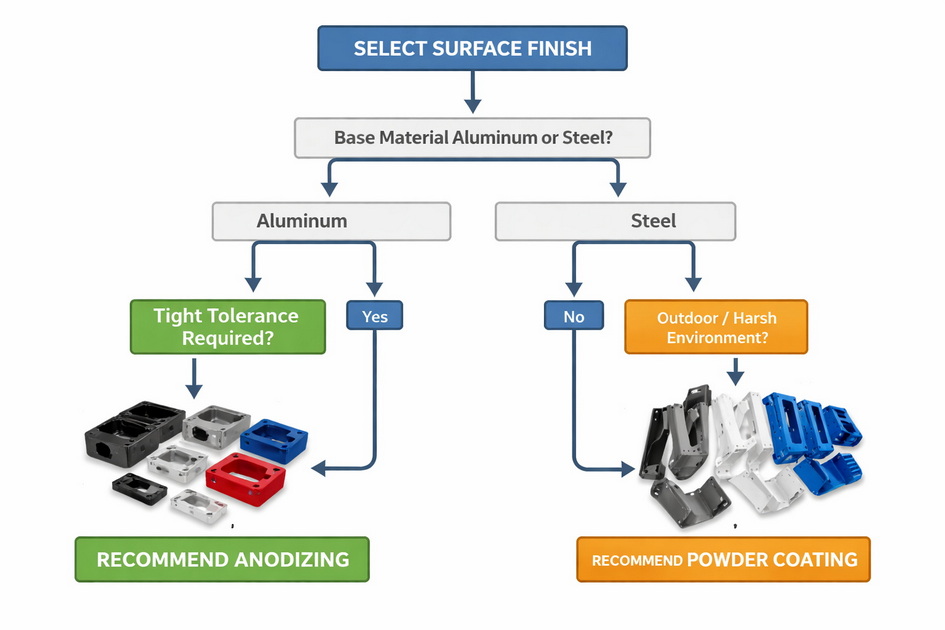
When we start a project, we typically walk customers through a simple, engineer‑friendly checklist like this. [jlccnc]
1. Base material
- Mainly CNC aluminum with tight tolerances → Favor anodizing.
- Steel or mixed metals, large welded assemblies → Favor powder coating.
2. Functional priorities
- Wear and scratch resistance, sliding or interfacing surfaces → Anodizing. [gabrian]
- Cosmetic uniformity and brand color accuracy → Powder coating. [prototek]
3. Environment
- Marine, salt‑spray, or harsh outdoor → Sealed anodizing or hard anodizing. [elemetgroup]
- Indoor, light industrial → Powder coating is usually sufficient. [keystonekoating]
4. Dimensional sensitivity
- Critical fits, threads, tight tolerances → Anodizing or masking strategy. [americanmicroinc]
- Non‑critical dimensions, robust clearances → Powder coating works well. [ptsmake]
5. Aesthetic strategy
- Premium metallic look that reveals machining → Anodizing. [metalscut4u]
- Textured, matte, or special effects surfaces → Powder coating. [prototek]
6. Lifecycle cost
- Higher initial cost but longer life in tough conditions → Anodizing. [elemetgroup]
- Lower initial cost for large batches in moderate environments → Powder coating. [protolabs]
You can turn this checklist into an infographic or decision‑tree graphic placed near the top or middle of the article for quick scanning.
As a CNC precision parts manufacturer, we see how finish decisions impact more than just appearance. [jlccnc]
- Design for manufacturability (DFM)
- We often adjust tolerances, fillets, and edge radii depending on finish, especially for powder-coated parts with significant film build. [jlccnc]
- Early discussion on finish helps avoid rework and assembly issues in mass production. [parashifttech]
- Quality and inspection
- Anodized parts may show minor surface inconsistencies more easily, so base machining and polishing need higher control. [datron]
- Powder-coated parts need consistent pretreatment (cleaning, blasting, phosphating) to secure adhesion and corrosion resistance. [komaspec]
- Brand and user perception
- For consumer products, customers often perceive anodized aluminum as more premium and "engineered", which can support higher price points. [gabrian]
- Powder coating, with its broad design freedom, is strong for building visually unified product families. [prototek]
If you work with a long‑term manufacturing partner, share your target markets, test standards, and warranty expectations up front so they can recommend the most suitable finishing path. [jlccnc]
To speed up communication and reduce sampling cycles, you can send a short, structured finishing brief like this. [jlccnc]
- Base material: 6061‑T6 aluminum CNC machined housing
- Application: Outdoor IoT sensor, wall mounted, exposed to rain and sun
- Mechanical requirements: High scratch resistance, no flaking, critical mating bosses and threads
- Aesthetic requirements: Dark gray, semi‑gloss, visible machining lines acceptable
- Target tests: 500–1,000 h salt spray equivalent, outdoor UV exposure
In this case, we would typically propose hard anodizing or high‑quality sealed anodizing in a dark tone rather than a standard powder coat, unless branding or steel parts dictate otherwise. [elemetgroup]
You can also include an editable table or downloadable spec sheet on your site to help users prepare this information.
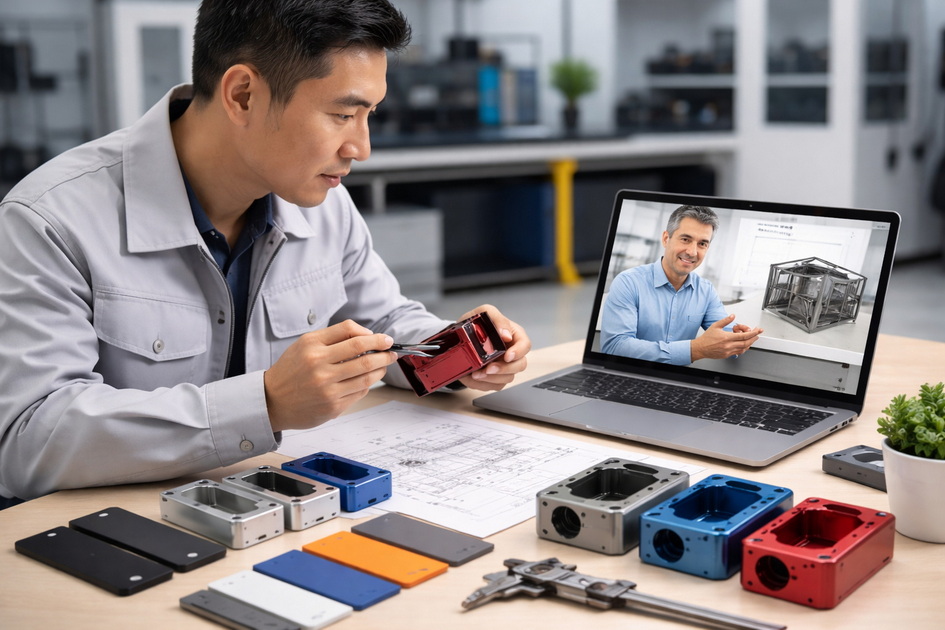
If you are still comparing anodizing vs powder coating for your CNC project, the most effective next step is to review your drawings and application together with a manufacturing engineer. [americanmicroinc]
Send us your 3D files, 2D drawings, and basic usage scenario, and our team at Shenzhen Feifan Hardware & Electronics Co.,Ltd. will propose a surface‑finishing strategy (including anodizing, powder coating, and other treatments) that balances performance, cost, and brand positioning for your specific market. [parashifttech]
1. Is anodizing always better than powder coating for aluminum?
No. Anodizing offers better wear and UV resistance and minimal dimensional change, while powder coating can be more cost-effective and visually flexible for indoor or non‑critical applications. [metalscut4u]
2. Can I powder coat over anodized aluminum?
Yes, powder coating over anodized aluminum is technically possible, but it requires special surface preparation to ensure proper adhesion, and it is not always recommended from a cost and process perspective. [keystonekoating]
3. Which finish is more environmentally friendly?
Both can be implemented with low emissions: anodizing is chemically stable and can be run with electrolyte recycling, while powder coating produces minimal VOCs and limited overspray waste when properly recovered. [gabrian]
4. How do these finishes affect CNC tolerances?
Anodizing has very low thickness, so it normally suits tight tolerances and threaded features with minimal adjustment, while powder coating adds significant build‑up that must be accounted for in design or masked during finishing. [americanmicroinc]
5. What if my product has both aluminum and steel parts?
In mixed‑material assemblies, many customers choose powder coating to achieve a unified appearance across different metals, but critical aluminum components can still be anodized and then selectively protected or over‑coated depending on the design. [ptsmake]
1. AT-Machining. "Anodizing vs. Powder Coating: Which Method Should You Choose?" https://at-machining.com/anodizing-vs-powder-coating/ [protolabs]
2. Protolabs. "Anodizing vs. Powder Coating." https://www.protolabs.com/resources/blog/anodizing-vs-powder-coating/ [protolabs]
3. Keystone Koating. "Powder Coating vs. Anodizing." https://www.keystonekoating.com/blog/powder-coating-vs-anodizing/ [keystonekoating]
4. Prototek Digital Manufacturing. "Anodizing vs Powder Coating." https://prototek.com/article/anodizing-vs-powder-coating/ [prototek]
5. PTS (China). "Anodising vs Powder Coating: Complete Guide to Benefits, Costs, Best Practices for Aluminum Parts." https://www.ptsmake.com/anodising-vs-powder-coating-complete-guide-to-benefits-costs-best-practices-for-aluminum-parts/ [ptsmake]
6. Gabrian. "Anodizing vs. Powder Coat: How to Choose the Right Aluminum Finish." https://www.gabrian.com/anodized-vs-powder-coat/ [gabrian]
7. Komaspec. "Surface Finishing for Durable and Attractive Parts." https://www.komaspec.com/zh-hans/custom-part-surface-finishing-china/ [komaspec]
8. Elemet Group. "Side-by-Side Comparison: Anodized vs. Powder Coat." https://elemetgroup.com/anodized-vs-powder-coat/ [elemetgroup]
9. American Micro Inc. "Advanced Surface Treatment Techniques in CNC Machining." https://www.americanmicroinc.com/resources/advanced-surface-treatment-techniques-cnc-machining/ [americanmicroinc]
10. DATRON. "CNC Machining: The Perfect Surface Finish." https://www.datron.com/resources/blog/cnc-machining-the-perfect-surface-finish/ [datron]
11. Foremost Media. "Google's E-E-A-T Algorithm Rewards Quality Content." https://www.foremostmedia.com/resources/blog/posts/how-to-take-advantage-of-google-e-e-a-t-for-manufacturing-websites [foremostmedia]
12. Parashift Technologies. "Stand Out in Manufacturing SEO with E-E-A-T." https://www.parashifttech.com/blog/stand-out-in-manufacturing-seo-using-e-e-a-t-to-build-real-online-trust-and-growth [parashifttech]
13. MetalsCut4U. "Anodizing vs. Powder Coating: Which Is Best For Metal." https://metalscut4u.com/blog/post/anodizing-vs-powder-coating.html [metalscut4u]


