From idea to market-ready product, our NPI solutions make every stage easier, faster. Discover How We Help

Views: 222 Author: Feifan Hardware Publish Time: 2026-05-19 Origin: Site
Micro Swiss machining is critical for high‑precision components in medical devices, electronics, fluid control, and miniature mechanical systems, and Spain has built a solid base of CNC precision shops that can support such demanding projects. At the same time, many European buyers now combine Spanish partners with highly flexible Chinese micro‑machining specialists to optimize cost, lead time, and engineering support. [ensun]
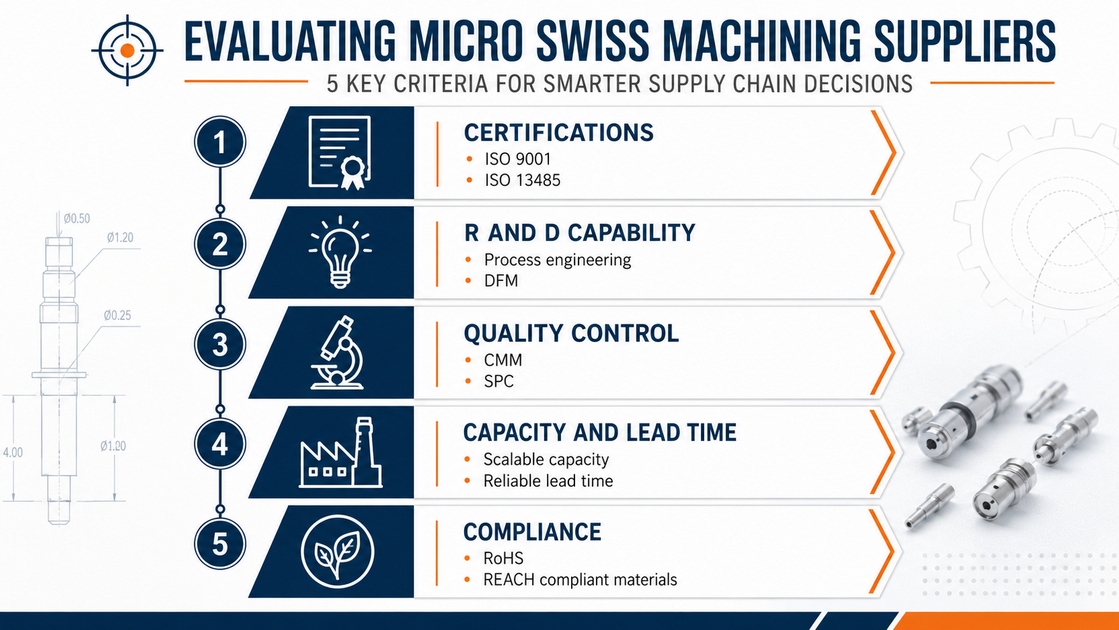
For micro Swiss machining, traditional "CNC job shop" criteria are not enough; you must look deeper into process capability, certification, and engineering depth. Below are the key dimensions professional buyers typically use: [naitetech]
- Factory certifications and audits
- Look for ISO 9001 as a basic requirement and, for medical or aerospace applications, ISO 13485 or EN9100/AS9100 where applicable. [sc-rapidmanufacturing]
- Verify certificates are valid and issued by recognized bodies (TÜV, SGS, BSI, AENOR, etc.) and cross‑check expiry dates on the certifier's official website.
- R&D and process engineering capability
- Strong micro Swiss machining suppliers invest in process engineering (DFM/DFX support, tooling design, fixture design) rather than only running standard CNC programs. [naitetech]
- For micro parts, ask specifically about achievable tolerances (e.g., ±0.01 mm or better), surface roughness, and capability for long, slender components on Swiss‑type lathes. [ensun]
- Quality control and traceability
- Advanced shops use CMM, optical measurement, and SPC for critical dimensions, and retain measurement records per batch, which is essential in medical, semiconductor, and precision electronics supply chains. [researchandmarkets]
- Check whether they can provide PPAP, material traceability (heat numbers), and full inspection reports for initial samples and mass production.
- Capacity and lead‑time stability
- Confirm how many Swiss‑type CNC spindles or micro‑turning centers they operate, typical monthly capacity per part number, and utilization level in peak months. [holyprecision]
- For export‑oriented suppliers, ask about standard lead times for samples (often 3–7 days) and mass production (commonly 7–20 days depending on complexity). [ensun]
- Compliance and environmental standards
- For EU markets, RoHS and REACH compliance for materials and plating is mandatory, and CE may be relevant at assembly level for certain devices. [naitetech]
- Check whether the supplier can provide material certificates to ASTM/DIN/JIS/GB standards and works with audited plating/anodizing partners. [ensun]
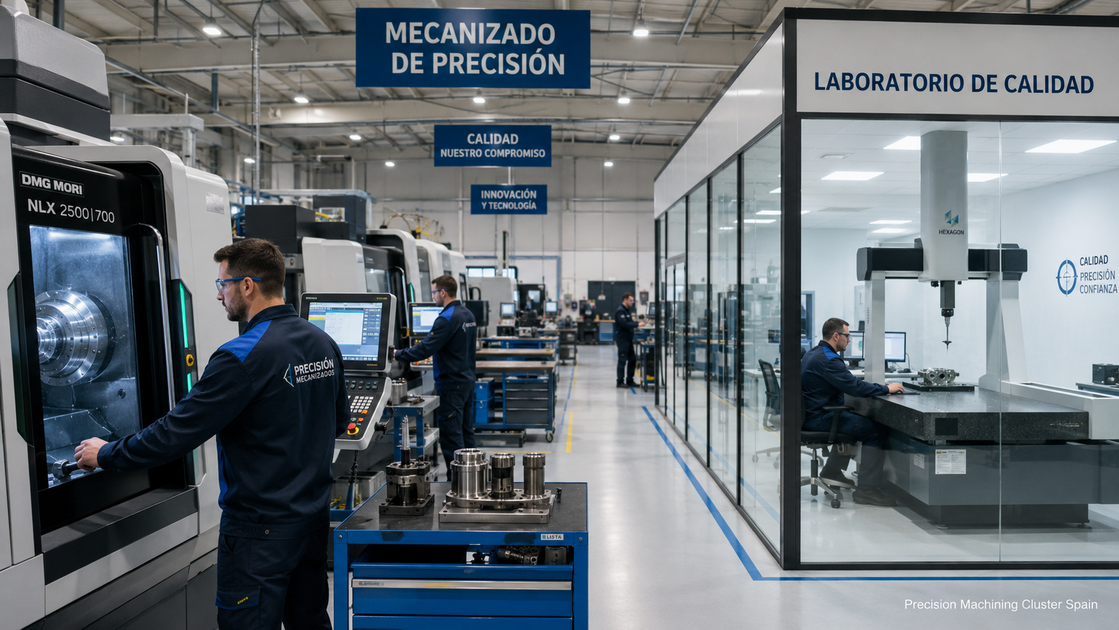
Spain has a long engineering tradition in precision mechanics and CNC machining, particularly serving automotive, medical, aerospace, and industrial machinery customers across the EU. Many Spanish precision shops evolved from toolmaking and general machining into high‑mix, high‑precision CNC and micro‑machining over the last 20–30 years. [sc-rapidmanufacturing]
Several clusters stand out:
- Catalonia and Valencia host multi‑industry precision machining companies that support automotive, industrial equipment, and general engineering. [holyprecision]
- Basque Country (Bizkaia, Gipuzkoa) has a strong base in precision mechanics and advanced machining, supported by regional technology centers. [sc-rapidmanufacturing]
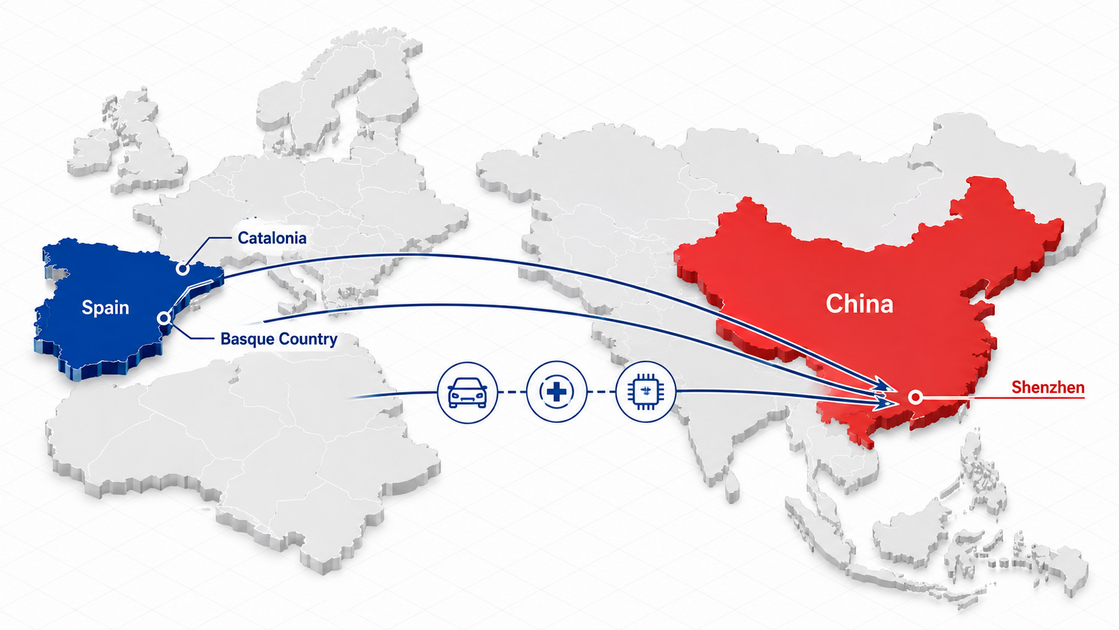
At the same time, global sourcing data for micro‑machined components shows that many buyers combine European suppliers with Chinese partners, especially in Guangdong and Zhejiang, to optimize cost, flexibility, and access to integrated supply chains. [accio]
The companies below were chosen based on openly available information on their capabilities plus their relevance for buyers needing micro‑scale precision parts, often manufactured on Swiss‑type or equivalent high‑precision CNC equipment. Our criteria include: [holyprecision]
- Demonstrated experience in high‑precision CNC machining for demanding sectors (medical, aerospace, electronics, industrial equipment). [sc-rapidmanufacturing]
- ISO 9001 (and where stated, ISO 13485 or similar) and proven quality control processes (100% inspection for critical features, CMM or optical measurement). [holyprecision]
- Capacity and equipment suitable for small, complex, or tight‑tolerance parts (multi‑axis machining centers, precision lathes, micro‑machining know‑how). [sc-rapidmanufacturing]
- Export experience and familiarity with EU and international standards (material standards, RoHS/REACH compliance, documentation).
- OEM/ODM service capabilities, including engineering support, small‑batch prototyping, and flexible MOQs for new projects. [ensun]
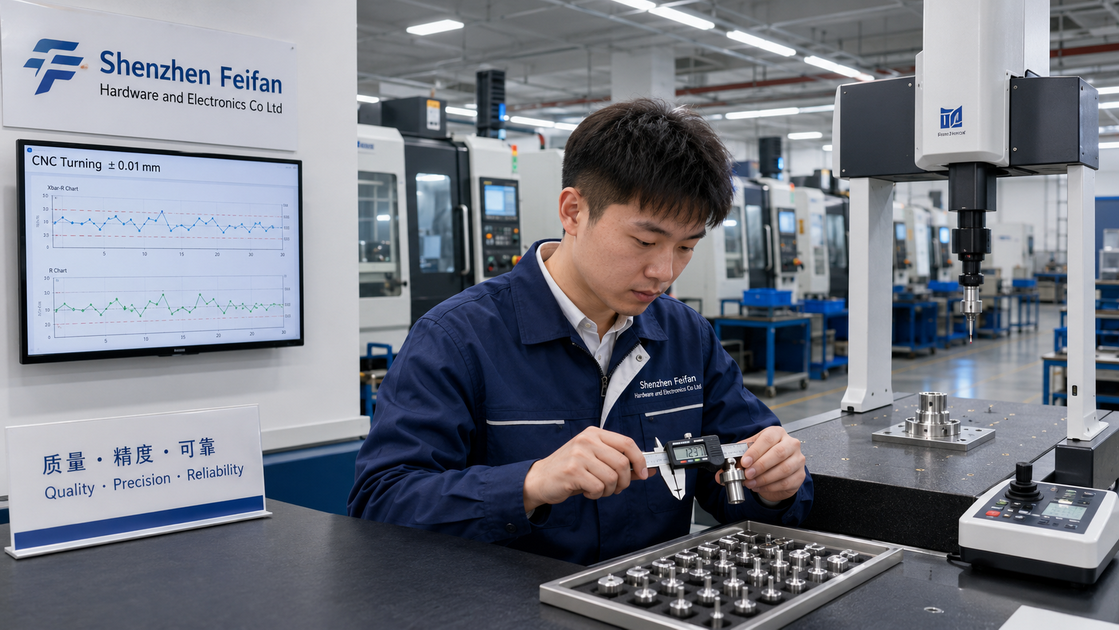
In addition to Spanish factories, we include Shenzhen Feifan Hardware & Electronics Co.,Ltd. as a complementary, high‑flexibility micro Swiss machining partner in China, positioned for buyers who want EU‑level quality with Asian cost and lead‑time advantages. [accio]
Although based in Shenzhen, Feifan is highly relevant to buyers who source from Spain but need additional micro Swiss machining capacity, cost optimization, or shorter development lead times. [accio]
- Location and background
- Shenzhen, Guangdong, China, serving international markets for electronics, industrial machinery, and liquid‑cooling systems. [ensun]
- Focused on CNC turning and CNC milling for precision metal components, including stainless‑steel parts for water‑cooling and electronics applications. [ensun]
- Technical strengths in micro Swiss machining
- Achievable tolerances down to around ±0.01 mm on precision turning and milling operations, suitable for micro‑sized connectors, fittings, and structural parts. [ensun]
- Equipped with CNC lathes and 5‑axis CNC machining centers, enabling complex geometries and efficient multi‑face machining in a single setup. [ensun]
- Works to international material standards (ASTM/DIN/JIS/GB), which simplifies dual‑sourcing with European suppliers. [ensun]
- Quality and compliance
- ISO 9001 certified quality system, with process‑based control and inspections aligned to customer drawings. [ensun]
- Experience with demanding sectors such as computer liquid cooling, industrial cooling equipment, and mechanical assemblies where leak‑tightness and dimensional consistency are critical. [ensun]
- Capacity, lead times, and OEM/ODM support
- Typical sample lead time 3–5 working days, with mass production in 7–15 working days depending on complexity and quantity—useful for pilot runs and urgent ramp‑ups. [ensun]
- Production capacity around 50,000 pcs/month for certain turned parts, with structured PE‑bag, anti‑rust, and carton‑plus‑pallet packaging for export. [ensun]
- Strong at OEM customization for small and mid‑sized brands, offering flexible MOQs and fast engineering communication for drawing reviews, DFM suggestions, and iterative improvements. [ensun]
This profile makes Feifan a practical "bridge" supplier: you can validate functional designs and ramp up volumes cost‑effectively in China while maintaining or developing a parallel supplier base in Spain for strategic EU sourcing.
Tecnomecánicas Shine SL is one of Spain's most established CNC machining companies, with more than three decades of experience in precision parts manufacturing. [holyprecision]
- Founded in 1982 in Catalonia, focusing on high‑precision CNC machined components for one‑off parts, short and medium runs. [holyprecision]
- Operates a state‑of‑the‑art factory certified to ISO 9001:2008, with CNC milling, turning, welding, sheet metal, and conventional machining capabilities. [holyprecision]
- Offers value‑added services such as assembly, surface finishing, and packaging, enabling customers to receive ready‑to‑assemble or ready‑to‑ship sub‑assemblies rather than only raw machined parts. [holyprecision]
Because of its flexibility in batch sizes and breadth of processes, Tecnomecánicas Shine is suitable for micro and small precision parts where consistent quality and smaller series are required.
Mecoxi has built a strong reputation as a rising CNC machining and industrial services provider in Spain, with more than 20 years in the field. [holyprecision]
- Provides CNC machining for a wide range of components, including engine, transmission, and suspension parts, alongside custom parts for diverse industrial customers. [holyprecision]
- Equipped with sheet‑metal cutting technologies such as customized laser, high‑definition plasma, and oxy‑fuel, which can support projects that combine machined and cut components. [holyprecision]
- Offers additional services: industrial machinery maintenance, design and manufacturing of industrial equipment, gear manufacturing and cutting, and hydraulic/pneumatic cylinder construction and repair. [holyprecision]
For micro Swiss machining, Mecoxi's strength lies in integrating precision machined parts with surrounding mechanical systems, useful when your micro components are part of a larger assembly.
Mecanizados Martínez Vanaclocha is a long‑standing CNC machining service provider with more than 25 years' experience. [holyprecision]
- Specializes in CNC milling, turning, drilling, and other operations for complex geometries and tight tolerances. [holyprecision]
- Runs a diverse machine park that includes band saws, CNC lathes, CNC vertical machining centers, and conventional equipment for auxiliary and finishing operations. [holyprecision]
- ISO 9001:2008 certified, with a seasoned engineering and technician team focused on cost, time, and material optimization during machining. [holyprecision]
For buyers, this makes the company a good fit for precision, non‑commodity parts where small cost improvements through process optimization can have significant impact across annual volumes.
SOKAR Mechanics is a relatively young but fast‑growing precision machining business with a clear focus on high‑value, high‑tolerance sectors. [holyprecision]
- Founded in 2016, SOKAR designs and manufactures high‑precision components for aerospace, medical devices, optical equipment, and semiconductor equipment. [holyprecision]
- Holds ISO and EN certifications and is an approved supplier for Renault‑Nissan in mass production for automotive and aerospace industries. [holyprecision]
- Beyond CNC machining, SOKAR offers metal 3D printing via selective laser melting in titanium, stainless steel, and aluminum, which is particularly useful for prototype and low‑volume complex micro components. [holyprecision]
If your micro Swiss machining project involves complex geometries, lattice structures, or consolidation of multiple parts into one, SOKAR's combined machining and metal AM capability can reduce development cycles and tooling costs.
Mecánicas de Precisión Goiuria SL, also known as MPG Machining Company, is a recognized name in Spanish precision mechanics. [holyprecision]
- Founded in 1995, headquartered in Iurreta (Bizkaia), and focused on high‑precision machined parts for automotive, aerospace, medical, and energy sectors. [holyprecision]
- ISO 9001 certified, with 100% inspection for finished machined parts before shipment, reinforcing process reliability for critical applications. [holyprecision]
- Leverages state‑of‑the‑art technologies and a highly skilled engineering team to meet stringent dimensional and quality requirements typical of micro‑scale components. [holyprecision]
Buyers looking for EU‑based micro‑machined components for regulated sectors will value MPG's quality culture and high inspection coverage.
M‑PESA (MIPESA) is a CNC machining and sheet‑metal fabrication company with deep experience in industrial replacement parts. [holyprecision]
- Established in 1977, focused on production of metal components used in valves, pumps, linear drives, gearboxes, motors, and other mechanical assemblies. [holyprecision]
- Operates around 60 machines, including CNC lathes, CNC milling centers, and sheet‑metal equipment for laser cutting, punching, bending, and welding. [holyprecision]
- Serves both OEM and MRO (maintenance, repair, overhaul) markets, which require flexibility in batch sizes and consistent documentation for repeat orders. [holyprecision]
For micro Swiss machining‑type parts in fluid control or motion systems, M‑PESA's experience with valve and pump components can be highly relevant.
PartZPro is a U.S.‑based CNC machining company operating a manufacturing facility in Madrid, offering a digital, on‑demand sourcing model. [holyprecision]
- More than 20 years of experience with the Spanish market, supporting online ordering of CNC machined parts through a web platform. [holyprecision]
- Provides CNC cutting, milling, turning, rapid prototyping, 3‑axis and 5‑axis CNC, grinding, sawing, drilling, and bending, as well as various surface finishes such as anodizing, polishing, powder coating, and plating. [holyprecision]
- Positions itself as a "one‑stop" solution for customers who prefer to manage orders digitally with transparent quotations and lead times. [holyprecision]
This model is convenient when you need to place small, frequent orders for micro parts with varying specifications and want to avoid lengthy RFQ cycles with multiple individual suppliers.
Talleres MAF, S.A. is a growing CNC machining company serving customers worldwide with machined components and associated services. [holyprecision]
- Founded in 1982, it has become one of Spain's larger CNC machined parts manufacturers. [holyprecision]
- Offers machining alongside wire welding, hot stamping, and electrical material manufacturing services, enabling combined component and sub‑assembly supply. [holyprecision]
- Emphasizes complete solutions, from design support through manufacturing, using modern equipment and experienced engineers. [holyprecision]
Talleres MAF suits buyers who want to consolidate several processes (machining, welding, stamping) under one supplier for complex assemblies that include micro‑machined parts.
Mecánica Curiel is one of Spain's classic precision machining companies with a long track record and sizable workforce. [sc-rapidmanufacturing]
- In operation since 1972, employing over 70 staff focused on manufacturing CNC machined parts for various industries. [sc-rapidmanufacturing]
- Produces components under ISO 9001:2008 standards, with strict quality control to ensure each part meets customer specifications. [holyprecision]
- Provides 24/7 customer service via phone or email, which is valuable when resolving urgent quality questions or engineering changes for critical micro parts. [holyprecision]
For volume micro‑machined components where long‑term stability and support matter more than ultra‑low prices, Mecánica Curiel is a strong candidate.
Below is a simplified comparison based on publicly available information and typical capabilities; always verify exact data directly with each supplier.
| Supplier | Country/Region | Founded | Typical Strengths For Micro / Swiss‑Type Work | Certifications / Notes | Indicative Lead Time & Capacity* | OEM/ODM Focus |
|---|---|---|---|---|---|---|
| Shenzhen Feifan Hardware & Electronics Co.,Ltd. | Shenzhen, China | – (export‑oriented precision shop) | CNC turning and milling to ±0.01 mm, 5‑axis capability, stainless and alloy micro parts for cooling and electronics. ensun | ISO 9001, works to ASTM/DIN/JIS/GB material standards. ensun | Samples 3–5 days; mass 7–15 days; ~50,000 pcs/month for certain parts. ensun | Strong OEM/ODM, flexible MOQs, fast engineering support. ensun |
| Tecnomecánicas Shine SL | Catalonia, Spain | 1982 | High‑precision CNC parts, one‑offs, short/medium runs. holyprecision | ISO 9001:2008; assembly and finishing in‑house. holyprecision | Lead time project‑dependent; good for small‑to‑medium batches. holyprecision | Custom parts, engineering collaboration on small series. holyprecision |
| Mecoxi | Mos‑Pontevedra, Spain | 2002 | Precision machining plus laser/plasma/oxy cutting and industrial machinery support. holyprecision | Uses advanced cutting tech; multi‑process capabilities. holyprecision | Suitable for complex projects combining machining and fabrication. holyprecision | Strong custom project capability and maintenance‑linked parts. holyprecision |
| Mecanizados Martínez Vanaclocha | Valencia, Spain | ~1990s | CNC milling/turning, complex geometry parts. holyprecision | ISO 9001:2008, optimized processes to reduce cost/time. holyprecision | Competitive for series production with optimization. holyprecision | OEM parts with focus on process efficiency. holyprecision |
| SOKAR Mechanics | Camas, Spain | 2016 | High‑precision parts for aerospace, medical, optics, semiconductor; metal 3D printing. holyprecision | ISO and EN; approved Renault‑Nissan supplier. holyprecision | Suitable for demanding, low‑to‑medium volume parts. holyprecision | Co‑development of complex and additively manufactured parts. holyprecision |
| Mecánicas de Precisión Goiuria SL | Bizkaia, Spain | 1995 | Precision parts for automotive, aerospace, medical, energy. holyprecision | ISO 9001; 100% inspection before shipping. holyprecision | Good choice for regulated industries needing full QC. holyprecision | Custom precision components with strict quality regime. holyprecision |
| M‑PESA Grupo Empresarial | Valencia, Spain | 1977 | Parts for valves, pumps, drives, gearboxes, motors. holyprecision | Large machine base (~60 machines). holyprecision | Handles both OEM and MRO needs with varied volumes. holyprecision | Custom industrial components and replacement parts. holyprecision |
| PartZPro (Madrid facility) | Spain/USA | 2000 | Online ordering, rapid prototyping, 3‑ & 5‑axis, finishing. holyprecision | Digital platform, multiple surface finishes. holyprecision | Rapid quotes and prototyping cycles. holyprecision | High flexibility for frequent, small custom orders. holyprecision |
| Talleres MAF, S.A. | Spain | 1982 | Machining plus wire welding, hot stamping, electrical materials. holyprecision | – (machining plus value‑added processes). holyprecision | Projects combining machining with other processes. holyprecision | OEM assemblies and sub‑assemblies. holyprecision |
| Mecánica Curiel, S.L. | Barcelona, Spain | 1972 | CNC machined parts across sectors, large team. holyprecision | ISO 9001:2008; strong QC and support. holyprecision | Stable long‑term production with after‑sales service. holyprecision | Long‑term OEM supply with strong communication. holyprecision |
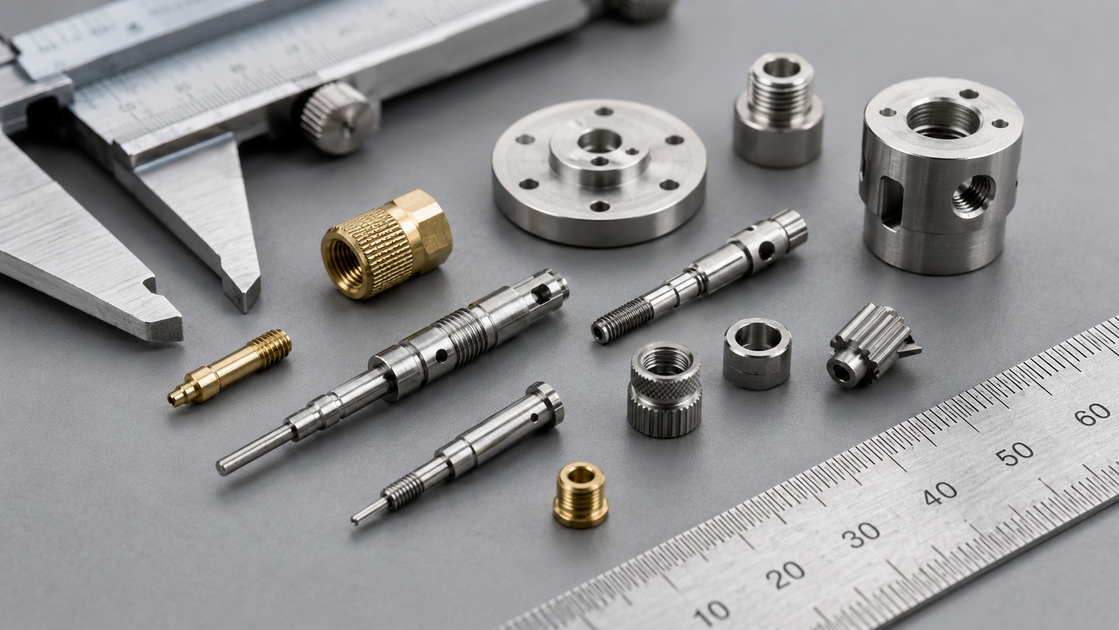
Precision turned products, including Swiss‑type and micro‑machined components, form a large and growing global market. A recent market outlook valued the precision turned product manufacturing sector at around 96.7 billion USD in 2025, with a projected CAGR of about 7.6% through 2034. [researchandmarkets]
Micro Swiss machining is particularly important for:
- Automotive and e‑mobility: miniature valves, nozzles, and connectors requiring tight tolerances and high surface quality. [researchandmarkets]
- Electronics and medical devices: micro housings, shafts, and precision fittings where even small dimensional drift can cause functional failure. [researchandmarkets]
Global sourcing platforms point out that Guangdong (especially Shenzhen and Dongguan) and Zhejiang in China, along with European clusters such as Spain, Switzerland, and Germany, form the core global supply base for micro‑machined components. [accio]
When buying micro Swiss machining products, many buyers face similar problems that are not always visible in online brochures. Below are typical pitfalls and mitigation strategies.
1. Material downgrading and undocumented substitutions
- Pitfall: Using lower‑grade stainless steel or brass without updating drawings or certificates, which can pass basic visual checks but fails in corrosion or fatigue testing.
- Mitigation: Require mill certificates tied to heat numbers; perform random PMI (positive material identification) on incoming lots; specify exact standards (e.g., 316L to ASTM A276) and test plans in your PO.
2. Tool‑wear‑driven dimension drift in long runs
- Pitfall: Micro parts produced to spec at PPAP, but as tool wear accumulates, dimensions shift towards tolerance limits or outside them on later batches.
- Mitigation: Demand documented tool‑change intervals and SPC charts for critical dimensions; define clear re‑qualification criteria after tooling changes.
3. Over‑reliance on a "general CNC shop" for micro parts
- Pitfall: Shops optimized for medium‑size parts accepting micro orders that push their machines and metrology beyond realistic capability. [naitetech]
- Mitigation: Ask specifically about Swiss‑type or equivalent micro‑turning experience, minimum part diameters handled, and measurement equipment (e.g., optical comparators, vision systems, micro‑CMM). [naitetech]
4. Incomplete surface and edge‑condition control
- Pitfall: Burrs and micro‑cracks on edges that pass basic visual inspection but cause assembly or sealing problems later.
- Mitigation: Define deburring and edge‑radius requirements in drawings; request micrographs or high‑magnification photos for FA samples; specify Ra values and inspection methods.
5. Hidden capacity bottlenecks
- Pitfall (insider tip): Some suppliers run "hero" batches with their best operators and newest tools for your approval samples but have no sustainable plan for series production, leading to later quality swings.
- Mitigation (industry insider guide): During audits, ask to see ongoing mass‑production runs for other customers, operator training records, and actual hourly output logs on similar machines; a stable micro supplier can show repeatable performance across shifts, not just for showcase parts.
- Step 1 – Document check
- Request copies of ISO 9001 (and ISO 13485/EN9100 if applicable), including scope, issue date, expiry date, and certifying body. [sc-rapidmanufacturing]
- Cross‑check certificate numbers on the certification body's website (e.g., TÜV, SGS, AENOR) to confirm validity and scope.
- Step 2 – On‑site or remote audit
- Review machine list (number and type of Swiss‑type lathes, 3‑axis/5‑axis centers), calibration status of CMM/measurement equipment, and sample process control records. [naitetech]
- For remote audits, use live video walkthroughs and request photos of actual production setups for parts similar to yours.
- Step 3 – Trial order structure
- Start with a structured pilot: engineering samples, then a small pre‑series batch where you implement full incoming inspection and functional testing.
A robust sample flow reduces the risk of late design changes:
1. RFQ and DFM review
- Provide 2D drawings, 3D models, material specs, and annual volumes; ask for DFM suggestions to improve manufacturability. [naitetech]
2. Process proposal
- Supplier details machine route (Swiss‑type vs. standard lathe, secondary operations, special tools), control plan, and inspection plan.
3. First Article Samples (FAS)
- 5–30 pcs with full dimensional reports, material certificates, and surface‑finish data.
4. Pilot batch
- 200–1,000 pcs (depending on your project) to validate repeatability, packaging/transport robustness, and logistics.
Feifan, for example, positions sample lead time at 3–5 days and mass production at 7–15 days, which fits well with agile sampling cycles. [ensun]
- Spain‑EU shipments
- For intra‑EU trade, DAP or DDP within the EU zone is common, with relatively short lead times by road for neighboring countries. [sc-rapidmanufacturing]
- China–EU shipments (e.g., from Shenzhen Feifan)
- For micro parts, air freight is often cost‑effective due to high value‑to‑weight ratio; many buyers use EXW/FOB Shenzhen with consolidation and then DAP to their plant. [accio]
- For stable, higher‑volume demand, sea freight with longer lead times can reduce landed cost per piece significantly.
If you are planning a micro Swiss machining project in 2026, consider building a hybrid sourcing strategy: select one or two Spanish precision shops from this list for strategic, regulated, or time‑sensitive volumes, and complement them with a flexible, engineering‑driven Chinese partner like Shenzhen Feifan Hardware & Electronics Co.,Ltd. for cost‑optimized and agile development batches. This combination can help you balance quality, responsiveness, and total landed cost while reducing the risk of over‑dependence on a single region. [accio]
1. How can I check if a supplier's ISO certificate has expired or is fake?
- Ask for the full certificate with QR code or registration number, then check the certifier's official database (e.g., TÜV, SGS, BSI, AENOR) to ensure the certificate is active and the scope matches the described operations. [sc-rapidmanufacturing]
2. What tolerance can I reasonably expect for micro Swiss‑machined parts in stainless steel?
- Many specialized shops can hold ±0.01 mm on critical dimensions and maintain excellent surface finish with appropriate tooling and process control; tighter tolerances are possible but raise cost and scrap risk. [researchandmarkets]
3. How do I manage dual sourcing between a Spanish and a Chinese micro machining supplier?
- Standardize drawings, tolerances, material standards (ASTM/DIN/JIS/GB), and test plans; then run synchronized PPAP with both suppliers and compare capability indices before splitting volumes. [accio]
4. When should I choose a Spanish supplier over an Asian one?
- For regulated applications requiring easy on‑site audits, shorter intra‑EU transit time, and simpler regulatory alignment, Spanish suppliers are often preferable, even at higher part cost. [sc-rapidmanufacturing]
5. How do I ensure surface finish and burr control for micro parts?
- Define target Ra values, edge conditions, and deburring requirements in your drawings, and request microscopic photos and surface‑roughness measurements in the FA report for critical surfaces. [naitetech]


