From idea to market-ready product, our NPI solutions make every stage easier, faster. Discover How We Help

Views: 222 Author: Tomorrow Publish Time: 2026-01-03 Origin: Site


Content Menu
● Understanding HP Multi Jet Fusion Technology
● Key Advantages of HP MJF 3D Printing
● Leading HP Multi Jet Fusion 3D Printing Service Providers
● Choosing the Right HP MJF Partner
● Applications of HP MJF in Industry
● Advantages of Certified HP Partners
● Sustainability and Efficiency in MJF
● Future Outlook of HP MJF Technology
● FAQ
>> 1. What materials are commonly used in HP MJF printing?
>> 2. How does HP MJF differ from SLS and FDM printing?
>> 3. What industries benefit most from HP MJF?
>> 4. Can HP MJF be used for large-volume production?
>> 5. How do I select a reliable HP MJF provider?
The global demand for precision 3D printing has seen exponential growth, fueled by industries seeking to accelerate design and manufacturing workflows. Among the leading additive manufacturing technologies available today, HP Multi Jet Fusion (MJF) stands out for its superior speed, surface quality, and consistent mechanical performance. From small startups to large manufacturers, organizations across automotive, healthcare, defense, and consumer sectors increasingly turn to HP MJF providers for cost-effective, scalable production.
This article explores the capabilities of HP's Multi Jet Fusion technology, highlights the top global service providers, explains how to select the right partner, and discusses where the future of MJF is heading.

HP's Multi Jet Fusion, introduced in 2016, revolutionized industrial 3D printing by offering a faster, more accurate alternative to laser-based additive manufacturing systems. MJF uses an array of inkjet heads to precisely apply fusing and detailing agents across a thin layer of nylon powder. After deposition, an energy source passes over the bed, causing the fused areas to solidify while unfused areas remain powder.
Unlike laser sintering, which applies concentrated heat to specific regions, MJF's uniform thermal management results in isotropic parts—meaning mechanical properties are consistent in all directions. This ensures parts can withstand stress, pressure, and repeated use, making them ideal for real-world applications. Additionally, since MJF builds parts layer by layer with exceptional control, fine details such as hinges, gears, and texturing can be achieved without traditional toolmaking.
Another strong advantage is material efficiency. Up to 80–90% of unused powder can be recycled in subsequent builds, reducing waste and lowering the cost per part. HP's ongoing material innovations also expand the technology's potential, with polymers and elastomers designed to meet specific thermal and mechanical performance needs.
The success of HP MJF lies in its balance of cost, speed, and accuracy. Companies around the world adopt MJF technology because it addresses multiple pain points common in both prototyping and production.
- Speed and throughput: HP MJF builds parts up to ten times faster than traditional selective laser sintering (SLS), powering rapid design iterations and production scalability.
- Dimensional accuracy: With fine powder consistency and controlled fusion, MJF delivers precise geometries with smooth, semi-matte surfaces requiring minimal finishing.
- Mechanical performance: MJF parts are highly isotropic, able to sustain mechanical loads and consistent material behavior across every axis.
- Reduced post-processing: Because MJF produces uniform surfaces and color-ready parts, finishing is typically simpler and faster.
- Full-color capabilities: Systems like the HP Jet Fusion 580 and 540 enable full-color 3D printing for functional prototypes or marketing models.
- Eco-efficiency: High powder reusability drastically cuts material waste, supporting sustainability goals and lowering production costs.
These advantages make HP MJF a cornerstone for both prototyping and low-volume production, helping engineers move from concept to market-ready product faster than ever before.
With HP's technology widely adopted across the industry, numerous providers now operate certified MJF facilities. These providers differ in material options, delivery speed, and customization capabilities. Below are the most notable industry leaders offering HP MJF services worldwide.
- Shapeways – Shapeways is one of the earliest online 3D printing platforms, offering HP MJF services in PA 12, PA 12 Glass Bead, and TPU. Their online interface allows customers to upload models, receive quotes instantly, and order parts globally. With support for both small-batch production and design consultation, Shapeways remains a favorite among independent designers and industrial clients alike.
- Sculpteo – Based in France and serving customers globally, Sculpteo provides extensive MJF capabilities along with materials optimized for mechanical resistance and high detail. Its online tools include design verification, cost analysis, and instant turnaround estimates, offering a transparent production pipeline ideal for startups and research groups.
- Protolabs – Protolabs integrates HP MJF as part of a comprehensive digital manufacturing system that also includes CNC machining and injection molding. Their automated quoting and design-for-manufacturing feedback significantly reduce development risk and time-to-market, making the service attractive to engineers needing both prototypes and production-grade parts.
- Hubs – Formerly known as 3D Hubs, Hubs operates a distributed manufacturing network covering more than 140 countries. Its HP MJF offering allows customers to access certified printers close to their location, reducing lead times and shipping costs. Hubs specializes in helping companies scale from prototype development to mass customization while maintaining cost transparency.
- Xometry – Xometry stands at the intersection of AI-driven quoting, large-scale supply networks, and high-quality additive manufacturing. Its HP MJF capabilities are supported by various material options, including PA 12 and glass-filled polymers. Xometry is known for its ability to handle enterprise-scale projects while still offering instant quotes for small batches.
- Materialise – This global leader in industrial additive manufacturing combines engineering expertise with advanced software tools. Materialise's HP MJF services accommodate stringent aerospace and medical standards, offering thorough documentation, validated materials, and highly detailed quality checks.
- Fathom – With multiple facilities across the United States, Fathom offers rapid turnaround HP MJF services integrated with design consulting and traditional manufacturing support. Its teams specialize in helping clients transition seamlessly from prototype to short-run production.
- 3D Systems On Demand – A division of 3D Systems, this service brings decades of industrial additive experience. 3D Systems' engineers assist clients in optimizing part geometry and tolerances for the best MJF outcomes. Their global presence ensures consistent standards and accessibility for clients in defense and heavy manufacturing.
Selecting the right MJF partner is about more than price—it's about consistency, scalability, and reliability. Consider the following factors before committing to a provider:
1. Material Diversity: Check if the provider supports the full range of HP-certified materials, including PA 11, PA 12, PA 12 GB, and TPU.
2. Production Scale: Small bureaus may offer personalized services, while larger networks deliver industrial-scale output.
3. Certification and Compliance: ISO-certified and HP-partnered providers ensure repeatable, compliant results for regulated industries.
4. Lead Time and Logistics: For high-demand production, the ability to deliver within days instead of weeks is crucial.
5. Design Optimization Services: Some bureaus assist with design-for-additive-manufacturing (DfAM), enabling part geometry improvements that reduce weight and cost.
6. Cost Transparency: Instant quoting and online order tracking improve decision-making and budget management.
Working with a provider that aligns with your goals can help you achieve the balance between quality, speed, and affordability.
HP MJF technology's combination of accuracy and durability makes it suitable for a wide variety of use cases:
- Automotive Engineering: Parts such as brackets, connectors, ducts, and prototypes benefit from high strength and temperature resistance.
- Medical and Dental: HP's biocompatible PA 11 and PA 12 materials are used for surgical tools, orthoses, and customized prosthetics.
- Consumer Electronics: Functional prototypes like wearable housing, phone accessories, and internal mounts gain rapid validation before mass production.
- Aerospace Components: MJF parts are used for lightweight assemblies, interior fixtures, and maintenance tools, helping lower aircraft weight and fuel costs.
- Industrial Manufacturing: Factories use MJF parts for jigs, fixtures, and end-use replacement components due to its consistency and repeatability.
Because the process requires no specialized tooling, manufacturers can rapidly switch between designs, making MJF attractive for high-variation or short-run production.
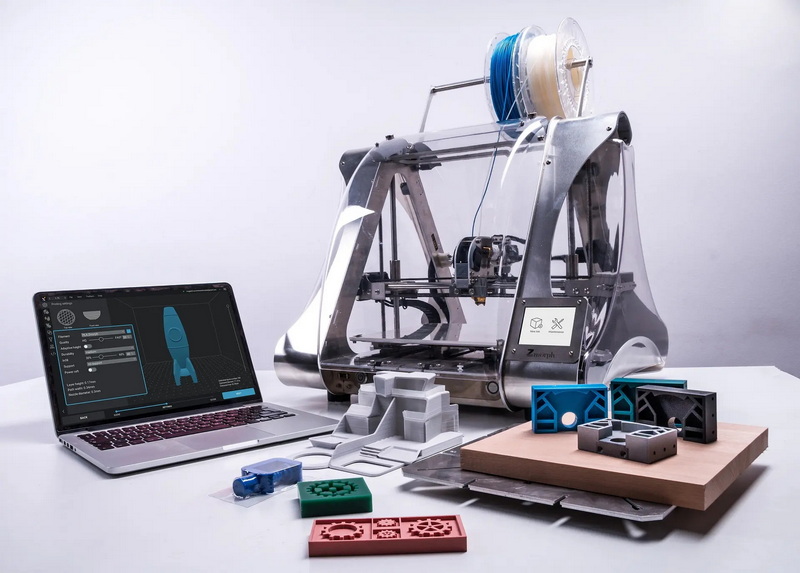
HP-certified partners meet rigorous testing standards that confirm machine calibration, powder management, and output consistency. Working with these providers ensures that:
- All equipment uses genuine HP-certified materials and software parameters.
- Batch consistency and part durability meet or exceed HP's industrial benchmarks.
- Customers gain access to advanced support, including failure analysis and process validation reports.
- Providers remain updated with HP's continual technology improvements and sustainability programs.
Such partnerships give businesses the confidence that every printed component meets the highest standards of accuracy and mechanical performance.
HP's commitment to sustainability plays a major role in MJF's adoption. The process minimizes material waste, consumes less energy compared to traditional manufacturing, and incorporates closed-loop powder recycling. HP's ongoing innovations aim to reduce the carbon footprint through optimized fusing agents, recyclable materials, and energy-efficient printers.
As industries prioritize greener production, MJF's combination of reduced waste and lightweight, performance-driven parts perfectly supports environmental goals. Manufacturers increasingly turn to 3D printing not only as a method of efficiency but as a cornerstone of responsible production.
The future of HP Multi Jet Fusion looks promising as HP expands its machine lineup and materials portfolio. Continuous development introduces new specialty polymers and flexible materials, enabling broader applications—from flexible consumer goods to impact-resistant automotive components. Integration with AI and predictive analytics will further enhance process reliability, part traceability, and performance optimization.
HP's ongoing collaboration with manufacturers and universities fosters research into bio-based and recyclable materials, ensuring additive manufacturing aligns with circular economy principles. Meanwhile, the Digital Manufacturing Partner Network keeps expanding, giving engineers worldwide access to industrial-grade 3D printing through local suppliers.
HP Multi Jet Fusion has firmly established itself as a cornerstone of modern additive manufacturing. With its unmatched speed, precision, and efficiency, MJF empowers industries to transition from prototyping to production without costly retooling. Choosing a reliable provider—such as Shapeways, Protolabs, Sculpteo, or Xometry—ensures consistent results, timely delivery, and scalable manufacturing solutions.
As digital manufacturing continues to advance, HP's MJF technology represents not just a 3D printing process but a foundation for the factories of the future, where customization, sustainability, and performance coexist seamlessly.
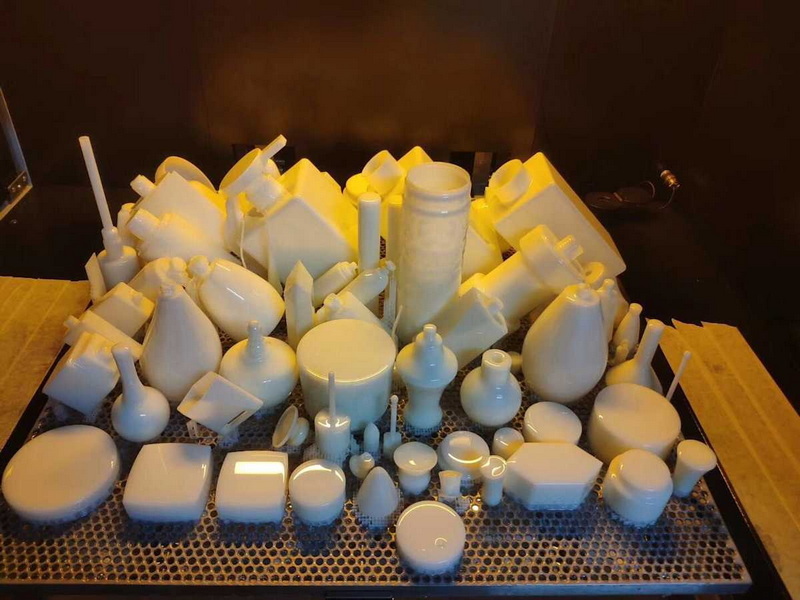
HP MJF primarily uses PA 12, PA 11, PA 12 Glass Bead, and TPU. These nylon-based powders offer exceptional durability, chemical resistance, and flexibility, depending on project requirements.
Unlike SLS, which relies on focused lasers, MJF uses two chemical agents and infrared energy for uniform heating, resulting in faster production and smoother finishes. Compared to FDM, it achieves superior strength, repeatability, and finer detail resolution.
Sectors such as automotive, aerospace, consumer goods, and medical technology rely heavily on MJF for functional parts that combine low weight, precision, and fast turnaround. It's equally valuable for end-use production and rapid prototyping.
Yes. Many companies employ MJF for both short runs and medium-scale manufacturing. Its consistent mechanical properties and material efficiency make it a cost-effective choice for functional components and spare parts.
Evaluate experience, certifications, supported materials, and production scalability. Trusted providers like Protolabs, Xometry, and Materialise offer certified HP systems, quality assurance, and robust customer support.
[1](https://www.sculpteo.com/en/services/online-3d-printing-service/)
[2](https://www.shapeways.com)
[3](https://www.protolabs.com/services/3d-printing/)
[4](https://printathing.com)
[5](https://www.xometry.com/capabilities/3d-printing-service/)
[6](https://www.materialise.com/en)
[7](https://fathommfg.com)
[8](https://www.xometry.com/capabilities/3d-printing-service/large-scale/)


