From idea to market-ready product, our NPI solutions make every stage easier, faster. Discover How We Help

Views: 222 Author: Tomorrow Publish Time: 2026-01-02 Origin: Site


Content Menu
● Understanding the CNC Machining Process
● Key Categories of Motion in CNC Systems
● The Major Moving Components in CNC Machining
>> 1. Spindle
>> 2. Tool Holder and Automatic Tool Changer (ATC)
>> 3. Worktable
>> 5. Ball Screws and Linear Guides
>> 6. Rotary Axes and Swivel Heads
>> 7. Tool Turret and Carriage (Lathe Systems)
>> 9. Coolant Delivery System and Chip Evacuation Motion
● Automation and Motion Coordination in Detail
● Influence of Machine Type on Movement
>> CNC Lathes
>> CNC Routers
● The Importance of Precision Movement
● Advances in Motion Technology
● FAQ
>> 1. What components typically move in a CNC machining center?
>> 2. How do rotary and linear motions differ in CNC operations?
>> 3. What ensures the accuracy of moving CNC parts?
>> 4. Why do some CNC machines have more than three axes?
>> 5. How is motion synchronized in CNC machining?
Computer Numerical Control (CNC) machining is one of the most advanced and transformative manufacturing methods in modern industry. It achieves extremely high levels of precision, consistency, and speed through the programmed control of moving mechanical components. Every motion in a CNC machine—from subtle micro-adjustments to rapid tool changes—is executed with mathematical precision. Understanding which components move during CNC machining not only clarifies how a CNC machine functions but also helps operators, engineers, and manufacturers optimize performance, reliability, and part accuracy.
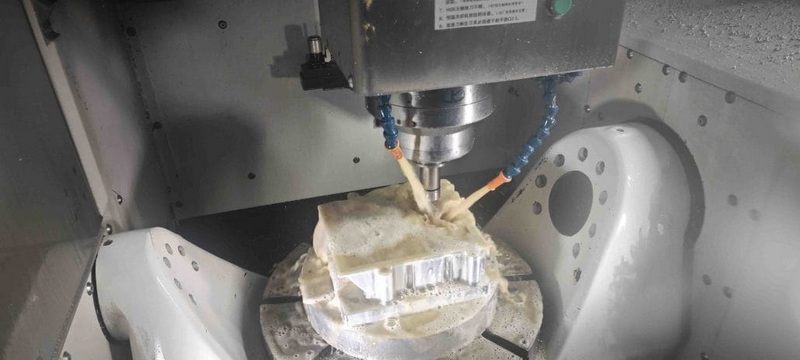
CNC machining involves using a pre-programmed sequence of commands to control machining tools and remove material from a workpiece. The code, commonly written in G-code, directs machine tools to move along defined paths and at specific speeds. These movements are carried out automatically by servo or stepper motors that control different axes and mechanical parts.
While early machine tools required continuous manual adjustment, CNC technology eliminated much of this human intervention. The integration of sensors, encoders, and computer control enables machines to self-correct deviations and complete complicated geometries with minimal input. The real magic lies in motion—how machine components move precisely in relation to each other.
CNC machining relies on two kinds of movement:
1. Linear Motion – Straight-line travel along the \(X\), \(Y\), and \(Z\) axes.
2. Rotary or Angular Motion – Rotational movement around one or more axes, designated as \(A\), \(B\), or \(C\).
The synchronization of these motions determines the shape, accuracy, and surface finish of the machined product. Machines can vary from simple 2-axis systems to highly complex 5- or 6-axis configurations used in aerospace, automotive, and medical device manufacturing.
The spindle is the heart of motion in any CNC machine. It holds and rotates the cutting tool (in milling) or the workpiece (in turning). Driven by either electric or hydraulic motors, the spindle's movement and speed control directly affect cutting performance and tool life.
Modern spindles are not just rotating components—they incorporate sophisticated bearings, cooling systems, and precision drive mechanisms. Some high-speed spindles can rotate at over 30,000 revolutions per minute (RPM), while maintaining micrometer-level accuracy. Spindle orientation and speed are critical parameters in CNC programs, especially in operations like threading, contouring, and pocket milling.
The tool holder ensures secure positioning of the cutting tool inside the spindle. It must withstand vibrations, torque, and accentuated forces during machining. Different standards exist for tool holders—such as CAT, BT, and HSK—each optimized for balance and rigidity.
The Automatic Tool Changer (ATC) moves dynamically to replace worn or unneeded tools with new ones in seconds. Depending on machine design, the ATC may rotate along a carousel, swing arm, or chain-type mechanism. This automated tool exchange boosts productivity, allowing for continuous multi-step machining without manual interruptions.
The worktable provides a stable surface to hold the workpiece using vises, clamps, or fixtures. Its controlled movement along the \(X\) and \(Y\) axes allows for precise positioning of the part relative to the cutting tool. Some CNC machines use dynamic tables that can rotate or tilt, enabling better access to multiple surfaces in complex machining jobs.
A precision-ground surface and rigid guide systems ensure that table movement occurs without vibration or distortion. Many machines use hydrostatic or linear guideways to minimize friction and maintain stability during heavy-duty operations.
At the core of CNC motion control are the linear axes.
Each axis corresponds to a direction in 3D space:
- X-axis: Moves left and right.
- Y-axis: Moves front to back.
- Z-axis: Moves up and down.
These axes work in combination to shape the workpiece through coordinated movement patterns. High-precision linear encoders constantly track the axis position, feeding data back to the controller to maintain desired precision.
CNC controllers calculate thousands of position updates per second to ensure synchronized axis movement. In sophisticated 5-axis systems, two additional axes allow rotation (A, B, or C), transforming the machine into a multiaxial sculpting system capable of creating complex geometries from a single workpiece setup.
Ball screws play a pivotal role in converting rotational motor input into smooth linear motion. Each ball screw contains recirculating ball bearings, dramatically reducing friction and improving efficiency. The tight tolerances of ball screw assemblies ensure movements occur with minimal backlash, keeping positional errors extremely low.
Linear guides—comprising rails and rolling blocks—support these motion systems. They maintain rigidity and direction as machine elements move. The combination of precision ball screws and linear guides allows CNC machines to sustain heavy loads while achieving micron-level accuracy over long production cycles.
In machines with rotary elements, axes beyond the standard three are introduced. The additional rotary axes—designated \(A\), \(B\), or \(C\)—enable the cutting tool or worktable to tilt or rotate. A 4-axis CNC typically includes one rotary motion, while a 5-axis design may include both tilt and rotation.
- A-axis: Rotation around the \(X\)-axis.
- B-axis: Rotation around the \(Y\)-axis.
- C-axis: Rotation around the \(Z\)-axis.
This extra degree of freedom is essential for creating intricate shapes such as turbine blades, molds, prosthetic components, and impellers. Rotational motion allows simultaneous contouring from multiple directions—something that would require multiple setups on 3-axis machines.
CNC turning centers employ a tool turret, which rotates to present different cutting tools to the workpiece. The turret indexes automatically, allowing for operations such as roughing, finishing, threading, and grooving without manual tool changes.
Attached to the turret is the carriage, which moves along the machine bed (usually the \(Z\)-axis) and supports cross-feed motion on the \(X\)-axis. This combination enables both longitudinal and radial material removal, making it the backbone of turning operations.
Underneath each axis lies a sophisticated drive system that controls motion. Feed drives consist of servomotors (or, in simpler machines, stepper motors), amplifiers, and feedback encoders. Servomotors respond to closed-loop control systems, adjusting torque and speed dynamically to maintain positional accuracy.
High-torque servos are crucial in heavy milling tasks, while lightweight, high-speed servos are used for rapid tool or spindle positioning. Their reliability ensures that programmed tool paths are followed exactly as intended.
Though often overlooked, the movement of coolant nozzles and chip conveyors ensures process stability. Coolant systems keep cutting zones thermally controlled, preventing tool wear and part deformation. Some advanced CNC machines use programmable coolant nozzles that automatically reposition to follow the tool's cutting path, maintaining optimal cooling.
Chip conveyors transport metallic or composite chips away from the cutting area. Their continuous, motorized motion prevents re-cutting of debris, preserving part finishes and safety.
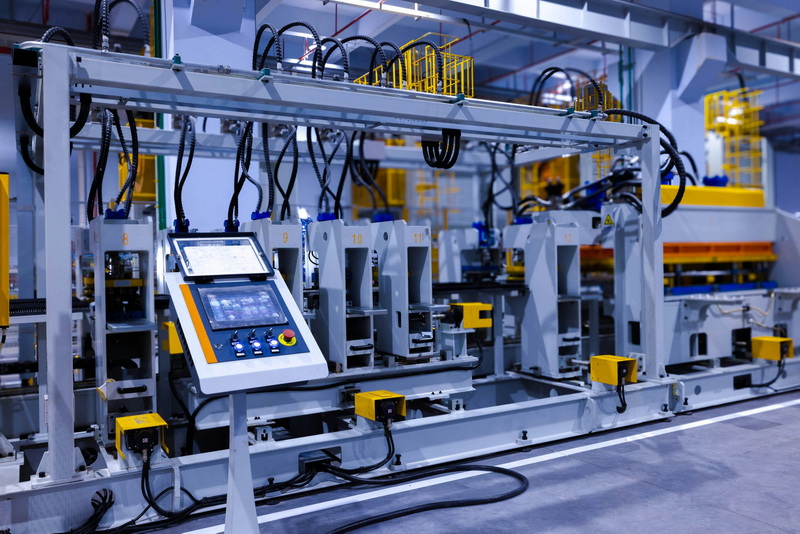
The precision and efficiency of CNC machining depend on motion coordination—how every axis, spindle, and accessory moves together under computer control.
Motion commands come from toolpath points generated by computer-aided manufacturing (CAM) software. The CNC controller interprets these into low-level signals for each motor. Encoders measure the actual positions, and a feedback loop compares real versus commanded motion. This closed-loop system corrects any discrepancy instantly.
Each move follows a motion profile that defines acceleration, velocity, and deceleration. Smooth transitions are vital to avoid tool deflection or surface scalloping. For example:
- Linear interpolation produces straight-line cuts.
- Circular interpolation produces arcs or curved paths.
- Helical interpolation combines both for complex surfaces.
Machines also employ compensation methods such as backlash correction, thermal drift correction, and dynamic error mapping. These ensure consistent accuracy across long run times and temperature changes that can affect precision components.
Different CNC machines are designed for different kinds of material interaction, meaning their motion systems vary accordingly.
Milling machines often use a moving table and a vertically moving spindle. In vertical mills, the spindle moves along the \(Z\)-axis, while the table moves along \(X\) and \(Y\). Horizontal mills have a spindle parallel to the table, allowing for deeper cuts and better chip removal.
CNC lathes rely on a rotating spindle that spins the workpiece while stationary tools move along linear axes. Tool turrets and carriages create coordinated longitudinal and cross movements to shape parts like shafts or bushings.
Routers operate much like mills but are optimized for lighter materials such as wood, foam, or plastic. They feature large worktables, belt-driven axes, and high-speed spindles for smooth cutting at high feed rates.
These machines integrate multiple rotary movements, enabling tool or workpiece tilting. The increased degrees of freedom eliminate multiple setups and improve accuracy for sculpted or curved parts found in aerospace or mold design.
Used for small, intricate parts, these machines feature sliding headstocks. The entire headstock moves, pushing the workpiece through a precision guide bushing while multiple tools cut simultaneously. This continuous feed motion allows near-perfect concentricity for tiny, high-tolerance components.
In CNC machining, accuracy is only as good as the smallest controlled motion. A micrometer of deviation can determine whether a part functions properly. Several design and control technologies ensure reliable precision:
- Temperature control systems prevent thermal expansion.
- Lubrication units reduce friction on moving parts.
- Dynamic balancing minimizes vibration in high-speed spindles.
- Calibration routines continually verify axis positioning.
Precision movement also enhances productivity by enabling faster feed rates without sacrificing quality. The smoother the motion, the less stress on both tools and components, resulting in lower maintenance and higher machine longevity.
As CNC machining evolves, so do its motion systems. Key innovations include:
- Linear motors replacing ball screws for direct, frictionless motion.
- Magnetic levitation technology that virtually eliminates wear.
- Smart sensors and IoT feedback to predict axis fatigue and prevent breakdowns.
- Artificial intelligence motion optimization, adjusting feed rates dynamically during machining for maximum efficiency.
These advancements redefine how moving components interact, paving the way toward autonomous and highly intelligent machining processes.
The moving components in CNC machining—spindles, tables, axes, tool changers, turrets, and drives—work in seamless coordination, transforming coded instructions into perfectly shaped parts. Each component's motion, whether linear, rotary, or automatic, defines the precision and capability of the overall system. By understanding the dynamics of movement, manufacturers can optimize accuracy, reduce cycle times, and extend machine life. Ultimately, motion is not just a mechanical function—it is the very soul of CNC precision.
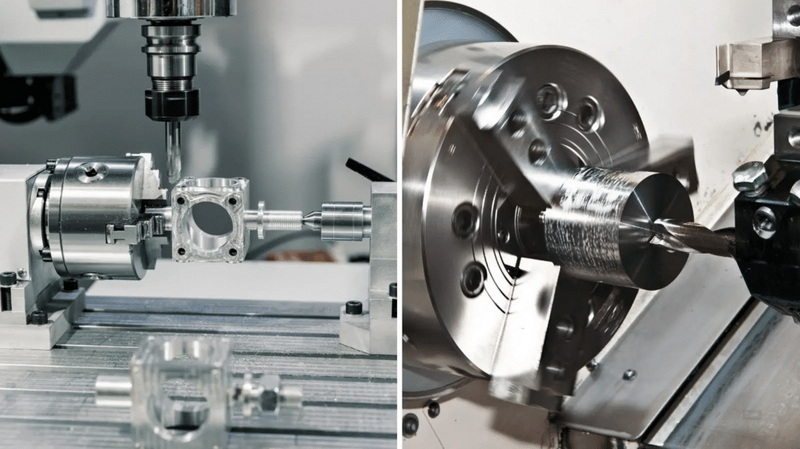
Major moving components include the spindle, worktable, tool holder, automatic tool changer, linear axes (\(X\), \(Y\), \(Z\)), and sometimes rotary axes. Each serves a unique role in shaping and positioning the material.
Linear motion refers to straight-line movement along coordinate axes, while rotary motion involves spinning or tilting parts around an axis. Combining both allows CNC machines to create 3D surfaces and complex curves with high accuracy.
Servo-driven motors, ball screws, linear guides, and closed-loop feedback systems maintain accuracy. These components, supported by software compensation, detect and correct even the smallest deviations during motion.
Additional axes—such as \(A\), \(B\), or \(C\)—enable multi-directional machining. They allow tools to approach a workpiece from different angles, reducing setups and enabling production of intricate, high-precision parts.
Synchronization occurs through a controller that processes toolpath commands and adjusts each motor's speed and position simultaneously. Feedback sensors confirm real-time alignment to ensure coordinated, accurate motion.


