From idea to market-ready product, our NPI solutions make every stage easier, faster. Discover How We Help

Views: 222 Author: Tomorrow Publish Time: 2025-11-27 Origin: Site


Content Menu
● Predecessor of CNC: The Age of Manual Machining
● The Invention of Numerical Control (NC)
● 1950s: The Birth of NC and Early Developments
● 1960s: Transition from NC to CNC
● 1970s: Expanding CNC Adoption Globally
● 1980s: Automation and Computerization
● 1990s: Speed, Precision, and User Interface Improvements
● 2000s to Present: Smart CNC and Industry 4.0
● Why CNC Machining Matters Today
● Timeline Summary of CNC Machining History
● Future Outlook for CNC Machining
● FAQs
>> 1. When was CNC machining first invented?
>> 2. Who invented CNC machining?
>> 3. How did CNC evolve from NC machines?
>> 4. Which industries rely heavily on CNC machining today?
>> 5. What does the future hold for CNC technology?
CNC machining is one of the most transformative innovations in modern manufacturing. It combines mechanical engineering and computer technology to produce highly accurate and repeatable parts across industries. Understanding when CNC machining started reveals the fascinating evolution of automation, industrial advancement, and precision manufacturing that has shaped today's global production landscape.

CNC stands for Computer Numerical Control. It refers to the use of computers to control machine tools such as lathes, mills, routers, and grinders. Instead of manual operation, operators use digital instructions (G-codes) generated from CAD and CAM software to control cutting tools and create precise parts.
CNC machining is used in industries such as aerospace, automotive, defense, electronics, and medical manufacturing. It allows precise shaping of metals, plastics, composites, and even ceramics, ensuring consistent production quality and complex geometries that manual machining cannot achieve efficiently.
Before CNC machines existed, parts were produced through manual machining. Skilled machinists operated tools like milling machines, lathes, and drills by hand. Although effective, this process required extensive experience and was limited by human precision and fatigue.
During the Industrial Revolution of the late 18th and early 19th centuries, manual lathes and mills represented the foundation for all manufacturing. By the mid-20th century, the demand for standardization and mass production grew, motivating engineers to find more efficient and automated techniques.
The real journey toward CNC machining began with the invention of Numerical Control (NC) in the late 1940s. John T. Parsons, an American engineer, often called the father of NC machining, played a pivotal role. Parsons was contracted by the U.S. Air Force and Massachusetts Institute of Technology (MIT) to automate the production of helicopter blades, which required consistent precision.
In 1949, Parsons and his team developed a method to control machine-tool movements using punched cards. Each card carried coordinate data, which allowed a motor-driven system to cut and move according to those inputs. This marked the first time machining processes were guided by numerical data rather than manual operation.
By the early 1950s, MIT demonstrated the first operational NC milling machine, a modified Cincinnati Hydrotel mill, solidifying the birth of numerical control machining technology. During this decade, NC machines operated with analog circuits and were controlled by punched paper tapes. Although costly and bulky, these machines proved capable of producing complex geometries with repeatable accuracy, which was a difficult feat for manual machining.
In 1958, Richard Kegg, working with MIT, filed a patent for a motor-driven positioning apparatus that would become foundational for CNC systems. This decade marked the gradual transition from experimental systems to commercial possibilities in automated machining.
The 1960s were a turning point as numerical control transitioned into computer numerical control with the integration of digital computers. Computers replaced punched tapes with editable memory, enabling easier program modification, real-time error correction, and more complex machining tasks.
In 1967, the Electronic Data Control Company introduced the first true CNC milling machine that integrated a computer system for fully automated control. This decade also witnessed the earliest partnerships between CNC systems and emerging CAD (Computer-Aided Design) technologies, expanding design-to-manufacturing workflows.
The 1970s saw explosive growth in CNC machining adoption across industries and countries. Advances in digital electronics, servo motors, and electronics miniaturization made CNC machines increasingly reliable and affordable.
During this time:
- The integration of CAD and CAM software became more common.
- Multipurpose CNC machining centers (with capabilities for milling, drilling, and turning) entered production.
- CNC standards such as G-code programming were widely adopted.
- Countries such as Japan and Germany joined the U.S. in advancing CNC technology.
This era turned CNC machining into an industrial staple for automotive, aerospace, and defense manufacturing.
By the 1980s, CNC machining was central to the global manufacturing industry's automation push. Personal computers made CNC programming and operation more accessible. Machine tool builders introduced automatic tool changers and multi-axis machines, enhancing productivity and complexity of parts.
The ability to simulate machining operations on CAD/CAM systems prior to production reduced errors and shortened lead times. Factories increasingly moved toward fully automated, continuous manufacturing processes using CNC technology.
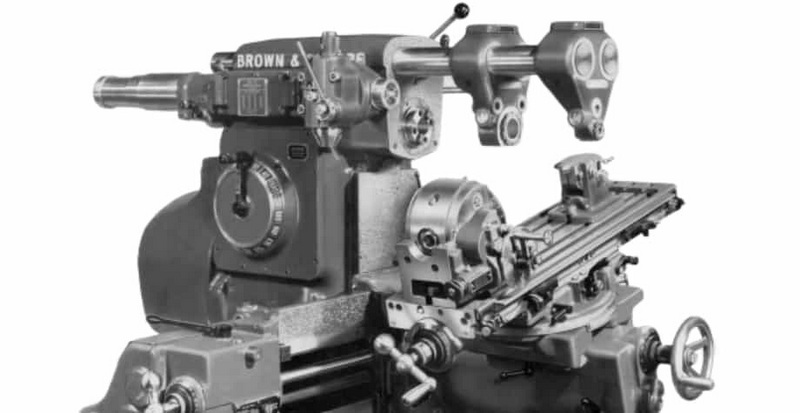
The 1990s elevated CNC machining to new levels with high-speed machining techniques, improving material removal rates while maintaining tight tolerances. Advances in spindle technology, cutting tools, and computerized feedback systems enabled multi-axis simultaneous machining.
User interfaces improved with graphical displays and software-based programming, lowering the requirement for specialized operators. Complex molds, dies, and aerospace parts could be made more efficiently, supporting modern product innovations.
Since 2000, CNC machining has integrated with Industry 4.0 concepts: interconnected machines, real-time monitoring, and data analytics drive smarter manufacturing decisions. Sensors provide feedback on cutting conditions, tool wear, and machine health, enabling predictive maintenance.
Modern CNC machines often interface with cloud platforms to allow remote programming, diagnostics, and collaboration. Hybrid additive-subtractive machines now combine CNC cutting with 3D printing in a single system.
This digital transformation ensures that CNC machining remains at the forefront of advanced manufacturing, enabling complex parts with greater speed, precision, and customization.
CNC technology ensures consistent quality, repeatability, and scalability across industries. It plays a crucial role in aerospace, automotive, healthcare, electronics, and defense manufacturing. CNC machines enable companies worldwide to meet stringent tolerances and complex geometries efficiently, supporting innovation and economic growth.
| Year/Decade | Key Development | Innovation Highlight |
|---|---|---|
| Late 1940s | Numerical control (NC) invention | John T. Parsons develops punched card control |
| 1952 | First NC machine demonstrated at MIT | Modified Cincinnati Hydrotel Milling machine |
| 1958 | First CNC patent filed by Richard Kegg | Motor controlled positioning apparatus |
| 1967 | First true CNC milling machine | Integrated computer controls |
| 1970s | Global expansion | CAD/CAM integration, G-code standards |
| 1980s | PC integration & automation | Tool changers, multi-axis controls |
| 1990s | High-speed, precision machining | Multi-axis, graphical UI improvements |
| 2000s-present | Smart CNC, IoT integration | Real-time monitoring and predictive analytics |
The future of CNC machining includes expanding AI-driven optimization, energy-efficient processes, and further hybrid manufacturing with additive technology. Remote monitoring and digital twin simulations will enhance productivity and reduce downtime. Advancements in materials and machining techniques will continue to support high-precision and sustainable manufacturing.
CNC machining began in the late 1940s as numerical control and evolved through decades of technological breakthroughs to become the foundation of modern manufacturing. From punched taped mechanical systems to sophisticated, interconnected digital machines, CNC has revolutionized how industries produce complex, precise components. This enduring innovation drives productivity, precision, and global industrial growth today.
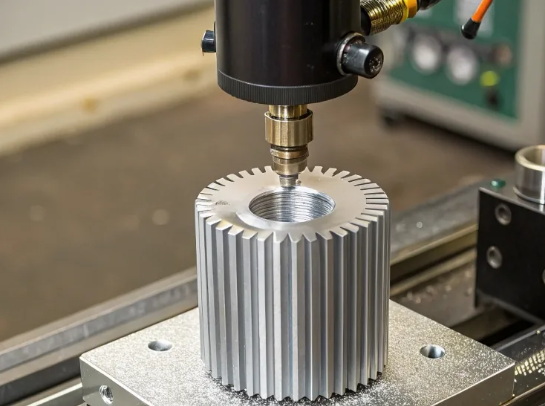
CNC machining started as numerical control in the late 1940s, with John T. Parsons pioneering punched card control. The first NC machine was demonstrated by MIT in 1952.
John T. Parsons is credited with inventing numerical control machining, collaborating with MIT to produce the first NC machine and advancing automated manufacture of helicopter blades.
NC used punched cards and analog controls, while CNC introduced digital computers enabling editable programming, real-time feedback, and complex machining operations starting in the 1960s.
Aerospace, automotive, electronics, medical, and defense industries rely on CNC machining to produce precise and complex parts reliably and efficiently.
CNC technology's future lies in AI-driven automation, Industry 4.0 integration, hybrid additive-subtractive manufacturing, predictive maintenance, and sustainable machining.
[1](https://www.3erp.com/blog/cnc-machining-history/)
[2](https://www.rapiddirect.com/blog/cnc-history/)
[3](https://yijinsolution.com/cnc-guides/cnc-machining-history/)
[4](https://machiningconceptserie.com/history-of-cnc-machining/)
[5](https://en.wikipedia.org/wiki/History_of_numerical_control)
[6](https://www.xometry.com/resources/machining/cnc-machining-history/)
[7](https://www.americanmicroinc.com/resources/evolution-cnc-machines/)
[8](https://laszeray.com/the-history-of-cnc-machinery/)
[9](https://www.toolcraft.com/blog/cnc-machining-a-brief-history/)
[10](https://www.james-engineering.com/history-of-cnc)


