From idea to market-ready product, our NPI solutions make every stage easier, faster. Discover How We Help

Content Menu
● Types of CNC Milling Operations
● CNC Milling Machine Components
● FAQ
>> 1. What is the primary function of CNC milling?
>> 2. Which materials can be machined using CNC milling?
>> 3. How does CNC milling differ from manual milling?
>> 4. What types of cuts can CNC milling perform?
>> 5. What are the main advantages of CNC milling for manufacturers?
CNC milling is a crucial machining process combining traditional milling with computer numerical control (CNC) technology. This process involves the removal of material from a workpiece using a rotating cutting tool controlled by a computer program, enabling the creation of highly precise and complex parts from various materials such as metals, plastics, wood, and composites.[3][10]
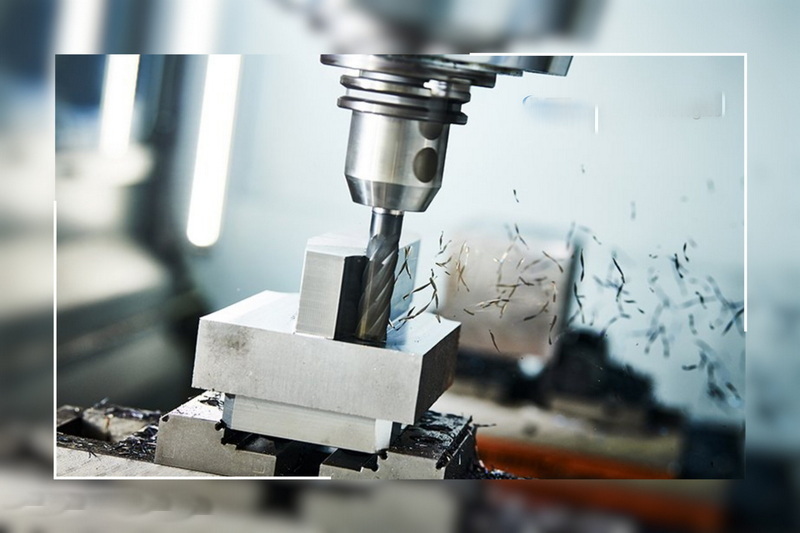
CNC milling is a subtractive manufacturing process in which a computer-controlled rotating cutting tool removes material from a fixed workpiece. The process automates the shaping, cutting, and drilling of parts according to digital designs. Unlike manual milling, CNC milling relies on programmed instructions to control tool movement and spindle speed, vastly improving accuracy and repeatability.[1][2][9]
The CNC milling process begins with designing a 3D CAD model of the desired part. This model is converted into machine-readable G-code instructions using CAM software, which control the CNC milling machine's movements along multiple axes. The workpiece is securely fixed onto the machine bed while the rotating cutting tool removes material precisely following the programmed tool paths, depths, and speeds. The cutting tool's spindle is motor-powered, allowing rotation to shave material selectively.[2][4][3]
The key steps are:
- Creating the CAD design
- Converting CAD to CNC machine program
- Setting up the workpiece and tools
- Executing the machining cycle
- Post-processing and finishing the part[1][2]
Once the setup is complete, the milling process starts by running the CNC program loaded into the machine. The cutting tool rotates at high speeds, often thousands of revolutions per minute, removing material layer by layer or in pockets until the final part geometry is achieved. Operators monitor the process and intervene if any issues arise, but CNC milling is largely automated and highly precise.[2]
CNC milling encompasses various operations depending on the tool shape, path, and cutting method:
- Face Milling: Removing a large flat surface on the workpiece. The tool's rotation axis is perpendicular to the workpiece surface, ideal for producing flat or shallow contours.
- Peripheral (Plain) Milling: Cutting along the edges or periphery to define shape. The tool's axis is parallel to the workpiece surface for creating slots, grooves, and walls.
- Slot Milling: Creating grooves or keyways by removing material along a linear path.
- Form Milling: Using specially shaped cutters to form convex or concave profiles and irregular surfaces.
- Angular Milling: Cutting at an angle to produce features like chamfers, dovetails, and grooves.
- Drilling: Creating round holes with drill bits integrated into CNC milling machines.[4][11][2]
A typical CNC milling machine consists of several key parts:
- Spindle: Holds and rotates the cutting tool.
- Worktable: Supports and positions the workpiece.
- Cutting Tools: Various shaped End Mills, drills, and cutters designed for specific milling operations.
- Controllers: Computer systems that interpret G-code and control movement along the X, Y, and Z axes, often with multi-axis capability for complex geometries.
- Coolant Systems: Spray coolant to reduce heat and improve cutting efficiency.
- Tool Changers: Automated systems for switching tools in multi-step operations.[5][7]
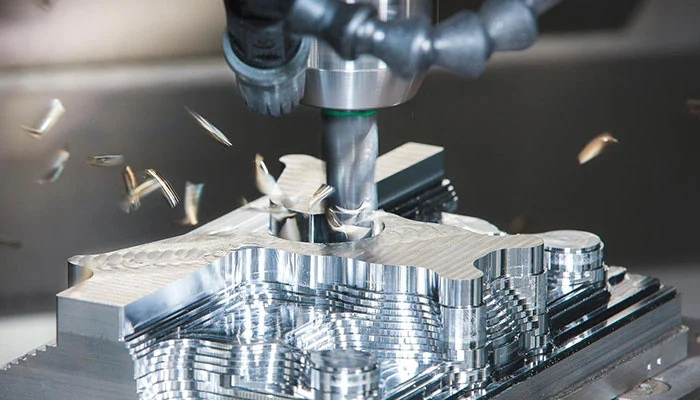
CNC milling plays a vital role in several industries due to its precision and versatility. It is used for:
- Aerospace components like turbine blades and structural parts.
- Automotive parts such as engine blocks and transmission housings.
- Medical devices, including surgical implants and dental prosthetics.
- Electronics enclosures and connectors.
- Industrial equipment and tooling.
- Prototyping and custom manufacturing for small to medium batch production.[10][4]
- High Precision and Accuracy: CNC control assures tight tolerances and repeatability.
- Complex Geometry: Capable of producing intricate shapes and multi-dimensional parts.
- Automation: Reduced manual labor and error risk.
- Material Versatility: Works with metals, plastics, composites, and wood.
- Scalability: Suitable for prototypes and mass production.
- Surface Finish: Achieves smooth and detailed finishes with correct tooling and parameters.[11][2]
- High setup and equipment costs relative to manual machining.
- Requires skilled programmers and operators.
- Material waste inherent in subtractive processes.
- Complexity and cost rise significantly with multi-axis machines.
- Limitations in machining very hard or brittle materials without tool wear or breakage.[11][2]
CNC milling is an integral part of modern manufacturing, blending precision machining and computer automation to create complex, high-quality parts efficiently. By using digital CAD designs and sophisticated CAM software, CNC milling machines can execute a variety of milling operations to sculpt material into desired shapes with consistent accuracy. While the process involves notable investments in equipment and expertise, its benefits in flexibility, speed, and quality make it indispensable across many sectors.
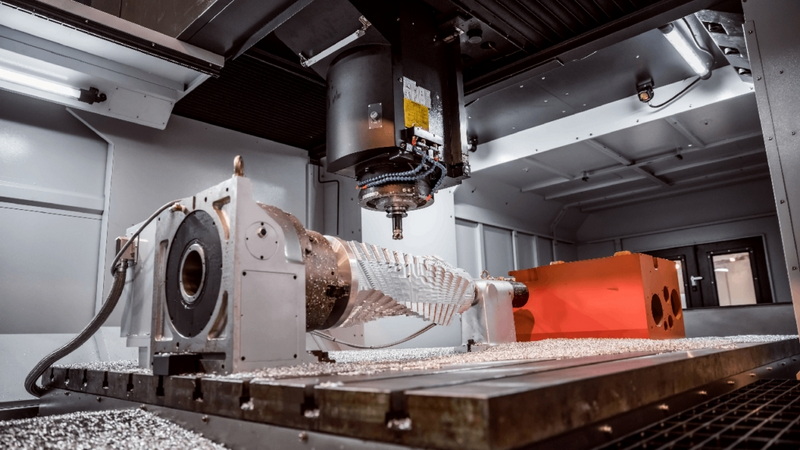
CNC milling uses computer-controlled rotating cutting tools to precisely remove material from a workpiece, forming the desired shape or feature according to a digital design.[3]
CNC milling machines can process metals, plastics, wood, composites, and other specialized materials, making it versatile for various industrial applications.[4][10]
Unlike manual milling, CNC milling automates tool movement via programmed instructions, providing higher precision, repeatability, and efficiency with less need for manual intervention.[1][2]
CNC milling can perform face milling, peripheral milling, slot milling, form milling, angular milling, and drilling, enabling a wide range of cutting operations for complex parts.[11]
The main advantages include precision, flexibility, repeatability, ability to create complex geometries, and reduced manual labor, which together improve production quality and efficiency.[2][11]
[1](https://www.hubs.com/knowledge-base/what-is-cnc-milling/)
[2](https://geomiq.com/blog/cnc-milling-guide/)
[3](https://www.xometry.com/resources/machining/what-is-cnc-milling/)
[4](https://get-it-made.co.uk/resources/what-is-cnc-milling)
[5](https://www.ardelengineering.com/cnc-milling-process)
[6](https://www.youtube.com/watch?v=flTPiOddlP4)
[7](https://www.speedtigertools.com/solution/ins.php?index_id=107)
[8](https://www.fictiv.com/articles/cnc-milling-explained)
[9](https://www.uti.edu/blog/cnc/milling)
[10](https://www.rapiddirect.com/blog/what-is-cnc-milling/)
[11](https://www.gs-proto.com/blog/cnc-milling-guide/)


