From idea to market-ready product, our NPI solutions make every stage easier, faster. Discover How We Help

Views: 222 Author: Tomorrow Publish Time: 2025-12-24 Origin: Site
Content Menu
● Introduction to Flute Turning
● The Purpose and Function of Flutes
● CNC Techniques for Turning Flutes
>> 3. Turning with Live Tooling
● Understanding Flute Geometry Parameters
● Programming Flutes in CNC Systems
● Materials Involved in Flute Turning
● Quality Inspection and Measurement
● Troubleshooting Common Issues
● Benefits of CNC Flute Turning
● Maintenance and Safety Considerations
● Future Trends in CNC Flute Turning
● FAQ
>> 1. What is the main function of turning flutes on CNC machines?
>> 2. Which CNC machines are typically used for flute manufacturing?
>> 3. How can manufacturers improve flute surface finish?
>> 4. What factors determine the helix angle in flutes?
>> 5. Why is CNC flute turning superior to manual machining?
CNC (Computer Numerical Control) machining is one of the cornerstones of modern manufacturing. It enables precise and automated shaping of materials into complex geometries with consistent quality. Among the many processes performed on CNC equipment, turning of flutes is one of the most intricate and specialized. This operation is crucial for creating tools such as drills, end mills, taps, and reamers — all of which rely on accurately formed flutes to function effectively.
This article provides an in-depth look into what flute turning means, how it is executed on CNC machines, which parameters and materials are involved, and how it directly affects tool performance. It also explores advanced methods, troubleshooting, and upcoming trends in automated flute production.
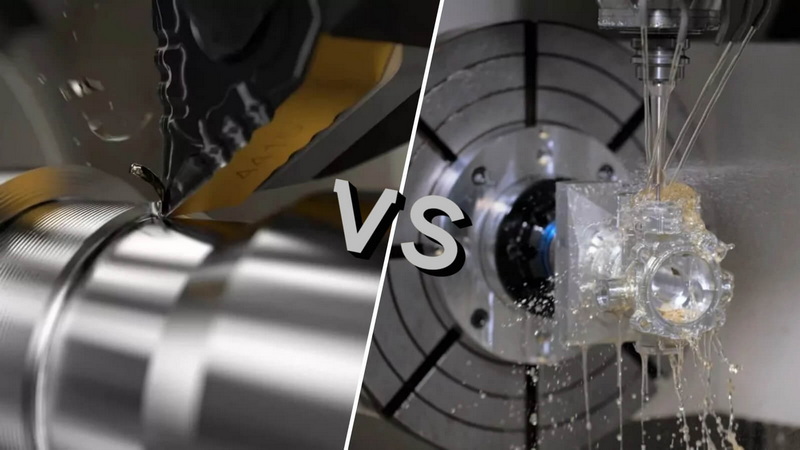
Flute turning refers to the machining or grinding of spiral grooves along the surface of a cylindrical tool blank. These helical channels, called flutes, perform vital functions in the cutting process. Their design influences chip evacuation, coolant flow, and cutting dynamics.
In CNC operations, the creation of these flutes requires coordinated movement among multiple machine axes, allowing precise synchronization between rotational and linear motion. Depending on the type of tool being manufactured and the material used, flutes may be formed through grinding, milling, or a combination of both.
Flutes are not just aesthetic or structural features — they define how the tool cuts, how heat is managed, and how long the tool will last under extreme working conditions.
Flutes improve the efficiency of cutting tools in multiple ways:
- Chip evacuation: As materials are cut, chips are forced into the flute channels, where they are expelled away from the cutting area.
- Cooling: Flutes guide coolant flow toward the cutting edge, keeping the operation cool and preventing burning or deformation.
- Edge formation: The edges of the flutes become the tool's cutting lips. Their exact geometry dictates how the tool engages the material.
- Load reduction: Removing material along the flute path decreases tool weight, reducing spindle load and enabling higher speeds.
- Noise and vibration reduction: A well-balanced flute design lowers vibration and improves surface finish.
Without well-formed flutes, cutting tools would quickly clog, overheat, and wear out, leading to inefficiency and quality problems.
Grinding is the most common and precise method for producing flutes on carbide or high-speed steel (HSS) blanks. Specialized CNC flute grinders use diamond or CBN (cubic boron nitride) wheels to grind the flute shape with microscopic precision. Multi-axis synchronization ensures the correct helix angle and depth throughout the entire tool length. This approach provides extremely tight tolerances suitable for professional cutting tools and aerospace components.
For softer materials or initial prototyping, CNC milling can be used. The machine's spindle holds an end mill or ball-nose cutter that removes material helically to form grooves. With the correct toolpath programming, the milling process can efficiently generate large flutes. However, surface finish and geometric exactness may not match those of precision grinding.
Modern CNC lathes with live tooling and C-axis control can mill flutes directly while the workpiece is held in the chuck. This hybrid approach allows both turning and milling in one setup, saving time and improving accuracy when producing shafts or tools with partial flute segments.
Creating flutes is not merely about cutting grooves; it requires precise calculation of various geometric variables:
- Helix angle (β): Determines the angle between the flute and the tool axis. A higher helix angle usually results in smoother cutting but lower rigidity.
- Flute depth and width: Impact chip volume and tool strength. Deeper flutes improve chip evacuation but weaken the tool core.
- Number of flutes: Fewer flutes offer better chip space (ideal for soft materials), while more flutes increase cutting edges (ideal for hard materials).
- Flute spacing: Must be symmetrical to avoid imbalance during high-speed rotation.
- Core diameter: The remaining tool diameter after flute cutting affects stiffness.
Optimizing these parameters ensures the tool achieves both performance and longevity.
Accurate programming is the backbone of successful flute machining. CNC software generates paths that synchronize rotational and linear movements to follow a helical trajectory. Key program inputs include:
1. Start and end coordinates of each flute.
2. Tool orientation angles relative to the blank.
3. Helical pitch, which defines the spacing between successive turns.
4. Feed rate and spindle RPM, balancing cutting load and surface quality.
5. Compensation parameters to adjust for tool wear or wheel deflection.
Most manufacturers use CAD/CAM software to design the flute geometry and automatically generate G-code. Advanced packages like Siemens NX CAM, Mastercam, and ANCA ToolRoom provide built-in libraries for different tool types.
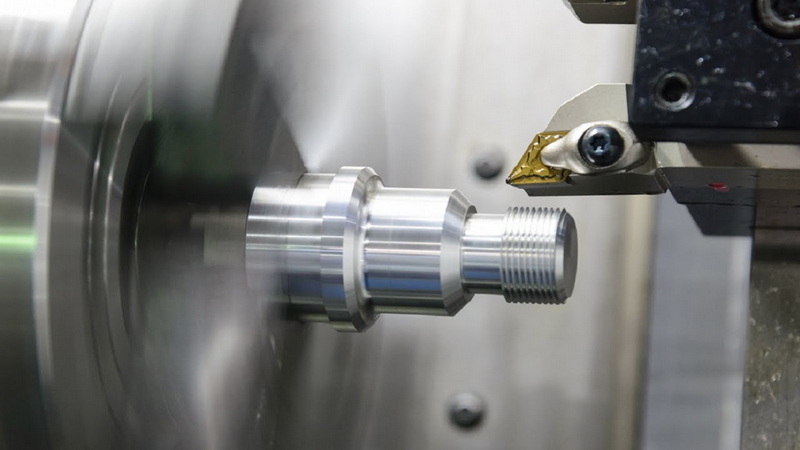
The tool blank material determines the machining or grinding method:
- High-Speed Steel (HSS): Commonly used for drills and reamers. Ground using aluminum oxide or CBN wheels.
- Cemented Carbide: Requires diamond wheels and careful coolant use to prevent cracking.
- Cermet Tools: Ground slowly with hybrid abrasives to maintain structural integrity.
- Composite or Alloy Tools: Often processed using coated diamond wheels or CNC milling depending on hardness.
- Aluminum or Brass Blanks: Easily milled at high speeds with less wear on tools.
Each material type calls for specific cooling, feed adjustments, and wheel dressing to maintain a consistent flute profile.
After flute machining, inspection verifies that the geometry matches design tolerances. Modern metrology technologies ensure this precision:
- Optical comparators magnify flute profiles for dimensional verification.
- Laser scanning systems measure helix angles, core diameters, and flute depth precisely.
- 3D microscopes capture surface finish conditions and detect micro-defects.
- Coordinate measuring machines (CMMs) can evaluate complex tool geometries automatically.
Inspection guarantees that the flutes will perform efficiently in real operating conditions.
Even with advanced CNC systems, flute turning can pose challenges:
- Vibration or chatter: Caused by improper fixturing, unbalanced flutes, or excessive feed rates.
- Overheating: Due to inadequate coolant application or excessive spindle speed.
- Edge burning: Results from dull grinding wheels or insufficient coolant flow.
- Surface roughness: Can arise from incorrect wheel dressing or contaminated coolant.
- Chip buildup: Indicates that the flute depth or helix angle is poorly optimized.
Each issue can be minimized by careful tool setup, process monitoring, and adaptive feed control.
CNC flute turning offers several measurable benefits that make it preferable to traditional manual methods:
- Unmatched precision: CNC control allows repeatable, sub-micron accuracy.
- Customization flexibility: Multiple flute shapes and variable helix angles can be programmed easily.
- Automation: Reduces human intervention and production time.
- Consistency: Maintains uniform quality across large batches.
- Enhanced surface finish: Improves chip evacuation and tool life.
As industries demand more reliable tools for high-speed production, CNC flute turning remains indispensable.
Flute turning plays a role in nearly every sector that relies on machining:
- Aerospace: For producing complex cutters capable of machining titanium and composites.
- Automotive: For drills and end mills used in mass production of engine components.
- Medical: Micro-drills and bone reamers require ultra-precise flute profiles.
- Energy: Turbine blade and pipeline machining tools benefit from advanced flute geometry.
- Toolmaking: Manufacturers create multi-flute end mills tailored to specific materials.
Each application demands specific flute geometry, balancing rigidity, chip evacuation, and surface conditions.
Machine maintenance and operator safety are critical in flute turning:
- Regular wheel dressing maintains accuracy during grinding.
- Coolant filtration systems prevent contamination and improve finish.
- Workholding inspection ensures no misalignment or slippage during rotation.
- Protective covers and eyewear shield the operator from sparks and debris.
- Scheduled calibration of CNC axes guarantees repeatability over long production runs.
Proper maintenance increases tool life, minimizes accidents, and ensures consistent high-quality output.
The future of flute turning involves broader automation and smarter integration. Advancements are emerging in areas such as:
- AI-assisted toolpath optimization, enabling real-time adjustments to spindle speed or feed rates.
- Digital twin simulations, allowing manufacturers to preview flute geometry before actual cutting.
- Additive-subtractive hybrid machining, combining 3D printing with flute grinding for complex geometries.
- Smart sensors and IoT-enabled machines, which monitor vibration and temperature to improve accuracy.
- Eco-friendly coolants and dry-grinding techniques, reducing environmental impact while maintaining performance.
These innovations will redefine toolmaking processes, delivering higher efficiency, precision, and sustainability.
Turning of flutes on CNC equipment is an intricate process that combines precision, material science, and machine intelligence. From chip removal to coolant flow and edge shaping, every feature of a flute influences a tool's performance. By mastering flute machining parameters, programming strategies, and inspection techniques, engineers can manufacture superior cutting tools that meet demanding industrial standards.
As CNC technology advances, flute turning continues to evolve, offering improved geometries, sustainability, and automation. Whether in aerospace, automotive, or medical manufacturing, accurate flute turning remains the foundation of efficient machining and high-quality results.
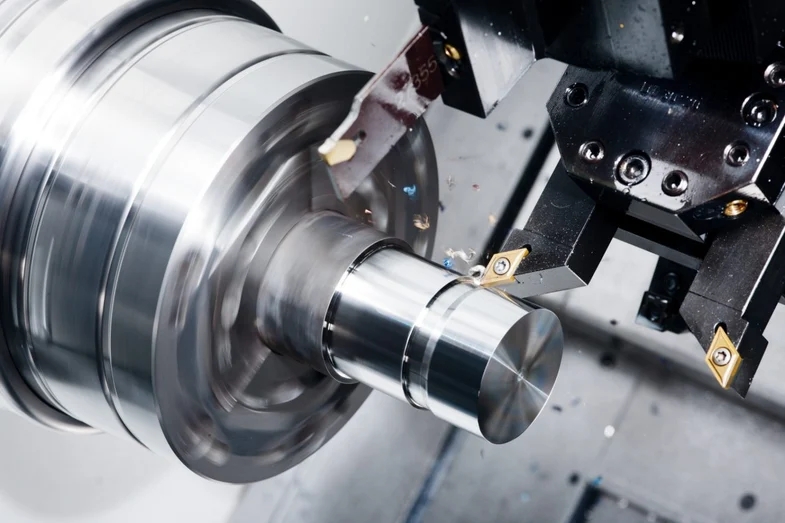
Flute turning produces helical grooves that help with chip removal, heat control, and edge formation, directly improving the performance of drills and milling tools.
CNC grinding machines, 5-axis milling centers, and multi-tasking lathes with live tooling capabilities are commonly used, depending on material hardness and design precision.
Using sharp grinding wheels, maintaining proper coolant pressure, minimizing wheel wear, and ensuring clean coolant filtration are key to achieving a smooth surface finish.
The material being machined and cutting conditions influence the helix angle — softer materials require higher helix angles for better chip evacuation, while hard metals need lower angles for rigidity.
CNC control ensures repeatable precision, customizable patterns, and automated production with minimal human error — capabilities difficult to achieve with manual grinding or milling.


