From idea to market-ready product, our NPI solutions make every stage easier, faster. Discover How We Help

Views: 222 Author: Tomorrow Publish Time: 2025-11-21 Origin: Site


Content Menu
● The Meaning of CNC: Computer Numerical Control
● Key Components of a CNC System
● Materials Used in CNC Machining
● Applications Across Industries
● CNC Machining vs. Traditional Machining
● FAQ
>> 1. What does CNC stand for in machining?
>> 2. What types of CNC machines exist?
>> 3. What materials can CNC machining work with?
>> 4. How accurate is CNC machining?
>> 5. Why is CNC machining important in modern manufacturing?
CNC machining is a key technology that revolutionizes modern manufacturing, providing automated, precise, and efficient production of complex components. The acronym CNC stands for Computer Numerical Control, representing a machine-controlled process that uses computerized instructions to manipulate tools and produce parts. This article explores CNC machining, explaining what it stands for, how it operates, its essential components, types of machines, benefits, materials used, and diverse industrial applications.

CNC machining is an advanced manufacturing method where machines are controlled by computers to cut, drill, shape, and fabricate parts from raw materials. Unlike traditional manual machining, CNC employs computer programs that direct tool movements automatically, ensuring high accuracy and repeatability. This automation enables manufacturers to produce complex items quickly without sacrificing precision.
The process begins with a digital design usually created with Computer-Aided Design (CAD) software. The design is then converted into a language that the CNC machine understands, instructing how the tools should operate on the workpiece. This blend of digital programming and mechanical execution underpins CNC machining's widespread adoption.
The acronym CNC means Computer Numerical Control, which literally describes the method of controlling machine tools through numerical commands issued by a computer. These commands are coded into text files commonly known as G-code and M-code. The codes specify movements along different axes, rotational speed, tool changes, feed rates, and other machine functions.
This numerical control replaces manual levers and handwheels, allowing machines to operate with unmatched precision and producing identical parts consistently, even with complex geometries.
The CNC machining workflow involves several key stages:
1. Design Phase: Engineers or designers create a 3D model using CAD software.
2. Programming: CAM software converts the CAD model into CNC code instructions.
3. Machine Setup: Operators fix the raw material (workpiece) securely and set up cutting tools.
4. Machining: The CNC machine follows the generated program to execute cuts, drills, or milling operations.
5. Quality Control: Finished parts are inspected to ensure they meet dimensional and surface finish specifications.
This process is highly efficient and minimizes human error, especially critical for industries demanding tight tolerances.
A typical CNC setup includes:
- Controller Computer: The central processing unit that reads and executes the coded instructions.
- Servo Motors and Drives: Mechanisms that precisely move the machine's axes based on commands.
- Cutting Tools: End mills, drills, routers, or lathe tools that physically shape the material.
- Feedback Mechanisms: Sensors that track exact tool or table position to maintain precision.
- Software: CAD for design, CAM for programming, and sometimes simulation software to preview operations.
The synergy between these components ensures smooth and accurate manufacturing.
Different CNC machines are optimized for specific tasks:
1. CNC Milling Machines: Perform operations like cutting, drilling, and slotting using rotary tools on multiple axes. Suitable for creating complex parts.
2. CNC Lathes: Rotate the material while a cutting tool shapes its exterior or interior, ideal for cylindrical or round parts.
3. CNC Routers: Mostly for softer materials like wood and plastics; used in cabinetry and sign-making.
4. CNC Plasma Cutters: Use high-temperature plasma jets to cut metals accurately.
5. CNC Electrical Discharge Machines (EDM): Employ electrical sparks to shape hard metals and intricate parts not possible with traditional cutting.
CNC machining delivers numerous advantages:
- High Precision: Capable of tolerances in microns, ensuring parts meet stringent specs.
- Consistency: Every part in a batch is virtually identical.
- Speed: Rapid production compared to manual methods.
- Flexibility: Easy reprogramming for different components.
- Reduced Waste: Efficient tool paths lower material waste.
- Labor Efficiency: Automation reduces operator workload and errors.
- Complex Designs: Ability to machine intricate shapes difficult or impossible manually.
These factors contribute to CNC machining's prevalence in mass production and prototype development.
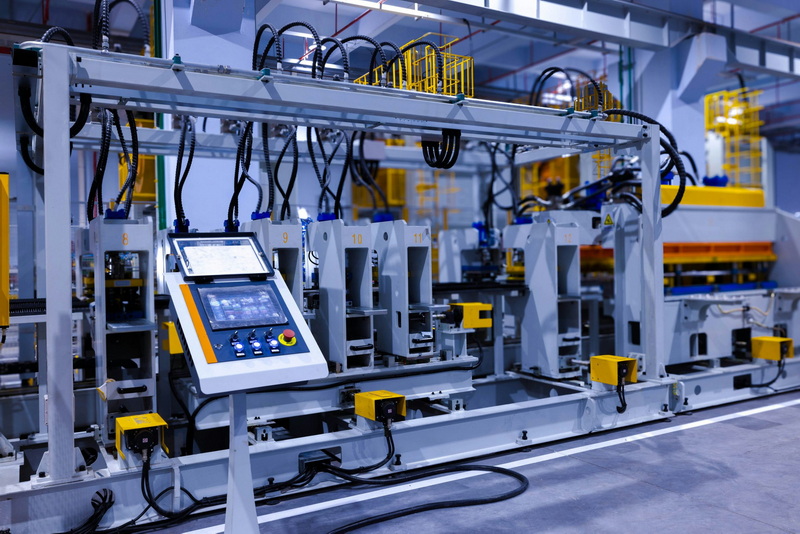
CNC machines process a wide spectrum of materials including:
- Metals like aluminum, stainless steel, titanium, brass, and copper.
- Plastics such as ABS, nylon, polycarbonate, and specialized polymers.
- Composite materials and ceramics for aerospace or medical applications.
The broad material compatibility allows CNC machining to supply parts across diverse sectors, each with tailored performance needs.
CNC machining is critical in various industries due to its precision and versatility:
- Aerospace: Producing lightweight yet strong components like turbine blades, structural ribs, and complex engine parts.
- Automotive: Manufacturing engine components, transmissions, and body parts. CNC supports prototyping as well as mass production.
- Medical: Creating surgical instruments, implants, prosthetics, and equipment housings with FDA-level accuracy.
- Electronics: Machining of printed circuit boards (PCBs), connectors, heat sinks, and casings.
- Energy: Parts for wind turbines, solar panels, oil and gas extraction equipment, and generator housings.
- Agriculture: Fabricating tractor parts, irrigation systems, harvesters, and related machinery.
- Food and Beverage: Tooling for food processing equipment, packaging machinery, molds, and bakeware.
- Furniture and Woodworking: CNC routers create furniture panels, cabinetry, and decorative elements with high precision.
These examples show that CNC machining molds the backbone of modern manufacturing in countless sectors.[1][2][3][4]
Recent technological advances include:
- 5-Axis Machining: Offers multiple simultaneous axis movements enabling incredibly complex shapes in one setup.
- Robotics Integration: Automates loading/unloading, tool changes, and improves productivity.
- Hybrid Manufacturing: Combines CNC subtractive machining with additive manufacturing (3D printing) for efficient production.
- AI & IoT: Leveraging smart sensors, real-time data, and machine learning to predict maintenance needs and optimize workflows.
These innovations enhance precision, reduce downtime, and open new possibilities for custom manufacturing.
| Aspect | Traditional Machining | CNC Machining |
|---|---|---|
| Control Method | Manual tools and operator skill | Computer-controlled automation |
| Accuracy | Operator-dependent | Micron-level precision |
| Production Speed | Slower, one-off setups | Faster, suitable for both prototyping & mass production |
| Complexity of Parts | Limited to simpler designs | Can produce highly complex geometries |
| Labor Costs | High, due to intensive manual labor | Reduced automation labor costs |
| Repeatability | Variable | Consistent part-to-part repeatability |
This comparison illustrates why CNC machining is preferred for modern manufacturing.[2]
CNC machining, short for Computer Numerical Control, is a transformative manufacturing technology that automates tool operation via computerized commands. It provides exceptional precision, consistency, flexibility, and efficiency vital for producing complex parts across industries such as aerospace, automotive, medical, electronics, energy, and agriculture. Constant innovations are further expanding its capabilities, making CNC machining indispensable in today's high-tech industrial landscape.
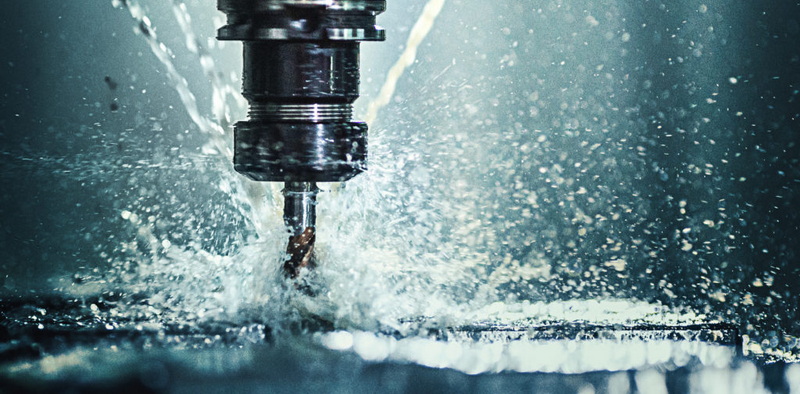
CNC stands for Computer Numerical Control, meaning machines are automated and operated via computer programs translating digital designs into precise tool movements.
Main types include CNC mills, lathes, routers, plasma cutters, and Electrical Discharge Machines (EDM), each suited for different materials and purposes.
CNC machining works with a variety of materials including metals (aluminum, titanium), plastics, composites, and ceramics depending on application needs.
It offers very high accuracy, able to achieve tolerances within microns, ensuring repeatable production of exact parts.
It ensures precise, high-volume, cost-effective, and flexible production, enabling industries to meet tight specifications reliably and innovate faster.
[1](https://www.3erp.com/blog/cnc-machining-applications-and-uses/)
[2](https://venttup.com/cnc-machining-industries-applications/)
[3](https://qviro.com/blog/what-industries-use-cnc-machines/)
[4](https://www.americanmicroinc.com/resources/industries-use-cnc-machinery/)
[5](https://durexinc.com/top-industries-using-cnc-machining/)
[6](https://www.reddit.com/r/MechanicalEngineering/comments/1953x9j/which_industrys_uses_cnc_milling_the_most_for/)
[7](https://www.ametals.com/post/7-uses-of-cnc-machining)
[8](https://millenniumprecision.com/7-key-industries-benefit-cnc-machining/)
[9](https://www.rcoeng.com/blog/cnc-applications)
[10](https://www.makerverse.com/resources/insights-and-trends/how-cnc-machining-is-used-across-industries/)


