From idea to market-ready product, our NPI solutions make every stage easier, faster. Discover How We Help

Views: 222 Author: Tomorrow Publish Time: 2026-01-01 Origin: Site
Content Menu
● Understanding Swiss-Type CNC Machining
● The Evolution of CNC Machining in Poland
● Applications of Swiss-Type CNC Machining in Poland
● Top Swiss-Type CNC Machining Manufacturers and Suppliers in Poland
>> 1. PreTech Precision Engineering
>> 4. TechMet Precision Polish
● Technology, Automation, and Quality Control
● Competitive Advantages of Polish Suppliers
● The Future Outlook for Swiss-Type CNC Machining in Poland
● FAQs About Swiss-Type CNC Machining Manufacturers and Suppliers in Poland
>> Q1. What is the difference between Swiss-type CNC machining and traditional CNC turning?
>> Q2. Which industries benefit most from Polish Swiss-type CNC machining?
>> Q3. Are Polish manufacturers equipped for both prototypes and mass production?
>> Q4. How do Polish manufacturers maintain quality and consistency?
>> Q5. Are Polish Swiss-type CNC machining companies competitive internationally?
Over the past decade, Poland has emerged as one of Europe's most dynamic precision manufacturing hubs. Its industrial growth has been fueled by high technical education, strong supply chain integration within the EU, and the rise of advanced manufacturing technologies such as Swiss-type CNC machining. Known for their exceptional precision and capability to produce intricate, small-scale components, Polish Swiss-type CNC machining manufacturers and suppliers are now trusted partners for global OEMs in automotive, aerospace, medical, and industrial sectors.
This article provides a detailed overview of the top Swiss-type CNC machining manufacturers and suppliers in Poland, analyzes their capabilities, technologies, and competitive advantages, and highlights why the country has become a preferred European location for these high-precision production services.
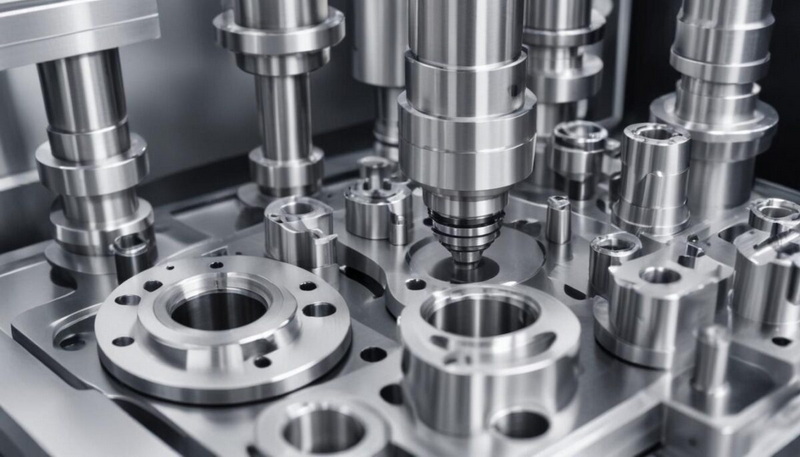
Swiss-type CNC machining, often referred to as Swiss turning or sliding headstock turning, originated from the Swiss watchmaking industry. The process is designed to produce very small, precise parts with incredibly tight tolerances, often in the range of ±0.002 mm or better.
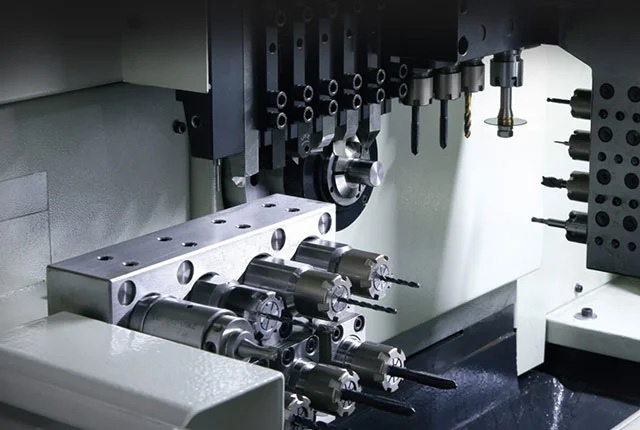
What differentiates a Swiss-type CNC lathe from a conventional CNC turning center is its sliding headstock and guide bushing. In a Swiss-type machine, the workpiece moves longitudinally through the spindle while being supported close to the cutting tool by a guide bushing. This eliminates vibration, allows precise control over long or thin parts, and enables continuous machining of complex geometries without losing accuracy.
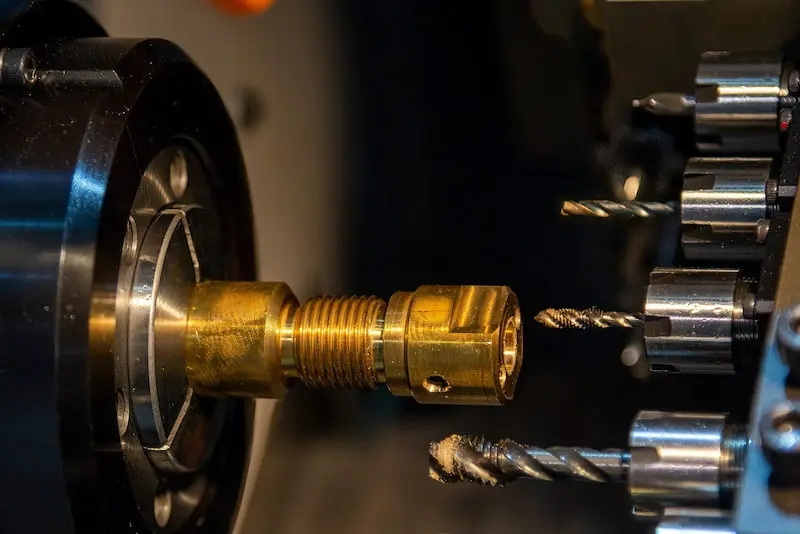
Modern Swiss-type CNC machining manufacturers and suppliers use multi-axis machines—often up to 12 simultaneous axes—allowing multiple tools to cut simultaneously. These machines can perform turning, milling, drilling, and tapping operations in one setup, which reduces production time, ensures consistency, and minimizes human handling.
Poland's industrial sector has evolved significantly since joining the European Union in 2004. With EU support and investments from international corporations, the country modernized its machinery, implemented ISO quality systems, and adopted Industry 4.0 principles.
Today, Poland is home to thousands of machining firms, but only a select group specialize in Swiss-type CNC machining, focusing on high-tolerance applications for industries where every micron counts. These companies combine European quality standards with cost efficiency, giving them a strong competitive edge.
Key drivers of this growth include:
- Skilled workforce: Poland's technical universities produce highly capable engineers and technicians familiar with CNC programming, robotics, and metrology.
- Strategic European location: Central positioning allows short delivery times to Western and Northern Europe.
- Cost advantage: Labor and facility costs remain lower than in Germany or France, while maintaining high-quality output.
- Advanced automation: Many facilities employ robotic material handling, real-time monitoring, and smart manufacturing systems.
- Strong industrial partnerships: Polish companies collaborate closely with global OEMs for co-design, prototyping, and production scaling.
Swiss-type CNC machining in Poland supports a wide range of high-tech industries:
1. Automotive: Polish manufacturers supply bushings, spindles, fuel injection components, and hydraulic fittings for European automakers.
2. Aerospace: Firms produce titanium fasteners, precision connectors, and valve bodies qualified for AS9100 standards.
3. Medical: Surgical instrument makers rely on Polish suppliers for orthopedic screws, surgical handles, and dental drill components meeting ISO 13485.
4. Electronics: Swiss-type machining enables the production of miniature electrical connectors, sensor housings, and contact pins.
5. Industrial equipment: Custom-machined shafts, couplings, and mechanical linkages are produced for automation and robotics systems.
The diversity of materials—stainless steel, brass, titanium, aluminum, PEEK, and Inconel—further broadens the scope of products Polish manufacturers can deliver.
Poland is home to numerous precision machining companies, but only a few stand out for their investment in advanced Swiss-type CNC technology and global OEM cooperation. Below are some of the most reputable Swiss-type CNC machining manufacturers and suppliers in Poland, recognized for technical expertise, quality systems, and export performance.
Location: Wrocław, Poland
Core strengths: High-accuracy Swiss-type turning, micro-part machining, and rapid prototyping.
PreTech is a high-tech precision manufacturer specializing in medical, aerospace, and defense components. Their production floor is equipped with Citizen and Star Swiss lathes capable of 12-axis simultaneous machining.
Distinguishing factors:
- Micro machining down to 0.3 mm diameter.
- Tolerance up to ±0.0015 mm.
- In-house 3D optical inspection and statistical process control (SPC).
- ISO 9001 and ISO 13485 certifications.
PreTech exports over 70% of its products to Germany, Switzerland, and Scandinavia, emphasizing reliability and engineering innovation.
Location: Poznań, Poland
Specialization: High-volume Swiss-type CNC production for automotive and industrial systems.
Mecmach Polska has over two decades of experience and continues to expand its equipment with new Tornos and Tsugami sliding-head lathes. The company offers end-to-end support—from design optimization and prototyping to mass production and assembly.
Key capabilities:
- Fully automated Swiss-type CNC production with round-the-clock operation.
- Robotic bar feeder systems for continuous cycles.
- In-line diameter and surface finishing control.
- Heat treatment and plating through integrated supply partners.
Their reputation for precision and consistency has made them a reliable Tier-2 supplier for European automotive giants.
Location: Kraków, Poland
Core market: Aerospace and medical device components with small-lot, high-precision requirements.
CNC-Protech is known for tackling challenging materials such as titanium and Inconel, ensuring exceptional surface integrity and roundness. Their workshop integrates CAD/CAM systems with real-time process monitoring, ensuring stability throughout production runs.
Key highlights:
- Cleanroom-ready machining for medical components.
- Multi-axis Swiss lathes ensuring concentricity and minimal burr formation.
- Comprehensive 3D inspection reports for each batch.
- Ongoing R&D in ultra-fine finishing and nanocoating technologies.
Their precision and flexibility make them a frequent partner for prototyping and custom solutions for European aerospace startups.
Location: Katowice, Poland
Specialization: OEM component supply for automation and energy sectors.
TechMet focuses on integrated production solutions using advanced Citizen L32 and L20 Swiss-type CNC lathes. They are capable of machining components with complex geometries for pneumatic, hydraulic, and automation systems.
Advantages include:
- Design-to-production support including reverse engineering.
- Full process documentation according to EU standards.
- Material traceability and serial code marking for every product.
- Cooperation with export clients across Germany, France, and the UK.
Their technical adaptability and production capacity make them an attractive strategic supplier for European system integrators.
Location: Warsaw, Poland
Core focus: Swiss-type CNC machining for small precision parts and custom toolmaking.
PolTurn's motto is *“precision in motion.”* The company employs a workforce of experienced programmers and machinists skilled in complex operations involving multiple tool changes. Their focus on digital integration ensures consistent repeatability across large production runs.
Distinctive strengths:
- Advanced 5-axis Swiss lathes paired with optical measurement technology.
- Consistent precision across extended production runs.
- Vertical integration — from machining to coating and packaging.
- Proven track record as a subcontractor for OEM and ODM projects.
PolTurn Technology has become a preferred supplier for several major electronics and automation brands due to their customer-centric approach.
What distinguishes the Swiss-type CNC machining manufacturers and suppliers in Poland is their strong emphasis on technology and process stability. The use of fully automated systems minimizes downtime, while advanced quality checks ensure compliance with global standards.
Common technological implementations include:
- Multi-axis Swiss CNC machines: With simultaneous control of multiple tool stations, manufacturers achieve complex profiles in one cycle.
- Robotic automation: Robots support continuous part loading, collection, and packaging, enabling 24-hour operations.
- Process monitoring: Real-time sensors check temperature, cutting pressure, and tool wear.
- Digital twin simulation: Used for setup validation before actual machining begins.
- High-precision metrology: Coordinate measuring machines (CMM), optical scanners, and profilometers ensure part conformity.
Polish firms also implement strict quality control steps, including First Article Inspection (FAI), In-Process Verification, and Final Inspection Reports, aligning with customer requirements from aerospace and medical fields.
The rise of Poland as a trusted hub for Swiss-type CNC machining services is no coincidence. Several key advantages underline their competitiveness:
1. High-quality European standards: Near-German precision with lower cost.
2. Short delivery times: Central European location minimizes logistics time to Western markets.
3. Flexible production: Ability to accommodate both small prototype lots and large-scale OEM contracts.
4. Sustainability focus: Many companies emphasize energy-efficient machining and waste recycling.
5. Collaborative mindset: Polish suppliers are open to co-development, making communication and technical adjustments seamless.
As global demand for micro and miniature machined parts continues to rise due to medical miniaturization and EV component design, Polish suppliers are well-positioned to expand globally.
The next decade promises even more innovation and international visibility for Poland's precision machining industry. As global OEMs seek to diversify their sourcing, Poland stands out due to its balance of cost, skill, and proximity.
Future trends include:
- Industry 4.0 integration: Use of real-time production data, machine learning optimization, and remote monitoring.
- Sustainable energy adoption: Transitioning to eco-friendly lubricants and renewable power usage.
- Expansion into electric vehicle (EV) supply chains: Producing precision sensors, battery connectors, and cooling system components.
- Additive manufacturing hybridization: Combining micromachining and 3D printing for tool inserts and complex geometries.
- International partnerships: Ongoing collaborations with Japanese and Swiss CNC companies for knowledge exchange and technology transfer.
With continuous investment in people, technology, and process excellence, Polish Swiss-type CNC machining manufacturers and suppliers will maintain steady growth and increased influence in global markets.
Poland has transformed from a developing manufacturing market into a highly competitive hub for Swiss-type CNC machining manufacturers and suppliers. Backed by advanced technology, strong engineering education, and integration within the EU industrial framework, Polish firms combine affordability, flexibility, and precision on par with global leaders.
From automotive to aerospace, medical, and electronics, their ability to produce complex components under tight tolerances makes them indispensable partners for modern high-tech production. As the industry moves toward smarter, greener, and digital manufacturing, Polish suppliers are extending their global footprint, further reinforcing their role in shaping the future of precision engineering across Europe and beyond.
A1. Swiss-type CNC machining uses a sliding headstock and a guide bushing that support the part close to the cutting tool. This reduces deflection and vibration, enabling ultra-high precision even on small or long parts.
A2. Automotive, aerospace, medical devices, and electronics are key beneficiaries, as these industries require complex, miniature components with tight tolerances.
A3. Yes. Most top suppliers offer rapid prototyping services and scalable high-volume production lines supported by automation and continuous monitoring.
A4. They rely on digitally controlled Swiss lathes, statistical process control, and advanced metrology systems such as CMM inspections and optical scanners, following ISO 9001 and AS9100 quality systems.
A5. Definitely. They offer European-level quality, fast delivery, and lower prices compared with Western European countries, making them competitive on the global market.


