From idea to market-ready product, our NPI solutions make every stage easier, faster. Discover How We Help

Views: 222 Author: Tomorrow Publish Time: 2026-02-01 Origin: Site
Content Menu
● Understanding Swiss-type CNC Machining
>> What Is Swiss-type CNC Machining?
● Top Swiss-type CNC Machining Manufacturers and Suppliers in Finland
>> 1. Ekinox Oy
● OEM Cooperation Opportunities with Finnish Manufacturers
>> Advantages for International Buyers
>> Steps to Partner with Finnish CNC Suppliers
● Finland vs. Other Global Machining Hubs
● Integration Between Finnish and Chinese Manufacturing Networks
● Industries Served by Finnish Swiss-type CNC Machining Manufacturers
>> Medical and Dental Instruments
>> Optical and Imaging Systems
>> Aerospace and Defense Components
● Technological Innovations in Finland's Machining Industry
>> Smart Manufacturing and IIoT Integration
>> Digital Twin and Simulation
>> Advanced Measurement Systems
>> Sustainable Machining Practices
● Future Outlook: Finland's Role in Global Precision Manufacturing
● Frequently Asked Questions (FAQ)
>> Q1: What is the key benefit of Swiss-type CNC machining?
>> Q2: Which industries primarily source from Finnish CNC manufacturers?
>> Q3: Can Finnish suppliers handle small and large production volumes?
>> Q4: Do Finnish companies provide OEM and customized design support?
>> Q5: What materials do Finnish Swiss-type CNC machining suppliers typically process?
>> Q6: How do Finnish CNC companies maintain consistent quality?
Finland has long been recognized for its precision engineering, advanced technology, and commitment to quality manufacturing. Over the past decade, the country has developed a strong specialization in Swiss-type CNC machining, a technique that enables exceptional accuracy, productivity, and consistency in producing micro-precision components.
Today, Finnish Swiss-type CNC machining manufacturers and suppliers serve a range of global industries—including medical devices, aerospace, electronics, optics, and instrumentation—where the demand for tight-tolerance machined parts continues to rise. This combination of technical skill, automation, and rigorous quality standards positions Finland among Europe's most reliable sources for high-precision machining.
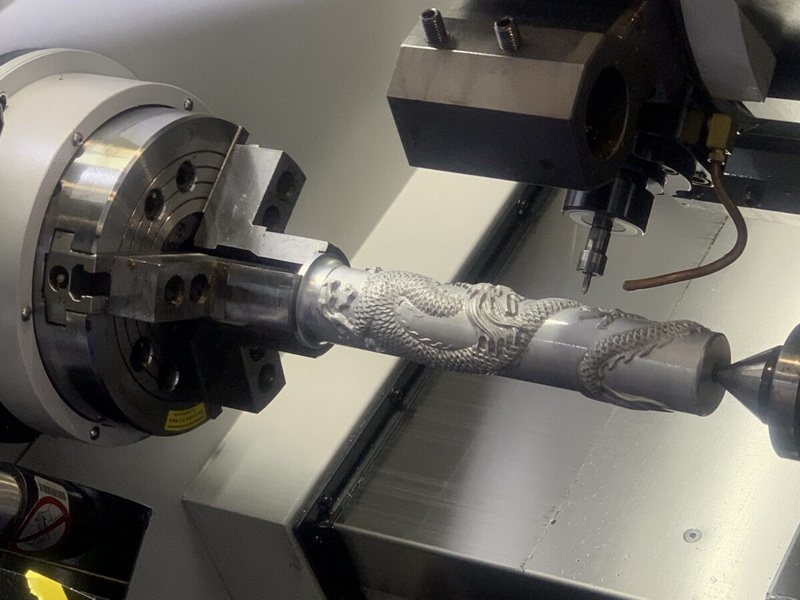
Swiss-type CNC machining, also called Swiss turning, is a specialized form of precision turning developed originally for producing miniature watch components. Its unique working principle involves supporting the workpiece very close to the cutting tool with a guide bushing, reducing deflection and vibration. This enables stable machining of slender, intricate parts with extremely fine tolerances, often within ±0.001 mm.
The technology combines multiple axes (up to 10 or more) and can perform simultaneous front and back machining operations, improving both speed and dimensional accuracy. As a result, Swiss-type CNC machining manufacturers and suppliers can produce complex parts in one operation, enhancing efficiency and consistency.
Finland's reputation in precision engineering comes from decades of investment in research, metalworking education, and automation technology. The country's manufacturing sector integrates three major advantages:
- Technical expertise in multi-axis CNC machining and materials science.
- Sustainable production models integrating renewable energy and waste reduction.
- Industry collaboration between research institutes, universities, and factories that ensures continuous process innovation.
Together, these factors make Finnish Swiss-type CNC machining manufacturers and suppliers trusted European partners for OEMs that value long-term reliability and flawless performance.
Headquartered in Tampere, Ekinox Oy represents excellence in Finnish micromachining. Equipped with Citizen and Star Swiss-type CNC lathes, the company specializes in producing small metallic and plastic components with diameters under 20 mm.
Its product range includes parts for medical devices, valves, and instrumentation sensors. Ekinox Oy backs its production with advanced measurement systems, including vision inspection, roundness testers, and coordinate measuring machines (CMMs). The company is known for its responsive engineering support and fast prototype development.
Located in Espoo, Mekatech Finland Ltd serves a diverse client base across Europe and North America. The company focuses on high-volume turning of precision parts using multi-axis Swiss-type machines with automatic bar feeders.
Their capabilities include machining stainless steel, aluminum, titanium, and polymers. Mekatech combines flexible production scheduling with strong quality control procedures, making it one of Finland's most reliable Swiss-type CNC machining suppliers for global OEMs.
Hydman Manufacturing Oy provides specialized Swiss-type CNC machining services for hydraulic, pneumatic, and automotive applications. With an ISO 9001 and ISO 14001 certification, Hydman's operations focus on maintaining accuracy with clean finishing, consistent surface roughness, and tight-tolerance inspection.
Its precision shafts and couplings are widely used in mechanical control assemblies and aerospace mechanisms. The company's experience in deep-hole drilling and its use of automated measurement equipment highlight its commitment to quality and repeatability.
Syväs Precision Systems provides high-end micromachining services for medical, optical, and life sciences industries. The company's Swiss-type CNC machining shop produces titanium bone screws, optical mounts, and stainless-steel miniature connectors for critical assemblies.
What sets Syväs apart is its dedication to digitalization. Each production batch is tracked through traceable electronic documentation, and quality verification uses 3D scanning and microscopic imaging. Syväs exemplifies how Finnish manufacturers integrate precision and data-driven smart manufacturing.
Metalex Finland Oy offers a complete manufacturing solution combining Swiss-type CNC turning, 5-axis milling, and part assembly. This integration allows customers to source finished components from one supplier, reducing coordination efforts and lead time.
The company's core products include spur shafts, coupling pins, and threaded connectors. Metalex serves both prototype and large-series production for international machinery manufacturers. Its reliability, dimensional precision, and transparent communication make it highly regarded among Swiss-type CNC machining manufacturers in Finland.
Finland's manufacturing industry is known for quality and dependability. For international buyers seeking Swiss-type CNC machining manufacturers and suppliers, Finnish companies offer key advantages:
- Unmatched machining precision – capable of tolerances under 0.002 mm.
- Automated and flexible production – suitable for both small-lot customization and large-scale serial runs.
- Expertise with advanced materials – titanium, Inconel, brass, PEEK, and PTFE.
- Dependable supply chains – strong logistics connections within the EU and worldwide.
- Exceptional communication – English-fluent technical engineers and project managers.
1. Send detailed technical drawings (STEP or IGES) and tolerance data for assessment.
2. Request samples or pilot runs to confirm precision expectations.
3. Clarify finishing processes, such as anodizing or passivation.
4. Verify quality certifications, including ISO 9001, ISO 13485 (for medical parts), or IATF 16949 (for automotive).
5. Agree on lead times and packaging options, ensuring global export readiness.
These structured practices make Finnish suppliers trustworthy partners for long-term OEM collaborations.
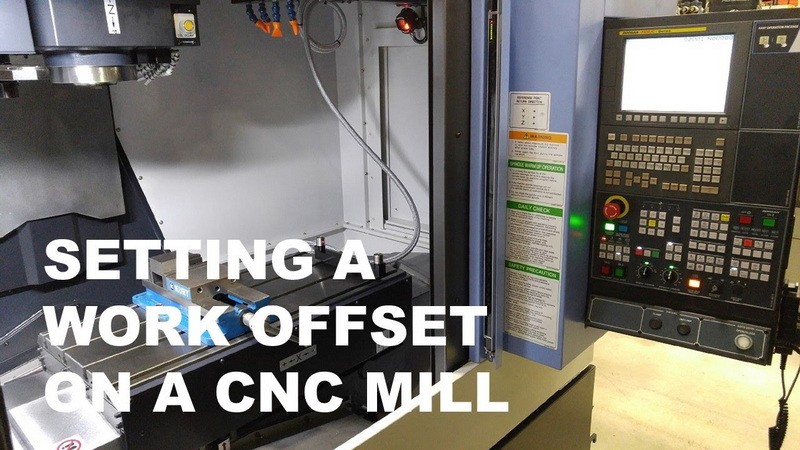
While Finland is not considered a low-cost manufacturing destination, it consistently delivers higher total value. Many European, American, and Japanese buyers prefer Finnish Swiss-type CNC machining suppliers due to their discipline in process control and low defect rates.
Here's why Finland stands out compared to other regions:
- Zero-compromise quality: dimensional precision remains consistent across large batches.
- Delivery performance: on-time delivery rates reach 95% or higher.
- Sustainability leadership: emphasis on renewable energy and waste reduction initiatives.
- Innovation culture: Finnish engineers regularly collaborate with universities and research centers to improve machining technologies.
These factors extend the product lifecycle and minimize the risk of production interruptions.
A growing number of international companies combine Finnish and Chinese production capabilities to achieve both cost-effectiveness and high-end quality assurance.
For example, a Chinese precision parts OEM manufacturer might provide high-volume production of standard components, while Finnish partners handle more complex, high-tolerance or prototype parts. This hybrid strategy leads to optimized sourcing, enabling clients to benefit from both flexibility and excellence.
In such partnerships:
- Finnish manufacturers deliver early-stage product prototypes or complex series with strict dimensional tolerances.
- Chinese OEMs scale the matured design efficiently across multiple production lines.
- Both sides share engineering data through cloud-based platforms, ensuring alignment and consistency.
This global collaboration demonstrates how the machining industry continues to evolve toward integrated, multi-regional supply models.
High precision and clean manufacturing environments make Finnish suppliers ideal partners for medical applications. Components include orthopedic screws, dental implants, and surgical tool handles—all machined under strict quality standards.
Swiss-type precision enables consistent concentricity in optical mounts, focusing rings, and camera joints. Finnish Swiss-type CNC machining manufacturers achieve flawless finishes without compromising tolerance, which is critical for optical alignment.
With their experience in light alloys and tough materials such as titanium and Inconel, Finnish suppliers produce actuator shafts, sensor housings, and aerospace coupling elements that meet the highest global standards.
Finnish machining companies provide miniature mechanical linkages and motion control shafts for automation systems. Components are designed for high-speed, vibration-free operation, ensuring reliability in robotic assembly lines.
Leading Finnish Swiss-type CNC machining suppliers integrate Industrial Internet of Things (IIoT) systems to monitor productivity, spindle health, and tool wear. Real-time data enables predictive maintenance and minimizes downtime.
Machine performance simulations allow virtual optimization of cutting parameters, helping to minimize tool wear and improve surface finish. Finnish engineers use these systems to validate process stability before production begins.
Automated inspection with coordinate measuring machines, laser profilometers, and surface analyzers ensures every batch meets specifications. Statistical Process Control (SPC) further guarantees that variations remain within defined tolerance windows.
Nearly all Finnish machining facilities implement sustainability initiatives—energy recycling, eco-friendly lubricants, and waste-free metal recovery. The integration of these environmental measures reflects Finland's strong industrial responsibility culture.
The future of Finnish precision machining looks promising. The ongoing adoption of AI-driven analysis, hybrid additive-subtractive CNC technology, and robotics will continue to enhance competitiveness. Finnish suppliers are expanding their market share not only in Europe but also in Asia and North America.
As miniaturization becomes more critical—especially in next-generation electronics and medical devices—Swiss-type CNC machining manufacturers and suppliers in Finland are expected to play an increasingly vital role in the global precision ecosystem.
Finland's machining industry continues to shine as a global model for precision, sustainability, and reliability. Its Swiss-type CNC machining manufacturers and suppliers combine traditional mechanical craftsmanship with cutting-edge automation and digital technologies.
For global OEMs, choosing Finnish partners means more than just acquiring components—it means securing long-term collaboration, technical excellence, and a consistent supply of flawlessly machined parts. By integrating Finnish precision with global production networks, businesses can gain a significant competitive edge in both quality and innovation.
Contact us to get more information!
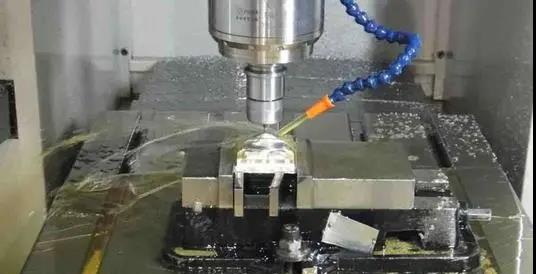
Swiss-type CNC machining minimizes vibration due to its guide bushing system, ensuring unmatched precision on slender workpieces and complex geometries.
Medical technology, aerospace, optics, and automation sectors rely heavily on Finnish machined components.
Yes, most suppliers offer scalable production from prototypes to high-volume runs, supported by automated bar feeding systems.
Yes, engineers collaborate closely with clients to optimize designs for manufacturability, ensuring cost-effective solutions without sacrificing accuracy.
Common materials include stainless steel, aluminum, brass, titanium, and engineering plastics such as PEEK and PTFE.
They use certified quality systems (ISO 9001, ISO 13485) and integrate real-time process monitoring, ensuring every part meets exact specifications.
1. (https://www.businessfinland.fi)
2. (https://www.machiningnews.com)
3. (https://www.manufacturinginfinland.fi)
4. (https://www.engineeringfinland.com)
5. (https://www.cnc-machining-europe.com)


