From idea to market-ready product, our NPI solutions make every stage easier, faster. Discover How We Help

Views: 222 Author: Tomorrow Publish Time: 2026-01-20 Origin: Site
Content Menu
● Understanding CNC Turning and Its Core Advantages
● The Growth of CNC Turning in Tajikistan
>> 1. Strategic Position and Logistics
>> 2. Skilled Technical Workforce
>> 3. Partnerships with International Investors
● Top CNC Turning Services Manufacturers and Suppliers in Tajikistan
>> 1. Tajik Precision Engineering Co.
>> 3. Pamir Industrial Solutions
>> 5. Alif Engineering Tajikistan
● Comparing CNC Turning Services Manufacturers and Suppliers
● Expanding Role of Chinese OEM Partnerships
● Applications of CNC-Turned Components
>> 1. Automotive and Transportation
>> 4. Electronics and Instrumentation
>> 5. Machinery and Construction
● Selecting the Right CNC Turning Supplier
● Sustainability and Innovation in CNC Turning
● The Future Outlook for CNC Turning in Tajikistan
>> Q1: What services do CNC turning manufacturers in Tajikistan provide?
>> Q2: Can Tajik suppliers handle OEM and custom design projects?
>> Q3: What materials do local manufacturers work with?
>> Q4: How do I ensure quality when sourcing from Tajikistan?
>> Q5: What is the lead time for custom CNC turned parts?
In recent years, Tajikistan has quietly emerged as a promising hub for industrial manufacturing and precision engineering in Central Asia. Among the growing sectors contributing to this development are CNC Turning Services Manufacturers and Suppliers, companies specializing in the production of high-precision, custom-engineered parts for global markets. As industries across the world demand ever-tighter tolerances and faster lead times, Tajikistan's machining companies are stepping up to fill that role — combining advanced technology with cost-effective manufacturing for OEM and ODM clients.
This article provides an in-depth look at the CNC turning landscape in Tajikistan, the strengths of local manufacturers, how international buyers can benefit, and what factors to consider when sourcing parts from this emerging market.
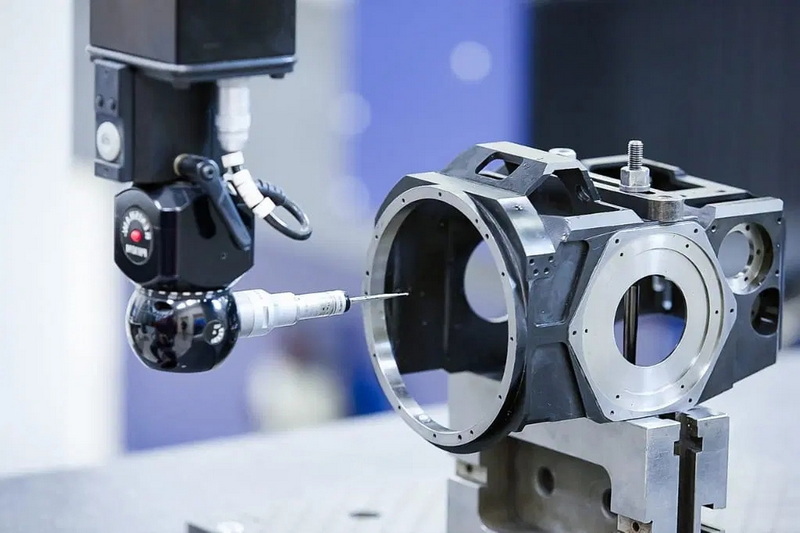
CNC turning is a machining process that uses computer-controlled lathes to rotate a workpiece while cutting tools remove material to create cylindrical and complex shapes. The process achieves extremely tight tolerances and is capable of producing parts with consistent quality even across large production volumes.
The advantages of CNC turning include:
- Precision and consistency: Automated systems minimize human error and ensure identical output for each part.
- Material versatility: Machines can process steel, aluminum, brass, copper, titanium, and engineering plastics.
- High efficiency: CNC setups optimize machining paths, reducing waste and cycle time.
- Repeatability: Perfect for producing thousands of identical components.
- Scalability: Ideal for both prototype runs and mass production.
In today's supply chain, CNC turning is vital across industries such as automotive, aerospace, electronics, medical, and industrial machinery. For foreign buyers, sourcing from professional CNC Turning Services Manufacturers and Suppliers offers long-term cost savings and manufacturing reliability.
Tajikistan's location in Central Asia offers strategic access to growing regional markets while maintaining relatively low production costs. Over the past decade, a number of initiatives have encouraged industrial development, including tax incentives for exporters and infrastructure upgrades in key industrial zones.
The country's machining industry benefits from three main strengths:
Tajikistan sits at the crossroads of China's Belt and Road trade routes, linking major Eurasian economies by rail and road. For CNC turning suppliers, this means fast access to neighboring markets like Kazakhstan, Uzbekistan, Russia, and China — as well as reduced shipping costs for exports to Europe and the Middle East.
Vocational institutes and technical universities in Dushanbe and Khujand have been expanding their curricula in CNC programming, CAD/CAM modeling, and metrology. Young technicians are increasingly trained in global machining practices, strengthening the industrial workforce.
Investment from Chinese, Turkish, and Russian firms has accelerated technology transfer to Tajik facilities. These partnerships bring in advanced lathes, 5-axis machining centers, and quality assurance systems that enable local firms to serve international clients confidently.
The following companies represent some of the most capable and reliable players in Tajikistan's precision machining industry. They provide comprehensive CNC turning services, often paired with milling, drilling, and surface finishing capabilities.
Based in Dushanbe, Tajik Precision Engineering Co. has earned a reputation as one of the top CNC Turning Services Manufacturers and Suppliers in the country. The company produces complex machined parts for European and Asian markets.
Key strengths:
- Multi-axis CNC lathe systems for high-precision turning.
- Batch production and prototype manufacturing.
- ISO-certified quality control standards.
- Full OEM part design support and export logistics.
Their main output includes automotive components, industrial fittings, and custom mechanical parts.
Located in northern Tajikistan, Khujand Machine Works serves clients across the transportation, energy, and construction sectors. It specializes in shaft, sleeve, and gear turning services and has extensive experience working with stainless steel and cast iron materials.
Capabilities:
- CNC lathe machining and thread cutting.
- Milling and drilling for complex assemblies.
- Flexible order quantities for small to medium OEM production.
- CAD/CAM integration for precise program optimization.
Their engineering team is particularly strong in developing replacement parts for heavy machinery.
Pamir Industrial Solutions offers customized precision components for local and international clients. As one of the most technologically advanced CNC Turning Services Manufacturers and Suppliers in Tajikistan, it invests heavily in smart production and 3D quality scanning.
Highlights:
- Automated inspection with coordinate measuring machines (CMM).
- Rapid prototyping and quick sample delivery.
- Technical consulting for design optimization.
- Strict traceability system for all materials used.
They serve diverse industries including oilfield services, machinery equipment manufacturing, and electronic components.
Operating from the capital, Dushanbe Metal Tech combines traditional engineering experience with modern CNC technology. The factory uses mid- and high-speed CNC lathes to achieve demanding tolerances.
Specializations:
- CNC turning for stainless steel and high-strength alloys.
- Surface finishing options such as polishing, anodizing, and plating.
- Long-term OEM cooperation with European industrial clients.
- Excellent documentation support for export certifications.
Their efficient production management allows them to handle both prototype and volume orders effectively.
Alif Engineering has diversified operations serving oil, gas, and mining industries with precision mechanical parts. Its CNC turning division focuses on durable, reliable components for field equipment.
Main services:
- Turning, milling, wire-cut EDM, and assembly machining.
- Engineering-grade metals like titanium and tool steel.
- Multi-axis equipment to handle complex part geometries.
- Experienced QA inspectors ensuring international quality compliance.
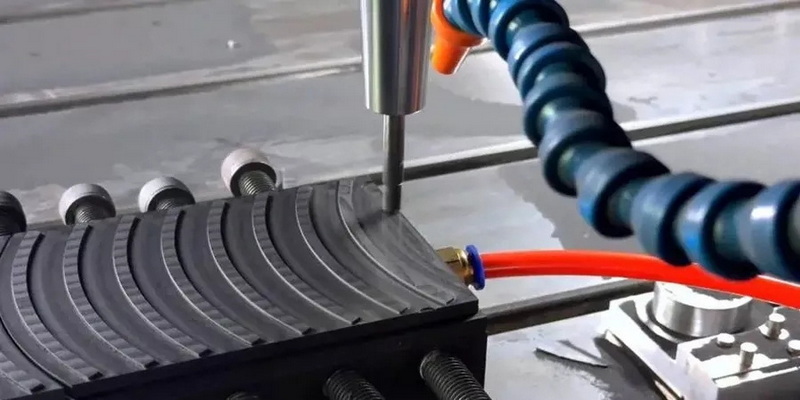
To better understand what makes these companies competitive, let's look at some comparison points that buyers should consider when evaluating potential partners:
| Evaluation Criteria | Importance | Typical Standard in Tajikistan |
|---|---|---|
| CNC Equipment Level | High | 3- to 5-axis machines with precision lathe integration |
| Material Range | High | Metals, alloys, plastics, ceramics |
| Quality Certification | Essential | ISO 9001, CE, RoHS compliance |
| Lead Time | Medium | 2–4 weeks for most export orders |
| Communication Skills | High | English, Russian, and Mandarin available |
| OEM/ODM Capability | Very High | Full custom production from drawings |
Foreign clients consistently choose CNC Turning Services Manufacturers and Suppliers in Tajikistan because of their strong balance of quality, flexibility, and affordability.
China plays a key supporting role in Tajikistan's industrial development. Chinese equipment suppliers have helped local firms modernize their machine tools and software. Moreover, joint venture arrangements allow Tajik producers to access global clients through established Chinese trading networks.
For buyers, this means they can enjoy “dual advantages” — Tajikistan's low-cost production base combined with Chinese engineering oversight and logistics expertise. Many Chinese factories outsource overflow production to Tajik partners, ensuring global clients receive continuous supply even during peak seasons.
This collaboration fosters technology exchange and regional industrial growth across Central Asia's precision manufacturing network.
Products produced by Tajikistan's machining firms find usage in multiple industries. Here are some major application sectors:
CNC-turned shafts, axles, and bushings are critical for drivetrains and engines. Tajik producers export these parts to assembly facilities in Uzbekistan, Russia, and Kazakhstan.
Several suppliers produce lightweight components from aerospace-grade aluminum and titanium alloys. Their commitment to tolerance accuracy makes them valuable subcontractors for defense and aircraft maintenance operations.
CNC-turned valves, couplings, and fittings are essential for high-pressure applications in oil and gas systems. Tajik companies serve regional pipeline projects and drilling equipment manufacturers.
Precision brass connectors, housings, and terminals are mass-produced by CNC turning — ensuring reliable integration within sensitive measurement equipment and electronic devices.
From hydraulic system parts to fastening solutions, CNC-turned products are integrated into heavy-duty equipment contributing to Tajikistan's infrastructure development boom.
Choosing the correct supplier among many CNC Turning Services Manufacturers and Suppliers can make or break a sourcing project. Buyers should evaluate the following aspects before signing contracts:
1. Facility and Equipment Audit: Request detailed machinery lists, including CNC lathe models and machining center brands.
2. Sample Evaluation: Assess samples for surface finish, tolerance, and dimensional accuracy.
3. Quality Management System: Ensure suppliers use formal inspection records and material certificates.
4. Technical Communication: Confirm that engineers can interpret 2D/3D drawings and technical English.
5. After-Sales and Warranty Policy: Ensure support for post-delivery modifications or issue resolution.
A professional supplier will openly discuss capabilities, limitations, and recommended process improvements — building transparency and long-term trust.
Environmental responsibility is becoming a defining factor for modern machining firms. Many Tajik CNC Turning Services Manufacturers and Suppliers are adopting cleaner practices to meet international sustainability standards.
Notable initiatives include:
- Coolant recycling systems: Reducing wastage and contamination risk.
- Energy-efficient servo motors: Lowering electricity consumption per cycle.
- Material optimization software: Minimizing scrap through digital analysis.
- Renewable energy integration: Some plants now partially run on hydroelectric power, one of Tajikistan's key natural resources.
Alongside sustainability, innovation drives future competitiveness. The adoption of Industrial IoT technology — where machines transmit data about their performance and tool wear — is helping local firms embrace predictive maintenance and boost productivity.
With continued foreign investment and regional cooperation, Tajikistan's CNC machining sector is poised for impressive growth in the next decade. Local manufacturers are already moving toward more automation, smart inspection tools, and software-driven efficiency.
Three trends will shape the future of CNC Turning Services Manufacturers and Suppliers in Tajikistan:
1. Increased automation through artificial intelligence and robotics.
2. Expansion of OEM/ODM partnerships with global brand owners.
3. Integration of digital twin and quality simulation systems for process optimization.
As these technologies evolve, Tajikistan could become one of Central Asia's leading CNC parts exporters.
Tajikistan's CNC Turning Services Manufacturers and Suppliers are steadily gaining international recognition. By integrating advanced equipment, skilled talent, and cross-border collaboration, these companies offer cost-effective and high-quality solutions for global OEM and ODM buyers.
Foreign clients benefit from strong communication, modernized production systems, and flexible order handling. As the country's industrial infrastructure expands and sustainability initiatives take root, Tajikistan is positioned to become a competitive precision machining center in Central Asia.
For companies seeking reliable partners in CNC turning and custom component manufacturing, Tajikistan represents both opportunity and strategic advantage — a blend of precision, performance, and potential.
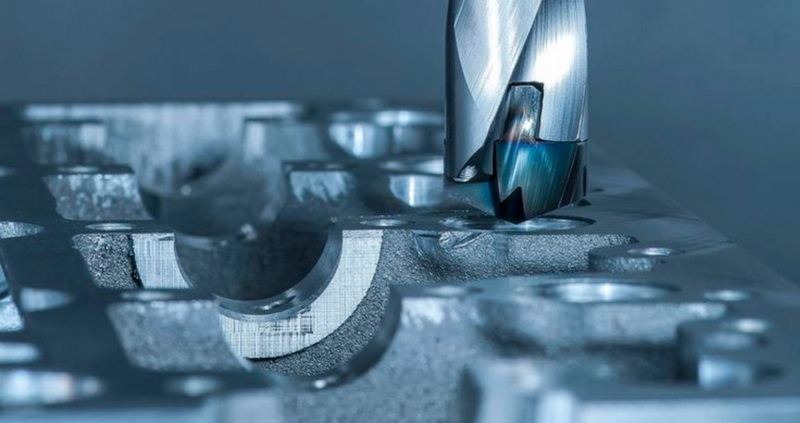
They offer precision machining, milling, drilling, and finishing for metals and plastics, serving industries from automotive to electronics.
Yes, most companies are experienced OEM partners offering full design-to-delivery solutions for custom components.
They commonly use aluminum, stainless steel, copper, brass, titanium, and various engineering plastics.
Ask for material certificates, on-site inspections, or third-party quality audits to verify machining standards.
Lead times vary based on design complexity, but most export orders are completed within 2–4 weeks.
1. https://www.machiningcloud.com
2. https://www.engineersedge.com
3. https://www.cncmachinisttraining.com
4. https://www.trade.gov/
5. https://www.industryweek.com


