From idea to market-ready product, our NPI solutions make every stage easier, faster. Discover How We Help

Views: 222 Author: Tomorrow Publish Time: 2026-01-14 Origin: Site
Content Menu
● Understanding CNC Turning and Its Role in Modern Industry
● The Netherlands: Europe's Hub of Precision Machining
>> Why the Netherlands Excels in CNC Turning
● Top CNC Turning Services Manufacturers And Suppliers in the Netherlands
>> 3. Stork Industrial Machining Technology (IMT)
● How Chinese CNC Manufacturers Complement Dutch Expertise
>> Benefits of Partnering with Chinese OEM CNC Manufacturers
● Key Industries Served by CNC Turning Manufacturers
>> 1. Automotive and EV Sector
>> 3. Medical and Dental Equipment
>> 4. Renewable Energy and Power Systems
>> 5. Electronics and Robotics
● Trends Shaping the Future of CNC Turning Services
>> 1. Automation and Lights-Out Manufacturing
>> 2. Artificial Intelligence and Data Monitoring
>> 3. Hybrid Machining: CNC Meets 3D Printing
>> 4. Sustainable Machining Practices
>> 5. Cloud-Based Collaboration and Digital Twin Technology
● Choosing the Right CNC Turning Supplier for Your Business
● Frequently Asked Questions (FAQ)
>> 1. What industries use CNC turning most commonly?
>> 2. What advantages do CNC Turning Services Manufacturers And Suppliers in the Netherlands offer?
>> 3. How can Chinese CNC manufacturers enhance cooperation with Dutch suppliers?
>> 4. Which materials are most frequently machined using CNC turning?
>> 5. How can I ensure I choose a trustworthy CNC supplier?
In the modern age of engineering and production, CNC Turning Services Manufacturers And Suppliers play a fundamental role in shaping precision components used across almost every industrial sector. From aerospace and automotive to medical devices and renewable energy systems, CNC turning ensures consistency, efficiency, and accuracy that manual processes simply cannot match.
Among European countries, the Netherlands stands out as a leader in advanced CNC machining and industrial manufacturing. Its precision engineering capabilities, focus on automation, and strong logistics network make it one of the most reliable destinations for businesses seeking quality CNC turning services.
This article explores the top CNC Turning Services Manufacturers And Suppliers in the Netherlands, highlights trends in the industry, discusses collaboration between Dutch and Chinese manufacturers, and provides useful guidance for companies looking to source CNC turning components efficiently.
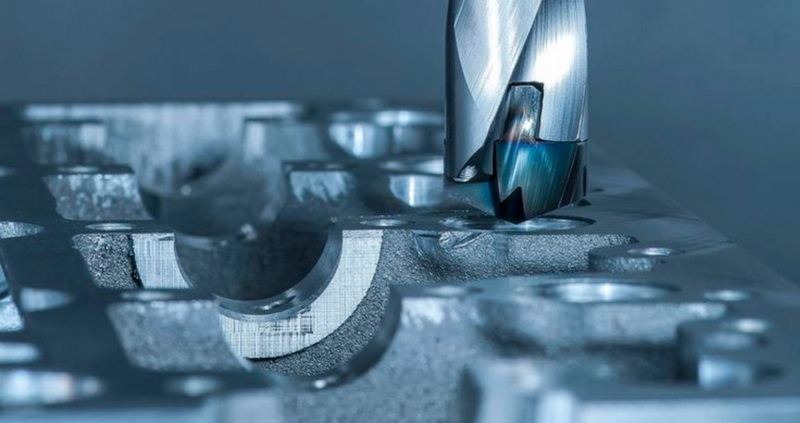
CNC turning is the process of shaping a rotating workpiece using a stationary cutting tool under computerized control. It's one of the most versatile processes in modern machining, capable of producing simple cylindrical parts as well as complex, multi-geometry components.
The advantages of CNC turning include:
- High precision and repeatability – Ideal for parts requiring tight dimensional tolerances.
- Rapid production cycles – Automated programming shortens turnaround times.
- Material versatility – Suitable for metals such as aluminum, steel, titanium, and brass as well as high-performance plastics.
- Consistency across volumes – Perfect for both small-batch prototyping and high-volume mass production.
These benefits have positioned CNC Turning Services Manufacturers And Suppliers at the heart of industrial supply chains, ensuring that every component meets rigorous quality and performance standards.
The Netherlands has a rich history of engineering excellence. Known for its forward-thinking approach to manufacturing, it has built a strong ecosystem of CNC machining companies capable of serving demanding international industries.
1. Advanced Technical Expertise – Dutch engineers and machinists are globally recognized for their knowledge of CNC programming, tool design, and process optimization.
2. Integration of Automation – The country's manufacturing facilities are pioneers in employing robotics and artificial intelligence for smart machining.
3. Strong Quality Standards – Dutch CNC Turning Services Manufacturers And Suppliers adhere to strict ISO and AS9100 standards.
4. Sustainability Practices – From energy-efficient machines to recyclable materials, Dutch manufacturers champion environmentally friendly production.
5. Reliable Logistics and Trade Links – Strategic location and access to the Port of Rotterdam allow rapid distribution throughout Europe, Asia, and the Americas.
The Netherlands also benefits from close collaboration with universities and technical research centers, ensuring continuous innovation in precision manufacturing.
Below are some of the most reputable companies offering CNC turning services in the Netherlands, known for their consistent quality, innovation, and reliability.
Kusters Precision Parts is a leading name in high-accuracy CNC machining. They provide bespoke metal components for automotive, offshore, and semiconductor applications.
Highlights:
- Specialist in 5-axis CNC turning and milling
- Automated quality control and measurement systems
- Certified ISO 9001 quality management
Their continuous investment in machinery and metrology ensures world-class precision and repeatability.
Mifa Aluminium is unique for combining aluminum extrusion technology with precision CNC machining. Their advanced facility serves aerospace, electronics, and optics industries.
Core strengths:
- Micron-level machining tolerance
- In-house surface treatment and anodizing
- Design-to-production service for OEM clients
Mifa's turned components are widely used in aerospace interiors and electronic enclosures requiring high dimensional stability.
Specialized in heavy-duty machining, Stork IMT provides CNC turning for large-diameter parts used in offshore, shipbuilding, and renewable energy projects.
Capabilities:
- Large-scale CNC turning (up to 1.2 meters in diameter)
- Custom tooling for non-standard geometries
- Rapid repair and re-manufacturing services
Their expertise in handling complex alloys and large assemblies makes them a dependable supplier for industrial manufacturing.
Innotech BV merges technology and sustainability. Their modern machining cells integrate robotics and tool monitoring systems, ensuring efficiency and reliability.
Key offerings:
- CNC turning and multi-axis milling
- Design simulation before machining
- Environmentally optimized lubrication and waste control
Innotech's solutions help global OEMs achieve lower costs while maintaining premium product quality.
Known for innovation and precision, Axxicon Group specializes in CNC machining for medical, optical, and electronic components.
Highlights:
- Micro-machining and ultra-precision turning
- Tooling design and injection mold integration
- Extensive experience in mass customization
Axxicon's advanced approach makes it one of the most reliable CNC Turning Services Manufacturers And Suppliers in the Netherlands for industries where micro-level accuracy is mission-critical.
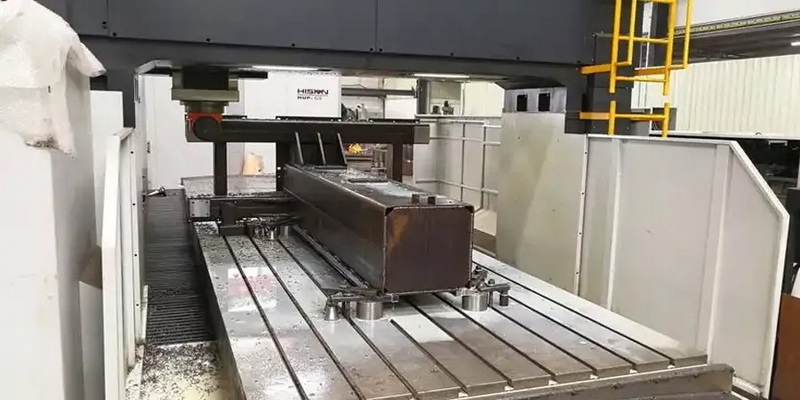
While the Netherlands focuses on innovation and R&D excellence, many European companies source production through Chinese CNC Turning Services Manufacturers And Suppliers to achieve cost efficiency and scalability.
1. Cost Efficiency and High Output – China's optimized manufacturing ecosystem allows competitive pricing, even for custom low-volume runs.
2. Comprehensive OEM Support – Chinese suppliers often provide design assistance, material sourcing, finishing, and assembly, creating a one-stop production channel.
3. Quality Certification Compliance – Many Chinese precision machining facilities hold ISO 9001, ISO/TS 16949, and CE certifications.
4. Rapid Delivery Times – Large-scale automation ensures consistent productivity and faster turnaround.
5. Flexible Collaboration Models – Both small-volume prototyping and mass production are supported for OEM or ODM clients.
By combining Dutch technology leadership with Chinese manufacturing efficiency, global buyers benefit from precision and affordability in one strategic supply chain.
The reach of CNC Turning Services Manufacturers And Suppliers extends across nearly every industrial field. Here are some key sectors benefiting from advanced precision machining today.
CNC-turned shafts, bolts, pistons, and components form the backbone of internal combustion and electric vehicle assemblies. Dutch automotive clusters rely on precise suppliers for improved durability and energy efficiency.
China's mass production capacity complements Europe's high-performance vehicle projects through seamless OEM partnerships.
CNC turning plays a vital role in manufacturing turbines, actuators, seat fittings, and control system components. Given the aerospace sector's safety requirements, parts must meet incredibly tight tolerances — a major strength of Dutch and Chinese CNC specialists.
Precision is essential in producing implants, surgical instruments, and diagnostic components. CNC turning ensures biocompatible surfaces and micron-level consistency vital for medical applications.
Energy generation systems require durable and precisely fitted components. CNC machining supports turbine housings, generator shafts, hydraulic valves, and control arms that enhance efficiency and reliability in renewable power.
From connectors and heat sinks to moving joints in robotics, CNC turning enables compact yet robust structures. The Netherlands' high-tech electronic industry frequently collaborates with Chinese producers for scalable component supply.
Like all advanced manufacturing technologies, the CNC sector continuously evolves. Modern CNC Turning Services Manufacturers And Suppliers prioritize efficiency, automation, and sustainability.
Dutch facilities increasingly employ “lights-out manufacturing” — operating CNC machines autonomously beyond working hours using robotic loaders and automated tool changers. This boosts productivity while reducing operational costs.
AI-driven systems analyze tool wear, temperature fluctuations, and precision deviations in real-time. This predictive maintenance ensures uninterrupted production and reduces material waste.
Combining additive manufacturing with CNC turning enables the creation of complex geometries with reduced material consumption. Dutch and Chinese companies are jointly investing in this hybrid technology to improve flexibility and efficiency.
Eco-friendly CNC shops in the Netherlands focus on water-based coolants, energy reuse systems, and optimized metal recycling to minimize environmental impact. This aligns with global sustainability initiatives and customer expectations.
Through digital twin design systems, clients and manufacturers can simulate machining steps and detect design flaws before production begins. It enhances collaboration between European designers and Chinese OEM teams, improving accuracy and reducing rework.
Selecting reliable partners among CNC Turning Services Manufacturers And Suppliers requires a thorough evaluation of capabilities and communication.
When comparing potential suppliers, consider the following:
- Technical Competence: Multi-axis machines, precision levels, and automation capacity.
- Engineering Support: Assistance in design for manufacturability (DFM) and tolerance optimization.
- Certification and Compliance: Quality standards like ISO 9001 or IATF 16949 ensure global compatibility.
- Material Expertise: Proven handling of complex alloys, titanium, or plastics.
- Delivery Reliability: On-time logistics and consistent lead times are crucial for long-term supply.
- Pricing Transparency: Clear quotations with no hidden fees help maintain trust and predictability.
Choosing suppliers that align with your company's production objectives creates a sustainable competitive edge.
The Netherlands holds a critical position in Europe's precision manufacturing landscape, combining innovation, technical mastery, and sustainability to produce world-class machining solutions. Its CNC Turning Services Manufacturers And Suppliers stand at the forefront of technological progress, offering premium quality to industries seeking perfection in every component.
When paired with the scalability and cost efficiency of Chinese CNC Turning Services Manufacturers And Suppliers, businesses gain a powerful synergy — blending advanced design expertise with streamlined global production. This collaboration not only strengthens supply security but also ensures that global manufacturing remains innovative, precise, and economically competitive.
For companies seeking long-term reliability, advanced engineering, and optimized costs, building strategic partnerships between Dutch and Chinese CNC turning factories is the path toward a smarter and more sustainable industrial future.
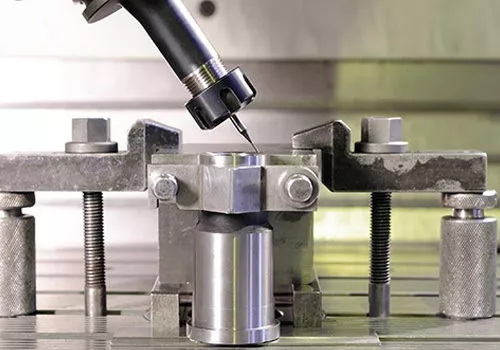
CNC turning is essential in automotive, aerospace, electronics, medical, energy, and industrial machinery. Its flexibility makes it suitable for both prototyping and full-scale production.
They deliver outstanding precision, advanced automation, sustainable machining practices, and compliance with European quality standards.
Chinese manufacturers provide cost-effective large-scale production and OEM customization, complementing Dutch firms' high-end engineering design and R&D capabilities.
Commonly used materials include stainless steel, aluminum, brass, copper, titanium, and various engineering plastics. Material choice depends on mechanical strength and intended application.
Evaluate their experience, quality certifications, machining technology, and client feedback. Request detailed inspection reports, prototypes, and references before finalizing cooperation.


