From idea to market-ready product, our NPI solutions make every stage easier, faster. Discover How We Help

Views: 222 Author: Tomorrow Publish Time: 2026-01-06 Origin: Site


Content Menu
● What Is CNC Machining Quoting?
● Why Instant Quoting Platforms Are Transforming Manufacturing
● Step-by-Step: How to Get Instant CNC Machining Quotes Online
>> Step 1: Prepare Your CAD or 3D Model Files
>> Step 2: Choose a Reliable Instant Quoting Platform
>> Step 3: Upload the Design File
>> Step 4: Define Project Specifications
>> Step 5: Utilize Automated DFM (Design for Manufacturability) Feedback
>> Step 6: Review, Compare, and Adjust Quotes
>> Step 7: Place the Order and Track Progress
● Benefits of Instant CNC Machining Quotes
● Factors That Influence CNC Machining Quotes
● Advanced Applications of Instant CNC Quoting Algorithms
● How To Optimize Your Parts for Better Instant Quotes
● Case Example: Prototype to Production Workflow
● The Future of CNC Machining Quoting
● FAQ
>> 1. What file formats do online CNC quoting platforms accept?
>> 2. How do instant quotes remain accurate?
>> 3. Can I order just a single prototype?
>> 4. Do these services handle post-processing and finishing?
>> 5. How secure are my CAD files?
In the modern manufacturing landscape, speed, precision, and digital efficiency are paramount. CNC (Computer Numerical Control) machining plays a vital role across industries such as aerospace, automotive, electronics, and medical device production. Yet, despite its high-tech nature, one aspect of the process has long remained outdated — the quoting stage.
It used to take days or even weeks for manufacturers to receive CNC machining price estimates. Engineers had to email multiple suppliers, wait for manual calculations, and interpret inconsistent results. Today, instant CNC machining quotes available online have completely changed this system. Using advanced algorithms, these platforms analyze your uploaded CAD files and generate accurate quotes within minutes.
This guide will walk you through everything you need to know about getting instant CNC machining quotes online — from preparation steps to comparing suppliers — and explore how digital quotation systems are reshaping manufacturing economics.
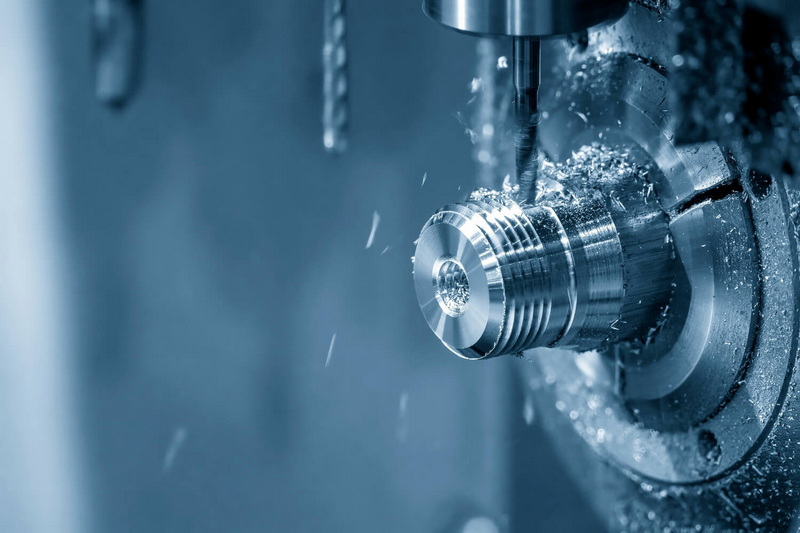
CNC machining quoting is the process of determining the cost and timeline for manufacturing a part or component through computer-controlled machining processes such as milling, turning, drilling, or grinding. The quotation includes details such as:
- Material and quantity
- Machining complexity
- Finishing operations
- Lead time
- Shipping and logistics
Traditional quoting involved significant human labor. Engineers reviewed drawings, estimated cutting times manually, and factored in hourly machine rates. Instant online quoting platforms have automated this process by leveraging computational geometry, cloud processing, and artificial intelligence (AI).
Instant quoting tools don't just simplify communication between design teams and manufacturers — they redefine how decisions are made. They allow real-time design evaluation, instant budget forecasts, and rapid iteration during early product development.
The most notable advantages include:
- Accelerated timelines: Quotes in under a minute enable same-day production approval.
- Cost transparency: Advanced pricing algorithms provide detailed cost breakdowns without hidden margins.
- Improved collaboration: Engineers, purchasers, and manufacturers can view data simultaneously.
- Reduced risk: By simulating production before manufacturing, errors are minimized.
As companies move toward digital manufacturing, instant quoting is becoming a core feature of Industry 4.0 workflows, supporting global supply chains and on-demand production models.
The quoting process begins with your design file. Most online platforms rely on 3D models to evaluate geometry, dimensions, and tolerances automatically.
Popular supported formats include:
- STEP (.stp, .step)
- IGES (.igs, .iges)
- STL (.stl)
- SLDPRT (.sldprt)
Ensure your file is clean and watertight. Remove redundant layers, overlapping surfaces, and non-manufacturable elements. Include notes about critical dimensions, threads, or materials if necessary.
If you're using CAD programs like Autodesk Fusion 360, SolidWorks, or Siemens NX, exporting a STEP file often provides the most reliable quoting results.
Today, several manufacturers offer automated CNC quoting systems that provide near-instant results. Prominent examples include:
- Xometry – Connects designers with global manufacturing partners and provides design-for-manufacturability analysis.
- RapidDirect – Specialized in custom prototypes and on-demand parts with automatic pricing optimization.
- Fictiv – Known for fast quoting and sourcing across trusted manufacturing networks.
- Protolabs – Offers AI-assisted manufacturability feedback and instant production scheduling.
- 3D Hubs (now Hubs) – A global platform simplifying custom manufacturing quotes for CNC, 3D printing, and sheet metal.
When choosing a platform, consider capabilities like available materials, finishing services, lead time options, and integration with your CAD tools.
Once you have selected your preferred platform, log in and navigate to its “Instant Quote” section. Most allow you to drag and drop your file directly into the web interface.
The system automatically performs geometry analysis, detecting features such as pockets, holes, contours, and fillets. It calculates machining time based on available tooling paths, tolerance levels, and machine types (3-axis, 4-axis, or 5-axis).
Some tools visualize problem areas in red or highlight thin walls and overly complex features to prevent future manufacturing issues.
After uploading, specify your desired manufacturing parameters. These usually include:
- Material choice: Aluminum (6061, 7075), stainless steel (304, 316), brass, titanium, and engineering plastics.
- Quantity and production scale: Prototypes, short runs, or large-volume production.
- Tolerance ranges: Choose only as tight as needed; less strict tolerances reduce cost.
- Surface finish: Options such as bead blasting, anodizing, polishing, painting, or powder coating.
- Thread specifications and inserts: Identify M3, M6, or custom fastener threading.
These settings affect pricing considerably, so take the time to evaluate what each choice contributes to cost and performance.
High-quality platforms use built-in DFM algorithms that check your geometry for manufacturability. They analyze wall thickness, minimum feature radius, part orientation, and machining accessibility.
This helps designers eliminate impossible or cost-prohibitive features early. For instance, a deep cavity with a sharp corner may require long-reach cutters and several operations, increasing cost exponentially. DFM feedback lets you adjust before finalizing your order.
Within seconds, multiple quotes will appear for different combinations of material, lead time, and process type. You may receive several pricing tiers, such as:
- Economy: Longest lead time, lowest cost.
- Standard: Balanced price and delivery.
- Expedite: Higher price, shortest delivery.
Use this opportunity to fine-tune your design. Changing your tolerance from ±0.005 mm to ±0.05 mm or switching from stainless steel to aluminum could cut your cost in half. Instant visualization lets you experiment efficiently.
After reviewing all options, approve the quote that fits your schedule and budget. Once confirmed, production starts immediately.
Most platforms allow you to track order progress: from machining and inspection to packaging and shipment. Some systems integrate online dashboards that display live production status, expected delivery dates, and shipment tracking.
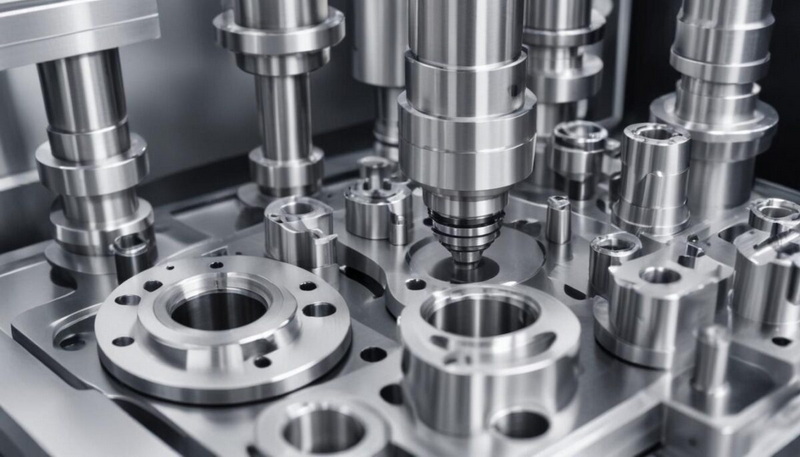
The advantages of instant online quoting go beyond convenience; they fundamentally improve how businesses operate:
- Reduced administrative effort: Automation eliminates manual quoting and email exchanges.
- Instant iteration: Designers can modify CAD models on the fly and instantly reseed updated quotes.
- Improved supply chain agility: Multiple vendors can bid simultaneously, increasing competitiveness.
- Enhanced accuracy: Machine learning improves estimation precision as more data accumulates.
- Scalable access: Companies of all sizes can access professional quoting tools without investing in software.
These benefits make instant quotations a game-changer for startups seeking prototypes and large manufacturers handling frequent design adjustments.
Although automated, these pricing systems still abide by key engineering cost principles. Common factors include:
1. Material cost: Raw materials, especially exotic metals or composites, significantly impact price.
2. Complexity: Parts requiring multiple setups, tight corners, or deep pockets consume more time.
3. Quantity: Higher volumes reduce setup costs per unit, improving cost efficiency.
4. Tolerance and precision: Tighter tolerances increase inspection time and tooling wear.
5. Surface finish: Each secondary operation adds cost and lead time.
6. Machine availability: Certain tools or axes may have limited capacity, influencing quote variation.
7. Delivery schedule: Faster turnarounds require premium scheduling.
Understanding these factors empowers designers to prioritize cost-effective solutions early in product development.
Instant quoting platforms now harness advanced computational approaches to enhance accuracy and speed:
- Feature recognition algorithms: Detect holes, pockets, chamfers, threads, and other geometric details.
- Machine learning models: Predict labor, tool wear, and cycle time from previous production runs.
- Cloud computing infrastructure: Handles large 3D models simultaneously for multiple users.
- AI-driven pricing optimization: Balances supplier capacity, material availability, and historical trends.
Future platforms may incorporate energy efficiency scoring, carbon footprint tracking, and dynamic pricing tied to real-time global materials markets.
To get the best results, follow these professional optimization tips before uploading files:
- Simplify geometry: Eliminate unnecessary details that add no functional value.
- Use consistent wall thickness: Prevent tool chatter and uncertain milling depths.
- Avoid narrow grooves or deep slots: These require specialized cutting tools.
- Round interior corners: Sharp internal corners increase machining passes.
- Use standard hole sizes: Match standard drill diameters for faster machining.
- Select realistic finishes: Ultra-smooth or mirror finishes can triple machining time.
Applying these guidelines can reduce your quoted price by up to 40% and shorten production time significantly.
Imagine an engineer designing a custom heat sink for an electric vehicle power module. They upload the cooling fin design to Protolabs using an aluminum 6061 base model. Within two minutes, the algorithm analyzes thermal fin geometry, identifies potential sharp corner issues, and suggests a fillet adjustment. The quote reveals three options: economy (10-day), standard (5-day), and expedited (2-day).
After revising the model and selecting a moderate finish, the final quote reduces by 22%. The prototype ships in under five days — a timeline that would have taken weeks using conventional methods.
Such real-world scenarios highlight how online quoting bridges design flexibility with manufacturing speed.
As artificial intelligence and automation continue to evolve, the future of CNC quoting looks increasingly interconnected. Platforms may soon integrate deeper CAD plug-ins, automatically adjusting design parameters to minimize cost in real time.
Blockchain-based job tracking could ensure traceability across the manufacturing chain, while predictive analytics might assess failure probabilities during machining and adjust scheduling accordingly.
Moreover, instant quoting will likely converge with digital twin technology, enabling engineers to not only receive cost information but visualize simulated machining results and energy usage — an innovation that supports both efficiency and sustainability.
Instant CNC machining quoting represents a true revolution in modern manufacturing. It simplifies vendor communication, accelerates prototype cycles, and brings full cost transparency to engineering projects. For both startups and established industries, the ability to upload a file and receive reliable pricing within minutes drastically enhances design agility and competitiveness.
By mastering the process — understanding cost drivers, leveraging DFM feedback, and using trusted platforms — businesses can achieve faster turnaround times, tighter quality control, and scalable production capabilities.
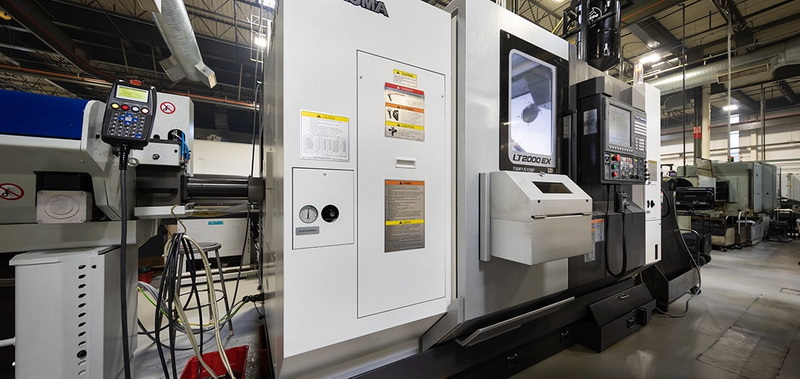
Most quoting systems accept STEP, IGES, STL, and SLDPRT files. Each contains 3D geometry necessary for automated manufacturing assessment.
Pricing is derived from verified machine cycle data, labor averages, and material costs stored in cloud databases. Machine learning continuously refines these estimates.
Yes. Most instant quoting services cater to both one-off prototypes and mass production runs, ensuring flexibility for every project stage.
Absolutely. Many platforms incorporate finishing options like anodizing, electroplating, sandblasting, and coating directly into the quotation process.
Trusted providers use encryption, temporary storage, and strict data-access policies to maintain confidentiality. Some also offer NDA agreements for added protection.
[1](https://help.fictiv.com/en/)
[2](https://xometry.pro/en-eu/articles/)
[3](https://promptadvance.club/blog/chatgpt-prompts-for-article-writing)
[4](https://en.wikipedia.org/wiki/Protolabs)
[5](https://breakoutgrowth.net/case-study/how-3d-hubs-is-disrupting-the-13-trillion-global-manufacturing-industry/)


