From idea to market-ready product, our NPI solutions make every stage easier, faster. Discover How We Help

Content Menu
● The workflow: from concept to finished part
>> (4) Machining and inspection
>> (5) Finishing and post-processing
● Best practices for precision and efficiency
● Common challenges and how to address them
● Quality assurance and measurement
● Cost considerations and lead times
● Choosing the right CNC partner
● Future trends in CNC machining
● How to get started with your first CNC project
● FAQ
>> - 1. What is the first step in starting a CNC project?
>> - 2. How do you choose between milling and turning for a part?
>> - 3. What affects CNC surface finish the most?
>> - 4. How can you reduce cycle time without sacrificing quality?
>> - 5. What documentation should accompany a CNC job?
CNC machining is a precision-driven manufacturing process that transforms digital designs into physical parts with repeatable accuracy. It combines computer-aided design (CAD), computer-aided manufacturing (CAM), and computer numerical control (CNC) to produce complex geometries from a variety of materials. This article explains the essential concepts, workflow, and best practices for successful CNC machining.
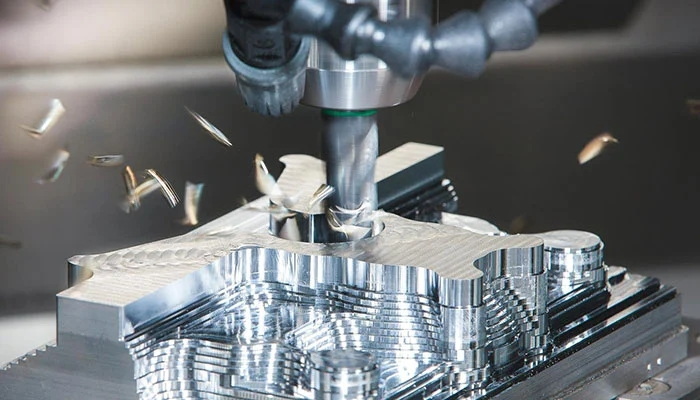
CNC stands for computer numerical control. In CNC machining, a machine tool follows programmed instructions to remove material or shape a workpiece. The most common CNC machines are milling machines and lathes, but the term also covers routers, wire EDM, laser cutters, and more. The core idea is to convert a digital model into precise tool paths that guide cutting tools along defined routes, depths, and speeds.
- Metals: aluminum, steel, stainless steel, brass, copper, titanium, and exotic alloys.
- Plastics: acetal (POM), nylon, polycarbonate, PMMA, PTFE, and various reinforced polymers.
- Composites: carbon fiber-reinforced polymers (CFRP) and fiberglass-reinforced polymers (GFRP).
- Hard materials: some machinable ceramics and hardened steels, depending on tooling and machine capabilities.
- Milling: removes material using rotating cutting tools. Techniques include roughing, finishing, pocketing, contouring, and threading.
- Turning: shapes cylindrical parts by rotating the workpiece against stationary tools. Includes facing, threading, grooving, and drilling.
- Drilling: creates holes using drill bits. Can be combined with tapping for threaded holes.
- Tapping: downloads internal threads by controlled cutting.
- Boring and reaming: refine hole size and finish.
- Routing and engraving: used for pockets, signs, and decorative or functional features in plastics and soft metals.
- Wire EDM and laser cutting: for features that are difficult with conventional tooling or require very tight tolerances.
- CAM/CAD: software tools that design parts (CAD) and generate tool paths (CAM).
- Tool path: the trajectory the cutting tool follows to remove material.
- Stock: the raw material before machining.
- Feed rate: how fast the tool advances through material.
- Spindle speed: rotational speed of the cutting tool.
- Stepover/stepdown: distance the tool moves laterally or axially per pass.
- Tolerance: the permissible deviation from a specified dimension.
- Surface finish: roughness or texture of the machined surface.
- Create a precise CAD model or import a compatible model.
- Define critical features, tolerances, and functional requirements.
- Consider manufacturability: wall thickness, hole sizes, fillets, and radii that affect tool access.
- Perform a design-for-manufacturing (DFM) assessment to minimize complexity and cost.
- Choose the appropriate material and verify availability.
- Select tooling (end mills, drills, taps, inserts) suited to the material and geometry.
- Create a tool library with diameters, flute counts, coatings, and speeds.
- Determine fixtureing methods to hold workpieces rigidly during machining.
- Generate tool paths that achieve the required features while optimizing cycle time.
- Determine cutting speeds and feeds based on material, tooling, and machine capabilities.
- Simulate tool paths to catch collisions, gouges, and improper clearances.
- Create setup sheets with all critical parameters, including zero points, origin, and clamping details.
- Load the program into the CNC control and verify the first run with a dry-run or test piece.
- Monitor for tool wear, chatter, overheating, or misalignment.
- Perform in-process inspections, such as gauging critical dimensions and surface roughness.
- Adjust offsets if necessary and document any deviations.
- Deburr, deburr and remove any sharp edges.
- Apply surface finishing processes such as polishing, anodizing, powder coating, or heat treatment.
- Conduct final dimensional inspection against the tolerance stack-up.
- Pack and prepare the part for delivery, including labeling and documentation.
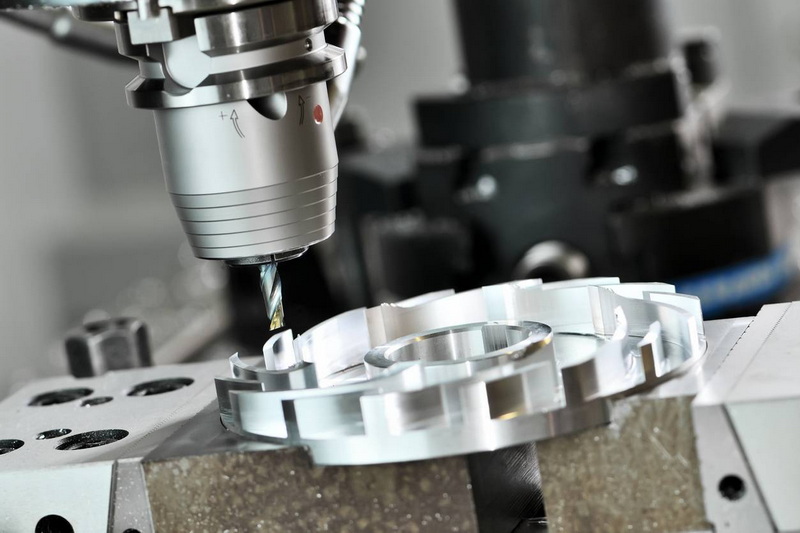
- Material selection matters: a material with stable properties and machinability reduces variances in dimensions.
- Right tooling choice: select tools based on material hardness, required surface finish, and geometry. Use coated or carbide tools for longer life and better consistency.
- Optimize feeds and speeds: balance removal rate with tool life and heat generation. Overly aggressive feeds can cause chatter and premature wear.
- Use proper fixturing: rigid, repeatable setups minimize positional errors and improve cycle-to-cycle repeatability.
- Minimize tool changes: design parts to reuse common tooling where possible to reduce downtime.
- Apply adaptive machining strategies: use multiple passes with finishing passes to achieve tight tolerances without overburdening the machine.
- Document everything: keep thorough setup sheets, tool lists, and inspection reports for traceability and repeatability.
- Tool deflection: stems from excessive loads or long tool overhang. Mitigate with shortertooling, proper fixturing, and conservative feeds.
- Warping and thermal distortion: manage with stable workholding, gradual heating or cooling, and allowing billets to acclimate to room temperature.
- Poor surface finish: caused by dull tools, incorrect feeds, or chatter. Rotate tools, adjust speeds, and apply vibration-damping strategies.
- Tolerances drift: arises from tool wear, machine backlash, or setup errors. Implement regular calibration, tool length compensation, and measurement checkpoints.
- Part-to-part variation in high-volume runs: standardize processes, use fixture templates, and implement statistical process control.
- First article inspection (FAI): verify a new design's features against the model before full production.
- In-process measurement: use calipers, micrometers, height gauges, and functional gauges to monitor critical dimensions during production.
- CMM (Coordinate Measuring Machine) inspection: for complex geometries or tight tolerances, CMM provides accurate three-dimensional measurements.
- Surface finish and coating checks: ensure consistent texture and coating thickness according to specifications.
- Documentation: maintain traceability with lot numbers, process parameters, and inspection data.
- Material and tooling costs: high-quality tooling and specialty materials can raise costs but improve reliability and finish.
- Setup time: manual setup and fixturing can dominate lead times; investing in reusable fixtures and standard operating procedures helps.
- Machining time: roughing strategies may reduce cycle time but require robust tooling to avoid failures.
- Quality controls: more comprehensive inspection increases upfront costs but reduces downstream rejects and returns.
- Supplier capabilities: alignment with a trusted partner that offers transparent pricing and lead-time estimates improves planning.
- Capabilities: ensure the shop handles your material, required tolerances, and surface finishes.
- Equipment: verify machines, controls, and tooling are appropriate for your parts.
- Certifications and quality systems: ISO 9001 or industry-specific certifications reflect process discipline.
- Communication: clear, proactive updates on progress, risks, and changes are critical for complex programs.
- Value proposition: beyond price, consider lead times, reliability, and post-process services like finishing or assembly.
- Personal protective equipment (PPE) is essential: safety glasses, hearing protection, and appropriate attire.
- Machine guarding and emergency stops must be functional and accessible.
- Proper training on machine operation, tool changes, and safety protocols is mandatory.
- Regular maintenance reduces the risk of accidents due to tool breakage or control faults.
- Automation and smart manufacturing: robotics, AI-driven process optimization, and autonomous setups reduce manual intervention.
- Additive-subtractive hybrid systems: combine 3D printing with subtractive finishing for complex assemblies.
- Advanced materials and coatings: new alloys and tool coatings extend tool life and enable difficult operations.
- Online collaboration and remote monitoring: cloud-based dashboards provide real-time visibility into production status.
- Define the part: list critical features, tolerances, material, and finish.
- Choose the manufacturing method: milling, turning, or hybrid processes based on geometry.
- Source the material: confirm availability and lead times.
- Create or obtain a CAD model: ensure dimensions align with functional requirements.
- Generate CAM toolpaths: plan roughing, finishing, and any special operations.
- Prepare the shop floor: set up fixtures, zero points, and inspection plans.
- Run a pilot: produce a small batch to validate processes before full production.
CNC machining is a versatile and disciplined approach to turning digital designs into precise physical parts. By aligning design for manufacturability, selecting appropriate tooling and materials, coding robust CAM programs, and enforcing thorough inspection and documentation, manufacturers can achieve consistent quality, repeatability, and efficiency. Embracing best practices, planning for potential challenges, and staying abreast of industry trends will help any organization optimize CNC operations and deliver reliable components.
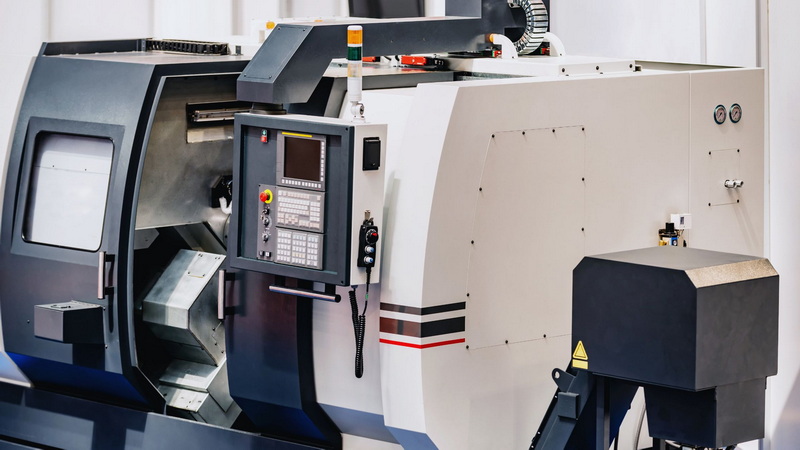
The first step is to define the part requirements, critical features, tolerances, material, and finish, then assess manufacturability to guide tool selection and process planning.
Milling is typically used for flat surfaces, pockets, and complex geometries; turning excels at cylindrical features and concentric operations. The choice depends on geometry, tolerances, and production volume.
Tool condition, feed rate, spindle speed, depth of cut, tool overhang, and rigidity of the setup primarily influence surface finish.
Use optimized tool paths, higher-depth roughing strategies, appropriate tooling, and stable fixturing, while validating with simulations and pilot runs.
A detailed setup sheet, bill of materials, tool list with offsets, process parameters, inspection plans, and first article inspection results should accompany every program.


