From idea to market-ready product, our NPI solutions make every stage easier, faster. Discover How We Help

Views: 222 Author: Tomorrow Publish Time: 2026-01-07 Origin: Site
Content Menu
>> Common Forms of Metal Stock
● How Metal Stock Is Utilized in CNC Milling
>> 1. Selecting the Right Metal Stock
>> 2. Cutting and Sizing the Raw Metal
>> 3. Preparing and Cleaning Metal Stock
>> 4. Fixturing and Workholding
>> 5. Generating Toolpaths and Programming
>> 6. Actual Machining Operation
>> 7. Coolant and Lubrication Management
>> 8. Measuring and Quality Assurance
● Common Issues When Milling Metal Stock
● Advanced Techniques in Metal Milling
● Best Practices for Handling Metal Stock
● Applications of CNC-Milled Metal Components
● Environmental Considerations in Metal Milling
● FAQ
>> (1) What is the best metal for CNC milling?
>> (2) How thick can metal stock be for CNC milling?
>> (3) How do I prevent tool wear during milling?
>> (4) Can recycled metal stock be used in CNC milling?
>> (5) How does CNC milling differ from CNC turning?
CNC milling represents one of the most versatile and essential methods in modern precision manufacturing. It enables the transformation of raw metal stock into complex parts and components with extremely tight tolerances. The performance of the machine, however, is deeply connected to the characteristics and quality of the metal stock itself.
Understanding how metal stock behaves, interacts, and responds during CNC milling can significantly enhance manufacturing precision, productivity, and cost-efficiency. This comprehensive article explores in depth how metal stock is used in CNC milling machines—from selection and preparation to fixturing, machining strategies, and modern innovations.
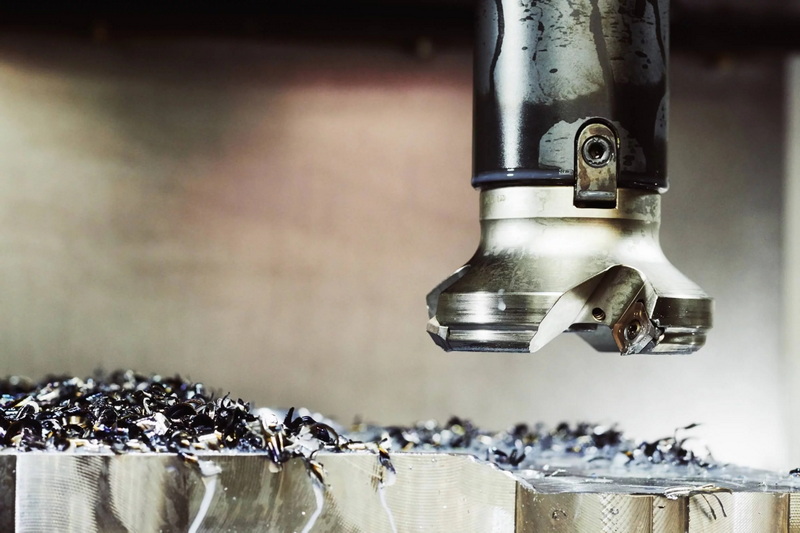
CNC milling, or Computer Numerical Control milling, refers to the automated machining process where a rotating cutting tool removes material from a stationary workpiece. The movements of the tool and the table are driven by pre-programmed digital instructions derived from CAD (Computer-Aided Design) and CAM (Computer-Aided Manufacturing) software.
This automation ensures high precision, enabling the creation of components used in aerospace, medical, automotive, and electronics industries. Unlike manual milling, CNC technology enhances repeatability and finish accuracy, even for complex geometries.
Metal stock is the raw material used for machining various mechanical components. It comes in several shapes and forms, such as bars, sheets, plates, rods, billets, and tubes. The choice of metal directly affects fabrication quality, tool life, and overall efficiency.
Each type of metal stock has its own set of mechanical properties and machining characteristics, such as hardness, strength, ductility, and thermal conductivity.
- Bars: Long, straight sections of rectangular, square, or round cross-sections used for shafts, frames, and support parts.
- Plates and sheets: Flat materials suitable for parts requiring wide surfaces, such as brackets and panels.
- Tubes and pipes: Cylindrical materials ideal for structural or fluid transmission applications.
- Billets: Compact, uniform blocks used when extensive material removal or reshaping is necessary.
- Aluminum alloys: Lightweight, corrosion-resistant, and ideal for high-speed machining.
- Mild and carbon steels: Strong and durable, often used for heavy-duty components.
- Stainless steel: Excellent corrosion and heat resistance.
- Brass and copper: Great machinability, suitable for electrical and decorative parts.
- Titanium and nickel alloys: Exceptional strength-to-weight ratio, often found in aerospace and medical industries.
The integration of metal stock into CNC milling operations involves multiple carefully coordinated steps. Each stage influences machining precision, time efficiency, and cost.
The first step is determining which material best fits the component's performance and cost requirements. Parameters influencing the choice include:
- Mechanical properties: Strength, toughness, and wear resistance.
- Machinability rating: How easily the material can be cut, shaped, and finished.
- Thermal characteristics: Heat conductivity and expansion under stress.
- Corrosion and fatigue resistance: Important for long-term durability.
In practice, machinists and engineers use alloy comparison charts or online materials databases to align material choice with design intent.
Before milling begins, the raw stock is processed to form manageable workpieces. Machinists use bandsaws, plasma cutters, or hydraulic shears to cut materials into the correct size. Efficient cutting practices reduce scrap and optimize setup time.
For mass production, suppliers may provide pre-cut blanks within close tolerances, reducing preparation effort and ensuring consistent results.
Surface quality matters. Contaminants like oil, rust, or oxides can affect clamping and machining consistency. Clean the stock using:
- Solvent cleaning to remove oils and lubricants.
- Abrasive brushing to eliminate scale or oxidation.
- Chemical etching for precise surface control in high-end operations.
Proper cleaning improves adhesion for coolants and reduces tool chatter caused by uneven surface contact.
Once prepared, the metal stock must be securely mounted inside the milling machine. Any micro-movement during cutting can compromise accuracy or damage tooling.
Common fixturing solutions include:
- Machine vices: Standard option for small to medium-sized blocks.
- Clamps and T-slot plates: Provide strong grip on larger components.
- Vacuum fixtures: Used for thin sheets or delicate parts.
- Magnetic bases: Hold ferromagnetic materials without clamps interfering with toolpaths.
Using vibration-resistant fixtures ensures consistent precision throughout long machining cycles.
Toolpaths are generated through CAM software based on the 3D model. The software determines the optimal cutting sequence, speed, feed rate, and tool geometry according to the chosen metal.
- Aluminum requires higher spindle speeds (up to 20,000 RPM or more).
- Hard alloys like titanium use slower speeds to prevent overheating.
- Toolpath optimization minimizes unnecessary tool movements and reduces cycle time.
Modern CAM programs also feature adaptive milling techniques, maintaining consistent load on the tool throughout cutting, which improves efficiency and tool endurance.
The CNC mill then performs the programmed series of operations:
- Facing: Leveling the surface of the metal stock.
- Roughing: Removing large chunks of material to outline the part.
- Pocketing and contouring: Creating internal and external profiles.
- Finishing passes: Smoothing surfaces to achieve final dimensions.
- Drilling and tapping: Forming holes and threads precisely positioned by CNC instructions.
Each stage requires monitoring of spindle load and cutting temperature to protect tools and maintain dimensional accuracy.
Metal machining generates friction and heat. Without proper cooling, both the workpiece and tool can deform.
- For steel and titanium, oil-based fluids provide superior thermal stability.
- For aluminum, water-soluble coolants work best to avoid staining.
- Compressed air or minimum quantity lubrication (MQL) offers an eco-friendly alternative.
Consistent coolant application prevents chip weld-up and produces smoother finishes.
After cutting, the machined part undergoes inspection using various instruments:
- Digital calipers for linear dimensions.
- Coordinate Measuring Machines (CMMs) for complex 3D geometry.
- Surface testers for roughness evaluation.
Every tolerance is validated against the CAD model to ensure 100% compliance with design specifications, particularly in aerospace and defense operations.
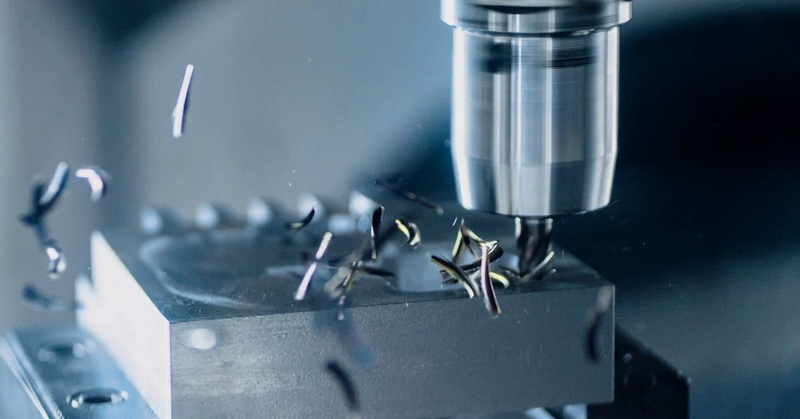
Despite technological progress, machinists must anticipate challenges unique to different materials:
1. Tool wear and breakage: Especially in hardened steels or exotic alloys.
2. Thermal distortion: Heat may expand the metal unevenly.
3. Chip evacuation problems: Poor chip control leads to tool marks or surface defects.
4. Material warping: Internal stresses released during machining can lead to bending.
Applying strategic cutting parameters, sharp tools, and coolant optimization significantly reduces these issues.
In modern manufacturing, efficiency and innovation evolve hand in hand. Several advanced techniques enhance how metal stock is machined today.
This strategy dynamically adjusts tools' cutting engagement to maintain consistent chip thickness, improving tool life by 30–50%.
Combines rapid spindle rotation and lighter tool loads to remove small amounts of material very quickly. It's invaluable for aluminum and softer alloys.
Allows machining from multiple angles simultaneously, reducing re-setup time and improving geometric accuracy on complex parts.
Integrates CNC milling with additive manufacturing. This hybrid approach allows near-net-shape fabrication followed by precision finishing.
Modern CNC machines leverage IoT sensors and AI algorithms to monitor vibration, torque, and temperature in real time—adjusting feeds and speeds automatically to maintain ideal conditions.
To maintain consistent results and minimize material waste, machinists should adopt the following best practices:
- Plan part layouts: Arrange multiple cuts efficiently to save raw stock.
- Label materials: Prevent confusion between similar alloys.
- Store properly: Keep metals away from corrosion sources like moisture or acidic vapors.
- Inspect prior to machining: Identify microscopic cracks or inclusions early.
- Track tool changes: Replace tools based on wear rate data, not visual judgment alone.
These disciplined methods improve operational reliability and cost control.
CNC milling of metal stock has applications across nearly every engineering sector:
- Aerospace: Precision turbine blades, airframe fittings, and housings.
- Automotive: Cylinder heads, transmission cases, and custom chassis components.
- Defense: Weapon housings, armor plates, and structural frames.
- Medical: Surgical implants, orthopedic devices, and dental instruments.
- Consumer electronics: Heat sinks, smartphone frames, and connectors.
With digitalization, manufacturers can shift from prototypes to mass production without repeating setup, ensuring seamless scalability.
Sustainable practices are increasingly integral to machining operations. Companies now focus on:
- Coolant recycling systems to reduce chemical waste.
- Chip recovery programs that separate and recycle metal scraps.
- Energy-efficient spindle drives to lower electricity usage.
- Dry machining techniques, minimizing fluid consumption while maintaining performance.
Implementing these eco-friendly methods supports global green manufacturing standards and lowers operational costs.
Metal stock lies at the foundation of every CNC milling operation. From selecting the right alloy and preparing the surface to securing fixtures and monitoring tool performance, every phase determines the success of the machining process.
By mastering how metal stock interacts with CNC milling systems, manufacturers can achieve exceptional accuracy, enhance productivity, and reduce waste. Combined with ongoing technological developments like adaptive milling, 5-axis machining, and AI-driven process optimization, the future of metal CNC milling continues to evolve—toward efficiency, precision, and sustainability.
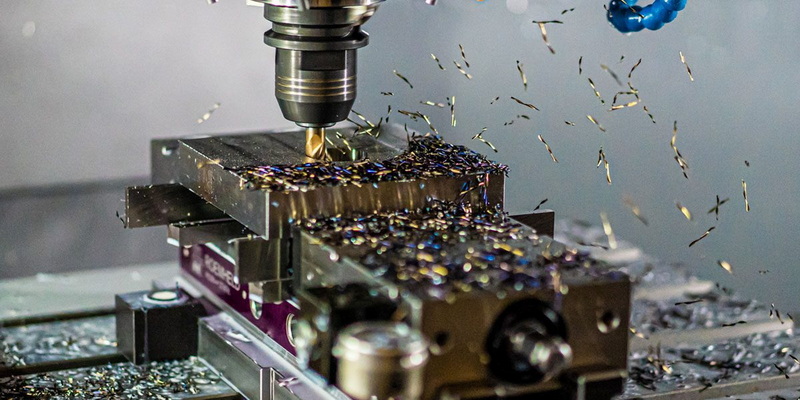
Aluminum is a top choice due to its easy machinability, low weight, and ability to produce fine finishes. However, harder metals like titanium or stainless steel are used when strength or corrosion resistance is more critical.
CNC machines can handle a wide range of material thicknesses, from thin plates under 1 mm to blocks exceeding 200 mm, depending on the machine's spindle power and cutting tool reach.
Use coated carbide cutters, apply adequate coolant, and maintain proper feed rates. Adaptive toolpaths also reduce excessive load on tools.
Yes, recycled alloys can perform comparably to virgin materials if verified for purity and strength. Quality testing ensures structural integrity and machinability.
Milling removes material with a rotating tool on a stationary workpiece, while turning spins the workpiece against a fixed cutting tool. Milling is ideal for prismatic parts; turning suits cylindrical shapes.


