From idea to market-ready product, our NPI solutions make every stage easier, faster. Discover How We Help

Views: 222 Author: Tomorrow Publish Time: 2026-01-07 Origin: Site
Content Menu
● The Early Foundations of Milling
● The Rise of Automation and Numerical Control
● The Transition From NC to CNC
● CNC Milling in the Digital Revolution
● Modern-Day CNC Milling Machines
● Advantages of CNC Milling Over Manual Machining
● The Global Influence of CNC Milling
● The Role of CNC Milling in Industry 4.0
● FAQ
>> 1. When was CNC milling first invented?
>> 2. What distinguishes CNC from traditional machining?
>> 3. Which industries benefit most from CNC milling?
>> 4. How has software influenced CNC milling?
>> 5. What is the future outlook for CNC milling?
CNC (Computer Numerical Control) milling is one of the most influential technological advances in the history of manufacturing. It bridges centuries of mechanical innovation, from the first manually operated milling machines to the fully automated digital factories of today. The story of CNC milling is not just about machines—it is about precision, creativity, and the continuous pursuit of perfection that defines modern engineering.
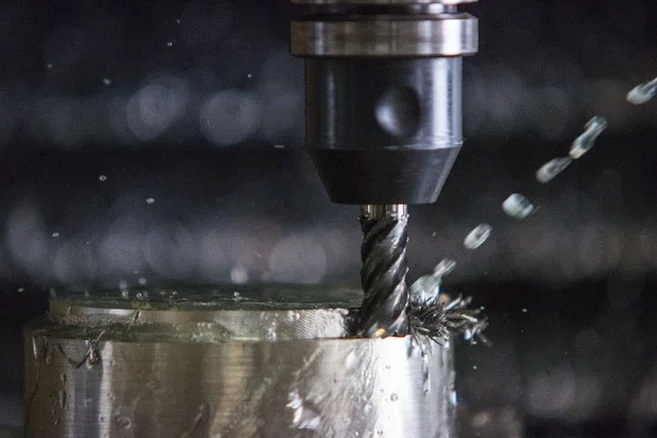
Before the arrival of computers or even electrical motors, machinists depended entirely on manual labor. The earliest forms of milling, which involved shaping materials with rotating cutters, emerged during the 18th century as industrialization gained momentum.
Eli Whitney's invention around 1818 is often cited as the first recognizable milling machine. His design, powered by water or steam, used a mechanically driven cutting tool to remove material from a stationary workpiece. This innovation helped manufacture standardized musket parts for the U.S. government, making Whitney's design a landmark moment for mass production.
Later in the 19th century, engine builder Joseph R. Brown developed the universal milling machine, introducing adjustable cutters and rotary tables. These improvements allowed machinists to produce more complicated shapes with accuracy that was previously unattainable.
By the early 20th century, milling machines were already vital in automotive, shipbuilding, and tool-making industries. They grew larger, more stable, and more versatile, but remained completely manual. Each operation depended on the artisan's physical precision and machining expertise.
After World War II, industries demanded parts that were too complex and precise for traditional manual machining. Aerospace applications, in particular, required exact contours and surfaces that no human could cut consistently.
This challenge sparked the birth of “numerical control” technology in the late 1940s. John T. Parsons, an engineer in Michigan, pioneered the concept of using numerical data to guide machine movements. He proposed recording the positions of cutting tools as numerical coordinates, which could then be read by a machine instead of a human operator.
In collaboration with the U.S. Air Force and MIT's Servomechanisms Laboratory, Parsons developed the first working numerical control (NC) milling prototype in 1952. It used punch tape to feed instructions into a milling machine, translating numbers into precise movements along multiple axes. This breakthrough fundamentally changed how parts were made.
While early NC systems were revolutionary, they also had limitations. Punched tapes were slow, editing errors required re-punching entire programs, and maintenance was expensive. But in the 1960s, the rapid development of electronic computers began transforming the manufacturing world.
By directly connecting machines to computers, engineers eliminated the need for physical tape. These new systems became known as CNC—Computer Numerical Control—machines. Operators could now program tool paths using software and make real-time adjustments to improve performance or fix errors.
In the 1970s, commercial adoption of CNC milling surged, especially in aerospace, automotive, and defense sectors. Machines produced turbine blades, aircraft parts, and engine components with unprecedented accuracy. The introduction of CAD (Computer-Aided Design) and CAM (Computer-Aided Manufacturing) software in the late 1970s further accelerated adoption by allowing designers to create parts digitally and generate toolpaths automatically.
The 1980s and 1990s brought a digital explosion in CNC technology. Personal computers became more affordable, and microprocessors more powerful. CNC machines evolved from standalone units to networked systems capable of communication across entire production floors.
This period saw major advancements such as:
- Software Integration: CAD and CAM tools were merged into unified systems, streamlining design and production.
- Multi-Axis Milling: Machines expanded from 3-axis cutting to 4-axis and 5-axis machining, allowing rotation and tilting of parts for complex shapes like turbine housings and medical implants.
- Automated Tool Changing: CNC machines could switch cutting tools automatically, dramatically increasing productivity.
- Data Storage and Memory: Programs could be saved digitally, edited instantly, and reused across various production lines.
These developments made CNC milling more versatile and essential to industries that demanded precision at scale.
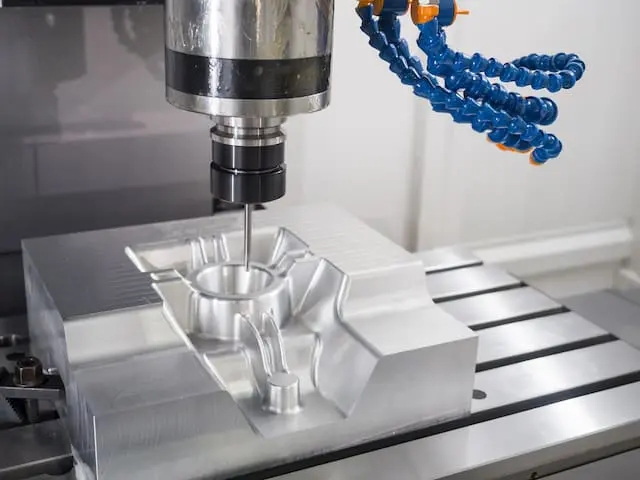
Today's CNC milling machines are marvels of mechanical and digital engineering. They harness precise motors, servos, sensors, and advanced software to produce intricate components with micro-level accuracy. Many are equipped with touch-screen controls, wireless connectivity, and monitoring systems that track performance and wear in real time.
Some defining features of modern CNC mills include:
- High-Speed Machining (HSM): Advanced spindles and optimized toolpaths reduce cycle times while improving surface finishes.
- Hybrid Systems: Machines combine subtractive milling with additive manufacturing (3D printing) to build and refine parts in the same setup.
- Automation and Robotics: Robotic arms load and unload workpieces, improving efficiency in 24/7 production environments.
- Smart Sensors: IoT-enabled CNC machines monitor temperature, vibration, and cutting pressure to automatically adjust operations.
CNC milling now serves critical roles in aerospace, renewable energy, automotive design, and even jewelry making. Medical industries use CNC precision to create implants, prosthetics, and surgical instruments tailored to individual patients.
The benefits of CNC technology go beyond automation—it has fundamentally changed manufacturing philosophy.
- Precision and Accuracy: CNC machines maintain tolerances as tight as ±0.001 inches or better.
- Reproducibility: Once programmed, CNC mills replicate complex parts consistently, no matter the batch size.
- Efficiency: Automated tool changes, faster speeds, and continuous operation reduce production time.
- Design Flexibility: Complex 3D shapes and contours can be machined directly from CAD designs.
- Reduced Labor: One operator can oversee multiple machines, minimizing human error.
- Scalability: CNC programs can be reused and adapted for mass production or customized small batches.
These advantages make CNC milling indispensable in an economy defined by precision, speed, and innovation.
CNC milling's impact extends far beyond factories. It has shaped entire economies and global trade structures. Countries with strong CNC manufacturing capabilities, such as Germany, Japan, and the United States, have maintained leadership in aerospace, automotive, and robotics industries.
In recent decades, developing nations have also embraced CNC milling as part of industrial modernization. Affordable desktop CNC mills and open-source hardware have empowered small businesses and educational institutions to train future engineers and entrepreneurs.
For instance, small CNC routers have revolutionized woodworking, custom design, and prototyping. Artists, architects, and makers use CNC milling to produce everything from furniture to musical instruments, blurring the boundary between manufacturing and art.
As industries move toward Industry 4.0, CNC milling remains central to the digital transformation of manufacturing. Smart factories integrate CNC machines with sensors, analytics platforms, and cloud-based systems to create fully connected production environments.
Artificial intelligence and machine learning now analyze CNC data to predict tool wear, optimize feed rates, and eliminate defects before they occur. Augmented reality helps operators visualize tool paths, while digital twins simulate machining processes to test performance before a single chip is cut.
CNC technology also drives sustainability. Efficient toolpath strategies reduce waste, while precision machining reduces the need for rework. Future CNC systems may rely on renewable energy and eco-friendly lubricants, aligning productivity with environmental responsibility.
Looking ahead, CNC milling is poised for even more dramatic advances. Several trends are defining the next generation of machining:
- AI-Driven Automation: Predictive maintenance, self-learning toolpaths, and adaptive cutting systems.
- Nanomachining: CNC technology capable of producing features at microscopic scales for electronics and biomedicine.
- Integrated Additive Manufacturing: Combining CNC milling with metal 3D printing to produce near-net-shape components.
- Cloud-Based Collaboration: Global remote programming and monitoring via secure cloud systems.
- Education and Accessibility: Open-source CNC software and low-cost hardware continue to democratize innovation.
These developments ensure CNC milling will remain vital well into the future, bridging the gap between creativity and production.
From Eli Whitney's early experiments in the 19th century to the intelligent CNC machines of today, milling has continuously evolved to meet the demands of progress. The journey from manually turning cranks to inputting digital code represents a profound transformation in human craftsmanship and technology.
CNC milling has been around in some form for more than two hundred years, but its digital incarnation has existed for roughly seven decades. Its evolution embodies the heart of industrial innovation, combining precision engineering, computing power, and human ingenuity. As industries embrace artificial intelligence, automation, and connectivity, CNC milling will remain the cornerstone of modern manufacturing—where imagination meets precision in motion.
The concept of CNC milling emerged in the late 1940s, when John T. Parsons developed the idea of using coded numerical data to control machine tools. The first working prototype, created at MIT in 1952, marked the birth of CNC technology.
Unlike manual machining, which depends on operator skill, CNC uses computer programs to control cutting tools with extreme accuracy. This automation allows for faster production, greater consistency, and the creation of more complex shapes.
CNC milling is essential in aerospace, automotive, electronics, defense, and medical industries. Each field depends on high-precision components that meet tight tolerances and rigorous safety standards.
Software integration through CAD and CAM systems has streamlined design and production. Engineers can now simulate entire machining processes digitally, ensuring accuracy before manufacturing begins.
The next generation of CNC technology will integrate artificial intelligence, IoT sensors, automation, and additive manufacturing. These advancements will make machines smarter, faster, and more sustainable.


