From idea to market-ready product, our NPI solutions make every stage easier, faster. Discover How We Help

Views: 222 Author: Tomorrow Publish Time: 2025-12-06 Origin: Site
Content Menu
● Core Components of a CNC Turning Machine
● Programming the CNC Turning Machine
● Step-by-Step Working Process
● Types of CNC Turning Operations
● Machine Configurations and Axes
● Materials Suitable for CNC Turning
● Maintenance and Troubleshooting
● Applications Across Industries
● FAQ
>> 1. What is the primary difference between CNC turning and CNC milling?
>> 2. How do you determine optimal spindle speed for CNC turning?
>> 3. What tolerances can CNC turning machines typically achieve?
>> 4. Can CNC turning machines handle non-metallic materials?
>> 5. What safety precautions are essential during CNC turning?
CNC turning machines transform raw materials into precise cylindrical components through automated rotation and cutting processes. These machines secure a workpiece in a rotating spindle while a stationary cutting tool removes material to achieve exact dimensions and surface finishes. The process relies on computer numerical control to execute programmed instructions with high accuracy and repeatability. Operators begin by designing a 3D model of the part, which software converts into G-code that dictates every movement. This code controls spindle speed, tool positioning, and feed rates, ensuring consistent results across production runs. Unlike manual lathes, CNC systems eliminate human error, enabling complex geometries on materials like metals and plastics.
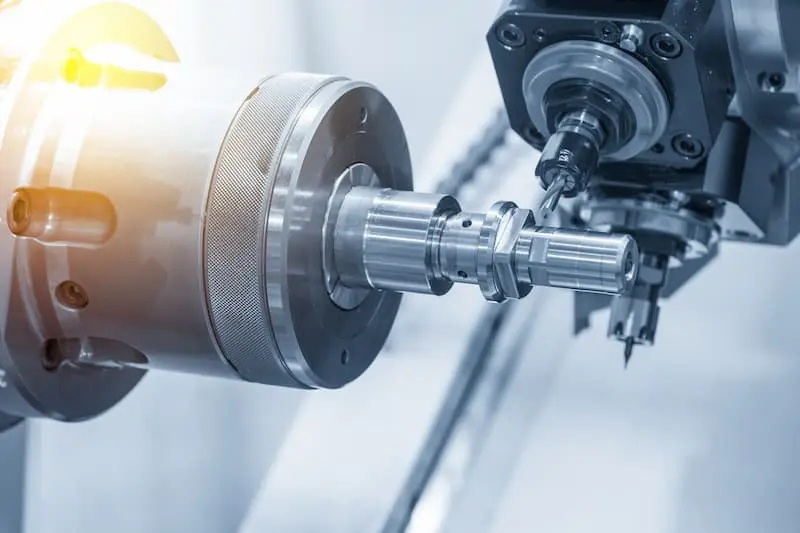
CNC turning machines feature several key elements that enable precise operation. The headstock houses the main spindle, which grips and rotates the workpiece at controlled speeds measured in revolutions per minute. A chuck or collet within the spindle securely holds bar stock or pre-formed blanks, while the tailstock provides support for longer pieces via a hydraulically actuated quill.
The tool turret or carriage mounts multiple cutting tools, allowing automatic changes during operation. Linear guides and ball screws facilitate smooth movement along X and Z axes, with advanced models adding Y-axis capability for off-center features. The CNC controller interprets G-code to synchronize these components, managing coolant flow and chip evacuation for uninterrupted machining.
Bedways form the machine's foundation, ensuring rigidity against cutting forces. Modern machines incorporate enclosed designs to contain chips and coolant, enhancing safety and cleanliness. Sensors monitor vibration, temperature, and tool wear, feeding data back to the controller for real-time adjustments.
Programming starts with CAD software to create a detailed 3D model of the desired part. CAM software then generates toolpaths, simulating the machining process to detect collisions and optimize cycles. The output is G-code, a language of commands like G00 for rapid positioning and M03 to start spindle rotation.
Key parameters include spindle speed, tailored to material hardness—higher for aluminum, lower for steel—and feed rate, which balances material removal with tool life. Depth of cut influences surface finish; shallow passes yield smoother results but extend cycle times. Programmers define sequences for operations like roughing, finishing, and threading, incorporating dwells and coolant activations.
Once loaded via USB or network, the program undergoes dry runs without material to verify accuracy. Simulation software visualizes the entire process, minimizing setup errors before production.
The process unfolds in distinct phases for efficiency and precision. First, operators load raw material into the spindle chuck, aligning it precisely with the tailstock if needed. The machine homes all axes, establishing reference positions from which all movements originate.
Spindle activation rotates the workpiece at programmed RPM while the tool turret indexes to the initial cutter. Rough turning removes bulk material along the Z-axis, with the tool feeding parallel to the rotation axis. Multiple passes reduce diameter incrementally, generating long chips that coolant flushes away.
Facing follows, where the tool traverses the workpiece end radially to create a flat surface perpendicular to the axis. Grooving cuts narrow slots by plunging the tool perpendicularly, often in multiple depths for wider features. Drilling or boring occurs with live tools on multi-tasking centers, piercing axial holes while rotation continues.
Threading uses a profiled tool synchronized with spindle rotation via electronic gearing, producing precise helical patterns. Finishing passes employ finer feeds for optimal surface quality, followed by part measurement via probes. Completed parts eject automatically or via bar feeders for high-volume runs.
Turning operations vary to produce diverse features on cylindrical parts. Straight turning reduces outer diameter uniformly, ideal for shafts and rollers requiring tight tolerances. Taper turning creates conical shapes by offsetting the tool path linearly along the Z-axis.
Contouring enables complex profiles by interpolating X and Z movements simultaneously, forming radii, fillets, and undercuts. Parting or cutoff severs finished pieces from bar stock using a narrow tool plunged to full depth. Knurling imprints diamond patterns for grip using hardened wheels pressed into the surface.
Advanced operations like polygonal turning produce non-round shapes such as hexagons through synchronized spindle and tool motion. Live tooling on mill-turn centers adds milling, drilling, and tapping without rechucking.
CNC turning machines range from basic 2-axis lathes to sophisticated multi-axis centers. 2-axis models handle X (radial) and Z (longitudinal) movements for simple cylindrical parts. 3-axis adds a turret-mounted drill for axial holes.
4-axis introduces a sub-spindle for back-side machining, doubling productivity by transferring parts mid-cycle. 5-axis or mill-turn machines incorporate Y-axis and live tools, approaching full simultaneity for intricate components. Twin-turret setups allow simultaneous machining from both ends.
Horizontal vs. vertical orientations suit different part sizes; vertical machines excel with heavy rings by leveraging gravity. Swiss-type lathes guide tools near the workpiece for ultra-precision on small, long parts like medical screws.
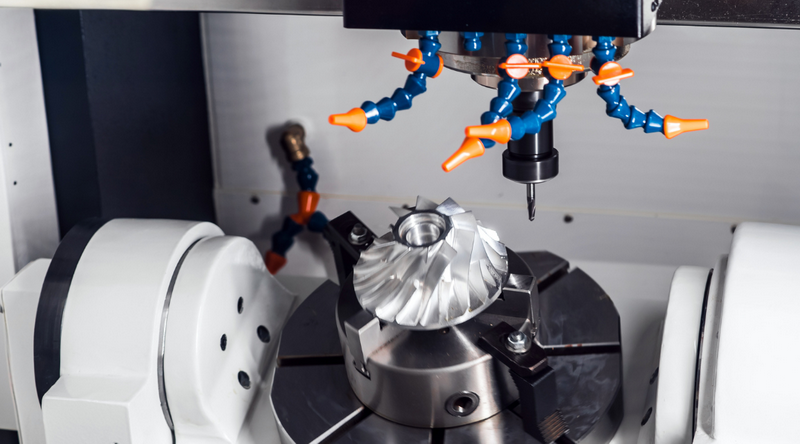
Material selection impacts machinability, tool life, and part performance. Aluminum alloys machine quickly at high speeds, producing lightweight aerospace fittings. Steels, from mild to stainless, demand slower feeds and robust tooling for durable automotive shafts.
Titanium resists wear in implants but generates heat, requiring flood coolant. Plastics like Delrin offer low friction for bushings, machining without chips. Brass yields free-cutting properties for fittings, minimizing burrs.
Exotic alloys like Inconel suit high-temperature applications but accelerate tool wear, necessitating ceramic inserts. Material properties like hardness, thermal conductivity, and ductility guide parameter selection for optimal results.
CNC turning delivers unmatched precision, holding tolerances under 0.001 inches repeatedly. Automation supports lights-out operation, slashing labor costs in high-volume production. Versatility across materials and geometries reduces setups compared to dedicated machines.
High spindle speeds and rigid frames enable superior surface finishes without secondary polishing. Integration with robotics streamlines workflows from raw stock to inspection.
Limitations include initial programming time for low volumes and chuck size constraints on large diameters. Deep cavities challenge chip evacuation, risking tangling. Tool changes interrupt cycles on basic machines, though modern turrets mitigate this.
Regular maintenance extends machine life and ensures accuracy. Daily checks verify lubrication levels in ball screws and ways, preventing wear. Weekly tool inspections replace dull inserts, maintaining consistent cuts.
Alignment calibration with laser tools corrects axis drift from thermal expansion. Coolant systems require filtration to avoid bacterial growth and nozzle clogs.
Common issues like chatter stem from imbalance or dull tools, resolved by balancing collets and rigid setups. Dimensional errors trace to thermal growth, countered by pre-warming cycles. Software diagnostics pinpoint electrical faults in servos or encoders.
CNC turning produces critical components in aerospace, such as turbine shafts and landing gear pivots demanding fatigue resistance. Automotive relies on it for pistons, valves, and transmission gears with high-volume repeatability.
Medical devices like orthopedic implants and surgical tools benefit from biocompatible finishes. Oil and gas sectors machine valve stems and fittings from corrosion-resistant alloys. Consumer electronics yield precision connectors and housings.
Defense applications include missile housings and gun barrels, prioritizing tight concentricity. General manufacturing creates pulleys, bushings, and adapters universally.
CNC turning machines revolutionize precision manufacturing by automating rotation, cutting, and control for unparalleled efficiency. Mastering their components, programming, and operations unlocks capabilities for diverse industries, from prototypes to mass production. Ongoing advancements in multi-axis tech and AI monitoring promise even greater accuracy and speed.
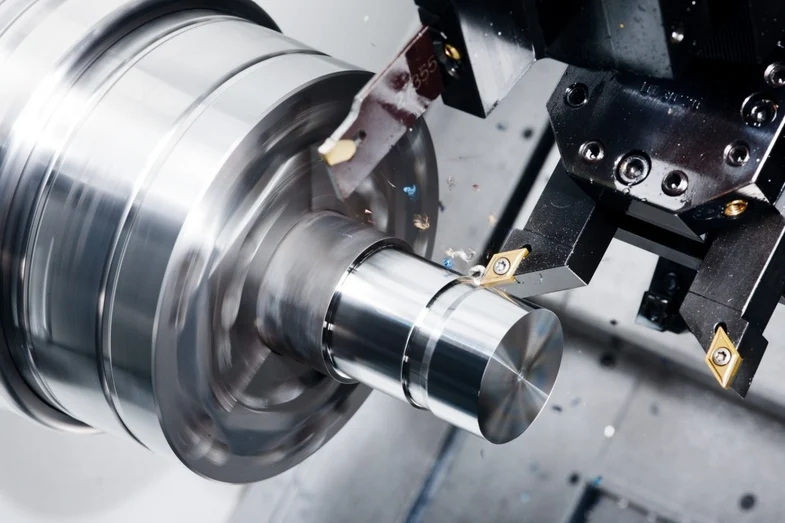
CNC turning rotates the workpiece against a stationary tool, ideal for cylindrical parts, while milling spins the tool against a fixed workpiece for complex 3D shapes.
Spindle speed depends on material type, tool diameter, and finish requirements, calculated via formulas like RPM = (Cutting Speed x 12) / (π x Tool Diameter) for inches.
Modern CNC turning holds ±0.0005 inches or better on diameters, with surface finishes under 32 Ra, varying by machine rigidity and material.
Yes, plastics, composites, and wood machine effectively, often at higher speeds without coolant to avoid melting or delamination.
Enforce machine guarding, eye protection, and no loose clothing; monitor coolant levels to prevent slips and ensure emergency stops function.
[1](https://www.rapiddirect.com/blog/what-is-cnc-turning/)
[2](https://www.wevolver.com/article/what-is-cnc-turning)
[3](https://geomiq.com/blog/what-is-cnc-turning/)


