From idea to market-ready product, our NPI solutions make every stage easier, faster. Discover How We Help

Views: 222 Author: Tofmorrow Publish Time: 2025-11-29 Origin: Site


Content Menu
● Overview of Office Depot 3D Printing Services
● How 3D Printing Services Work at Office Depot
● Service Availability and Locations
● Benefits of Choosing Office Depot for 3D Printing
● Applications of Office Depot 3D Printing Services
● Limitations and Considerations
● FAQ
>> 1. Does Office Depot offer 3D printing services nationwide?
>> 2. What types of materials does Office Depot use for 3D printing?
>> 3. Can I order bulk 3D printed parts at Office Depot?
>> 4. How fast can I get my 3D printed parts from Office Depot?
>> 5. Is technical assistance available for 3D printing projects at Office Depot?
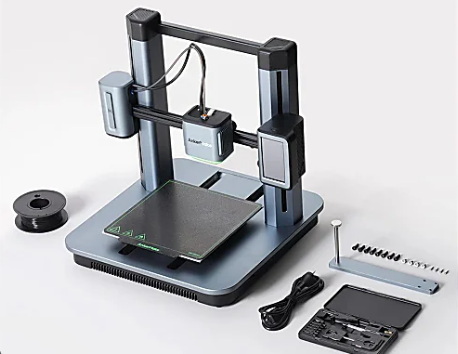
Office Depot does offer 3D printing services, providing local and faster turnaround options for customers who need prototypes or bulk 3D printed parts. This service allows businesses and individuals to quickly create and receive 3D printed products at convenience with the ease of local store access. Office Depot's 3D printing operates much like a copy machine for 3D objects, delivering finished products quickly and efficiently.

Office Depot provides 3D printing services aimed at both small-scale customers needing individual prototypes and businesses requiring bulk orders. The service highlights local accessibility, which cuts down turnaround time and transportation costs. Customers can visit a nearby Office Depot store to order 3D printed parts, often receiving hands-on support from store staff for a seamless experience.
The 3D printing technology Office Depot uses is designed to produce ready-to-use products that function much like conventional printing services but for three-dimensional objects. This technology is ideal for rapid prototyping, customized manufacturing, and iterative design processes, helping businesses innovate with speed and efficiency.
To use Office Depot's 3D printing services, customers typically provide a digital 3D model file, which can be uploaded online or submitted in-store. The printing is done on-site where equipment is available or coordinated through local print centers, allowing customers to manage their projects closely and often receive faster turnaround times than outsourcing to an external facility. Office Depot's technology supports a variety of materials suitable for different business and personal applications.
Office Depot supports face-to-face interactions, enabling customers to consult with associates who guide them through the printing process, material selection, and finishing options. This makes the experience approachable, especially for newcomers to 3D printing.
Office Depot's 3D printing services are available in select store locations across the United States. Not every store is equipped to handle 3D printing onsite, so it's recommended that customers check with their local Office Depot to confirm service availability. The company has expanded 3D printing services to over 150 stores, particularly targeting areas with higher demand such as major metropolitan regions.
This selective presence is designed to optimize resources and ensure that customers receive quality service and expert support. For locations without in-store 3D printing, Office Depot often facilitates connections to external print centers that can handle customer orders with quick turnaround.
- Local convenience: Orders can be placed and picked up from nearby stores, eliminating long waits from shipping.
- Speed: Faster turnaround times, especially for prototypes and urgent print jobs.
- Expertise: In-store support from knowledgeable staff for technical advice and ordering assistance.
- Cost-effective: Reduces expenses linked with outsourcing 3D printing to third-party vendors.
- Flexible volumes: Accommodates both single units and bulk production needs.
Office Depot's 3D printing is widely used for rapid prototyping, allowing innovators to test designs quickly and cost-effectively. It supports industries including manufacturing, engineering, healthcare, education, and small business product development. The ability to produce custom parts and samples on demand accelerates development cycles and reduces time to market for new products.
Additionally, Office Depot's 3D printing can be valuable for creatives and hobbyists seeking custom models, figurines, or replacement parts. The service's relatively low cost and local access make it attractive for individuals needing professional-grade 3D printing without investing in expensive equipment.

While Office Depot offers 3D printing services, the technology and materials used are generally suited for prototyping and small-batch manufacturing but may not cover all industrial-grade or highly specialized production needs. Customers with large-scale or highly specialized requirements may still need to utilize dedicated industrial 3D printing providers.
Service availability varies by location due to differences in equipment and staff expertise. Checking with the local Office Depot store for specific service offerings and capabilities is advised. In some cases, print files must meet specific format or size requirements to ensure successful printing.
Office Depot provides 3D printing services in select locations, focusing on fast, local, and convenient solutions for both individual and business needs. Their service simplifies prototyping and small-batch production with in-store support and quick turnaround times. It offers a cost-effective option for 3D printed products while accommodating a diverse range of applications. For those seeking accessible and reliable 3D printing, Office Depot is a practical choice, although specialized or large-scale industrial needs may require alternative providers.
Office Depot offers 3D printing services in select store locations, mainly concentrated in metropolitan areas. Customers should check with their local store for availability.
Materials vary by location and application but generally include common plastics suitable for prototyping and functional parts.
Yes, Office Depot accommodates both single-item prototypes and bulk printing orders to support varying business needs.
Turnaround times are typically faster than external outsourcing, especially when printed locally, with many stores offering same-day or next-day service.
Yes, store associates provide expert guidance on file preparation, material selection, and printing process to ensure successful project completion.
[1](https://www.youtube.com/watch?v=il38Ju1_54M)
[2](https://www.officedepot.com/l/print-and-copy/print-services)
[3](https://www.odpbusiness.com/l/print-and-copy/print-services)
[4](https://www.reddit.com/r/OfficeDepot/comments/ek5lic/has_anyone_offered_this_service/)
[5](https://www.retaildive.com/news/office-depot-expands-3-d-printing-services/206787/)
[6](https://chainstoreage.com/news/office-depot-offer-3-d-printing-services-150-stores)
[7](https://www.sigmatechnik.com/3d-printing-services/the-ultimate-guide-to-office-depot-3d-printer-services)
[8](https://www.officedepot.com/b/printer-accessories/Print_Technology--3D_Printing/N-1462044)
[9](https://chainstoreage.com/operations/office-depot-expands-store-3-d-printing)
[10](https://investorplace.com/2013/12/office-depot-in-store-3d-printing/)


