From idea to market-ready product, our NPI solutions make every stage easier, faster. Discover How We Help

Views: 222 Author: Tomorrow Publish Time: 2025-11-16 Origin: Site


Content Menu
● Core concepts and terminology
>> 1. Part design and programming
>> 3. Execution
>> 4. Inspection and finishing
● Key components of a CNC milling machine
● Operating considerations and best practices
● Applications across industries
● Choosing the right CNC milling machine
● Practical tips for productivity
● The evolving landscape of CNC milling
● FAQ
>> 1. What are the main differences between 3-axis and 5-axis CNC milling machines?
>> 2. How does tool selection impact milling performance?
>> 3. What maintenance tasks are essential for CNC mills?
>> 4. What factors affect surface finish quality in milling?
>> 5. How can one improve CNC milling accuracy?
Computer Numerical Control (CNC) milling has transformed modern manufacturing by combining precision, repeatability, and automation. A CNC milling machine uses programmed instructions to remove material from a workpiece, producing complex shapes with tight tolerances. This article explains what a CNC milling machine is, how it works, common configurations, key components, operations, and considerations for selecting equipment. It also covers maintenance, safety, and practical tips for maximizing productivity in a workshop environment.

A CNC milling machine is a computer-controlled device that uses rotating cutting tools to remove material from a workpiece. The machine translates a computer program into precise movements across multiple axes to shape the part. Unlike manual milling, where an operator manually guides the tool, CNC milling relies on software to control speed, feed rate, tool path, and depth of cut. This automation enables high-precision parts, repeatable production runs, and the ability to reproduce complex geometries with minimal human intervention.
- Workpiece: The material being machined, clamped securely in place.
- Spindle: The rotating shaft that holds and drives the cutting tool.
- Cutting tool: An end mill or other geometry used to remove material.
- Axis: Directions in which the machine can move. Common configurations include 3-axis and 4-axis or 5-axis systems.
- Toolpath: The programmed route the cutting tool follows to machine the part.
- Feed rate: The speed at which the cutting tool moves through material.
- Chipload: The thickness of material removed per tooth per revolution.
- Tolerance: The permissible variation from specified dimensions.
- Zeroing: Establishing a reference point on the workpiece for accurate measurements.
- Wooding and truing: Techniques used to ensure workholding components are aligned and secure.
Engineers design the part in a computer-aided design (CAD) program and generate a toolpath in a computer-aided manufacturing (CAM) program. The CAM software determines how the tool will move, which tools will be used, and the sequence of operations. The CAM process also includes simulation to verify that the toolpath will not collide with fixturing and to estimate cycle times and material removal.
The operator loads the program into the CNC controller, mounts the workpiece on the machine table, and installs the appropriate cutting tools. Calibration and work zeroing establish reference points for accurate machining. Establishing a reliable setup reduces risk of part distortion and ensures repeatable results.
The CNC controller interprets the toolpath and drives the machine axes to execute the program. The spindle rotates the tool, while feed rates and cutting speeds are managed to optimize material removal and surface finish. Real-time monitoring may provide feedback on spindle load, temperatures, and axis positions.
After machining, the part is inspected for dimensional accuracy and surface quality. Additional operations such as deburring, threading, or secondary finishing may be performed as needed. Quality control might involve coordinate measuring machines (CMM) or other precision inspection tools to verify tolerances.
Common CNC milling configurations
- 3-axis CNC milling
- X, Y, and Z axes provide movement in three linear directions. This configuration suits many simple prismatic parts and pockets. It is typically the most cost-effective setup for basic manufacturing tasks.
- 4-axis CNC milling
- Adds rotation around one axis (typically A or B) to enable curved features and indexed rotations, improving the ability to machine features from multiple angles without repositioning the part manually. This enables features such as engraving, helical pockets, and more complex pocketing.
- 5-axis CNC milling
- Includes two rotational axes in addition to the three linear axes (A, B, and C). This enables machining complex geometries with excellent surface finishes and minimal secondary operations. It is ideal for aerospace, automotive, and mold-and-die applications where intricate surfaces are common.
- Horizontal vs vertical milling
- Vertical milling machines have the spindle oriented vertically, with the workpiece moving or the table translating along the axes. They are versatile and widely used for a range of operations.
- Horizontal milling machines have the spindle oriented horizontally, which can improve chip evacuation and is beneficial for certain workpiece geometries, such as wide slots or deep pockets.
- Base and frame: Provides rigidity and stability for accurate cutting. A robust frame minimizes deflection under load.
- Saddle and table: Supports the workpiece and allows precise movement along the axes. A quality table reduces runout and improves repeatability.
- Ball screws and linear guides: Ensure smooth, accurate motion with minimal backlash. They are critical for precision and speed.
- Spindle and tool changer: Spindle speeds the cutting tools; automatic tool changers (ATC) switch tools as programmed, enabling longer uninterrupted run times.
- Servo or stepper motors: Drive the axes with controlled positioning. Servo motors offer closed-loop feedback for higher accuracy.
- Control system: The "brain" of the machine, interpreting G-code or other programming languages and coordinating movement.
- Coolant system: Helps manage heat, flush chips, and extend tool life. Proper coolant management reduces thermal distortion and improves surface finish.
- G-code: The standard language for CNC machines, describing movements, speeds, and tool actions.
- M-code: Supplemental commands for auxiliary functions like tool changes and coolant activation.
- CAM workflows: Software such as Mastercam, Fusion 360, or SolidWorks integrated with CAM modules generates toolpaths from CAD designs.
- ISO tolerances: International standards guide tolerance definitions and measurement practices.
- Post-processors: Translate CAM toolpaths into machine-specific G-code compatible with the target controller.
- Metals: Aluminum, steel, stainless steel, brass, copper, titanium, and specialized alloys.
- Plastics: ABS, polycarbonate, nylon, acrylic, and acetal.
- Composites: Carbon fiber-reinforced polymers (CFRP) and other composite materials, often requiring careful tool selection and coolant strategies.
- End mills: Square, ball nose, bull nose, and bull end mills cater to different geometries and finishes.
- Tool materials: High-speed steel (HSS), carbide, and cobalt tools offer different wear characteristics and costs.
- Tool coatings: TiN, TiCN, TiAlN, and others reduce wear and improve performance in specific materials.
- Tool stickout and balance: Longer tools require careful balance to avoid vibration and deflection.
- Tool life monitoring: Some setups include sensors to monitor vibration, temperature, and wear for predictive maintenance.
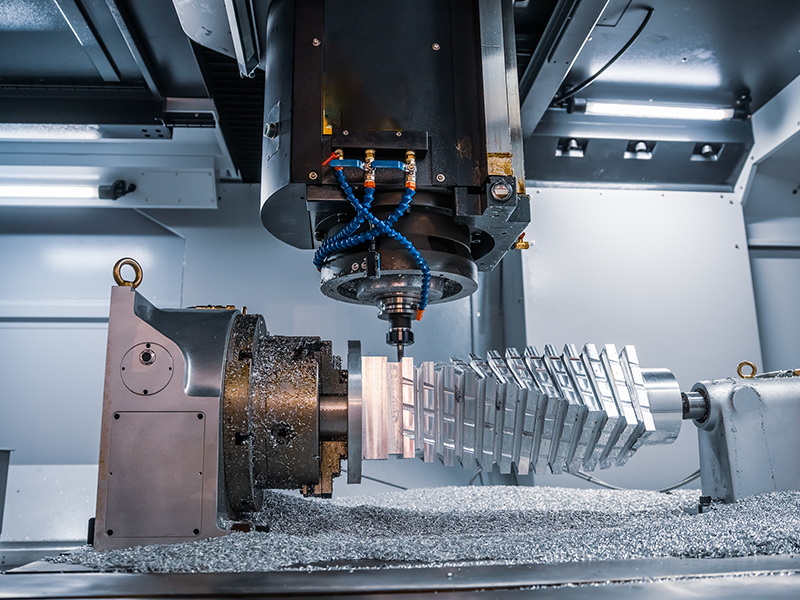
- Workholding: Secure clamping, vises, or fixtures ensure the workpiece remains stable during cutting. Precision fixtures reduce runout and improve repeatability.
- Chip evacuation: Proper coolant flow and chip removal prevent recutting and heat buildup. As boards and metal alloys vary, chip management plans may adjust to stack heights and feed rates.
- Cutting parameters: Selection of cutting speed, feed rate, and depth of cut directly impacts tool life and surface finish. Start conservative and ramp up after confirming stability.
- Surface finish goals: Finishing passes with lighter cuts and finer feeds improve surface quality. Scallop patterns should be minimized through appropriate stepover settings and cutter choices.
- Cycle time optimization: Efficient toolpaths, multiple features per setup, and minimized repositioning reduce overall cycle time. Techniques include trochoidal milling for metals and high-efficiency pocketing for soft alloys.
- Dimensional accuracy: Achieved through precise machine calibration, stable tooling, and controlled environmental conditions. Temperature control reduces thermal expansion effects.
- Surface finish: Influenced by tool geometry, feed rate, and cutting speed. Finishing passes may require slower speeds and smaller stepovers for mirror-like surfaces.
- Repeatability: CNC machines can reproduce identical parts across many runs, given consistent programming and setup. Documented setups and standardized fixturing improve consistency.
- Regular calibration checks: Verify axis accuracy, spindle runout, and backlash. Use calibration artifacts and checklists to track wear over time.
- Lubrication: Ensure all moving parts are properly lubricated to reduce wear. Adhere to manufacturer schedules for grease and oil changes.
- Cooling system maintenance: Check coolant levels, filtration, and cleanliness to prevent tool overheating and corrosion. Replace coolant regularly to prevent microbial growth.
- Predictive maintenance: Monitor machine health through vibration analysis, spindle load, and temperature trends to anticipate failures. Utilize data logs to schedule proactive interventions.
- PPE: Eye protection, hearing protection, and appropriate footwear are standard.
- Machine guarding: Ensure doors, interlocks, and safety features are intact.
- Emergency stop accessibility: Know the location and function of emergency stops.
- Workpiece handling: Secure clamps and fixtures prevent unintended movement during operation. Keep clear of moving parts and avoid loose clothing.
- Automotive: Precision parts, prototype components, and production runs. CNC milling supports both rapid prototyping and high-volume manufacturing.
- Aerospace: Complex geometries, lightweight structures, and high-tolerance components. Multiaxis strategies enable airfoil shaping and turbine components.
- Electronics: Precision housings, connectors, and micro-scale features. Miniaturization challenges demand tight tolerances and cleanroom-compatible processes.
- Medical devices: Implants, surgical instruments, and diagnostic components. Biocompatible materials may require specialized tooling and finishes.
- Consumer products: Custom housings, prototypes, and small-batch production. Short run flexibility is a key advantage.
Consider the following when selecting a machine:
- Required work envelope and travel: Ensure the machine can accommodate the largest workpiece and required reach.
- Axis configuration: Decide between 3-, 4-, or 5-axis capabilities based on geometric complexity. Higher-axis machines unlock features that reduce setup time.
- Tolerance and surface finish: Higher precision often requires more rigid machines and premium tooling.
- Material compatibility: Ensure the machine and tooling support the target materials.
- Production volume: High-volume manufacturing may justify more automation, ATC, and robust reliability.
- Budget and total cost of ownership: Include initial cost, tooling, maintenance, and energy consumption. Consider resale value and service support in total costs.
- Plan toolpaths to minimize tool changes and air cuts.
- Optimize setups to reduce repositioning and improve part family manufacturing.
- Use high-feed-rate strategies for aluminum and other soft metals to shorten cycle times.
- Run dry or flood cooling depending on material and tool life considerations.
- Implement standard operating procedures (SOPs) for common parts to reduce error rates.
- Leverage software simulation to catch collisions and optimize passes before cutting.
Advances in CNC milling continue to enhance capabilities such as multi-axis synchronization, adaptive control, real-time monitoring, and integrated CAD/CAM ecosystems. These developments enable more complex geometries, tighter tolerances, shorter lead times, and improved overall efficiency in modern manufacturing facilities. Digital twins and machine learning-driven optimization are increasingly used to predict maintenance needs and optimize toolpath strategies based on historical performance.
A CNC milling machine stands at the intersection of design, engineering, and automation. By translating digitally defined toolpaths into precise physical shapes, CNC milling enables the rapid production of complex parts with consistent quality. The choice of machine, tooling, and process parameters depends on the intended applications, required tolerances, material considerations, and production volume. With proper setup, maintenance, and optimization, CNC milling delivers reliable productivity, high-quality finishes, and the flexibility needed to meet evolving manufacturing demands.
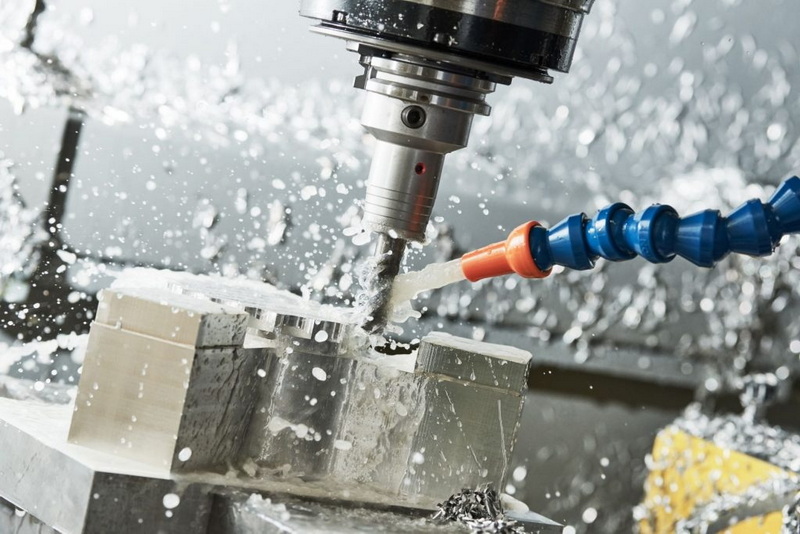
3-axis machines move the tool in three linear directions (X, Y, Z), suitable for simpler geometries. 5-axis machines add two rotational axes, enabling complex angles and features without reorienting the workpiece, resulting in greater flexibility and surface quality.
Tool geometry, material, coating, and length influence cutting efficiency, heat management, and surface finish. Proper tool selection minimizes wear, reduces cycle time, and improves accuracy for specific materials.
Regular calibration, lubrication of moving parts, coolant management, and inspection of spindle runout and axis accuracy are essential. Preventive maintenance helps avoid unexpected downtime and extends machine life.
Cutting speed, feed rate, depth of cut, tool geometry, and chip evacuation all influence surface finish. Finishing passes with lighter cuts and appropriate tool selection yield smoother surfaces.
Stabilize the setup with proper workholding, minimize vibrations, ensure precise tool length compensation, and verify machine geometry periodically. Environment control and consistent programming also play important roles.


