From idea to market-ready product, our NPI solutions make every stage easier, faster. Discover How We Help

Views: 222 Author: Tomorrow Publish Time: 2026-02-05 Origin: Site


Content Menu
● Understanding Nitinol and Its Machinability
● Why CNC Machining Is Used for Nitinol
● Main Challenges in CNC Machining Nitinol
>> Work Hardening and Elastic Recovery
>> Low Thermal Conductivity and Heat Sensitivity
>> Surface Integrity and Functional Performance
>> Tool Wear and Tool Material Selection
● Optimizing CNC Machining Parameters for Nitinol
● CNC Machining vs Other Nitinol Processes
● Typical Applications of CNC-Machined Nitinol Parts
>> Aerospace and Industrial Uses
>> Robotics and Consumer Products
● Practical Strategies for Successful CNC Machining of Nitinol
● Cost and Productivity Considerations
● Environmental and Regulatory Aspects
● FAQ
>> 1. What makes Nitinol difficult to machine?
>> 2. Can conventional cutting tools be used for Nitinol?
>> 3. Does CNC machining affect Nitinol's shape memory properties?
>> 4. What cooling methods work best for CNC machining Nitinol?
>> 5. How does CNC machining compare to EDM or laser cutting for Nitinol?
Nitinol can undergo large recoverable strains and return to its original shape when heated or unloaded, which is the core of its shape memory and superelastic properties. These advantages in service, however, complicate traditional metal cutting processes because the material tends to spring back, harden quickly, and concentrate heat at the cutting zone.
For CNC machining, this means:
- The cutting tool must cope with strong, resilient material that resists plastic deformation.
- Cutting forces and temperatures must be carefully controlled to avoid damaging the microstructure.
- Tool paths and strategies must anticipate elastic recovery to maintain tight tolerances.
When these factors are addressed, CNC machining Nitinol becomes a powerful way to achieve complex geometries, precision fits, and functional surfaces that meet demanding industry standards.
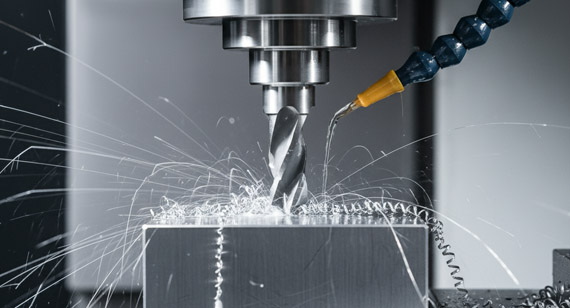
Despite its challenges, CNC machining is one of the most widely used subtractive processes for Nitinol components, especially in high-value markets such as medical devices and aerospace systems.
Key reasons why CNC machining Nitinol is attractive include:
- High dimensional accuracy: CNC machining can reach tight tolerances and repeatability, critical for implants, actuators, and precision couplings.
- Complex, 3D geometries: Multi-axis CNC machining supports undercuts, pockets, channels, and transitions that would be difficult to obtain by forming alone.
- Flexibility for prototypes and small batches: Many Nitinol devices are customized; CNC machining allows economical low-volume production and iterative design.
- Process integration: Features such as drilling, milling, turning, and threading can be combined in a single CNC machining setup, lowering assembly steps.
For many manufacturers, CNC machining sits alongside laser cutting, EDM, and grinding as a core Nitinol manufacturing capability, used when a cut, contour, or pocket must meet strict geometrical and surface requirements.
Even experienced CNC machinists must adjust their approach when working with Nitinol. The main challenges include work hardening, thermal sensitivity, surface integrity, and tool wear.
Nitinol exhibits pronounced work hardening during cutting: as the material is deformed by the cutting edge, its hardness increases, which makes subsequent passes more demanding and accelerates wear. At the same time, its superelastic behavior causes the material to spring back, which can:
- Increase cutting forces and friction.
- Lead to chatter or vibration if machine rigidity is insufficient.
- Make it harder to achieve the intended dimensional accuracy, especially on thin sections or sheets.
High-rigidity CNC machines and well-supported fixturing are crucial to stabilizing CNC machining Nitinol and keeping dimensional deviations under control.
Compared to many steels, Nitinol conducts heat poorly, which traps heat in the cutting zone and the tool. Excessive temperature can:
- Accelerate tool wear and edge chipping.
- Alter transformation temperatures and phase distribution, which changes the alloy's shape memory or superelastic response.
For this reason, CNC machining Nitinol typically uses abundant coolant, through-tool delivery, or even cryogenic techniques to manage temperature and protect the alloy's functional properties.
Because Nitinol is used in fatigue-critical and biocompatible applications, the surface and subsurface condition is just as important as dimensional accuracy. Poorly controlled machining may cause:
- Microcracks, smeared layers, or tensile residual stresses.
- Altered microstructure near the surface, affecting fatigue resistance and transformation behavior.
- Surface defects that compromise corrosion resistance and biocompatibility in medical devices.
To maintain surface integrity during CNC machining, manufacturers combine conservative cutting parameters with post-processing such as polishing, electropolishing, or light grinding to remove affected layers.
The combination of high strength, work hardening, and abrasive oxide layers on Nitinol can quickly wear conventional HSS tools. To stabilize CNC machining Nitinol, shops typically use:
- Fine-grain carbide tools with advanced coatings.
- Polycrystalline diamond (PCD) or cubic boron nitride (CBN) inserts for demanding operations.
- Optimized rake and clearance angles to reduce rubbing and built-up edge.
Although these tools are more expensive, they enable longer tool life and consistent surface finish, which lowers overall cost per part in precision machining of Nitinol.
Carefully tuned cutting parameters are central to making CNC machining Nitinol both feasible and repeatable.
Common guidelines from experimental and industrial practice include:
- Cutting speed: Use moderate to low speeds to limit heat, typically significantly lower than for aluminum and many steels.
- Feed rate: Moderate feeds help avoid rubbing, reduce heat concentration, and limit work hardening.
- Depth of cut: Shallow cuts reduce cutting forces, but depth must be balanced to avoid plowing with just the tool edge.
- Coolant strategy: Flood coolant, high-pressure through-tool delivery, minimum quantity lubrication, or cryogenic systems improve chip evacuation and thermal control.
- Toolpath design: Smooth tool paths with minimal sudden direction changes lower dynamic loads and vibration.
In practice, many manufacturers perform small parameter studies for each new Nitinol grade or part geometry, then lock in the most stable settings for CNC machining that maintain both dimensional accuracy and functional alloy behavior.
Nitinol can be cut and shaped by wire EDM, laser cutting, electrochemical machining, grinding, and forming as well as CNC machining. Each method has a niche:
- Wire EDM: Excellent precision and ability to cut hard materials but introduces a recast layer that often requires removal for fatigue-critical devices.
- Laser cutting: Commonly used for thin Nitinol tubes and sheets in medical devices; ultrashort pulse lasers minimize heat-affected zones.
- Electrochemical machining: Avoids mechanical stresses, leaving uniform surfaces but with limited shape flexibility and slower material removal.
- Grinding and polishing: Ideal to refine external profiles and surface finish, often after primary shaping.
CNC machining Nitinol complements these methods when:
- 3D features such as pockets, bosses, and threads are required.
- Rigid parts must maintain tight tolerances and specific fits.
- Complex fixtures or interfaces must be produced on thicker sections.
For many components, a hybrid route combines laser cutting or EDM for basic outlines and CNC machining for finishing and final features.
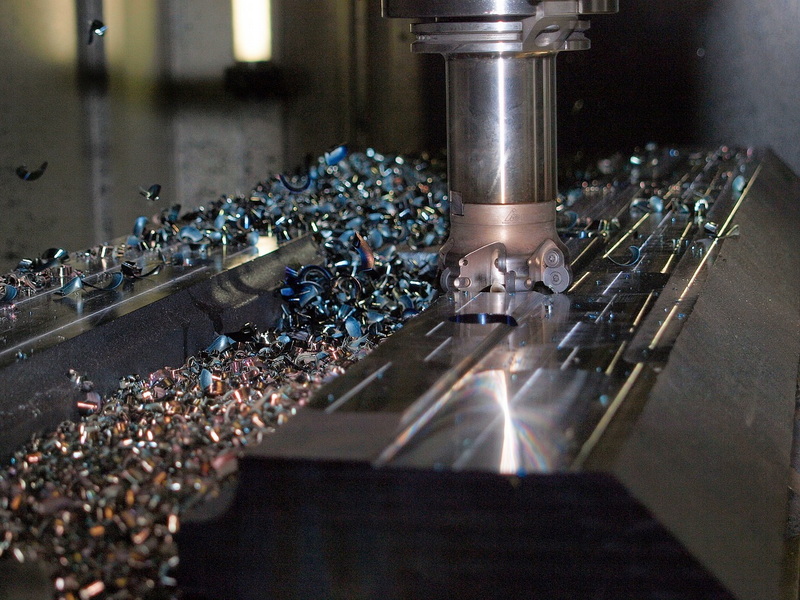
The unique mechanical and functional properties of Nitinol, combined with the precision of CNC machining, enable a broad range of advanced products.
Medical technology is the largest consumer of Nitinol, where CNC machining Nitinol supports:
- Components for stent delivery systems, heart valve frames, and neurovascular devices.
- Bone staples, orthopedic fasteners, and trauma fixation elements.
- Surgical tools and micro-mechanisms that benefit from superelasticity and fatigue resistance.
CNC machining makes it possible to achieve complex contours, controlled clearances, and smooth surfaces that meet biocompatibility and regulatory requirements.
Beyond medicine, CNC machining Nitinol is used for:
- Temperature-responsive actuators for aerospace systems, where shape memory provides automatic actuation without complex electronics.
- High-strength couplings, seals, and vibration dampers that exploit Nitinol's energy absorption and corrosion resistance.
- Mechanisms and sensors in harsh environments requiring both elasticity and durability.
In these areas, CNC machining ensures consistent part quality and enables design engineers to integrate functional Nitinol components into complex assemblies.
Robotics and consumer products also benefit from Nitinol's superelastic and shape memory characteristics:
- Flexible robotic grippers, joints, or linkages that return to form after distortion.
- Self-adjusting eyeglass frames, orthodontic components, and other comfort-focused products.
CNC machining supports these applications by providing precise, repeatable parts that work reliably under repeated bending and loading cycles.
To make CNC machining Nitinol robust in daily production, manufacturers often adopt several best practices:
- High-rigidity equipment: Use stiff CNC machines and rigid fixturing to limit deflection, vibration, and dimensional error.
- Process monitoring: Track cutting forces, tool wear, and surface finish to adjust parameters early and prevent scrap.
- Progressive tooling strategy: Start with roughing tools and reserve fresh finishing tools for final passes to preserve surface integrity.
- Integrated heat treatment: Coordinate machining and heat treatment steps so that machining either precedes final shape setting or preserves the desired transformation temperatures.
- Quality control: Apply surface inspection, microstructural evaluation, and fatigue testing where necessary, especially for implants and structural parts.
By embedding these strategies in their process, companies can turn CNC machining Nitinol from a niche skill into a repeatable, scalable production capability.
From a cost standpoint, CNC machining Nitinol is more demanding than machining common steels or aluminum, mainly because of slower feeds and speeds, higher tool costs, and the need for advanced cooling. However:
- Nitinol parts often have high added value, particularly in the medical and aerospace fields.
- CNC machining can reduce the number of assembly steps by integrating multiple features into a single, precisely machined component.
- Parameter optimization and longer-lasting coated tools can significantly lower cost per part over time.
For prototypes, clinical trial runs, and specialized components, CNC machining remains a cost-effective way to bring Nitinol designs from concept to reality, even when total material and tooling costs are relatively high.
Environmentally, CNC machining Nitinol generates recyclable metal chips that can be collected and reprocessed, while modern coolant systems reduce fluid consumption and emissions. In regulated sectors:
- Medical manufacturers must comply with ISO 13485 and related standards, ensuring traceability and process validation for CNC machining of Nitinol devices.
- Aerospace suppliers adhere to standards such as AS9100, implementing rigorous process control and part qualification for Nitinol components used in flight systems.
CNC machining fits well into these frameworks because it is a highly controllable, documentable process that supports detailed process windows and repeatable outcomes.
So, is CNC machining a good approach for Nitinol? When handled with the right tooling, parameters, and controls, the answer is clearly yes. Nitinol's superelasticity and shape memory behavior do create machining challenges such as work hardening, heat concentration, and surface integrity concerns, but optimized CNC machining strategies can effectively manage these issues.
For manufacturers in medical, aerospace, robotics, and advanced industrial markets, CNC machining Nitinol delivers the precision, geometric freedom, and process flexibility needed to unlock the full potential of this unique alloy. As tooling, cooling technologies, and process monitoring continue to evolve, CNC machining will remain one of the most capable and adaptable methods for producing high-performance Nitinol parts.
Contact us to get more information!
Nitinol is difficult to machine because it work hardens rapidly, has low thermal conductivity, and exhibits superelastic recovery, which can increase cutting forces and cause dimensional inaccuracies if not managed correctly.
Standard HSS tools generally wear out too quickly on Nitinol. For CNC machining Nitinol, manufacturers prefer carbide, PCD, or CBN tools with suitable coatings to withstand high strength, abrasion, and heat.
Improper CNC machining that generates excessive heat can change phase transformation temperatures and degrade shape memory or superelasticity, but careful control of cutting speed, feed, and cooling preserves the alloy's functional properties.
Flood coolant, high-pressure through-tool systems, and in some cases cryogenic cooling with liquid nitrogen or CO₂ are effective at removing heat, improving tool life, and protecting Nitinol's microstructure during CNC machining.
EDM and ultrashort-pulse laser cutting are excellent for fine features and thin-walled structures, but they can introduce recast layers or require specific setups, while CNC machining offers flexible, multi-axis capability for 3D features, solid sections, and integrated geometries.
1. https://www.hznitinol.com/knowledge/what-are-the-challenges-in-machining-nitinol-sheets-
2. https://www.sciencedirect.com/science/article/pii/S2238785422007372
3. https://www.spectra-physics.com/medias/sys_master/spresources/h94/ha9/9954749087774/AP53_Nitinol/AP53-Nitinol.pdf
4. https://pmc.ncbi.nlm.nih.gov/articles/PMC7254380/
5. https://www.laseroptronic.it/2020/06/25/nitinol-machining-for-precision-applications/
6. https://resonetics.com/articles/impact-of-nitinol-in-medical-device-manufacturing-qa-with-scott-robertson/
7. https://pmc.ncbi.nlm.nih.gov/articles/PMC10573343/
8. https://research.utwente.nl/files/250005498/Hassan2014review.pdf
9. https://www.marvermed.com/nitinol-machining
10. https://ajaxelectric.com/shape-setting-nitinol/
11. https://www.machining-custom.com/blog/nickel-alloy-cnc-machining-guide.html
12. https://www.samaterials.com/content/top-6-medical-applications-of-nitinol.html
13. https://www.kelloggsresearchlabs.com/2019/01/04/nitinol-manufacturing-and-metalworking/
14. https://seisa.com/nitinol-wire-properties-applications-and-uses/
15. https://www.sciencedirect.com/science/article/abs/pii/S000785061300005X


