From idea to market-ready product, our NPI solutions make every stage easier, faster. Discover How We Help

Views: 222 Author: Tomorrow Publish Time: 2026-01-07 Origin: Site
Content Menu
● What Is a CNC Milling Machine?
● Classification of CNC Milling Machines
>> 1. Based on Axis Configuration
>>> a. 3-Axis CNC Milling Machine
>>> b. 4-Axis CNC Milling Machine
>>> c. 5-Axis CNC Milling Machine
>>> d. 6-Axis CNC Milling Machine
>> 2. Based on Spindle Orientation
>>> a. Vertical CNC Milling Machine
>>> b. Horizontal CNC Milling Machine
>>> c. Universal Milling Machine
>> 3. Based on Machine Structure and Design
>>> a. Gantry or Bridge-Type CNC Milling Machine
>>> b. Bed-Type CNC Milling Machine
>>> d. Ram-Type CNC Milling Machine
● Factors to Consider When Choosing a CNC Milling Machine
● Benefits of CNC Milling Machines
● Common Industrial Applications
● The Future of CNC Milling Technology
● FAQ
>> 1. How many main types of CNC milling machines exist?
>> 2. What differentiates a vertical milling machine from a horizontal one?
>> 3. Why is a 5-axis CNC milling machine so important in aerospace?
>> 4. Which materials can CNC milling machines process?
>> 5. How does automation enhance CNC milling productivity?
Computer Numerical Control (CNC) milling machines are an essential foundation of modern manufacturing. These machines combine mechanical precision with digital automation, enabling engineers to create intricate components with remarkable accuracy and repeatability. With the advancement of technology, CNC milling has moved beyond traditional machining, introducing diverse configurations and control systems that suit everything from small workshops to large-scale industrial production lines.
A frequent question arises among machinists and engineers alike: How many types of CNC milling machines are there, and what makes each type unique?
This article provides a complete overview of CNC milling machine classifications, features, capabilities, and applications across industries.

A CNC milling machine is a computer-controlled tool that uses rotary cutters to remove material from a workpiece. The operator or programmer inputs machining instructions — known as G-code — which dictate toolpaths, spindle speeds, feed rates, and depth of cut. Once the program begins, the CNC system automatically executes complex machining tasks with little or no manual intervention.
The main components of a CNC milling machine include:
- Base and column: Provide structural rigidity and stability.
- Spindle and motor system: Drive the cutting tool at precise speeds.
- Worktable: Holds and positions the workpiece during machining.
- Control panel: Acts as the interface between human operators and the machine software.
- Tool magazine: Stores multiple tools for automatic changeover during multi-step operations.
CNC milling machines differ from manual mills in their ability to produce complex geometries rapidly and consistently, even on hard materials such as titanium or hardened steel.
CNC milling machines are primarily classified based on three factors: number of axes, spindle orientation, and machine design or construction. Each classification reflects specific machining capabilities, flexibility levels, and industrial use cases.
The axis configuration refers to how many directions the cutting tool or workpiece can move. The higher the number of axes, the greater the capability to create complex three-dimensional shapes.
The 3-axis milling machine is the fundamental configuration, with motion along three linear axes: X (side-to-side), Y (front-to-back), and Z (up-and-down). While the workpiece remains stationary, the cutting tool moves to carve the desired shape.
Advantages:
- Simple design and easier programming.
- Suitable for most basic machining tasks.
- Cost-effective and widely available.
Applications:
Used in toolmaking, automotive parts, and general manufacturing for processes such as contour milling, drilling, and pocketing.
The addition of a fourth axis — typically the A-axis, which rotates around the X-axis — allows the workpiece to spin during machining. This capability enables cutting on multiple sides without manually repositioning the part.
Advantages:
- Reduced setup time.
- Improved symmetry and surface quality for cylindrical parts.
- Enhances efficiency in repetitive production.
Applications:
Ideal for machining camshafts, impellers, and complex rotational components.
5-axis CNC mills incorporate two rotational axes (A and B) in addition to the X, Y, and Z directions. These extra degrees of freedom enable the cutter to approach the part from virtually any angle.
Advantages:
- Significant time savings on multi-face operations.
- Exceptional surface finish and contouring accuracy.
- Fewer fixtures and setups required.
Industries:
Aerospace, shipbuilding, and medical industries rely heavily on 5-axis machines for crafting intricate gears, turbine blades, prosthetic implants, and molds.
6-axis machines represent the pinnacle of milling precision and complexity. They add one more rotational degree, allowing simultaneous movement in all directions. Though less common due to high costs, they enable ultra-sophisticated machining.
Applications:
Used for advanced aerospace components, intricate robotics parts, and research laboratories requiring organic, free-form shapes.
The spindle orientation shapes how the tool interacts with the workpiece. It also affects chip removal, tool life, and part accuracy.
In this type, the spindle is positioned vertically, and the cutting tool moves downward into the material. It is the most common configuration in workshops.
Advantages:
- Easy to operate and maintain.
- Excellent for precision work.
- Lower setup cost.
Limitations:
- Not ideal for heavy material removal.
- Chip accumulation can hinder deep cutting.
Industries: Tool and die manufacturing, small production lines, and prototyping workshops.
Here, the spindle orientation is horizontal, and the cutters operate from the side. Horizontal milling allows chips to fall freely due to gravity, improving cooling and reducing tool wear.
Advantages:
- Efficient for large material removal.
- Stronger cutting forces.
- Excellent for machining hard materials and long parts.
Applications: Gears, grooves, and large cast components used in automotive and heavy machinery sectors.
The universal design combines both horizontal and vertical functionalities through a rotatable table and adjustable head. It offers more flexibility for combined processes.
Advantages:
- Machining at multiple angles.
- Reduced machine changeover.
- High adaptability in small and mid-size production environments.
Beyond axes and spindle orientation, machine structure differentiates CNC mills for unique industrial applications.
A gantry mill features two vertical columns connected by a horizontal beam — the gantry — where the spindle travels. The workpiece lies stationary on a large table.
Features:
- High rigidity and stability for large parts.
- Excellent repeatability across long spans.
- Ideal for machining aircraft frames, molds, and ship components.
In this design, the worktable moves only in one direction, while the spindle head moves along multiple axes. The stationary bed offers enhanced rigidity compared to knee-type mills.
Uses:
Perfect for machining heavy workpieces requiring stable operations, such as engine blocks and large molds.
A turret milling machine houses the spindle head on a rotating turret that can be angled in various directions for flexible cutting.
Pros:
- Easy adjustment for angular operations.
- Compact footprint and adaptable design.
Industries: Ideal for tool rooms and small repair shops.
The spindle is fixed to a movable ram that can slide in and out. This movement provides extended reach and allows machining of large surfaces without repositioning the workpiece.
Use Case: Large dies, molds, and machining around bulky parts.
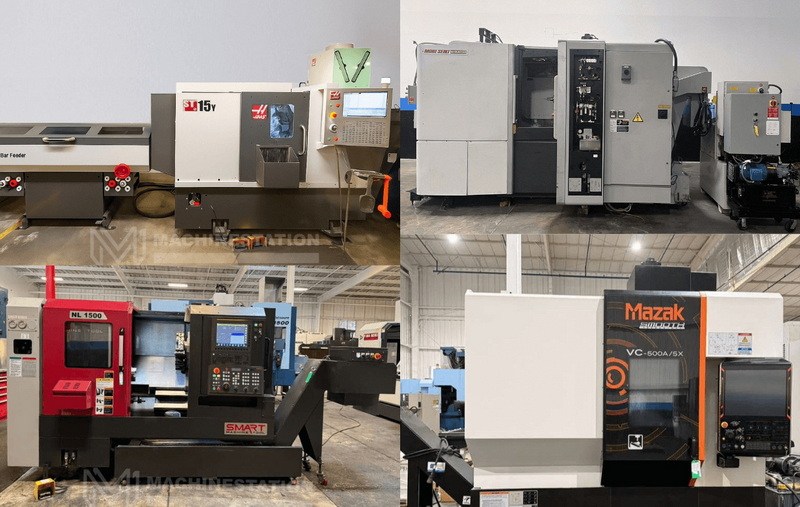
When choosing a CNC milling machine, manufacturers must weigh various operational and financial factors to ensure production efficiency and long-term profitability.
1. Material Hardness: Hard metals like titanium or steel require rigid and powerful machines, usually horizontal or bed-type mills.
2. Part Complexity: Multi-axis systems enable contouring and undercutting that simpler machines cannot perform.
3. Production Volume: For small batches, a 3 or 4-axis machine is suitable, whereas production lines benefit from automated 5-axis setups.
4. Accuracy Requirements: Medical and aerospace sectors demand tolerances within microns, achievable only through high-precision spindles and thermal stability systems.
5. Budget and Maintenance: Higher-axis machines are costly but deliver long-term performance gains through reduced setup times.
6. Automation Needs: Integration with robots, sensors, or pallet systems can enhance unmanned operations for continuous shifts.
CNC milling technology continues to dominate modern mechanical manufacturing due to its numerous advantages over manual systems.
- Precision and Repeatability: Automated control systems guarantee consistent part quality regardless of batch volume.
- Reduced Human Error: Once programmed, the toolpaths minimize operator mistakes.
- Cost Efficiency: Lower labor requirements and material waste lead to long-term savings.
- Advanced Tooling: Automatic tool changers increase versatility and productivity.
- Versatility: Suitable for metals, plastics, composites, and hybrid materials.
- Enhanced Safety: Enclosed machining areas and built-in emergency stops protect operators from hazards.
CNC milling machines are indispensable across several major industries:
1. Aerospace: Manufacturing turbine blades, wing components, and precision housings.
2. Automotive: Milling engine blocks, transmission parts, and customized prototypes.
3. Medical Equipment: Producing dental implants, surgical tools, and orthopedic devices.
4. Energy Sector: Crafting parts for wind turbines, oil rigs, and nuclear systems.
5. Electronics: Milling circuit boards, heat sinks, and enclosures.
6. Tool and Die: Creating precision molds and stamping dies for mass production.
Each industry adapts CNC milling to its unique tolerance levels, material preferences, and complexity demands.
CNC milling continues to evolve with technological innovation. The integration of software, sensors, and artificial intelligence reshapes what modern machining can achieve.
- AI and Machine Learning: Predictive algorithms optimize tool life, feed rates, and temperature control.
- Hybrid Manufacturing: Combines additive 3D printing and subtractive milling for rapid prototyping and repair.
- IoT Connectivity: Machines linked via industrial networks allow remote monitoring and predictive maintenance.
- Energy Efficiency: New-generation spindles and servo drives reduce power consumption.
- Autonomous Operation: Robotic automation increases uptime while minimizing manual supervision.
These advancements point toward full smart factories, where digital twins and real-time analytics will govern machining precision and resource management.
CNC milling machines come in many types, each designed to meet specific production needs and technical challenges. From versatile 3-axis models that handle basic machining to sophisticated 6-axis systems for complex aerospace geometries, CNC technology enables an unmatched combination of speed, precision, and adaptability. Recognizing how machines differ — by axis configuration, spindle orientation, and structure — empowers businesses to select equipment suited to their budget, quality standards, and production scale. As industries advance toward digital manufacturing, CNC milling remains at the core of innovation and precision engineering.
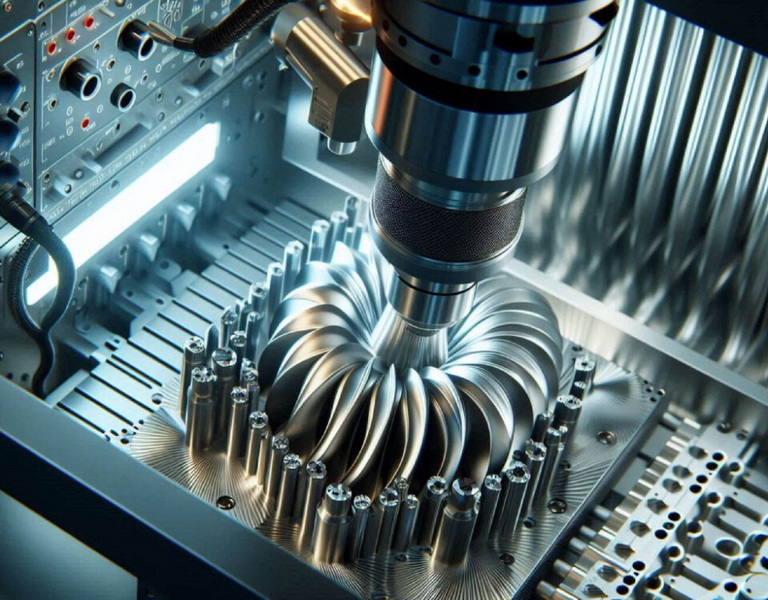
CNC milling machines are generally categorized into 3, 4, 5, and 6-axis systems, along with variations like vertical, horizontal, bed-type, and gantry mills. Each type serves specific complexity and production requirements.
Vertical machines have an upright spindle, making them ideal for precision cuts and ease of operation. Horizontal mills have a side spindle orientation, offering stronger cutting forces and improved chip removal for large-scale machining.
Because it allows simultaneous machining on multiple planes, a 5-axis machine can shape complex turbine and structural parts with fewer setups and higher accuracy, essential for safety-critical aerospace components.
They can cut a wide range of materials including steel, aluminum, titanium, brass, composite polymers, ceramics, and even wood — depending on tool selection and cutting parameters.
Automation allows machines to run continuously with robotic loading systems and automated tool changers, maximizing productivity while minimizing downtime and operator fatigue.


