From idea to market-ready product, our NPI solutions make every stage easier, faster. Discover How We Help

Views: 222 Author: Tomorrow Publish Time: 2026-01-02 Origin: Site


Content Menu
● Key Differences Between CNC and 3D Printing
● Applications Across Industries
● Limitations of Each Technology
● Evolution of Both Technologies
● The Role of Software and Digitalization
● Future Outlook: Collaboration, Not Replacement
● FAQs
>> 1. What are the main differences between CNC machining and 3D printing?
>> 2. Can 3D printing achieve the same precision as CNC machining?
>> 3. Which manufacturing method is more cost-effective?
>> 4. What materials can both technologies handle?
>> 5. Is hybrid manufacturing the future of production?
The rise of additive manufacturing has completely changed how engineers, designers, and manufacturers think about product creation. Among the many questions that come up in this technological shift, one stands out: will 3D printing replace CNC machining? Both manufacturing methods have made groundbreaking contributions to modern production, yet they serve fundamentally different purposes. To answer this question, it's important to understand how each process works, where their strengths lie, and how industries are adapting to their evolving capabilities.
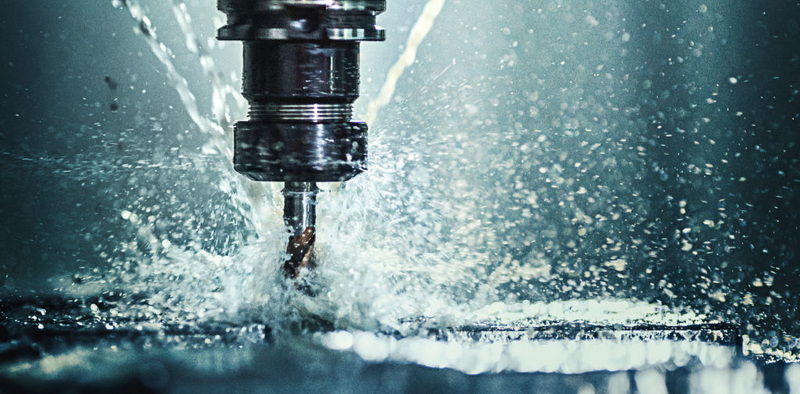
CNC (Computer Numerical Control) machining is a subtractive manufacturing process that has been a cornerstone of industrial production for decades. It begins with a solid block or billet of raw material—often metal, plastic, or composite—which is gradually cut away using rotating tools controlled by a computer. The instructions are generated from CAD (Computer-Aided Design) files, which dictate every movement, depth, and feed rate of the toolpath.
CNC machining is prized for its exceptional accuracy, surface finish quality, and material flexibility. It can produce complex geometries with tight tolerances, sometimes within micrometers. This consistency makes CNC indispensable in fields such as aerospace, automotive, defense, and healthcare, where precision determines functionality and safety.
However, CNC machining has some drawbacks. Because it removes material rather than adding it, the process generates waste. It also requires skilled operators and significant setup time. For custom or small-batch production, the tooling and preparation can make costs relatively high.
3D printing, often called additive manufacturing, takes the opposite approach. Rather than removing material, it builds parts layer by layer from a digital model. The process uses a variety of materials, such as thermoplastics, resin, metal, ceramics, or even advanced composites. Each layer is precisely deposited according to the computer-generated design.
What makes 3D printing revolutionary is its ability to turn digital designs into physical objects without traditional tooling. Designers can quickly prototype parts, iterate designs, and manufacture items with complex internal features that would be impossible or uneconomical with subtractive methods. Applications range from consumer electronics and automotive components to medical implants and aerospace tools.
Additive manufacturing also enables mass customization—every part can be slightly different without affecting production efficiency. However, the method still struggles with surface smoothness, limited material strength for some applications, and slower speed when producing large or dense parts.
The two technologies differ not only in process but also in performance and industrial fit. Below is a comparative overview:
| Criteria | CNC Machining | 3D Printing |
|---|---|---|
| Process | Subtractive | Additive |
| Material Waste | High | Minimal |
| Accuracy and Tolerance | Very high (±0.005 mm) | Moderate (±0.1 mm) |
| Surface Finish | Smooth | Rough, needs post-processing |
| Material Options | Extensive | Limited but evolving |
| Complex Geometry | Restricted | Excellent for intricate shapes |
| Prototyping Speed | Moderate | Very fast |
| Production Volume | Suitable for mass production | Ideal for small batches |
| Setup Cost | High | Low |
| Customization | Less flexible | Highly flexible |
From this comparison, it becomes clear that 3D printing and CNC machining are not direct competitors—they're complementary. While CNC machining excels in high-precision, large-scale production, 3D printing dominates rapid prototyping and creative design freedom.
Both technologies hold critical roles in modern manufacturing. The best choice often depends on the application requirements, production volume, and material properties.
- Aerospace:
3D printing enables lightweight lattice structures, tool-free manufacturing, and internal cooling channels. Meanwhile, CNC machining provides durable, high-stress components for aircraft engines and structural parts. Combined, they reduce weight and enhance performance.
- Automotive:
Manufacturers use 3D printing for rapid design prototyping, fixtures, and small-batch custom parts like dashboards or air ducts. CNC machining, meanwhile, ensures high-quality metal parts such as engine blocks, transmission housings, and precision gears.
- Medical and Dental Fields:
Additive manufacturing supports personalized implants and prosthetics tailored to individual patients. CNC machining produces surgical instruments, titanium bone plates, and orthopedic parts that demand precise tolerances.
- Consumer Products:
3D printing supports innovation and rapid iteration for sports equipment, footwear, and electronics housings. CNC machining ensures mechanical reliability for parts that must endure stress or wear.
These cases show that instead of replacing each other, 3D printing and CNC machining often work together in a hybrid manufacturing environment.
- Unmatched precision: Capable of extremely tight tolerances required for critical components.
- Excellent surface quality: Ideal for visible or high-contact surfaces with minimal finishing.
- Material flexibility: Works with metals, plastics, ceramics, and composites.
- Durability: CNC-machined parts can endure intense mechanical and environmental stress.
- Repeatability: Every part produced meets identical quality standards.
CNC machining remains the go-to solution for parts requiring long-term durability and dimensional accuracy.
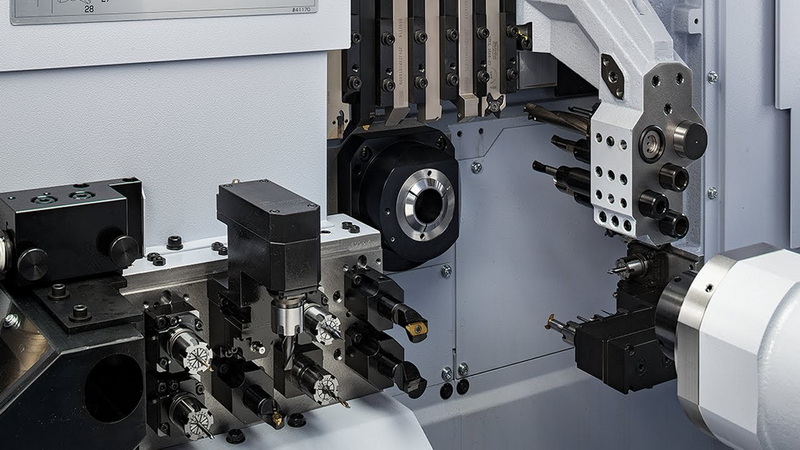
- Freedom of design: Allows engineers to create organic forms, hollow structures, and lightweight components.
- Reduced waste: Minimizes leftover material, cutting environmental impact.
- Rapid development: Speeds up iteration cycles and product testing.
- On-demand production: Eliminates the need for large inventories or tooling.
- Customization at scale: Differentiated products can be created with identical efficiency.
Additive manufacturing transforms creativity into reality, enabling quicker transitions from concept to product.
No technology is flawless. Understanding limitations helps users choose wisely.
CNC Machining Limitations:
- High initial costs and resource consumption.
- Material waste due to subtractive nature.
- Restricted ability for internal geometries or hollow features.
- Tool wear and machine maintenance over time.
3D Printing Limitations:
- Surface roughness often requires post-processing.
- Fewer materials suitable for high mechanical strength.
- Lower accuracy compared to CNC for tight tolerances.
- Slower for large-scale or mass production scenarios.
The balance between design flexibility and dimensional precision defines when each should be used.
Manufacturing innovation is constant. New developments are narrowing the gap between 3D printing and CNC machining:
- Hybrid Systems: Machines that combine additive and subtractive processes in one platform. They can print near-net shapes and machine surfaces to exact tolerances.
- Advanced Materials: High-strength metal powders, carbon-fiber composites, and temperature-resistant polymers are making 3D printing more competitive.
- Automation in CNC: AI-assisted programming and automated tool changes reduce setup and downtime.
- Multi-axis 3D Printing: New printers can produce parts from different angles, enhancing complexity and accuracy.
These advancements suggest not a replacement, but a convergence—where both technologies integrate to enhance efficiency and design possibilities.
From an economic perspective, choosing between CNC machining and 3D printing depends on volume, complexity, and production goals:
- Low-volume or prototyping: 3D printing is generally cheaper due to no tooling and quick turnaround.
- High-volume production: CNC machining is more economical because it amortizes setup costs over many parts.
- Tooling investment: CNC requires expensive jigs and fixtures, while 3D printing operates directly from digital files.
- Maintenance and labor: CNC machines need skilled oversight; 3D printing benefits from automation with minimal supervision.
In the long run, integrated workflows—using both where appropriate—often yield the best cost efficiency.
Sustainability plays an increasing role in manufacturing decisions. 3D printing's additive nature minimizes material waste, making it an environmentally friendly alternative for certain components. Its localized production also reduces transportation emissions.
However, CNC machining, when optimized with recycling systems and modern coolant recovery, can still operate environmentally responsibly. The key lies in process optimization—using 3D printing for design efficiency and CNC machining for durable, long-life parts.
Both technologies rely on digital design and computer modeling, but the level of integration is advancing with Industry 4.0. Cloud-based platforms now allow manufacturers to simulate, optimize, and track every stage of the production lifecycle.
- Generative design: AI-driven algorithms suggest optimized geometries that leverage 3D printing's unique flexibility.
- CAM software: Modern applications automate CNC toolpath generation, reducing programming effort.
- Smart factories: Networked machines share production data in real-time, improving efficiency and predictive maintenance.
The merging of digital tools with physical manufacturing bridges the gap between design and production, further blurring the line between 3D printing and CNC machining.
The future manufacturing landscape will not be defined by competition between CNC machining and 3D printing, but rather by collaboration. Each technology will continue to evolve in parallel, serving specific roles in the product development chain.
For example, an aerospace manufacturer might 3D print a titanium preform part, then finish it with CNC machining to meet tight tolerances. A medical company could print custom implant shapes and CNC-machine precise mounting interfaces. These synergistic approaches demonstrate that the future is hybrid—not one technology replacing the other.
3D printing is transforming manufacturing through creative flexibility, sustainability, and rapid production. CNC machining, on the other hand, remains essential for achieving the highest precision, durability, and repeatability across industries. While additive manufacturing expands the boundaries of what's possible, it will not replace CNC machining entirely. The two will coexist, complementing one another in an age of smart, connected, and efficient manufacturing.
Industries that embrace both technologies will gain a competitive edge, combining innovation with precision. The future of manufacturing lies not in choosing between additive or subtractive techniques but in uniting them for maximum potential.
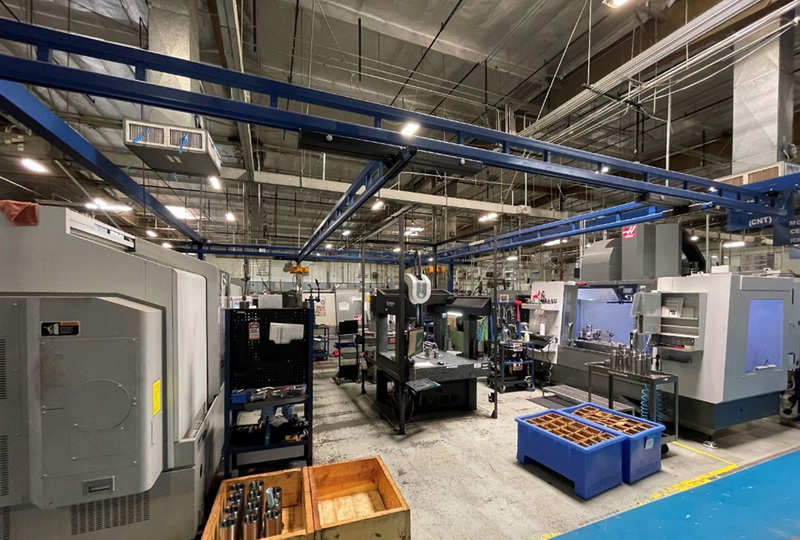
CNC machining removes material from a solid block (subtractive process), while 3D printing builds a part layer by layer (additive process). CNC achieves tighter tolerances, but 3D printing offers greater design flexibility and faster prototyping.
Currently, no. CNC machining still provides superior tolerances and smoother surfaces. However, technological advancements in metal 3D printing are closing this gap, especially with hybrid processes combining both techniques.
For rapid prototyping or small-batch production, 3D printing is more cost-effective. For mass production and high-precision items, CNC machining is usually cheaper and more efficient.
CNC machining supports almost any rigid material—metals, plastics, and composites. 3D printing materials include resins, filaments, and powdered metals. The selection for additive materials is expanding every year.
Yes. Hybrid systems combining additive and subtractive processes are gaining traction. This integration leverages the design flexibility of 3D printing and the precision finishing of CNC machining, making it ideal for complex, high-value parts.


