From idea to market-ready product, our NPI solutions make every stage easier, faster. Discover How We Help

Views: 222 Author: Tomorrow Publish Time: 2026-01-11 Origin: Site


Content Menu
● Reproducibility and Scalability
● Complexity and Design Flexibility
● Reduced Waste and Material Efficiency
● Integration with Advanced Manufacturing
● CNC Machining vs. Manual Machining Comparison Table
● Limitations of CNC Machining
● Future Trends in CNC Machining
● FAQ
>> 1. What industries benefit most from CNC machining?
>> 2. How does CNC machining ensure accuracy?
>> 3. Can CNC machines handle different materials?
>> 4. Is CNC machining suitable for prototyping?
>> 5. How does CNC machining lower long-term costs?
In the competitive world of modern manufacturing, success relies on precision, efficiency, and consistency. CNC machining—short for Computer Numerical Control machining—has transformed traditional production workflows through digital automation. Unlike manual machining, which depends on human skill and physical control of machine tools, CNC machining uses pre-programmed software to guide cutting tools with exact movements. This difference is more than technological; it is strategic, redefining how industries like aerospace, automotive, defense, and medical engineering approach mass production and prototyping.
As competition tightens and product designs become more complex, manufacturers face immense pressure to reduce costs without sacrificing quality. Manual processes, while reliable for small-scale work, struggle to match the scalability and precision of CNC machining. This article explores the many reasons why CNC machining has become the preferred choice for leading manufacturers and why its advantages extend far beyond automation.
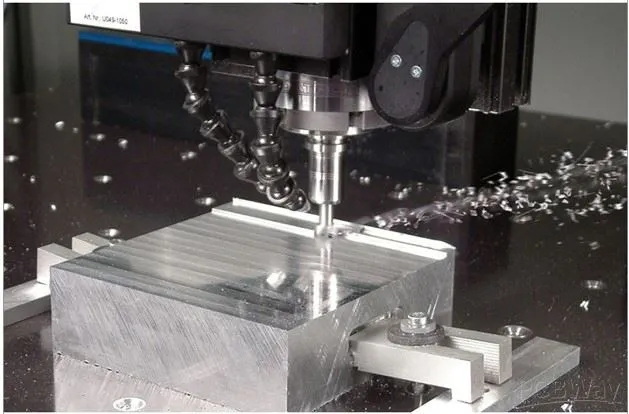
CNC machining is a subtractive manufacturing method that removes material from a workpiece to form a final part. The process begins with a digital design created using CAD (Computer-Aided Design) software. This 3D model is then converted into CAM (Computer-Aided Manufacturing) instructions, producing precise tool paths for cutting, drilling, milling, or turning. The CNC machine follows these instructions automatically, replicating the design exactly as programmed.
Common types of CNC machines include lathes, milling machines, routers, grinders, and plasma cutters. They can operate on multiple axes—ranging from three to even nine—allowing for intricate part geometries that are impossible to achieve with manual tools. Because of their digital foundation, CNC machines can integrate easily with other advanced systems like robotics, sensors, and AI-driven platforms for quality control and data analytics.
In contrast, manual machining depends on operators physically controlling machines through hand wheels, levers, and feed handles. The machinist uses blueprints and measuring instruments like calipers or micrometers to shape the material. While highly skilled operators can achieve commendable results, the process is time-consuming and limited by human fatigue and consistency. Manual machining excels in one-off projects or on-the-spot repairs but fails to meet industrial-scale demands that require repetitive, accurate production.
Precision is the cornerstone of modern manufacturing. CNC machining achieves accuracy levels measured in microns, thanks to computer-guided toolpaths and servo motors that ensure exact positioning. In contrast, manual machining's results depend on the machinist's experience and coordination, leading to larger deviations and variances across parts.
In high-stakes sectors such as aerospace or medical device manufacturing, even a fraction of a millimeter can determine whether a part performs safely and efficiently. CNC technology minimizes such errors, ensuring uniform output that conforms to the tightest tolerances possible. Once a program is optimized, it can produce thousands of identical components, eliminating inconsistencies that often arise in manual processes.
Speed is not simply about how quickly a single part can be made. It's also about how efficiently an entire production cycle operates. CNC machining accelerates manufacturing through automation of tool changes, fixture positioning, and sequential operations. Tasks that take hours by hand are completed within minutes.
Batch production becomes even more efficient since CNC machines can operate continuously under minimal supervision. Operators can program multiple tasks into a queue, allowing the machine to run overnight—an impossible feat with traditional manual setups. Additionally, modern CNC systems feature automatic calibration and self-check processes that reduce the need for manual reconfiguration between jobs, decreasing downtime and improving throughput.
CNC machining introduces ultimate reproducibility. Once the first part is programmed and verified, each subsequent unit will mirror that original with perfect accuracy. This level of repeatability is essential for industries requiring interchangeable components.
Manual machining cannot match this consistency due to variations in operator performance, environmental conditions, or even tool wear. Scaling production manually often means exponentially increasing human involvement, which raises labor costs and the likelihood of error. CNC systems, however, scale seamlessly—from rapid prototyping to mass production—without sacrificing precision or speed.
As designs evolve toward more intricate geometries, CNC machining wins on complexity. Modern 5-axis and multi-axis machines allow for sophisticated shapes, compound angles, and undercuts that manual tools simply cannot replicate consistently.
In traditional machining, creating complex components often requires multiple setups, special jigs, and repeated manual adjustments. CNC machining eliminates most of these steps by allowing virtual simulation before cutting begins. Designers can experiment freely with geometries, materials, and tolerances without worrying about tool limitations. Once the model is finalized, the CAM system translates these features into executable machine instructions instantly.
Material utilization directly impacts manufacturing profitability. CNC machining uses sophisticated programming to determine the exact cutting pattern, minimizing waste and optimizing each stock piece. Because machines execute the toolpath precisely, there is far less risk of scrap material caused by operator error.
CNC machines also use real-time feedback systems to adjust spindle speeds and feed rates dynamically, prolonging tool life and enhancing efficiency. These smart optimizations not only conserve material but also reduce energy consumption and operational wear, contributing to sustainability goals.
Safety is a critical consideration in any manufacturing environment. CNC machining reduces direct contact with tools and materials, lowering the risk of injury from sharp cutters, high-speed spindles, or hot chips. Enclosures and safety interlocks further protect operators from hazards.
From a workforce standpoint, CNC machining lessens dependence on highly skilled manual machinists for repetitive or labor-intensive procedures. Operators focus on programming, machine setup, and quality control instead of continuous manual adjustments. This shift enhances job safety and allows a single technician to supervise multiple machines at once, dramatically boosting productivity.
CNC machining forms the backbone of Industry 4.0, where interconnected manufacturing systems share data to optimize productivity. CNC machines interface with digital software platforms, enabling remote monitoring, predictive maintenance, and adaptive control. They collect valuable operational data—spindle load, temperature, wear patterns—that can be analyzed to prevent downtime and improve process stability.
This connectivity also supports hybrid processes that merge CNC machining with additive manufacturing, creating parts that combine complex internal structures with precision-milled surfaces. Manual processes cannot integrate into this connected ecosystem because they rely solely on human intervention.
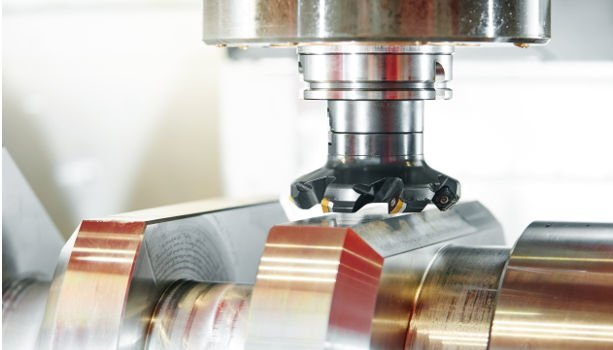
Although the upfront investment in CNC technology is substantial, its long-term advantages far outweigh the initial cost. Automation drastically cuts labor expenses, ensures consistent quality, and reduces the costs associated with rework or scrap. Faster cycle times also lead to quicker delivery, giving businesses a competitive advantage.
Manual machining's low entry cost seems appealing for small workshops, but its inefficiency and labor dependency limit scalability. Over time, the lower operational cost of CNC systems—combined with their capability for continuous production—translates into a much higher return on investment.
CNC machines are designed for durability and minimal maintenance. Automated lubrication systems, temperature control, and built-in diagnostics ensure consistent performance. Regular software updates and calibration checks keep machines operating within tolerance.
In contrast, manual equipment experiences faster degradation because of constant human manipulation and less precise wear tracking. Furthermore, because CNC machines record performance data, predictive maintenance can prevent breakdowns altogether, whereas manual machines may fail unexpectedly due to unnoticed wear.
| Feature | CNC Machining | Manual Machining |
|---|---|---|
| Accuracy | Micron-level precision | Reliant on human skill |
| Speed | Automated, fast cycle times | Slow production cycle |
| Consistency | Perfect repeatability | Variation between parts |
| Complexity | Supports intricate designs | Limited by mechanical setup |
| Labor Need | One operator for multiple machines | One operator per unit |
| Safety | Enclosed and automated | Direct physical handling |
| Setup Time | Minimal with stored programs | Long setup and manual calibration |
| Material Waste | Optimized via programming | High due to trial errors |
| Cost Over Time | Lower due to automation | Higher due to manual labor |
| Integration | Compatible with digital systems | Isolated and non-digital |
Sustainability plays an increasingly vital role in industrial decision-making. CNC machining inherently supports greener manufacturing through efficient energy use, optimized tool paths, and material conservation. Coolants can be recycled, and metallic chips are easily collected and resmelted.
Automated operations often reduce energy consumption by completing tasks faster. Manual machines, however, remain active longer for each unit produced, consuming more electricity and generating more waste. Thus, CNC machining is a better fit for companies striving to meet environmental regulations and carbon reduction goals.
While CNC machining offers exceptional advantages, it is not flawless. Its initial cost can be prohibitive for small workshops, and the need for trained programmers can pose a challenge in regions with limited technical education. Complex programming errors may also lead to costly waste if not detected early.
Despite these challenges, the technology continues to become cheaper and more accessible. Advances in cloud computing, open-source software, and intuitive interface design have made CNC systems easier to adopt than ever before.
Emerging trends point toward even greater automation and intelligence. AI-enhanced CNC machines can adapt to cutting conditions in real time, optimize tool lifespan, and reduce setup time through self-learning algorithms. The integration of IoT (Internet of Things) technologies allows remote monitoring and predictive diagnostics for global manufacturing operations.
Robotic-assisted CNC cells are also becoming common, enabling full automation from raw material loading to finished part inspection. Coupled with augmented reality (AR) for training and simulation, the future of CNC machining continues to outpace traditional manual techniques in every measurable aspect.
CNC machining stands as the modern manufacturing standard—fast, precise, scalable, and safe. Compared with manual machining, it eliminates human inconsistency, boosts productivity, and ensures perfect repeatability across large production runs. Beyond efficiency, it opens creative possibilities and integrates seamlessly with the digital systems driving Industry 4.0.
Adopting CNC machining is more than technological progress; it represents a business transformation toward long-term competitiveness. Whether for large-scale industrial manufacturing or small prototyping operations, CNC machining guarantees reliability, precision, and profitability that manual processes can no longer match.
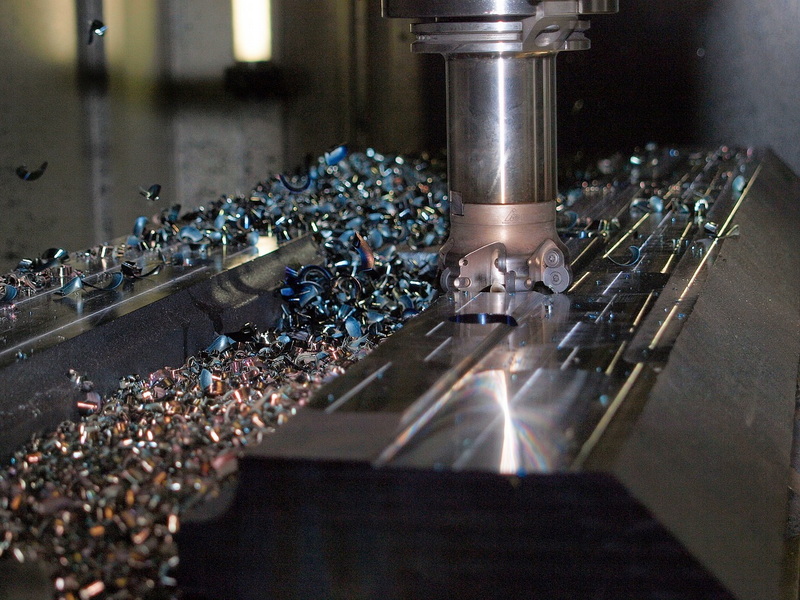
CNC machining is vital for sectors like aerospace, automotive, electronics, energy, and medical manufacturing, where tight tolerances and product consistency are essential for safety and function.
It uses computer-controlled motion based on programmed CAD/CAM data, ensuring perfect repeatability and superior precision while minimizing human influence.
Yes. CNC machines are adaptable and can process metals, plastics, composites, ceramics, and wood by modifying tooling, speeds, and feeds according to material properties.
Absolutely. CNC machining offers rapid, cost-effective prototyping with accurate results, making it ideal for validating designs before committing to large-scale production.
Though machines are expensive initially, automation, decreased labor requirements, minimal rework, and efficient material use lower operating costs significantly over time.


