From idea to market-ready product, our NPI solutions make every stage easier, faster. Discover How We Help

Views: 222 Author: Tomorrow Publish Time: 2025-11-23 Origin: Site
Content Menu
● Who Needs 3D Printing Services?
>> Manufacturing Companies and Product Developers
>> Medical Professionals and Healthcare Industry
>> Aerospace and Automotive Industries
>> Fashion and Consumer Product Designers
>> Energy and Semiconductor Industries
>> Agriculture and Construction
● Why Use 3D Printing Services?
>> Customization and Flexibility
>> Sustainability and Waste Reduction
>> Enhanced Innovation and Accessibility
● Expanding Applications and Future Trends
>> Advanced Materials and Smart Structures
>> Automation and AI Integration
● FAQ
>> 1. What types of materials can be used in 3D printing services?
>> 2. How does 3D printing reduce manufacturing costs?
>> 3. Are 3D printed parts as strong and reliable as traditionally made parts?
>> 4. How fast can 3D printing produce parts?
>> 5. Is 3D printing suitable for mass production?
3D printing services have become a cornerstone of modern manufacturing and innovation. By creating objects layer by layer from digital files, 3D printing allows unprecedented flexibility in design and production. This technology is indispensable for diverse fields, ranging from rapid prototyping to mass customization, enabling faster development, lower costs, and complex geometries that traditional methods cannot achieve. This article provides a thorough overview of who needs 3D printing services, exploring the industries benefiting most, the technology's advantages, and its expanding applications.

3D printing, or additive manufacturing, is a process that constructs physical objects by depositing material layer upon layer according to a digital model. This contrasts with subtractive manufacturing, which cuts or molds materials. 3D printing excels at creating complex shapes, customized components, and low-volume production runs quickly and cost-effectively.
Entrepreneurs and startups leverage 3D printing to bring their ideas to life quickly. It allows frequent prototyping iterations, reducing design cycle times and development costs significantly. This speed empowers new businesses to launch innovative products without large upfront investments in tooling or manufacturing infrastructure.[11]
For established manufacturers, 3D printing enables faster product development cycles through rapid prototyping and functional testing. It also serves niche needs for small batch runs or spare parts, circumventing long lead times and high costs of conventional manufacturing. The ability to produce complex, lightweight parts supports product innovation in competitive markets.[12][11]
Healthcare extensively uses 3D printing to fabricate customized implants, prosthetics, surgical guides, and anatomical models. These personalized solutions improve patient outcomes and surgical precision while cutting manufacturing time and costs. Additionally, bioprinting research offers prospects for printing tissues and organs.[2][3][4][11]
These sectors employ 3D printing to create lightweight, high-strength parts that boost performance and fuel efficiency. Aerospace companies print engine components, fuel nozzles, and structural parts, often reducing weight and material waste. Automotive manufacturers use it for prototyping, tooling, and limited production runs, offering customization and faster design validation.[3][4][13][2]
3D printing empowers fashion designers to produce intricate garments, accessories, or footwear with unique designs and sustainable materials. Consumer product development benefits from rapid prototyping, customized products, and small-scale manufacturing capabilities, aligning with growing demands for personalization and eco-friendliness.[13][3][11]
Additive manufacturing is vital for producing complex, optimized components such as turbine blades, heat exchangers, and electronic cooling parts in energy and semiconductor sectors. These industries require precision, lightweight, and thermally efficient components that 3D printing can uniquely provide, improving device performance and operational efficiency.[1][2]
In agriculture, 3D printing supports the production of specialized equipment, replacement parts, and sustainable materials. Construction firms experiment with large-scale 3D printing to build components or entire structures faster and more cost-effectively, advancing sustainable building practices and architectural innovation.[2][3]
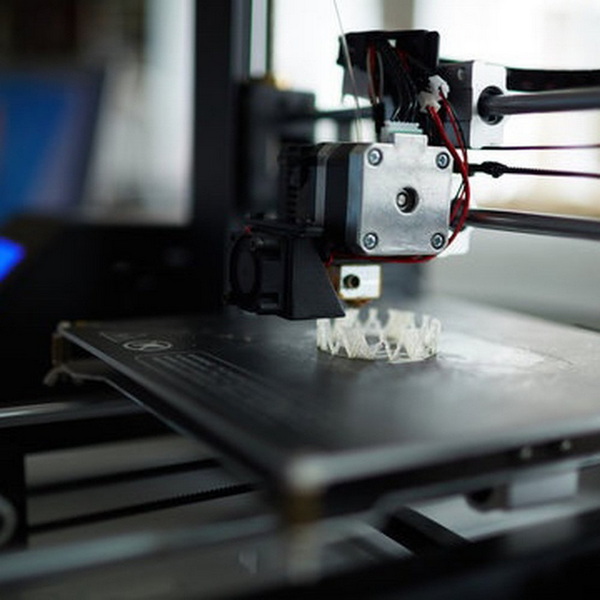
By eliminating molds and tooling and enabling on-demand production, 3D printing reduces upfront costs and lead times. Prototypes can be developed in hours or days rather than weeks, accelerating innovation and market entry.[5][11][12]
3D printing enables the creation of unique, customized products without extra cost or delay. This flexibility drives product differentiation, especially in medical devices, fashion, and consumer goods, meeting user-specific needs.[11][2]
Additive manufacturing uses only necessary material, minimizing waste compared to subtractive methods. Localized, on-demand production reduces inventory and transportation emissions, contributing to greener manufacturing processes.[13][2][11]
3D printing democratizes manufacturing, making advanced production accessible to startups, small businesses, and individuals. It supports rapid experimentation and new business models based on customization and small batch production.[11]
3D printing is shifting from prototyping toward producing end-use parts, particularly in aerospace, automotive, and healthcare, supported by improved materials and process reliability.[6][1][2]
Emerging high-performance polymers, metal alloys, and composites enable 3D printing of durable, functional components. Innovations like 4D printing—materials that change shape or properties over time—are opening new possibilities in adaptive products and medical implants.[1][2]
Automation of 3D printing workflows and AI-driven design optimization are enhancing quality, speed, and scalability. These advances make additive manufacturing more viable for complex industrial applications and broader adoption.[1][2]
| Industry | Key Benefits |
|---|---|
| Healthcare | Custom implants, prosthetics, surgical tools |
| Aerospace | Lightweight parts, complex designs |
| Automotive | Rapid prototyping, tooling, custom parts |
| Fashion | Personalized designs, sustainable production |
| Energy | Optimized turbine components, heat exchangers |
| Semiconductor | Precision electronic components |
| Construction | Large-scale printing, architectural innovation |
| Agriculture | Specialized tools and equipment |
| Consumer Goods | Custom, small-batch manufacturing |
3D printing services are vital across a broad spectrum of industries, empowering entrepreneurs, manufacturers, healthcare providers, and more with rapid, cost-effective, and customized production capabilities. The technology's flexibility, sustainability benefits, and evolving applications ensure that it will play a pivotal role in driving innovation and efficiency well into the future. As advances continue in materials and automation, 3D printing is poised to become a mainstream manufacturing method beyond prototyping, revolutionizing how products are designed and made.
3D printing supports plastics, metals, resins, composites, and advanced polymers like PEEK and ULTEM, allowing applications from prototypes to high-performance end-use parts.[5][2][11]
By cutting out molds and tooling, enabling on-demand production, and reducing material waste, 3D printing lowers upfront investments and inventory costs.[12][5][11]
Yes, with the right materials and technology, 3D printed parts can meet or exceed traditional manufacturing standards, particularly for aerospace and medical applications.[2][13]
Prototyping can take from a few hours to days depending on complexity, offering much faster turnaround than conventional fabrication.[2][11]
While currently best for prototyping and low-to-medium volume production, advances in speed and automation are expanding its use for larger-scale manufacturing.[6][1]
[1](https://3dzgroup.com/trends-for-3d-printing-in-2025-according-3d-systems-innovation-materials-and-automation/)
[2](https://www.wevolver.com/article/applications-of-3d-printing-from-industry-to-electronics-and-beyond)
[3](https://rev1tech.com/10-industries-revolutionized-by-3d-printing-in-2025/)
[4](https://www.trumpf.com/en_US/newsroom/stories/what-industries-use-3d-printing/)
[5](https://www.precedenceresearch.com/3d-printing-market)
[6](https://www.daydream.eu/3d-printing-market-highlights-august-2025/)
[7](https://ultimaker.com/learn/applications-of-3d-printing-in-manufacturing/)
[8](https://www.xometry.com/resources/3d-printing/future-of-3d-printing/)
[9](https://uptivemfg.com/3d-printing-companies/)
[10](https://www.youtube.com/watch?v=qSgHK2iE_pk)
[11](https://www.linkedin.com/pulse/why-you-need-3d-printing-service-james-murphy)
[12](https://www.raise3d.com/academy/why-businesses-need-3d-printing/)
[13](https://www.3ds.com/make/solutions/blog/five-industries-benefit-most-3d-printing)


