From idea to market-ready product, our NPI solutions make every stage easier, faster. Discover How We Help

Views: 222 Author: Tomorrow Publish Time: 2025-12-22 Origin: Site


Content Menu
>> Typical Components Produced by CNC Lathes
>> Benefits of CNC Lathe Machines
>> Disadvantages of CNC Lathes
● What Is a CNC Milling Machine?
>> Common Applications for CNC Milling Machines
>> Disadvantages of CNC Milling
● CNC Lathe vs CNC Milling: Key Technical Differences
● Factors to Consider When Choosing Between CNC Lathe and CNC Milling
>> 1. Part Geometry and Complexity
>> 2. Volume and Production Speed
>> 6. Software and Skill Requirements
● Combining CNC Lathe and CNC Milling in Production
● CNC Lathe vs CNC Milling in Different Industries
>> Oil, Gas, and Energy Sector
● Which Is Better CNC Lathe Or CNC Milling?
● FAQ
>> 1. What is the key operational difference between CNC lathe and CNC milling?
>> 2. Which machine provides a smoother finish?
>> 3. Why are CNC milling machines more expensive?
>> 4. Can one machine perform both turning and milling functions?
>> 5. Which is ideal for beginners or small workshops?
In the modern world of precision engineering, CNC (Computer Numerical Control) machining has become the backbone of manufacturing. Whether it's the automotive, aerospace, electronics, or medical industry, the demand for highly precise and efficient machining tools continues to grow. Among the various CNC technologies available, two stand out as the most widely used — the CNC lathe and the CNC milling machine.
Both machines transform raw materials into finished products through controlled material removal, but their methods, strengths, and applications differ dramatically. Understanding the technical distinctions between these two machines helps manufacturers, engineers, and designers make strategic decisions when selecting the right equipment for production.
This comprehensive article will explore the fundamentals, advantages, limitations, and use cases of CNC lathes and milling machines — and guide you in choosing which one is better for your specific machining needs.
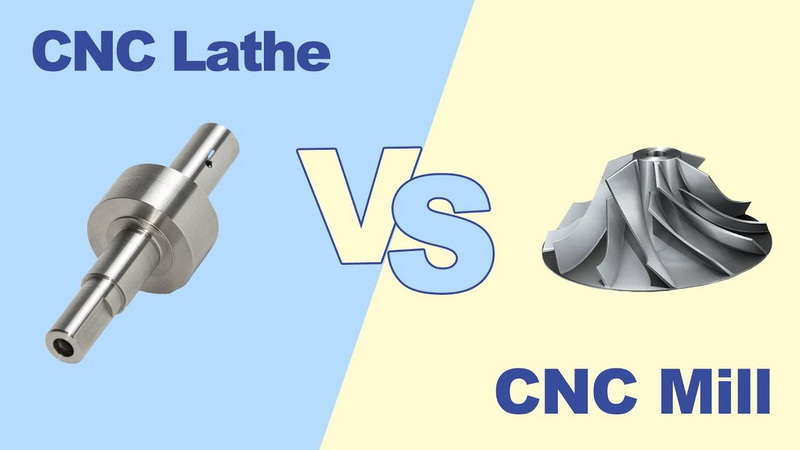
A CNC lathe is a highly precise machining tool specifically designed to shape a piece of material by rotating it while a cutting tool removes the unwanted sections. The machine operates under computer control, allowing exact replication of parts with minimal human intervention.
The key principle behind CNC lathe operation is rotation — the workpiece itself spins on its axis while the stationary cutting tool performs the shaping. This design makes it especially efficient for producing round, cylindrical, or conical shapes.
CNC lathes usually feature two primary axes (X and Z). The spindle holds and rotates the material, while the cutting tool moves linearly along fixed coordinates. Advanced lathes may include additional axes (such as C or Y) that enable more complex operations like off-center drilling or milling.
During operation, the computer calculates the toolpath through G-code commands. Operators can program cutting depth, rotation speed, and feed rate to achieve precise results with tight tolerances.
CNC lathes are ideal for manufacturing rotationally symmetrical components. Common examples include:
- Shafts and axles
- Bushings and sleeves
- Bolts, nuts, and threaded parts
- Bearings and rollers
- Fittings, valves, and couplings
1. Efficiency for Round Parts: Perfect for any cylindrical component production.
2. Smooth Surface Finish: Due to constant rotation and consistent tool engagement.
3. Precision and Repeatability: Capable of producing identical parts in high-volume manufacturing.
4. Reduced Human Error: Automation ensures consistent quality across batches.
5. Compact Setup: Occupies less space compared to larger milling centers.
1. Limited to Cylindrical Designs: Cannot efficiently create flat or angular surfaces.
2. Lower Versatility: Not suitable for parts requiring multiple geometries or irregular features.
3. Restricted Axes: Most lathes use two or three axes, limiting creative design capabilities.
A CNC milling machine operates on a completely opposite principle. Instead of rotating the workpiece, the milling tool spins at high speed while the workpiece remains stationary (or moves minimally). This difference allows CNC milling to create complex, multi-angled shapes with incredible precision.
Milling machines are among the most versatile fabrication tools in modern manufacturing, capable of handling 3D contours and highly detailed geometries.
CNC milling machines are equipped with multi-axis systems — ranging from 3-axis for basic operations to 5-axis for advanced, multi-directional machining. The rotating cutting tool moves along the X, Y, and Z directions to remove material from flat, curved, or irregular surfaces.
Operators use digital commands (G-code) to define every detail such as feed speed, spindle rotation, and cutting path. Complex parts like molds, engine housings, or turbine blades rely heavily on CNC milling for their production.
CNC milling excels in tasks requiring precise detailing or unique shapes. Examples include:
- Casings, molds, and plates
- Engine blocks and heat sinks
- Aerospace brackets and frames
- Custom prototypes and tooling dies
- Mechanical housings with cavities or slots
1. High Design Flexibility: Easily handles non-symmetrical and complicated shapes.
2. Ideal for Complex Machining: Multi-axis movement supports contouring and 3D surface creation.
3. Consistent Accuracy: Maintains precision across large or intricate projects.
4. Works with Tough Materials: Handles stainless steel, titanium, and hardened alloys effectively.
5. Rapid Prototyping: Enables engineers to create functional prototypes quickly.
1. Longer Setup Time: Requires more programming and fixture alignment.
2. Higher Cost: Multi-axis machines come with greater investment and maintenance needs.
3. Tool Wear and Heat Issues: Continuous cutting can lead to faster tool degradation.
4. Bulkier Footprint: Milling centers can occupy a large portion of a workshop floor space.
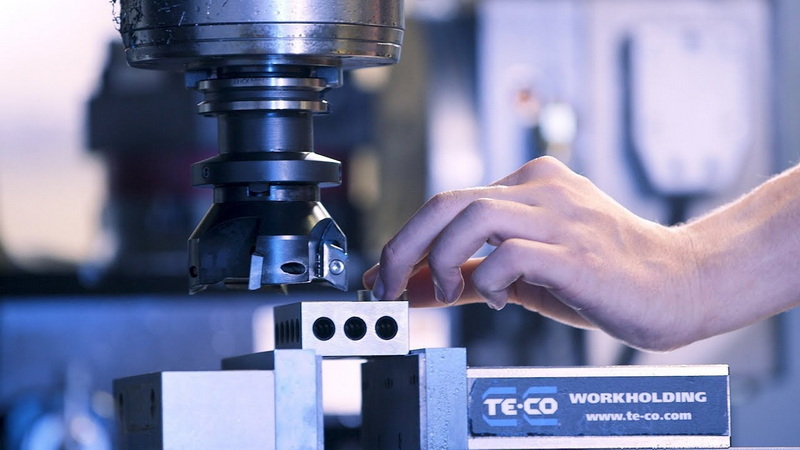
To better understand the distinction, let's compare their most essential aspects.
| Feature | CNC Lathe | CNC Milling |
|---|---|---|
| Workpiece Movement | The workpiece rotates on a spindle | The workpiece is stationary |
| Cutting Tool Movement | Limited linear movement (X and Z axes) | Moves along multiple axes (X, Y, Z, and more) |
| Design Complexity | Suitable for symmetric, round parts | Suitable for complex, irregular designs |
| Surface Finish | Produces smoother and polished finishes | Can leave tool marks requiring extra finishing |
| Production Speed | Faster for simple, repeating components | Slower but more versatile for varied designs |
| Setup Requirements | Simple and quick setup process | Lengthier setup due to toolpaths and fixture alignment |
| Typical Industries | Automotive, plumbing, machinery | Aerospace, medical, prototyping, tooling |
This technical comparison clearly shows that neither machine universally outperforms the other — each dominates its own field depending on part geometry and production intent.
The shape of your part is one of the biggest deciding factors.
- Choose a CNC lathe for round, tubular, or threaded components.
- Choose a CNC milling machine for multi-surfaced, angular, or detailed parts.
If your goal is mass production of simple components, CNC lathes offer faster turnaround times with lower cycle durations. Milling machines are slower but ideal for custom or low-volume operations where flexibility matters more than speed.
While both machines deliver exceptional precision, milling machines often win in terms of dimensional control and surface detail, especially when tolerances under ±0.001 inch are needed.
CNC milling handles a wider variety of materials, especially hard metals like titanium or stainless steel. Lathes, on the other hand, perform better on machinable materials such as aluminum, brass, copper, and mild steel.
A CNC lathe is generally cheaper to purchase and maintain, making it suitable for startups or workshops focusing on standard cylindrical components. Milling centers demand higher investment and maintenance due to complex multi-axis setups.
Milling machines call for more advanced CAD/CAM programming and operator expertise compared to lathes. However, modern training and simulation tools have made both systems more user-friendly over time.
In many professional workshops, CNC lathes and milling machines are not competitors but partners. The integration of both tools within a production line allows manufacturers to maximize efficiency and accuracy.
For instance, a part may be initially shaped on a CNC lathe for rough turning and basic form creation. Then it moves to a CNC milling machine for finishing operations such as cutting grooves, holes, or complex angles.
This hybrid approach results in:
- Increased productivity, as each machine handles the process it excels at.
- Reduced waste through optimized tool usage.
- Improved precision since each process complements the other.
Some advanced machines, called CNC multitasking centers, combine both lathe and milling capabilities in one unit, allowing turning and milling to occur sequentially without re-clamping. These machines are revolutionizing modern manufacturing by minimizing cycle time and ensuring perfect part alignment.
CNC lathes are used to produce drive shafts, pistons, and wheel components. In contrast, CNC milling machines create molds, brackets, and engine blocks that require detailed geometries.
Precision, lightness, and performance are core goals. Milling machines dominate due to their ability to work with titanium and aluminum alloys while forming complex aerodynamic components like brackets, turbines, and landing gear housings.
CNC milling is essential for producing surgical instruments and implants with intricate features. Meanwhile, CNC lathes handle orthopedic screws, rods, and pins requiring round geometry and perfect surface finish.
Lathes craft symmetrical pipeline fittings and valve bodies. Milling machines process flange faces, pump housings, and custom tool holders crucial for high-pressure systems.
The question of which machine is “better” depends entirely on your operational goals. CNC lathes excel at producing round parts efficiently, while CNC milling machines shine in creating detailed, multi-angled, and complex designs.
If your manufacturing needs revolve around repetitive production and rotational symmetry, go for a CNC lathe. If you often handle prototyping, mold making, or require multiple curved and flat surfaces, the CNC milling machine will be your best choice.
In essence, both are vital pillars of CNC manufacturing. Choosing one over the other should be guided by part geometry, design requirements, budget, and long-term production strategy.
CNC machining is integral to modern manufacturing, and understanding the differences between CNC lathes and CNC milling machines is key to optimizing production.
- CNC lathes dominate where speed, surface smoothness, and rotational symmetry are priorities.
- CNC milling machines prevail when flexibility, complexity, and multi-axis precision are required.
For many manufacturers, the ultimate solution lies not in choosing one but in combining both technologies to maximize operational versatility. Whether you are crafting aerospace components or automotive shafts, a balanced approach using both CNC lathes and milling machines ensures productivity, precision, and profitability across all operations.
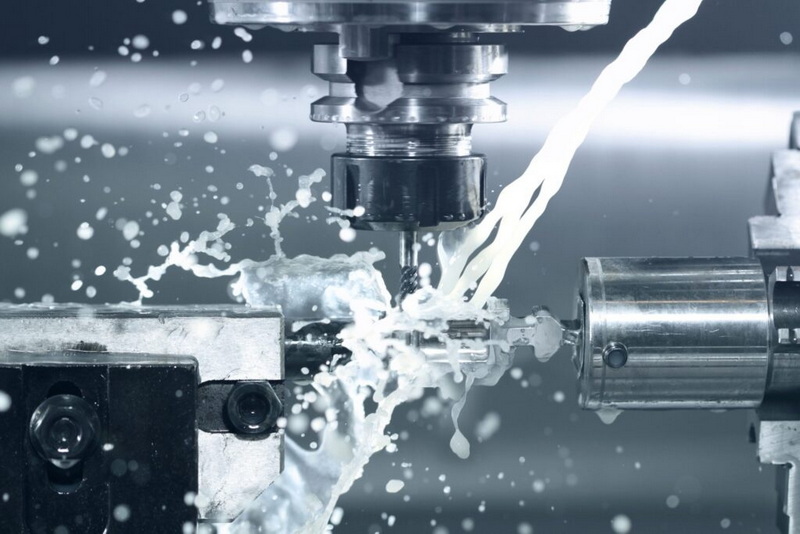
CNC lathes rotate the workpiece while the cutting tool stays mostly stationary. CNC milling machines, however, keep the workpiece fixed and move the cutting tool across multiple axes to create shapes.
A CNC lathe usually produces smoother finishes, especially on round or tapered parts, because of constant rotational motion and balanced cutting forces.
They are costlier due to complex multi-axis systems, higher maintenance needs, and more advanced software programming for detailed part creation.
Yes. Multitasking CNC centers combine both lathe and milling functions, allowing sequential operations without repositioning the part, which increases accuracy and speeds up production.
CNC lathes are generally better for beginners due to easier programming, quicker setups, and lower costs. Milling machines require more experience and investment but offer greater design freedom.


