From idea to market-ready product, our NPI solutions make every stage easier, faster. Discover How We Help

Views: 222 Author: Tomorrow Publish Time: 2025-12-29 Origin: Site
Content Menu
● Understanding 3D Printing Services
● When a 3D Printing Service Becomes the Better Choice
>> 1. When You Need Uncompromising Precision and Surface Quality
>> 2. When You Lack Access to Professional Equipment
>> 3. When Your Project Requires Advanced Materials
>> 4. When You Need Large or Complex Geometries
>> 5. When Speed and Turnaround Time Matter
>> 6. When Scaling Up to Short-Run or Batch Production
>> 7. When You Need Design Consultation
>> 8. When Post-Processing Is Essential
● Benefits of Partnering with a 3D Printing Service
>> Time Savings
>> Reduced Risk
● When Printing at Home Still Makes Sense
● How to Choose the Right 3D Printing Service
● Industry Applications of 3D Printing Services
>> Aerospace
>> Automotive
● The Future of Professional 3D Printing
● FAQ
>> 1. What is the difference between a personal 3D printer and a 3D printing service?
>> 2. How much does it typically cost to use a 3D printing service?
>> 3. How long does a service usually take to deliver parts?
>> 4. Can 3D printing services produce strong, production-grade parts?
>> 5. Are 3D printing services environmentally friendly?
Over the past decade, 3D printing has evolved from a niche prototyping method into a mainstream manufacturing solution. From small entrepreneurs to global corporations, businesses now rely on additive manufacturing for everything from rapid prototyping to large-scale production. Yet, one critical question emerges for designers, engineers, and entrepreneurs alike: When should you use a 3D printing service instead of handling the process yourself?
This guide explores key scenarios, benefits, and decision factors that help you determine when outsourcing to a professional 3D printing service is the most efficient, cost-effective, and strategic choice.
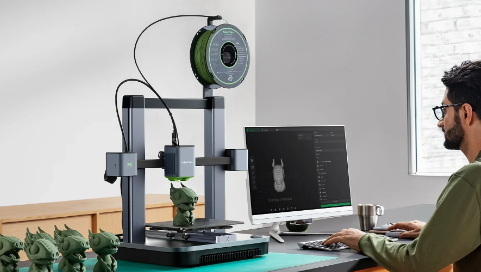
A 3D printing service provides on-demand access to industrial-grade machinery, specialized materials, and expert technicians who bring digital designs to life. These services use sophisticated additive manufacturing technologies such as:
- FDM (Fused Deposition Modeling) for durable, low-cost plastic components.
- SLA (Stereolithography) for high-resolution resins and visual prototypes.
- SLS (Selective Laser Sintering) for functional nylon parts.
- DMLS (Direct Metal Laser Sintering) for metal and alloy production.
By outsourcing, clients avoid the high costs and technical complexity of running their own printing operations while achieving professional quality and reliability. Most services also handle design optimization, part orientation, support removal, and surface finishing — steps that often demand significant expertise.
Choosing whether to print in-house or use a service depends on your goals, budget, and capability. The following sections outline major cases where using a 3D printing service offers clear advantages.
Industrial 3D printers use high-resolution lasers and precisely calibrated encoders to achieve extreme accuracy, often within ±0.05 mm. This makes them ideal for mechanical components, detailed prototypes, and medical models where tolerances are critical.
In contrast, most desktop printers suffer from minor layer shifting, warping, or rough finishes. Services offering SLS or SLA technologies deliver smooth surfaces that require minimal sanding or post-processing.
Owning a 3D printer requires more than a one-time purchase. You must maintain the machine, replace components, and manage temperature, humidity, and calibration.
A service eliminates this hassle — users pay only for the output, not the maintenance. Many online platforms even provide instant quoting, letting you upload a CAD file, choose material specifications, and receive shipping options within minutes.
Consumer-grade printers mostly rely on simple plastics such as PLA or ABS. Industrial printing, however, supports an expansive material range including:
- Carbon fiber composites for high strength-to-weight ratios.
- Nylon 11 or 12 for flexible yet durable mechanical parts.
- Titanium and stainless steel for aerospace and medical components.
- High-temperature resins for functional testing and tooling.
- Silicone and biocompatible resins for healthcare and wearable designs.
These materials require controlled environments and specialized machines, which only a professional 3D printing service can provide.
Desktop printers are restricted by their build volume — often under 300 mm in any dimension. Services operating large-scale machines can produce parts over 1 meter long or combine multiple sections seamlessly.
Complex internal channels, lattice structures, and topologically optimized shapes are easily supported using advanced techniques like powder-bed fusion or multi-jet printing.
Businesses developing prototypes or custom parts often work under strict deadlines. 3D printing services typically operate multiple high-speed printers around the clock, which allows them to deliver parts in days or even hours.
Instead of waiting for one in-house printer to finish several sequential jobs, you can offload the entire workload and focus on design iteration or client engagement.
In the past, 3D printing was mainly for single prototypes. Today, it's suitable for low-volume manufacturing — anywhere from 10 to 10,000 parts.
Using a service lets you order batches on demand without investing in tooling. The parts can be stored digitally and reproduced when needed, creating a “digital inventory” that minimizes physical storage and reduces waste.
Even experienced engineers struggle with additive design principles. Professional services often include DfAM (Design for Additive Manufacturing) consultation.
Experts can help you modify designs for weight reduction, better material flow, and fewer supports. This advice minimizes failure rates and maximizes strength without extra cost.
Raw 3D-printed parts may exhibit visible layer lines, rough textures, or minor imperfections. Professional services handle post-processing steps like:
- Sanding, polishing, and vapor smoothing.
- Dyeing or painting for color consistency.
- Metal plating for strength and appearance.
- Heat treatments for improved durability.
These finishing touches give your print a professional look, often indistinguishable from traditionally manufactured products.
Collaborating with a 3D printing service provides both immediate efficiency and long-term strategic value.
You pay only for what you print. There's no need to invest thousands in machines, software, or training. Outsourcing converts capital expenditure (CapEx) into operating expenditure (OpEx), which offers financial flexibility.
Professional facilities run continuously and handle multiple jobs simultaneously. Many offer expedited services for same-day printing, ideal for tight schedules.
Technology evolves rapidly — owning a printer often means dealing with obsolescence. By using a service, you automatically benefit from the latest equipment and materials.
Complex prints can fail for many reasons such as design flaws or material inconsistencies. Services absorb this risk through quality assurance and controlled environments, delivering consistent output.
3D printing services optimize build setups for minimal waste and energy efficiency. Many also offer material recycling programs that reduce environmental footprint compared to traditional methods.
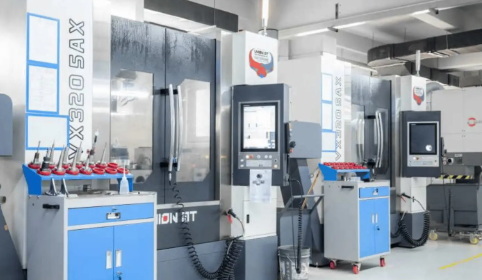
Despite the advantages of outsourcing, personal 3D printers retain specific value for particular scenarios:
- Learning and experimentation: Great for students, makers, and hobbyists exploring design fundamentals.
- Iterative prototyping: Fast testing of basic designs before ordering professional prints.
- Customization and fun projects: Ideal for artistic creations, toys, or small accessories.
- Frequent small runs: Cheaper if you repeatedly print small, non-critical parts.
If your needs are mostly educational, creative, or small scale, owning a printer remains practical.
Once you decide to outsource, selecting the right partner becomes key. Use these factors to guide your choice:
1. Technology portfolio: Verify that the provider offers technologies matching your required specifications.
2. Material selection: Ensure availability of both basic plastics and specialized materials like metal or resin.
3. Accuracy and tolerance standards: Check whether the provider meets industry-specific tolerances.
4. Quality control process: Ask about inspection, testing, and post-print verification.
5. Customer support: Look for responsive teams offering design help and order tracking.
6. Turnaround and logistics: Compare lead times, shipping options, and reliability.
7. Cost transparency: Choose services that provide itemized quotes without hidden fees.
8. Scalability: Confirm they can handle increasing order sizes as your business grows.
By evaluating these aspects, you can establish a long-term, reliable relationship that integrates seamlessly into your workflow.
3D printing has become a cross-industry enabler, revolutionizing manufacturing, supply chains, and product design worldwide.
High-performance materials like titanium and Inconel are used to fabricate bracketry, ducting, and structural supports that reduce weight while maintaining strength.
Surgeons and dentists use 3D printing for patient-specific implants, prosthetics, and anatomical models that improve surgical accuracy and comfort.
Manufacturers print jigs, fixtures, and even final car components to accelerate production cycles and reduce tooling costs.
From personalized jewelry to ergonomic tools, 3D printing services empower creators to produce customized items on demand.
Architectural firms print intricate scale models for planning and presentations, while artists use additive manufacturing for sculptural design innovation.
Universities leverage 3D printing for hands-on learning, scientific prototyping, and developing innovative research equipment quickly and affordably.
The demand for 3D printing services is rapidly expanding thanks to cloud-based manufacturing, AI optimization, and decentralized production.
Future trends will include:
- Hybrid manufacturing: Combining additive and subtractive methods for precision finishing.
- Smart material printing: Adaptive materials that change shape or properties under different conditions.
- Sustainability focus: Bio-based plastics and closed-loop recycling systems.
- Instant quote algorithms: Supporting more accurate pricing and lead time prediction.
These advancements will make outsourcing even more attractive, enabling both small startups and Fortune 500 companies to integrate additive manufacturing efficiently at scale.
Using a 3D printing service makes sense whenever precision, speed, or advanced material access matters more than the convenience of owning a personal printer. Outsourcing ensures consistent results, reduces costs, and eliminates maintenance headaches while tapping into professional expertise.
Whether you're refining a prototype, producing limited runs, or experimenting with new materials, 3D printing services deliver measurable advantages that help turn ideas into reality faster and with greater accuracy. With technology advancing rapidly, the line between prototyping and manufacturing continues to blur, making professional 3D printing an invaluable tool for modern innovation.
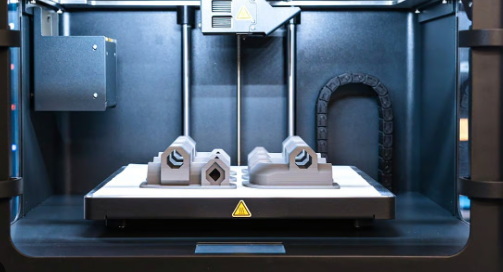
A personal printer is ideal for basic, small-scale tasks, while a 3D printing service provides access to professional-grade machines, extensive materials, and expert technicians capable of delivering superior precision and finish.
Prices vary by material, size, and finish. A small plastic part can cost under $50, while a complex metal component might exceed several hundred dollars. Bulk orders often receive discounts.
Standard turnaround times range from 2–7 business days, depending on project complexity. Many providers offer express printing and overnight shipping options.
Yes. Advanced industrial printers and materials like reinforced nylon, carbon composites, and titanium enable production-grade durability suitable for aerospace, medical, and automotive uses.
Additive manufacturing produces minimal waste compared to machining. Some services also recycle unused powder or filament, offering a greener manufacturing process.


