From idea to market-ready product, our NPI solutions make every stage easier, faster. Discover How We Help

Views: 222 Author: Tomorrow Publish Time: 2025-12-29 Origin: Site
Content Menu
● Understanding Ceramic 3D Printing
● Common Types of Ceramics Used in 3D Printing Services
>> Zirconia (Zirconium Dioxide)
>> Porcelain and Clay-Based Ceramics
● Ceramic 3D Printing Technologies
>> Stereolithography (SLA) with Ceramic Resin
>> Material Extrusion (Robocasting)
● Key Applications of Ceramic 3D Printing Services
● Advantages of Ceramic 3D Printing
● Challenges in Ceramic 3D Printing
● Future Innovations in Ceramic 3D Printing
● FAQ
>> 1. What ceramics are suitable for 3D printing?
>> 2. How strong are 3D-printed ceramic parts?
>> 3. What industries benefit most from ceramic 3D printing?
>> 4. Can intricate designs be printed in ceramics?
>> 5. Is ceramic 3D printing environmentally sustainable?
3D printing has evolved from a rapid prototyping tool into one of the most versatile manufacturing methods of the modern era. While early printers were limited to plastics and resins, advancements in materials science have opened the door to metals, composites, and, notably, ceramics. Among all emerging uses, ceramic 3D printing carries unique importance, bridging the ancient craft of ceramics with the precision of digital manufacturing.
Today, 3D printing services can produce ceramic parts with complex geometries, customized textures, and industrial-grade durability. These services are revolutionizing sectors like aerospace, medicine, architecture, and art. But what kinds of ceramics are most compatible with 3D printing technology? And what advantages do they bring to different applications?
This detailed article will explore the types of ceramics used in 3D printing, their manufacturing processes, technical benefits, and the promising future they hold for both creative and industrial innovation.
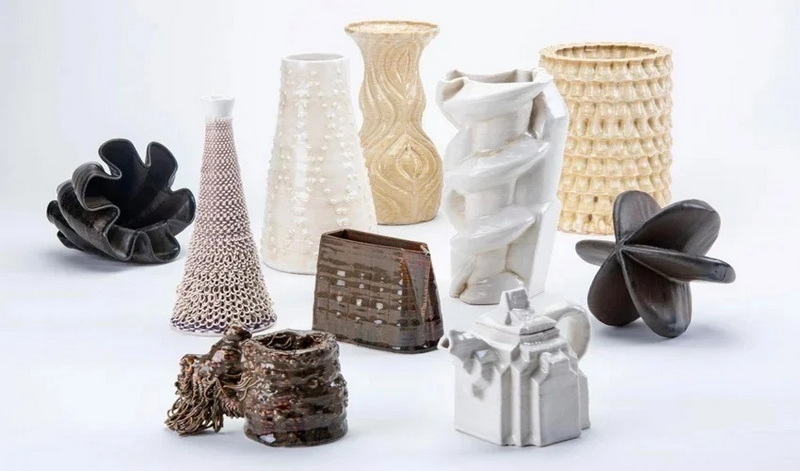
Ceramic 3D printing, also known as additive ceramic manufacturing, is based on the principle of building three-dimensional objects layer by layer using finely processed ceramic materials. Depending on the printing method, these materials can appear as powders, slurries, or pastes. Once the initial print is complete, it undergoes drying, firing, and sintering to achieve strength and functional stability.
Traditional ceramic-making processes such as wheel throwing or slip casting impose design limitations because shapes depend on manual molds and physical manipulation. In contrast, 3D printing enables the creation of internal lattice structures, intricate channels, and seamless curves that would be impossible to shape by hand. This makes it especially valuable in both performance-driven industries and experimental design fields.
Modern 3D printers for ceramics use advanced digital parameters to control layer deposition, drying times, and even micro-surface finishing. The result is a dramatic increase in consistency and repeatability — essential qualities for industries where precise tolerances are required.
Different types of ceramics serve different purposes depending on their thermal, chemical, and mechanical properties. Below are the most commonly used materials in professional ceramic 3D printing services.
Alumina is among the most standard materials in ceramic 3D printing because of its high melting point, corrosion resistance, and exceptional hardness. It retains stability under extreme conditions, making it perfect for use in environments such as jet engines, furnaces, and heat exchangers.
In electronics, alumina is used for insulators, connectors, and housings because it resists electrical conductivity while managing thermal loads. When 3D printed, alumina components can achieve fine surface detail, allowing engineers to create miniature, lightweight, and geometrically complex designs.
Zirconia has a unique ability to withstand cracking due to its high toughness, achieved through a transformation-toughening mechanism. This property makes it one of the most resilient ceramics available for precision applications.
In dentistry, zirconia is widely used for crowns, implants, and bridges because it mimics the translucency of natural teeth while remaining biocompatible and hypoallergenic. It also appears in high-end consumer products like luxury watches, where aesthetic perfection and structural integrity must coexist.
When utilized in 3D printing, zirconia enables the production of components with precise fit and polished finish — key aspects of medical and design industries.
Silicon carbide is known for its exceptional thermal conductivity and resistance to oxidation. This makes it suitable for demanding environments such as gas turbines, heat shields, and mechanical seals. SiC's low density and high strength make it an excellent alternative to metals in lightweight applications.
In 3D printing services, silicon carbide's durability and heat resilience are beneficial in situations where products must withstand friction, corrosion, or rapid temperature changes. Such properties are often desirable in aerospace components and automotive systems where safety and endurance are priorities.
Silicon nitride is the ceramic of choice for applications that require extreme mechanical robustness. It is lightweight yet nearly as strong as steel, maintaining structural stability under stress and during thermal cycling.
Because of these properties, 3D-printed silicon nitride parts are often found in high-performance bearings, turbine rotors, and engine components. Furthermore, its resistance to thermal shock makes it highly suitable for continuous operations at elevated temperatures.
Porcelain, earthenware, and stoneware continue to thrive in the artistic and design communities. Through 3D printing, these traditional materials gain new possibilities that go beyond manual craftsmanship. Artistic studios and architectural firms use clay-based 3D printing services to produce customized home décor, tabletops, lighting fixtures, and facade panels.
What once required hours of manual labor and mold preparation can now be digitally fabricated in a fraction of the time — allowing for experimentation in form, scale, and surface treatment. This democratization of ceramic creativity is one of the most exciting outcomes of ceramic 3D printing.
The efficiency and quality of 3D-printed ceramics depend heavily on the specific printing method. Among the most popular are stereolithography, binder jetting, and material extrusion.
In SLA-based ceramic 3D printing, a liquid polymer resin mixed with fine ceramic particles is cured layer by layer using ultraviolet (UV) light. After printing, the part undergoes a burnout and sintering process to remove the polymer and solidify the ceramic body.
This method is favored for its high precision, making it ideal for fine components and detailed medical models.
Binder jetting uses a different approach: a thin layer of ceramic powder is spread across the print bed, and a liquid binder selectively fuses specific particles. Once printing is complete, the green part (unsintered component) is carefully dried and fired.
Binder jetting excels in scalability — services can print multiple parts simultaneously — which makes it ideal for production runs and large-scale architectural pieces.
In extrusion-based 3D printing, a ceramic paste or clay is pushed through a nozzle in controlled paths following a digital model. These printers can create solid or hollow objects with customized infill patterns, making them particularly useful for sculptural and creative work.
The method allows artists to experiment with organic structures, while engineers exploit its potential to fabricate porous materials useful for biomedical implants.
Ceramic 3D printing technologies have penetrated numerous fields and continue to innovate how complex objects are made.
- Medical and Dental Care: Custom-fit prosthetics, crowns, and implants that integrate naturally with human tissue.
- Aerospace and Defense: Heat shields, turbine blades, and lightweight insulators for high-temperature operations.
- Automotive Engineering: High-performance parts resistant to wear, corrosion, and thermal stress.
- Electronics: Substrates, detectors, and insulating components that handle high-voltage applications.
- Architecture and Art: Creative installations, large-scale structural tiles, and design prototypes combining form and functionality.
- Energy Sector: Ceramic filters, catalysts, and sealing rings for renewable energy systems like hydrogen cells.
Each application demonstrates ceramics' unique ability to combine strength, heat resistance, and aesthetics — properties rarely achieved by other materials.
Ceramic 3D printing offers several benefits that make it appealing across fields:
- Complex geometries: Enables design flexibility beyond traditional casting or pressing.
- High-performance properties: Ceramics handle extreme temperatures, corrosion, and wear.
- Sustainability: Minimal waste generation and efficient use of raw materials align with eco-friendly goals.
- Customization: Perfect for producing on-demand parts tailored to unique requirements.
- Prototyping and scalability: Rapid iterations and small-batch productions reduce time-to-market.
Furthermore, 3D printing allows precise material distribution, ensuring optimal structural performance while minimizing unnecessary weight.
Despite the progress, several challenges still affect the mass adoption of ceramic 3D printing services:
- Pre-sintering fragility: Freshly printed parts, often called “green bodies,” are delicate and require careful handling.
- Shrinkage management: Ceramics tend to shrink during firing; neglecting compensation parameters can distort final geometries.
- Surface finishing: Achieving smooth surfaces often demands additional post-processing or glazing.
- Process cost: High sintering energy consumption and specialized equipment make ceramic printing more expensive than polymers or metals.
- Material consistency: Uniformity of ceramic powders or slurries remains crucial to prevent defects.
Ongoing improvements in printer calibration, software compensation, and powder synthesis are gradually overcoming these hurdles.
The future of ceramic 3D printing is bright and multifaceted. Researchers and manufacturers are working toward scalable, energy-efficient processes that bring the cost down and increase reliability.
AI-driven design optimization already allows software to automatically calculate shrinkage rates and topology reinforcement for stronger, lighter parts. Multi-material printers capable of combining ceramics with polymers or metals are also being developed, unlocking hybrid structures with combined flexibility and rigidity.
In the medical field, bio-ceramic printing is emerging as a major trend. These new formulations aim to regenerate bone tissue and develop implants that naturally integrate with body chemistry. Similarly, in energy storage systems, nanostructured ceramic materials printed in 3D are showing promise for fuel cells and solid-state batteries.
Cultural institutions are also embracing ceramic 3D printing as a way to restore heritage sculptures and archaeological artifacts. The precision of digital modeling ensures accurate reproductions while minimizing invasive restoration techniques.
Overall, ceramic 3D printing will continue evolving into a critical technology that strengthens global sustainability efforts by merging advanced manufacturing with natural materials.
Ceramic 3D printing services represent a remarkable convergence of heritage and innovation. From alumina's industrial strength to porcelain's timeless beauty, different ceramics provide unique performance and creative potential for modern manufacturing.
As printers become more precise and materials more refined, the boundaries between art, engineering, and sustainability continue to fade. The future of ceramic 3D printing lies not only in what can be built but also in how this technology redefines the relationship between human imagination and material possibility.
Materials like alumina, zirconia, silicon carbide, silicon nitride, and clay-based porcelain are commonly used. Each offers specific benefits, from mechanical strength to aesthetic appeal.
After sintering, 3D-printed ceramics can achieve comparable or superior densities and strengths to traditionally manufactured ceramics, depending on material type and process quality.
Key beneficiaries include aerospace, automotive, healthcare, electronics, architecture, and fine arts. Each uses ceramics for thermal stability, biocompatibility, and design versatility.
Yes. Ceramic 3D printing services allow for complex geometries such as internal channels, lattice structures, and intricate surface details that were impossible through manual methods.
Yes. The process minimizes material waste and allows production of long-lasting, recyclable parts made from natural, non-toxic raw materials, aligning with global sustainability initiatives.


