From idea to market-ready product, our NPI solutions make every stage easier, faster. Discover How We Help

Views: 222 Author: Tomorrow Publish Time: 2026-01-08 Origin: Site


Content Menu
● What Does Offset Mean in CNC Turning?
● Types of Offsets in CNC Turning
>> 4. Nose Radius Compensation Offset
● Importance of Offsets in CNC Turning
● Common Offset Errors and Solutions
● Best Practices for Managing CNC Offsets
● Modern Offset Systems and Automation
● Advanced Tips for Professionals
● Troubleshooting Offset-Related Issues
● The Evolution of Offset Technology
● FAQ
>> (1) What is the main purpose of offset in CNC turning?
>> (2) How many types of offsets are used in CNC turning?
>> (3) How do you set tool offsets in a CNC lathe?
>> (4) What happens if offsets are not set correctly?
>> (5) Can modern CNC machines automatically adjust offsets?
Computer Numerical Control (CNC) turning is one of the most precise and efficient machining processes used in modern manufacturing. It allows machinists to produce symmetrical and high-accuracy cylindrical parts using advanced computer-guided systems. Among the many parameters that influence the accuracy of CNC turning, offset plays a vital role. Understanding what offset means, how it is used, and why it is important is essential for machinists, programmers, and engineers aiming to optimize operations.
Offset in CNC turning ensures the cutting tool and workpiece are correctly aligned according to the coordinate system. Proper offset settings directly affect dimensional accuracy, surface finish, productivity, and tool life. In this article, we will explore in detail what offset means, its types, its working principle, and its role in precision turning operations.
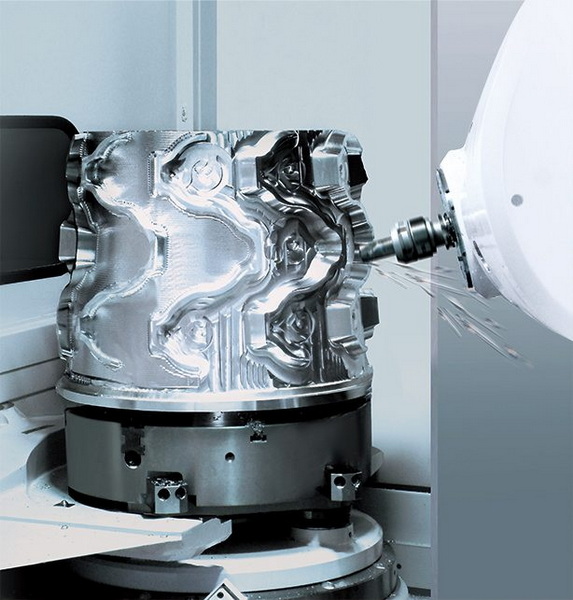
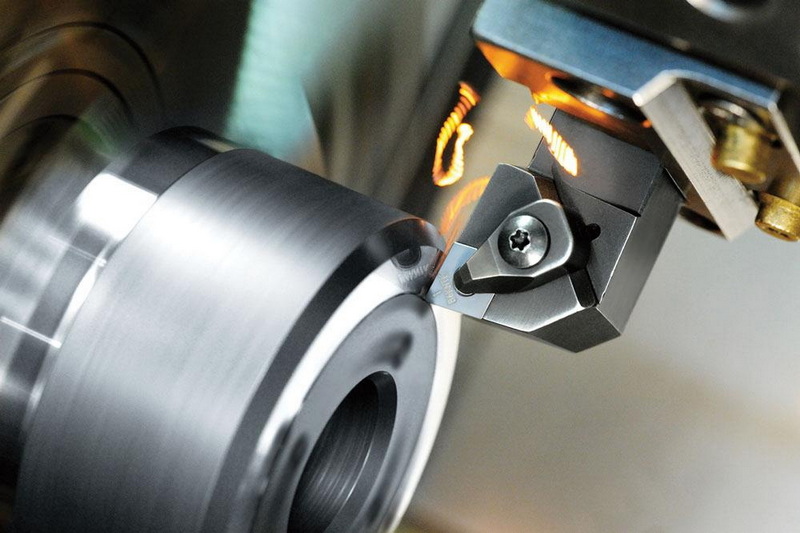
CNC turning is a subtractive manufacturing process where a rotating workpiece is cut by a stationary tool to create precise cylindrical or conical shapes. The CNC lathe uses programmed instructions (G-code) to determine the cutting path and feed rate automatically. Because CNC turning relies on a pre-established mathematical coordinate system, ensuring that the actual position of the tool matches the programmed coordinates is essential. This is precisely where the concept of offset comes into play.
Without offsets, even a perfectly written CNC program cannot produce correct parts because the machine would not know the exact position of the workpiece or the tool. Therefore, defining offsets during the setup stage is one of the first and most crucial tasks for machinists.
In its simplest form, an *offset* is a numerical adjustment that compensates for the difference between physical and programmed positions. It ensures that all machine movements align perfectly with the geometry of the workpiece and tool.
For example, if the tip of a cutting tool is not exactly at the spindle centerline but 2 mm away, the machinist uses an offset to tell the machine to shift the coordinate system by that amount. Similarly, if a tool wears out by 0.05 mm, a wear offset is applied to maintain the desired dimension.
Offsets help synchronize the real cutting process with the programmed model, ensuring precision in every operation.
Different operations require different offset settings. Below are the main categories used in CNC turning.
Tool geometry offset (also known as tool length offset) compensates for differences in tool length, nose shape, and cutting tip position. When machinists install a new tool in the turret, they measure its length relative to a reference point and store the value in the tool offset table. Each tool receives its own unique geometry offset, allowing the machine to adjust automatically when switching between tools.
For instance, when switching from a threading tool to a boring bar, the machine recalls the new offset automatically so that cutting starts from the correct position.
The work coordinate offset aligns the part's zero position with the machine's zero or home position. CNC machines often use multiple coordinate systems such as G54, G55, and G56 for different setups. By entering correct work coordinate offsets, machinists can machine multiple parts or fixtures without rewriting the program every time.
For example, G54 might refer to a main part, while G55 corresponds to a secondary setup on the same machine.
Wear offset is used to make fine adjustments during production runs. Tools gradually wear down from repeated cutting, which slightly alters dimensions. Instead of re-calibrating the tool geometry each time, machinists add a small correction through the wear offset. This adjustment prevents part deviations and ensures stable production quality across long runs.
Turning tools have curved tips (nose radii), usually between 0.2 mm and 1.2 mm. This curvature affects how the programmed path translates into the actual cut. Nose radius compensation adjusts the toolpath automatically so that contour surfaces remain accurate. In programming, this is often implemented using codes G41 (left compensation) and G42 (right compensation).
Machine zero offset defines the relationship between the machine's reference point and the physically usable area. Maintenance technicians usually configure this setting. It remains fixed and ensures that all other offsets operate within the machine's safe motion limits.
Offsets act as invisible corrections inside the CNC controller. When a tool or work offset is selected, the controller shifts the coordinate system by the stored values. This mathematical adjustment ensures the machine interprets tool positions as if they match the programmed design perfectly.
For example:
- If the Z-axis geometry offset is -125.500 mm, the controller knows the cutting edge is that distance away from the spindle face.
- If the X-axis wear offset is +0.030 mm, it compensates for tool wear automatically to maintain the part's diameter.
This flexible offset system allows machinists to switch tools, modify setups, and run production batches efficiently without rewriting code.
Establishing accurate offsets involves systematic measurements and careful verification. The process generally follows these steps:
1. Mount the workpiece and tools. Secure materials and install cutting tools in the turret.
2. Set the machine reference point. Return all axes to the home position using G28 or manual controls.
3. Touch off each tool. Bring the tool tip close to the workpiece surface using manual jog, and record the position where it just touches.
4. Record and enter offsets. Input measured distances into the offset table (geometry or wear section).
5. Define work coordinate zero. Use an edge finder, touch probe, or dial indicator to find the part zero point.
6. Run a trial cut. Machine a sample surface and measure it to confirm accuracy.
7. Fine-tune wear offsets. Adjust minor deviations without altering geometry offsets.
Precision during setup saves time and improves both consistency and repeatability.
Accurate offset control influences almost every aspect of production quality and efficiency. Its benefits include:
- High dimensional accuracy: Correct offsets ensure precision that meets tight tolerances.
- Reduced setup time: Offsets allow quick tool changeovers without reprogramming.
- Extended tool life: Small corrective wear adjustments prevent tool overload.
- Fewer defects: Stable offsets minimize out-of-tolerance parts and scrap rates.
- Consistency across batches: Saved offset settings ensure repeatable machining quality for recurring jobs.
Small errors in offset calculation can lead to major mechanical problems such as tool crashes or defective components, leading to production delays and wasted resources.
Even experienced machinists occasionally face challenges related to offsets. Below are common problems and simple fixes.
- Incorrect tool offset entered: Always double-check tool numbers against the offset library before running.
- Wrong sign (+/-) on values: Understand machine coordinate directions clearly—reversing sign conventions can cause collisions.
- Neglecting wear compensation: Track dimensional changes during long runs and update wear offsets continuously.
- Multiple coordinate systems confusion: Verify that the correct system (e.g., G54) is active before starting.
- Not accounting for tool nose radius: Use proper G41/G42 compensation for contour machining operations.
Regular training, digital calibration tools, and simulation software significantly reduce offset-related issues in production.
Successful offset management combines skill, organization, and technology. Effective shops follow consistent standards such as:
- Maintain a detailed offset log, linking each tool and operation.
- Use touch probes or laser systems for automatic measurement.
- Back up offset data regularly to prevent setup loss.
- Keep each setup's coordinate system documented for future repeat jobs.
- Train operators to understand offset significance rather than copying values blindly.
Adopting a disciplined offset management system ensures efficiency, precision, and safety in CNC turning environments.
Advances in digital manufacturing have greatly improved offset adjustment accuracy. Modern CNC lathes include automated systems that measure tool geometry and wear automatically. They use contact probes, laser sensors, and vision-based systems to detect deviations within microns.
Some examples include:
- Automatic tool measurement: The machine scans each tool to determine its exact length and diameter before cutting.
- Real-time offset correction: Integrated sensors measure part dimensions and update offsets mid-production.
- Network data transfer: Machines share offset data across production lines for consistent quality in multi-machine environments.
Integration with the Industrial Internet of Things (IIoT) and digital twins allows offset data to become part of a larger smart manufacturing ecosystem. This enables predictive maintenance, minimized downtime, and real-time quality control.
For experienced machinists, pushing precision even further involves careful offset optimization. Here are some advanced tips:
- Use tool life management software to link offset changes with wear history for predictive adjustments.
- Experiment with dynamic offsets that automatically adjust based on temperature compensation.
- Apply macro programming to implement automatic offset updates in repetitive jobs.
- Regularly verify coordinate alignment using calibration spheres or gauge blocks.
- Establish standard tolerance bands for offset variation in quality control systems.
By combining automation with human expertise, workshops achieve faster cycle times and higher accuracy without compromising safety or reliability.
When dimensional errors occur even after correct programming, offset mismanagement is often the culprit. Consider the following diagnostic approach:
1. Verify coordinate system activation. Check the active work coordinate and ensure it matches the program.
2. Measure actual tool position. Compare the physical position using dial test indicators against offset values.
3. Check for thermal drift. Machine temperature changes can subtly affect dimensional accuracy; temperature compensation may be necessary.
4. Reinspect probe calibration. A miscalibrated touch probe may store inaccurate reference points.
5. Review offset combination. Interaction between tool and wear offsets can cause cumulative deviations.
By addressing these systematically, machinists can restore dimensional consistency and prevent recurrence.
In earlier decades, machinists manually touched off tools and recorded values in notebooks. With today's technology, this has transformed into automated offset tables, digital databases, and cloud storage. High-end machines can even auto-correct offsets mid-cut.
Future innovations are focusing on:
- Self-calibrating spindles that adjust offset autonomously.
- AI-based systems analyzing offset variation across batches.
- Real-time digital twins synchronizing virtual simulations with live offset data.
These developments underline how critical the concept of offset is—not only for individual machines but also for broader manufacturing intelligence.
Offset in CNC turning bridges the gap between theoretical programming and real-world machining. It compensates for variations in tool geometry, wear, temperature, and workpiece setup, ensuring parts are produced accurately and efficiently. Mastering offset management is essential for maintaining quality, avoiding costly errors, and maximizing machine performance.
As automation and smart manufacturing continue to evolve, offsets remain the foundation of precise, adaptive machining processes. Understanding and controlling them effectively distinguishes skilled machinists and ensures that every turned part meets the highest industrial standards.
Offset ensures that the tool and workpiece alignment matches the programmed coordinate system precisely, allowing the machine to cut parts within specified tolerances.
Typically, there are five main types: tool geometry, wear, work coordinate, nose radius compensation, and machine zero offsets.
You mount the tools, touch each tool off the part surface, record the distances, and input them into the machine's tool offset table before machining.
Incorrect offsets may cause dimensional errors, surface irregularities, poor tolerances, and in severe cases, damage due to tool-workpiece collisions.
Yes. Modern CNC machines and smart systems can automatically detect tool wear, measure offsets through probes, and apply corrections without manual input.


