From idea to market-ready product, our NPI solutions make every stage easier, faster. Discover How We Help

Views: 222 Author: Tomorrow Publish Time: 2026-01-08 Origin: Site


Content Menu
● Definition and Basic Concept
● Key Characteristics of Hard Turning
● The Importance of CNC Lathes in Hard Turning
● Essential Process Parameters
● Comparison Between Hard Turning and Grinding
● Surface Integrity and Microstructural Effects
● Modern Developments and Process Automation
● Best Practices for Successful Hard Turning
● FAQ
>> 1. What materials are suitable for hard turning?
>> 2. What cutting tool materials are used in hard turning?
>> 3. Can hard turning completely replace grinding?
>> 4. Does hard turning require coolant?
>> 5. What industries benefit most from hard turning?
Hard turning is a high-precision machining technique used for cutting hardened metals with hardness levels generally exceeding 45 HRC. Performed on a Computer Numerical Control (CNC) lathe, it utilizes specialized cutting inserts made from cubic boron nitride (CBN) or advanced ceramics. This process has gradually replaced several grinding operations across industries such as automotive, aerospace, toolmaking, and energy. The ability to produce accurate, high-quality finishes without the need for extensive post-processing makes hard turning one of the most efficient methods for machining hardened materials.
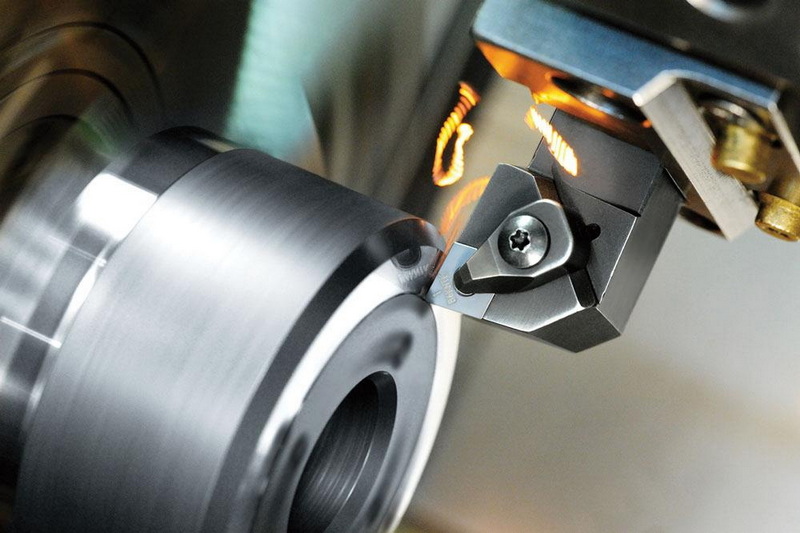
Hard turning is defined as the process of turning parts that have already undergone heat treatment to reach a high hardness level. Traditionally, these hardened components would require grinding to achieve dimensional accuracy and surface finish, but modern CNC technology has made it possible to turn directly on hard surfaces.
Unlike conventional turning that relies on mechanical shear deformation of softer metals, hard turning involves cutting with extremely sharp, wear-resistant tools that can withstand intense heat and pressure. The process eliminates multiple secondary operations, enabling manufacturers to achieve final dimensions and surface quality in a single setup.
When executed correctly, hard turning provides comparable results to fine grinding while significantly reducing production costs and lead times.
Hard turning differs from conventional machining in multiple factors, including cutting tool composition, feed rate, material hardness, and cutting forces.
The following characteristics highlight its uniqueness:
- Material hardness: Hard turning is suitable for materials between 45–68 HRC.
- Tooling materials: Tools made of CBN or PCBN possess high thermal resistance and superior edge retention.
- Cutting parameters: It involves high cutting speeds and minimal feed per revolution.
- Surface quality: Achievable surface roughness (Ra) can range from 0.1 µm to 0.8 µm depending on tool radius and cutting conditions.
- Dimensional precision: Tolerances tighter than ±2 microns are possible using modern CNC controls.
These characteristics make hard turning a viable alternative to final grinding operations.
CNC lathes play a vital role in ensuring reliable, repeatable, and high-quality results. Advanced CNC systems allow precise control of feed rate, spindle speed, and tool path geometry. The following features make CNC lathes ideal for hard turning:
- High rigidity: To counteract the cutting forces of hardened materials.
- Superior spindle accuracy: Prevents runout, ensuring smooth surface finishes.
- Stable machine base: Absorbs vibration, which is crucial for maintaining tool life.
- Programmable motion control: Enables intricate surface generation and fine adjustments to feed and speed.
- In-process measurement systems: Monitor tool wear and workpiece dimensions to guarantee quality compliance.
Modern CNC systems often integrate smart technologies like thermal compensation, adaptive control, and automatic balancing to maintain consistent performance.
Manufacturers increasingly prefer hard turning over grinding for several compelling reasons:
1. Reduced cycle time and setups. Operations such as roughing, finishing, and threading can occur in a single setup, saving handling time.
2. Lower tooling and maintenance costs. CNC lathes are versatile and cheaper to maintain compared to specialized grinding machines.
3. Enhanced flexibility. One machine can handle various geometries, from cylindrical to conical and contoured profiles.
4. Dry machining capability. Hard turning operates efficiently without coolant, minimizing costs and environmental harm.
5. Improved surface integrity. Residual compressive stresses introduced by turning enhance fatigue resistance.
6. Energy efficiency. Hard turning consumes less power per part than conventional grinding.
Additionally, because the process requires no dressing wheels or coolant disposal, it aligns with the growing emphasis on sustainable manufacturing systems.
The choice of tool material directly influences chip formation, cutting temperature, and tool life.
The most widely used materials include:
- Cubic Boron Nitride (CBN): Extremely hard and wear-resistant, ideal for hardened steels above 55 HRC.
- Polycrystalline Cubic Boron Nitride (PCBN): A composite providing toughness and long service life.
- Ceramic Tools: Effective for cast iron and moderately hardened steels up to 55 HRC.
- Carbide Tools (coated): Reservable for intermittent hard turning at slightly lower hardness levels.
Proper insert geometry must balance chip control and cutting stability. A small nose radius (<0.4 mm) improves dimensional accuracy, while a larger radius (0.8–1.2 mm) enhances surface finish. Positive rake angles and honed edges are often preferred for efficient material removal and controlled heat distribution.
Successful hard turning depends on optimizing several interrelated cutting parameters:
- Spindle speed (N): Typically ranges between 600–1,200 rpm depending on diameter and hardness.
- Cutting speed (\(V_c\)): 100–250 m/min is standard for CBN tools.
- Feed rate (\(f\)): Fine finishing requires feeds from 0.05–0.15 mm/rev.
- Depth of cut (\(a_p\)): Finishing uses shallow passes of 0.1–0.3 mm to minimize tool wear.
Other influencing factors include tool nose radius, cutting edge preparation, and machine rigidity. Proper parameter selection increases tool life and ensures uniform surface finish without thermal cracking or microstructural changes in the workpiece.
| Aspect | Hard Turning | Grinding |
|---|---|---|
| Material hardness | 45–68 HRC | 50–70 HRC |
| Removal mechanism | Shear cutting | Abrasive removal |
| Surface finish (Ra) | 0.2–0.8 µm | 0.05–0.2 µm |
| Setup time | Short | Long |
| Coolant use | Minimal or none | Required |
| Flexibility | High | Low |
| Cost per part | Lower for small batches | Lower for large runs |
| Energy demand | Lower | Higher |
While grinding remains unmatched for mirror-like finishes, hard turning's advantages in speed, flexibility, and environmental impact make it the preferred solution for many manufacturers seeking leaner production workflows.
Hard turning finds practical applications across various sectors that demand precision and durability:
- Automotive: Drive shafts, gears, transmission components, and bearing seats.
- Aerospace: Engine shafts, turbine discs, and landing gear bushings.
- Tool and die industry: Molds, dies, punches, and form inserts.
- Energy and power: Valve seats, turbine shafts, and drilling components.
- Medical technology: Surgical tools, implants, and prosthetic device housings.
Given its capability to reach tight tolerances and superior finishes, the process often integrates into finishing operations for high-performance systems.
Surface integrity refers to the material condition of a surface and the layers beneath it after machining. Hard turning directly affects factors like surface roughness, residual stress distribution, and microstructural transformations.
Properly controlled hard turning induces compressive residual stresses, which enhance fatigue strength. However, improper parameter selection may cause adverse effects such as surface tensile stresses, white layer formation, or micro-cracks. To prevent these issues:
- Maintain sharp, properly honed cutting edges.
- Avoid excessive cutting speed or feed rate.
- Use stable fixturing and rigid machines.
- Consider applying minimum quantity lubrication when heat buildup is high.
Regular monitoring using surface profilometers and non-destructive testing methods ensures final product quality meets specification standards.
Despite its advantages, hard turning faces several hurdles that engineers must manage effectively:
- Rapid tool wear: High cutting temperatures can accelerate flank wear or edge chipping.
- Thermal deformation: Uncontrolled heat leads to dimensional inaccuracies.
- Restricted surface finish: Extremely fine finishes below 0.1 µm still favor grinding.
- Material-specific difficulties: Highly alloyed steels with carbides can lead to unstable cutting behavior.
- Vibration control: Even slight vibration can degrade surface finish and tool life.
Solutions include optimizing process parameters, employing balanced fixtures, using vibration-suppressing tool holders, and monitoring tool condition in real time through sensors.
Recent innovations have made hard turning more reliable and user-friendly. Key advancements include:
- Smart sensor integration: Cutting force and temperature sensors feed data to the CNC system for adaptive control.
- Hybrid machining: Combining hard turning with minimal grinding steps in one setup enhances accuracy.
- Advanced coatings: Multi-layer CBN and ceramic coatings extend tool life dramatically.
- AI-driven optimization: Predictive analysis prevents tool failure and maximizes cutting consistency.
- Digital twin technologies: Simulate the machining environment virtually for parameter optimization before physical execution.
Automation and robotics further increase productivity by enabling unattended machining cycles while maintaining precision across large production batches.
Manufacturers can achieve optimal results by following these key guidelines:
1. Ensure machine rigidity: Use stable bases and properly maintained guideways to minimize vibration.
2. Control thermal expansion: Implement temperature compensation software in CNC.
3. Select proper tool geometry and materials: Match insert grade and nose radius to workpiece hardness and shape.
4. Monitor tool wear continuously: Replace inserts before excessive wear affects surface accuracy.
5. Optimize chucking and fixturing: Secure workpieces firmly to avoid micro-movements.
6. Experiment with small parameter adjustments: Fine-tune speed and feed based on real-time observations rather than preset data alone.
Following these best practices can greatly improve process reliability and extend the overall lifespan of both the tooling and the machine.
Hard turning on a CNC lathe is a transformative technique in precision engineering, capable of replacing or complementing traditional grinding operations. Through the use of CBN or ceramic inserts, it achieves exceptional accuracy, surface finish, and repeatability on materials exceeding 45 HRC hardness. Modern CNC control systems, combined with advanced tool materials and adaptive process technologies, make it a cornerstone of lean and sustainable manufacturing.
While limitations remain—particularly regarding ultra-fine finishing and certain material behaviors—the technological evolution of hard turning continues to push these boundaries. For manufacturers seeking efficiency, flexibility, and environmental responsibility, hard turning stands as a proven and forward-looking solution.
Hard turning works best on hardened tool steels, bearing steels, nitrided alloys, and hard cast irons with hardness between 45 and 68 HRC. It can also handle some carburized and induction-hardened components.
CBN and PCBN are the primary tool materials because of their hardness and heat resistance. Advanced ceramics also perform well in lower-hardened applications or with continuous cuts.
In many use cases, yes. Although grinding remains superior for achieving mirror finishes or ultra-tight tolerances, hard turning can replace rough and semi-finish grinding while offering faster cycle times.
Hard turning is typically a dry process to avoid thermal shock to CBN tools. When required, a small amount of cutting oil or MQL may be used to control heat and enhance tool life.
Automotive, aerospace, toolmaking, energy, and medical manufacturing sectors benefit due to their need for high-precision, hardened parts that demand consistent quality and fast delivery.


