From idea to market-ready product, our NPI solutions make every stage easier, faster. Discover How We Help

Views: 222 Author: Tomorrow Publish Time: 2026-01-08 Origin: Site


Content Menu
● Understanding the Concept and Principles
● The Green Material State Explained
● The Green Turning Process in Detail
>> Post-Machining and Handling
>> Reduced Tool Wear and Energy Use
>> Improved Dimensional Control
>> Cost Efficiency and Sustainability
● Key Parameters in Green Turning
>> Feed Rate
● Applications of Green Turning
>> Machine Stability and Vibration
● Process Optimization Strategies
● Quality Control in Green Turning
>> Dimensional Accuracy Checks
● Environmental and Economic Benefits
● Future of Green Turning Technology
● FAQ
>> 1. What materials are suitable for green turning?
>> 2. How is green turning different from normal turning?
>> 3. How do manufacturers handle dimensional changes after sintering?
>> 4. Can CNC automation enhance green turning efficiency?
>> 5. What safety precautions are important during green turning?
Green turning on a CNC lathe refers to the process of machining a workpiece when it is still in its “green” or pre-hardened state. This means the material has been shaped but not yet sintered, cured, or heat-treated to its final hardness. In this stage, the workpiece is relatively soft, which enables easier cutting and forming of precise geometries.
In modern manufacturing, green turning is a critical step—especially in industries that use powdered metal, ceramic, or composite materials. The technique combines high-precision CNC (Computer Numerical Control) machining technology with material science principles to achieve economical, high-accuracy production before final material treatment.
Through green turning, manufacturers produce near-net-shape components that require minimal finishing after heat treatment. This provides significant advantages in cost savings, tool longevity, and overall process efficiency.

Green turning is essentially a machining operation performed on materials that haven't reached their final hardened state. The “green” refers to the unsintered or uncured condition of the material. This process is commonly used for powder metallurgy parts, ceramic components, and certain metallic or composite compounds.
The goal is to remove excess material while forming features such as threads, grooves, or contours. By carrying out this operation before sintering or heat-treating, manufacturers simplify subsequent stages and minimize hard machining requirements, which are typically more expensive and slower.
CNC lathes are crucial in green turning because they deliver digital precision, automation, and adaptability. Their computerized control systems manage rotation speed, feed rate, tool path, and cutting depth with exact precision, ensuring consistency and repeatability across multiple parts.
Moreover, CNC machines minimize human error and allow fine adjustments for different material densities and cutting conditions. This makes them ideal for machining green-state parts, which can be extremely delicate compared to fully hardened metals.
When a component is described as being in its “green state,” it typically means it has undergone forming—either through compaction of powder, injection molding, or casting—but is still porous and weak.
For example:
- Green powder metal has been pressed under high pressure but not yet sintered.
- Green ceramic parts have been molded but not yet fired in a kiln.
- Soft alloys may not yet be heat-treated to their final mechanical strength.
Because of its low strength, the material can be easily machined, but handling requires precision. Cutting too aggressively can deform or fracture the part.
Before green turning begins, several preparatory steps ensure success:
1. Material Evaluation: The density and uniformity of the green compact are checked to avoid defects.
2. Machine Calibration: Spindle speeds, cutting positions, and feed mechanisms are tuned according to material softness.
3. Tool Selection: Sharp tools with positive rake angles are used to minimize cutting resistance.
4. Fixturing: Special jaws, soft supports, or vacuum fixtures are employed to prevent distortion.
During the turning process, the tool removes material layer by layer while the workpiece rotates on the lathe's spindle. The CNC system continuously monitors speed and feed adjustments to maintain surface quality and dimensional accuracy.
Feed rates are kept moderate, and cutting depths are shallow to avoid stressing the part. The operator may rely on air jets or vacuum suction rather than traditional liquid coolants to remove debris.
After machining, green parts require careful handling. They are fragile and prone to cracking under impact or compression. Typically, they are stored in cushioned trays or processed directly into the sintering furnace to minimize damage. Dimensional measurements are taken to confirm process reliability before sintering causes predictable shrinkage.
Green turning allows manufacturers to establish close-to-final dimensions before heat treatment. This means fewer grinding or re-machining operations after hardening, which saves time and money.
Because the material is still soft, it reduces tool wear dramatically. This also means the machine can operate at lower energy consumption levels, extending tool life and reducing operational costs.
By cutting before sintering, engineers can anticipate and compensate for shrinkage. This predictive modeling ensures that the final hardened part maintains its intended geometry and tolerance.
Green turning significantly reduces scrap rates, limits abrasive tool use, and often eliminates multiple post-sintering steps. Fewer finishing operations mean a streamlined and cost-effective process with a smaller environmental footprint.
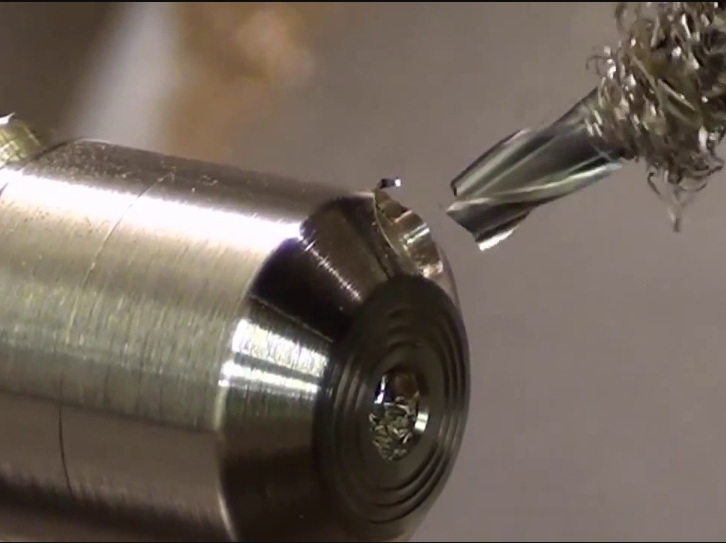
Machining green materials requires specialized parameter control to balance speed, accuracy, and safety.
High speeds can cause vibrations, while low speeds may lead to inefficient cutting. The ideal range is determined by material type—typically around 80–200 m/min for powder metal and lower for ceramics.
Feed rate defines how fast the tool moves relative to the workpiece rotation. Too high a feed can chip fragile materials; too low a feed can cause rubbing and surface marks. Precise feed adjustments are essential for consistent surface quality.
Sharp carbide, CBN, or diamond tools work best. The tool's rake angle and edge sharpness are adjusted to minimize resistance and prevent tearing of the material surface. Rounded corners are often avoided to reduce friction.
Traditional coolants are often avoided in green turning because the material can absorb moisture, weakening its structure. Instead, compressed air, vacuum extraction, or dry machining is used for chip removal.
Since green compacts are fragile, soft pads or conformal chucks are employed to disperse clamping pressure uniformly. Non-metallic fixtures such as polyether ether ketone (PEEK) are sometimes used for delicate green ceramics.
Green turning is popular in the automotive industry for parts like gears, pistons, and camshaft components made through powder metallurgy. It ensures that complex shapes are created without relying solely on die compaction accuracy.
Aircraft parts requiring lightweight yet strong materials use green machining to achieve complex geometries before sintering advanced alloys or ceramics.
Green turning plays a role in producing surgical tools, implants, and dental components through advanced ceramic or metal powder processes, where extreme precision is required.
The electronics sector uses green machining for insulators, semiconductors, and substrates made of green ceramics before high-temperature firing. This ensures electrical components achieve exact dimensions without post-hardening correction.
The most significant challenge is the risk of cracking or deforming parts during cutting. Even slight overpressure or vibration can cause failure.
Predicting exact shrinkage percentages after sintering is difficult. Small deviations can result in out-of-spec dimensions if the compensation model is inaccurate.
Any vibration or instability during machining can ruin the part's surface finish or cause edges to chip. CNC systems must be well-calibrated, and machine beds must be rigid.
Green parts need careful handling using padded trays or automated conveyors to avoid physical shock. Manual handling can often lead to microfractures invisible until after sintering.
To optimize green turning success, engineers can adopt the following strategies:
1. Digital Twin Simulation: Use CNC software simulations to predict material response and process flow.
2. Adaptive Feed Control: Implement sensors to monitor load and adjust parameters in real time.
3. Predictive Shrinkage Compensation: Employ software models that forecast post-sintering dimensions based on material data.
4. Tool Path Optimization: Reduce unnecessary tool moves to shorten cycle time and minimize stress on fragile parts.
5. Integrated Workflow: Combine green turning with automated transfer systems for sintering, minimizing manual intervention.
By combining these strategies, plants achieve both high throughput and superior precision, ensuring long-term cost efficiency.
Dimensional measurements are taken immediately after machining using non-contact optical systems or laser scanners. This avoids deforming the component and ensures high measurement repeatability.
Surface roughness should remain within tighter limits to ensure proper diffusion and bonding during sintering. Smooth surfaces improve structural integrity after final treatment.
Every green turning operation is documented digitally within a CNC system log or manufacturing execution system (MES). This ensures traceability and continuous improvement in future production cycles.
Green turning's minimal material waste and low tool wear make it one of the most sustainable precision machining processes. Unlike grinding or EDM, it produces little heat, consumes less energy, and requires minimal coolant.
Economically, companies save on consumables and production time. As global industries aim for carbon-neutral goals, green turning aligns with sustainability-focused manufacturing strategies by integrating resource-efficient practices.
With ongoing advancements in Industry 4.0 and smart manufacturing, green turning is evolving rapidly. Future improvements include:
- AI-driven parameter adjustment: Predicting optimal speed and feed in real time.
- Smart tool systems: Sensors embedded in cutting tools for wear detection.
- Hybrid machining centers: Combining green turning and additive manufacturing in one system.
- Automated part handling: Robotic systems for fragile-workpiece transfer to limit human contact.
These innovations will make green machining more consistent, sustainable, and capable of meeting the tight tolerances demanded by next-generation materials.
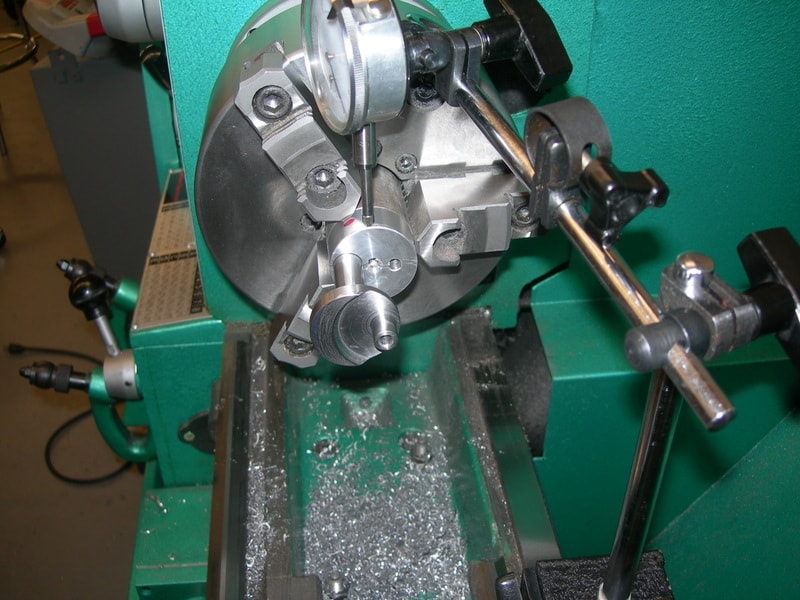
Green turning on a CNC lathe bridges material science with digital machining precision. By machining parts in their pre-hardened state, manufacturers achieve significant improvements in production efficiency, cost reduction, and tool longevity. However, it remains a process requiring high technical control—balancing delicate handling, parameter accuracy, and predictive modeling of post-sintering transformations.
As industries focus increasingly on eco-friendly and smart manufacturing, green turning emerges as a core technology driving innovation across automotive, aerospace, medical, and ceramic sectors. Mastery of this process not only enhances productivity but also contributes to sustainable, high-precision engineering in the era of digital industry.
Green turning suits unsintered powder metals, ceramics, and certain soft or composite alloys. Each requires unique parameter optimization depending on density and hardness before hardening.
Ordinary turning works on hardened or final materials, while green turning shapes the part before sintering or curing, making it easier to cut and more cost-effective but requiring delicate handling.
They use predictive models that account for shrinkage percentages during sintering, allowing compensated machining dimensions during green turning for accurate final results.
Yes. Adaptive CNC control adjusts parameters in real time, reducing material damage and improving process stability across large-scale production runs.
Operators should minimize manual contact, use gentle clamping methods, and avoid applying excessive coolant or pressure that could crack or deform the green part.


