From idea to market-ready product, our NPI solutions make every stage easier, faster. Discover How We Help

Views: 222 Author: Tomorrow Publish Time: 2026-01-08 Origin: Site
Content Menu
● The Principles of CNC Programming
● Major Components of CNC Turning Programming
>> 1. Work Coordinate System (WCS)
● Types of CNC Turning Operations
● Developing a CNC Turning Program Step by Step
● Manual Coding vs. CAM-Generated Programming
● Advanced Features in Modern CNC Turning
>> 3. CSS and Constant Feed Control
● Common Challenges in CNC Turning Programming
● The Role of Simulation and Verification
● Training and Skills Required for CNC Turning Programmers
● Industry Applications of CNC Turning
● The Future of CNC Turning Programming
● FAQ
>> 1. What is the key advantage of CNC turning over manual turning?
>> 2. Which materials can be machined using CNC turning?
>> 3. How is accuracy maintained in CNC turning machines?
>> 4. How can beginners learn CNC turning programming?
>> 5. What factors affect surface finish in CNC turning?
Computer Numerical Control (CNC) turning programming is the digital command process that transforms a virtual design into a precisely machined physical component. It empowers machinists and engineers to control automated lathes using coded instructions, allowing for consistent, high-speed, and high-precision part production. This process fuels the industrial backbone of sectors ranging from aerospace and automotive to medical manufacturing and consumer electronics.
At its core, CNC turning programming involves generating a sequence of codes—called G-code—that tell the machine how to move the cutting tool, at what speed, and along which path. These programs orchestrate every step, from the initial roughing cuts to the final finishing passes, ensuring each part meets tight dimensional and surface requirements.

CNC turning differs from other machining types, such as milling, in the way materials are removed. In turning, the workpiece rotates while the cutting tool remains stationary (except for precise linear or radial movements). This configuration is ideal for creating round objects, such as shafts, bushings, and connectors.
Because the process is automated, CNC turning eliminates the variability and labor intensity of manual lathe work. It also enables producers to handle both high-volume production and one-off precision parts with equal efficiency.
Key advantages of CNC turning include:
- Repeatability: Every identical part is machined within microns of specification.
- Speed: Automated execution accelerates cycle times.
- Safety: Reduced manual intervention enhances operator safety.
- Complexity Handling: Complex geometries and contours can be produced through multi-axis and live-tooling lathes.
The CNC turning system interprets instructions through a universal programming language known as G-code. Each line of G-code—called a block—contains specific commands that guide the machine's behavior. Understanding how these lines interact is fundamental to writing or modifying a successful program.
- G00 / G01: Rapid and linear motion.
- G02 / G03: Clockwise and counterclockwise circular interpolation.
- G90 / G91: Absolute and incremental positioning.
- M03 / M04: Start spindle clockwise or counterclockwise.
- M08 / M09: Coolant on or off.
- T0101: Tool selection and offset reference.
Together, these code elements form the operational language that controls tool movements, spindle behavior, and machine state transitions throughout the machining cycle.
Several foundational components determine how well a CNC turning operation will run. A properly constructed program coordinates these aspects harmoniously to achieve optimal results.
The WCS establishes the reference point from which all movements are measured. Typically, the origin lies on the face of the part where the spindle's centerline and the workpiece intersect. Correct alignment ensures precision and consistency across multiple runs.
Programming requires defining tool paths—the motion that the tool follows during machining. Efficient path planning reduces machine time and prevents tool collisions. Modern programs also integrate constant surface speed (CSS) control, adjusting spindle speed dynamically to maintain consistent cutting pressure as diameters change.
CNC turning performance depends on selecting the right combination of parameters:
- Spindle speed (S): Revolutions per minute (RPM) of the workpiece.
- Feed rate (F): Linear tool movement per revolution.
- Depth of cut: Material thickness removed per pass.
These parameters directly affect surface quality, tool longevity, and material removal rate.
Tool compensation adjusts for the geometry and imperfections of the cutting tool insert. Using commands such as G41 and G42, programmers offset paths to achieve the intended dimension, compensating for the curvature of the tool nose radius.
Safety lines (like G40, G80, and G90) prevent errors by canceling previous operations or returning the machine to known states before executing new commands. Always including them reduces risk during program restarts or editing.
CNC turning involves several distinct machining operations, each with a specific purpose and programmed motion:
- Facing: Machining across the part's end to achieve a smooth, flat surface.
- Straight Turning: Reducing the outer diameter to a uniform cylindrical shape.
- Taper Turning: Creating a conical shape by moving tools along a diagonal path.
- Grooving: Cutting narrow channels or recesses around the workpiece.
- Threading: Producing internal or external screw threads.
- Drilling: Using a stationary drill to create centered holes.
- Boring: Enlarging existing holes for tight tolerances.
Modern CNC lathes, equipped with live tools and sub-spindles, can even combine turning and milling in a single setup, minimizing repositioning and human input.
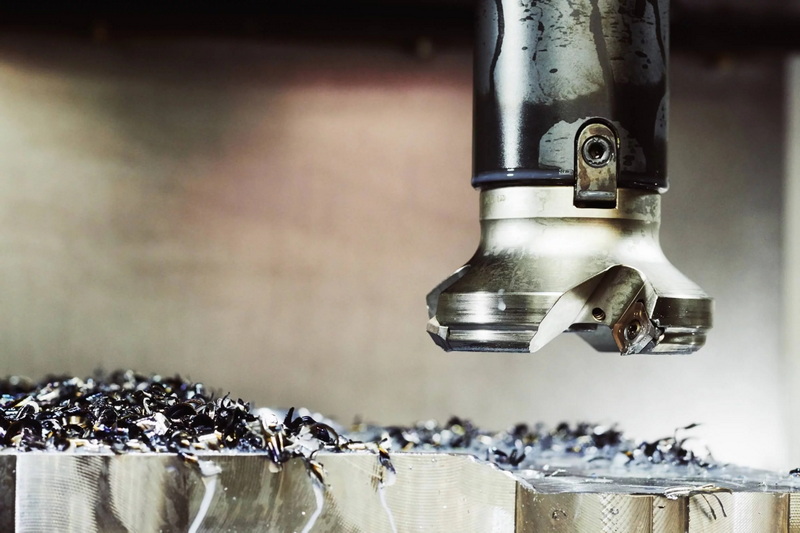
Writing a CNC turning program involves following a structured development process to ensure both efficiency and accuracy.
1. Analyze the Part Drawing: Determine the geometry, material, tolerance, and surface requirements.
2. Select the Machine and Tools: Choose tool holders, inserts, and chuck types suitable for the material and operations.
3. Establish Coordinate Systems: Define zero points and offsets using work coordinate systems (usually G54–G59).
4. Plan Roughing and Finishing Strategies: Write passes for bulk material removal followed by precise finishing paths.
5. Add Canned Cycles: Commands like G71 (rough turning cycle) and G70 (finishing cycle) automate repetitive passes.
6. Set Feed and Speed Parameters: Optimize based on material hardness, tool grade, and machine capability.
7. Simulate the Tool Path: Use CAM verification software to check for collisions or redundant motions.
8. Run and Inspect the Program: Execute safely by starting dry runs and then inspecting parts until full validation.
While manual programming deepens understanding of machining fundamentals, Computer-Aided Manufacturing (CAM) tools have made programming faster and more accessible.
- Manual Programming:
- Useful for simple, repeated parts.
- Enhances understanding of each motion and setting.
- Offers direct control and flexibility.
- CAM-Based Programming:
- Generates toolpaths automatically from 3D models.
- Reduces programming time for complex geometries.
- Integrates simulation, feed optimization, and tool libraries.
Today, most facilities use a hybrid approach—combining manual editing for efficiency tweaks with CAM output for shape-intensive components.
Technological evolution has added many capabilities to CNC turning systems:
Machines with Y-axis and sub-spindle configurations allow angular drilling, off-center features, and part handoff operations—all in one cycle.
Live tools enable milling, drilling, or tapping on the lathe without transferring the workpiece to another machine, greatly improving throughput.
Constant surface speed (G96) maintains stable cutting forces across varying diameters. This improves surface finish and extends tool life.
Bar feeders, robotic arms, and part catchers automate part loading and unloading, creating continuous production lines with minimal supervision.
Even experienced programmers encounter issues in toolpath optimization or operation variables:
- Collision Risks: Tool interference can damage parts and machines if simulation or offsets are incorrect.
- Feed or Speed Errors: Wrong parameters cause chatter, tool breakage, or poor surface finish.
- Incorrect Coordinate Offsets: Resulting in misaligned cuts or off-center machining.
- Tool Wear or Calibration Drift: Leads to dimensional variations over multiple cycles.
- Syntax Errors: Small typographical mistakes can stop a machine mid-operation or trigger alarms.
Mitigating these issues involves careful verification, scheduled maintenance, and consistent documentation practices.
Before executing a new program, simulation provides a cost-free environment to test motions and detect potential problems. Programs are checked for:
- Unexpected rapid-move collisions.
- Overcutting or undercutting.
- Unoptimized tool transitions.
- Incorrect spindle rotations or coolant activation.
High-end CAM systems include realistic machine models that account for tool holders, sub-spindles, turrets, and cross-slides. Once a simulation passes, dry run testing on the actual machine confirms safe real-world execution before cutting material.
CNC programmers require a blend of theoretical knowledge and practical expertise. Core skills include:
- Understanding engineering drawings and GD&T (Geometric Dimensioning and Tolerancing).
- Proficiency in trigonometry, geometry, and spatial reasoning.
- Familiarity with CNC machine operations and controller types (Fanuc, Siemens, Haas, etc.).
- Competence in CAM/CAD software usage.
- Strong attention to detail and problem-solving ability.
Good communication between programmers, operators, and quality inspectors ensures smoother transitions from design to production, minimizing downtime and rework.
CNC turning supports a wide array of applications:
- Automotive: Axles, drive shafts, pistons, and gearbox components.
- Aerospace: Engine housings, hydraulic fittings, and landing gear pins.
- Medical: Surgical implants, orthopedic tools, and prosthetic connectors.
- Electronics: Precision connectors, sensor housings, and enclosures.
- Oil & Gas: Valves, couplings, and pressure housings.
Its versatility comes from the ability to produce high-tolerance parts quickly and repeatedly, essential in industries where reliability is critical.
CNC technology is evolving toward smart manufacturing ecosystems. Future advancements include:
- AI-driven optimization: Machines learn ideal feed rates and tool changes to adapt in real time.
- Digital twin systems: Virtual replicas synchronize with real-world machines for live monitoring.
- Predictive maintenance: Sensors monitor vibration, temperature, and tool stress to prevent failures.
- Networked production: Machines communicate with each other and central systems for smooth coordination.
These innovations promise greater productivity, decreased waste, and near-zero defect manufacturing.
CNC turning programming is the foundation of modern precision manufacturing. By converting digital designs into executable G-code, it transforms raw materials into high-accuracy machined components with efficiency and automation. Mastery of CNC turning enables professionals to optimize performance, embrace technological upgrades, and sustain competitiveness in a data-driven manufacturing landscape.
Whether executed manually through direct G-code entry or generated automatically by CAM systems, CNC turning remains central to intelligent production. As industries advance toward connected, AI-enhanced fabrication, the importance of skilled CNC programmers will only continue to grow.
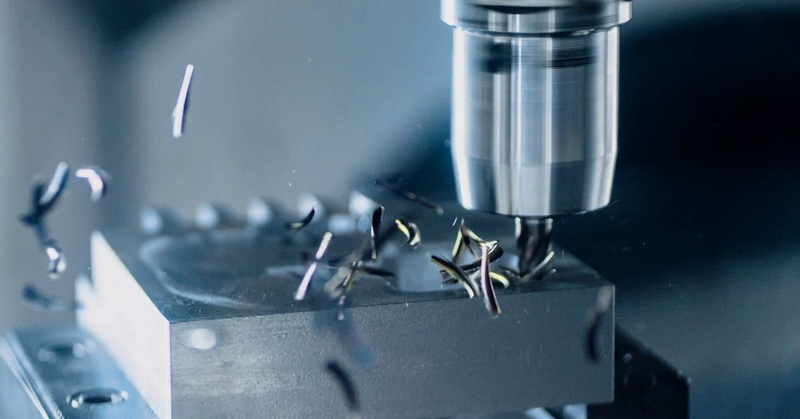
CNC turning allows repeatable, automated production of high-precision parts with minimal human error. Once programmed, the same product can be reproduced hundreds of times with perfect consistency.
CNC turning can process metals (steel, aluminum, titanium, brass), polymers, and composites. Correct tool selection ensures optimized cutting performance for each material.
Accuracy is ensured through calibration, proper work offset setup, tool compensation, and thermal stability of the machine components. Advanced control systems use feedback loops to maintain repeatable positioning.
Beginners can start by learning manual G-code basics, practicing with simulation software, then progressing to CAM systems. Many vocational programs and online courses also teach programming through real-world examples.
Surface quality depends on cutting speed, feed rate, tool geometry, material type, coolant usage, and machine stability. Fine feed rates, sharp tools, and proper lubrication are key to a smooth finish.


