From idea to market-ready product, our NPI solutions make every stage easier, faster. Discover How We Help

Views: 222 Author: Tomorrow Publish Time: 2025-12-30 Origin: Site


Content Menu
● Key Components of a CNC Lathe
● Types of CNC Turning Operations
● Materials Commonly Used in CNC Turning
● Difference Between CNC Turning and CNC Milling
● CNC Turning Process Parameters
● Quality Control in CNC Turning
● Future Trends in CNC Turning
● FAQ
>> 1. What does CNC stand for in machining?
>> 2. What are the main advantages of CNC turning?
>> 3. Can CNC turning handle both metals and plastics?
>> 4. How is CNC turning different from manual turning?
>> 5. What industries rely most on CNC turning?
CNC turning is a fundamental machining process that plays a vital role in modern manufacturing industries. It involves the controlled removal of material from a rotating workpiece using automated, computer-guided cutting tools. The result is a precisely shaped component that meets tight dimensional tolerances. Whether producing prototypes or mass-manufactured parts, CNC turning allows engineers to achieve accuracy, repeatability, and cost-effectiveness unmatched by traditional manual methods.
This process forms the backbone of countless applications in aerospace, automotive, medical, defense, and electronics manufacturing. Its precision and versatility have made CNC turning one of the most widely used and continuously evolving technologies in engineering today.
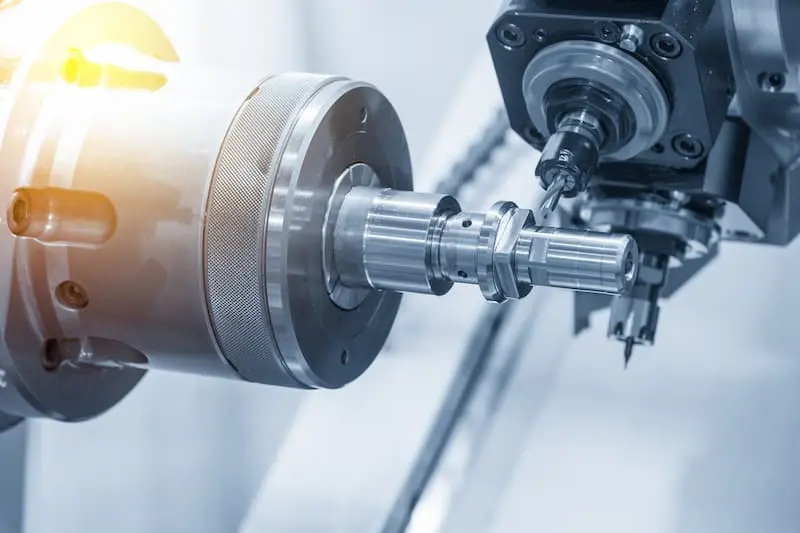
CNC (Computer Numerical Control) turning is performed on machines known as lathes or turning centers. In essence, a workpiece—typically cylindrical—is rotated at high speed while a stationary cutting tool progressively removes material from its outer surface.
Unlike manual turning, which requires continuous operator control, CNC turning relies on pre-programmed instructions encoded in a digital file. These instructions control every movement of the cutting tool, determining speed, feed rate, depth of cut, and tool path. The machine executes the program autonomously, ensuring consistent production of identical parts, even in large batches.
In the past, turning was limited to simple shapes. Today, advanced multi-axis CNC lathes can produce complex geometries, including intricate contours, threads, grooves, and tapers with minimal setup time. This evolution has revolutionized how precision machining is performed worldwide.
CNC turning follows a systematic sequence that transforms raw material into finished components. The process can be divided into several steps:
1. Design and Programming – The first step involves designing the component using CAD (Computer-Aided Design) software. The design is then translated into machinable instructions via CAM (Computer-Aided Manufacturing) software, which generates the tool paths and G-code—a standardized programming language for CNC machines.
2. Setup and Calibration – The operator mounts the raw material into the chuck, aligns the cutting tool, and verifies machine parameters. Proper calibration ensures dimensional accuracy and prevents excessive tool wear.
3. Machining Operations – The CNC lathe executes the program, performing turning, facing, threading, grooving, and drilling depending on design requirements. Coolant systems are often employed to control temperature, improve surface finish, and prolong tool life.
4. In-Process Monitoring – Modern CNC lathes use sensors and real-time feedback systems to adjust feed rates and spindle speeds dynamically, maintaining precision even under varying loads.
5. Inspection and Quality Control – Upon completion, the component is inspected using micrometers, calipers, or coordinate measuring machines (CMMs) to confirm dimensions and tolerances.
6. Post-Processing – Finishing operations—such as polishing, deburring, or coating—are applied to achieve the desired surface texture or corrosion resistance.
This workflow ensures each product maintains uniform quality from the first unit to the last, meeting stringent industry standards.
Every CNC lathe consists of several core parts designed for stability, precision, and automation:
- Chuck – The rotating clamp that grips the workpiece firmly during machining.
- Spindle – The rotating axis that drives the chuck and provides power for material rotation.
- Tool Turret – A rotatable mount holding multiple cutting tools; it automatically changes tools during operations.
- Tailstock – Offers support at the opposite end of the workpiece, especially during the machining of long parts.
- Carriage and Slides – Enable precise linear and cross movements of the tool.
- Bed Frame – The rigid structure that anchors all components, minimizing vibration.
- Control Panel – Allows operators to input commands, load programs, and monitor progress.
Advanced CNC turning centers often feature live tooling, Y-axis movement, and sub-spindles, which enable milling, drilling, and secondary machining without moving the workpiece to another machine. This capability saves time and enhances overall part accuracy.
The CNC turning process consists of several specialized cutting operations tailored to shape and finish materials efficiently:
- Facing: Creates a smooth, flat surface perpendicular to the workpiece axis.
- Straight Turning: Reduces the material's diameter evenly along its entire length.
- Taper Turning: Produces an angled, conical shape used in shafts and connectors.
- Parting (Cutoff): Separates a finished part from the raw bar stock.
- Grooving: Cuts narrow depressions for rings, O-rings, or locking mechanisms.
- Threading: Forms external or internal screw threads precisely and consistently.
- Drilling and Boring: Produces and enlarges internal holes using rotating or stationary tools.
- Knurling: Adds textured patterns for improved grip on metal handles or fasteners.
CNC lathes can perform these operations sequentially within a single setup, reducing downtime and ensuring continuous production.
The range of usable materials in CNC turning is extensive. Choice of material affects cutting parameters, tool selection, and end-use application.
- Aluminum: Lightweight, corrosion-resistant, and ideal for aerospace and automotive parts.
- Stainless Steel: Known for strength and corrosion resistance, widely used in medical and food-grade components.
- Carbon Steel: Offers robustness for structural and heavy-duty applications.
- Brass and Bronze: Provide superior machinability and aesthetic appeal, suitable for decorative components and fittings.
- Titanium: High strength-to-weight ratio, perfect for aerospace and prosthetics.
- Plastics (e.g., Nylon, PEEK, Delrin): Used for insulating, lightweight, or non-magnetic parts.
- Copper: Excellent electrical conductivity for electrical connectors or contacts.
Careful selection of cutting tools and speeds ensures optimum surface finish and tool longevity for each material type.
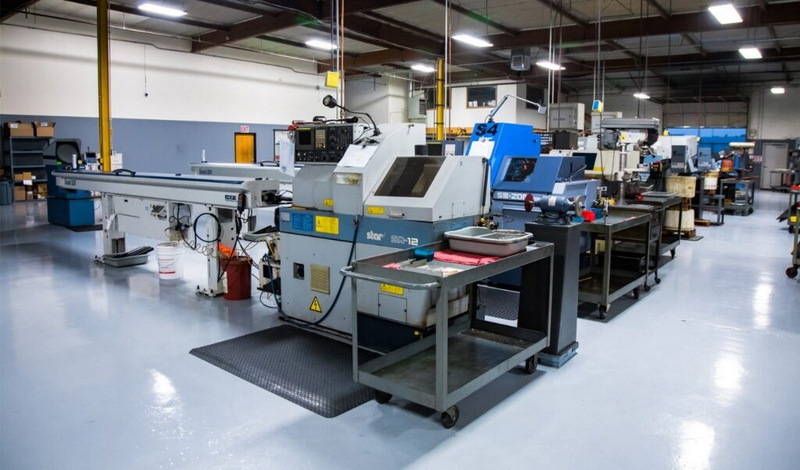
CNC turning offers numerous technical and economic advantages that make it indispensable to manufacturers worldwide:
- Unmatched Precision: Achieves tight tolerances, typically within ±0.001 inches.
- Consistency and Repeatability: Produces identical components across thousands of units.
- Automation: Minimizes human error through computer-controlled execution.
- Efficiency: Reduces machining time and tool change interruptions.
- Design Flexibility: Handles complex geometries and custom shapes.
- Reduced Waste: Optimized cutting paths lower material waste.
- Scalability: Suitable for prototypes, small runs, or high-volume production.
- Improved Safety: Operators remain at a safe distance while the machine operates autonomously.
These benefits collectively enhance productivity and quality while lowering operational costs.
CNC turning finds application across multiple high-demand sectors due to its ability to deliver accuracy, durability, and high throughput.
- Aerospace: Precision turning produces turbine shafts, landing gear parts, and hydraulic components.
- Automotive: Used in gearbox shafts, pistons, engine housings, and bearing seats.
- Electronics: Manufactures miniature connectors, screws, and socket pins.
- Medical: Produces orthopedic implants, surgical tools, and dental components with biocompatible materials.
- Oil and Gas: Machines valves, drilling couplings, and compressor housings.
- Defense and Firearms: Creates barrels, triggers, and precision hardware.
Because CNC turning ensures consistent tolerances, it is particularly crucial for industries requiring safety-critical and high-performance parts.
Although both CNC turning and milling use computer control and involve material removal, they differ in motion principles and typical part geometries.
| Aspect | CNC Turning | CNC Milling |
|---|---|---|
| Workpiece Movement | Rotates while the tool remains stationary | Workpiece stays stationary; the cutting tool rotates |
| Shape Focus | Cylindrical or conical | Prismatic or complex 3D |
| Machine Type | Lathe or turning center | Milling machine or machining center |
| Axes of Motion | Typically X and Z axes | Up to 5 simultaneous axes |
| Operation Example | Shafts, rods, tubes | Plates, housings, molds |
Today, hybrid machines combine both turning and milling in one unit, enabling single-setup machining for even greater efficiency.
Performance in CNC turning depends on proper control of cutting parameters:
- Spindle Speed (RPM): The rotational speed of the workpiece, influencing surface finish.
- Feed Rate: The distance the tool advances per revolution.
- Depth of Cut: Determines how much material is removed in each pass.
- Cutting Tool Material: Common options include carbide, ceramic, and high-speed steel (HSS).
- Coolant Type: Essential for lubrication, heat dissipation, and chip evacuation.
Balancing these parameters optimizes tool life, dimensional accuracy, and surface texture, avoiding excessive tool wear or thermal damage.
Maintaining product consistency and dimensional accuracy is essential in precision manufacturing. Key quality assurance practices include:
- Real-Time Monitoring: Built-in sensors detect deviations and adjust in real time.
- Tool Life Management: Automated systems notify operators before tool failure.
- Dimensional Inspection: Uses CMMs, laser scanners, and micrometers to verify part dimensions.
- Surface Finish Analysis: Ensures the final product meets aesthetic and functional requirements.
- Statistical Process Control (SPC): Analyses process stability and identifies potential errors before defects occur.
By integrating these control systems, manufacturers achieve zero-defect production rates and maintain international quality certifications.
The CNC turning field continues to evolve alongside advances in digital manufacturing and automation technologies:
- AI and Machine Learning Integration: Predictive maintenance reduces downtime and improves optimization.
- Smart Factories and IoT Connectivity: Real-time data monitoring enhances efficiency and accountability.
- Additive and Subtractive Hybrid Systems: Combine 3D printing with traditional turning for flexible production.
- Eco-Friendly Machining: Focus on coolant recycling, minimal material waste, and reduced energy consumption.
- Miniaturization and Micro Machining: Growing demand for high-precision components in electronics and medical devices.
These innovations indicate that CNC turning will remain essential for Industry 4.0, empowering manufacturers to meet future demands for customization, sustainability, and speed.
CNC turning is far more than a traditional machining method—it's a cornerstone of modern precision manufacturing. By combining automation, accuracy, and versatility, it enables the efficient production of components that power industries ranging from aerospace to consumer electronics. As technologies such as AI, IoT, and hybrid machining continue to evolve, CNC turning systems will only grow smarter, faster, and more sustainable.
For any business seeking precision, reliability, and scalability in component manufacturing, CNC turning remains an indispensable solution that bridges innovation and industrial performance.
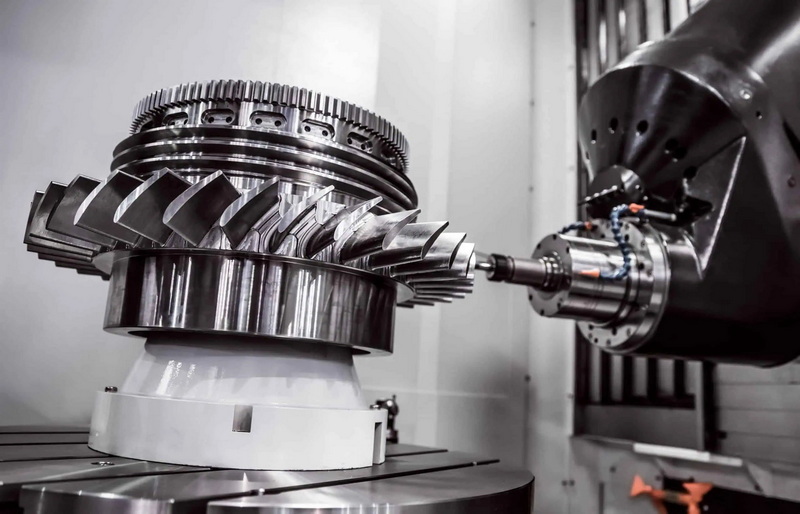
CNC means Computer Numerical Control, referring to automated control of machine tools through computer-executed programs that follow numeric codes.
CNC turning allows high-speed production with exceptional precision, repeatability, and lower human error. It also reduces waste and supports complex geometries.
Yes. Modern CNC lathes can machine metals—such as steel, aluminum, brass—and plastics, including PEEK, nylon, and acrylic, depending on requirements.
Manual turning requires an operator to guide tool and workpiece movements. CNC turning executes tasks automatically from pre-programmed instructions, enabling accuracy and consistency.
Industries such as aerospace, automotive, medical devices, oil and gas, and electronics depend heavily on CNC turning to produce safe and reliable components.


