From idea to market-ready product, our NPI solutions make every stage easier, faster. Discover How We Help

Views: 222 Author: Tomorrow Publish Time: 2025-11-18 Origin: Site


Content Menu
● Core components and how they work
● Key processes performed on CNC turning machines
● How CNC turning ensures precision
● Limitations and considerations
● Selecting a CNC turning machine for a project
● Operational practices for best results
● FAQ
>> 1. What are the primary differences between CNC turning and CNC milling?
>> 2. What is a Swiss-type turning machine, and when is it used?
>> 3. How does tool wear affect CNC turning, and how is it managed?
>> 4. What factors affect the surface finish achieved by turning?
>> 5. What are common indicators that a CNC turning project is a good fit for automation?
CNC turning machines are a cornerstone of modern manufacturing, enabling precise, repeatable, and efficient production of cylindrical parts. By combining computer numerical control with a rotating workpiece and stationary tooling, these machines deliver consistent diameters, smooth finishes, and tight tolerances across a wide range of industries. This expanded discussion delves into the nuances of CNC turning, including historical context, architectural variations, control strategies, and practical considerations for deploying turning centers in a production environment. Understanding these aspects helps engineers select appropriate equipment, optimize cycles, and achieve predictable quality.

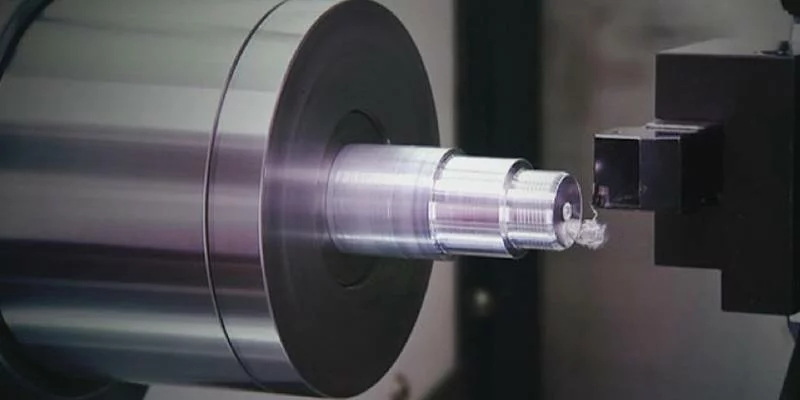
A CNC turning machine, often referred to simply as a turning center or lathe, is a machine tool that rotates a part around its axis while cutting tools move in various axes to shape the exterior or interior surfaces. The turning process primarily removes material from the outside diameter of a workpiece to produce cylindrical or conical shapes, but it can also perform grooving, threading, parting, drilling, and boring operations when combined with additional tooling or accessory attachments. The “CNC” aspect means that computer numerical control is used to program the tool movements, speeds, feeds, and other parameters, enabling automated production with high repeatability. For typical manufacturing scenarios, turning centers are designed to achieve tight concentricity between the outside diameter and any internal features, which is critical for components like shafts, bushings, and connectors.
- Spindle: The spindle holds and rotates the workpiece. In CNC lathes, spindles can run at high speeds with precision shafts and bearings to minimize runout. A well-designed spindle also includes thermal management to reduce drift during long runs.
- Chuck and workholding: Chucks grip the workpiece securely. Three-jaw chucks provide versatility for round parts, while collet chucks offer higher gripping force and better concentricity for small-diameter components. Workholding design directly influences runout, surface finish, and cycle time.
- Turret: The turret carries multiple cutting tools and indexes to bring the appropriate tool into position for each operation. In some turning centers, tools are mounted on linear slides for additional reach and versatility. The turret's indexing speed and rigidity play a major role in overall productivity.
- Tooling: Cutting tools are typically made from carbide, high-speed steel, or ceramic materials, designed for specific operations such as facing, turning, grooving, threading, or drilling. Tool geometry, including rake, relief angles, and corner radius, affects cutting forces and surface integrity.
- Carriage and control system: The tool post, cross-slide, and compound rest provide movements in X and Z axes (and sometimes additional axes) under CNC control. The control system interprets G-code or other programming languages to drive these movements with precise synchronization.
- Turret indexer and feed mechanisms: The CNC controller coordinates tool changes, spindle speed, feed rate, and coolant delivery to optimize productivity and surface quality. Modern machines often integrate servo-driven axes, fast tool changing (FTC), and automatic lubrication systems to sustain performance.
- Slant-bed CNC lathes: Feature a tilted bed, which enhances chip removal and accessibility for tooling and maintenance. They are popular for high-volume production and complex parts due to improved rigidity and ease of maintenance.
- Swiss-type lathes (gundrilling and sub-spindle variants): Specialized for long, slender parts requiring high precision and minimal deflection. They include live tooling and guide bushing systems to support the workpiece during machining, making them ideal for medical devices and small-diameter components.
- Multi-axis turning centers: Combine turning with milling or drilling capability, enabling complex geometries in a single setup. These machines may include Y-axes or additional linear axes for improved reach and flexibility, reducing part handling and setup times.
- Horizontal turning centers: Standard machines used for a broad range of diameters and batch sizes, emphasizing stability and rigidity. They are well-suited for heavy roughing operations and large-diameter components.
- Facing: Produces a flat surface at the end of a part, removing fins and creating a true edge. High-precision facing often requires careful workholding and stable cutting conditions.
- Turning: Reduces the diameter of a cylindrical portion, producing cylindrical or conical shapes. Different cutting strategies, such as climb milling or conventional milling, can influence surface finish and tool life.
- Grooving: Partially cuts a groove into the workpiece to create shoulders, steps, or recesses. Grooving tools must maintain accuracy in depth and width to ensure proper assembly fits.
- Threading: Produces internal or external threads using thread-cutting tools or form tools. Thread quality depends on pitch accuracy, lead, and tool geometry.
- Parting (finishing): Cuts off a finished part from the stock by using a parting tool. Proper clearance and blade geometry minimize burrs and deflection.
- Drilling and boring: Creates holes or expands existing holes, often using drill bits or boring bars. Hole location accuracy and straightness are critical for mating with pins or fasteners.
- Finishing operations: Includes deburring, chamfering, and surface finishing to achieve precise dimensions and smooth surfaces. Finishing steps often determine functional performance in assemblies and wear resistance.
- Pre-programmed tool paths: G-code programs define each move with exact coordinates, speeds, and tooling sequences, ensuring repeatable results. Advanced programs may also include macro variables and subroutines for complex families of parts.
- Rigidity and stabilization: Modern turning centers feature robust spindles, reinforced beds, and careful thermal management to minimize deformation during cutting. Damping systems and chip control both contribute to stability.
- Tool life management: Controlled feeds, feeds per tooth, and optimized cutting conditions extend tool life and maintain consistent surface finishes. Monitoring tools and wear compensation help sustain performance over long campaigns.
- In-process metrology: Probes and static measurement routines can verify dimensions during production, enabling corrective actions without stopping the line. Adaptive control can adjust speeds and feeds in real time based on feedback.
- Compensation and calibration: Tool wear compensation, spindle calibration, and temperature compensation help maintain tight tolerances across shifts and shifts. Documentation of calibration data supports traceability.
- Metals: Aluminum, steel, stainless steel, brass, copper, titanium, and exotic alloys requiring precision and surface integrity.
- Plastics: Engineering resins and composite materials that benefit from tight tolerances and smooth finishes.
- Special applications: Machining of heat-treated parts, components with tight concentricity requirements, or features demanding high surface quality.
- Precision and repeatability: Once a program is validated, parts can be produced consistently across thousands or millions of units.
- High efficiency and automation: Automated tool changes, part handling, and coolant management reduce manual intervention and cycle times.
- Flexibility: A single machine can perform multiple operations, reducing setup times and eliminating the need for multiple dedicated machines.
- Tight tolerances and surface finish: CNC turning achieves precise diameters and smooth finishes suitable for bearing fits and high-precision assemblies.
- Documentation and traceability: Digital records of programs, offsets, and inspection data support quality control and regulatory compliance.
- Part geometry limitations: Complex internal features or non-axial geometries may require alternative processes or additional machines.
- Capital cost: High-precision turning centers with multi-axis capabilities represent a significant investment.
- Tool life and maintenance: Tools wear over time; regular maintenance and calibration are essential to maintain performance.
- Programming expertise: Effective CNC turning relies on skilled programmers who can optimize toolpaths, feeds, speeds, and coolant strategies.
- Part setup time: Initial setup can be time-consuming for low-volume production, though automation and multi-tasking can mitigate this.
(1) Define part geometry and tolerances: Identify diameters, bores, threading, and surface finish requirements.
(2) Assess production volume and cycle time: Higher volumes may justify multi-axis machines or automation.
(3) Choose turret configuration and tooling: Ensure sufficient tools for planned operations and future expansions.
(4) Consider material handling and automation: Robotic part unload/load, bar feeders, or parts catchers can minimize manual handling.
(5) Evaluate auxiliary capabilities: Drilling, milling, threading, and secondary operations may influence the choice between a dedicated turning center and a multi-tasking machine.
(6) Plan for maintenance and support: Availability of service, spares, and local trained technicians affects uptime and total cost of ownership.
- Thermal management: Control machine temperature through enclosure cooling to minimize thermal deformation during extended runs.
- Process optimization: Use machining strategies such as steady rest support, appropriate cutting speeds, and feeds to maximize material removal rate while preserving surface quality.
- Quality control: Implement inline and post-process inspections using calipers, micrometers, coordinate measuring machines, or laser scanning to verify dimensions and tolerances.
- Workholding optimization: Use appropriate chucks, jaws, or collets to maximize gripping force and minimize runout.
- Documentation: Maintain versioned programs, offsets, and inspection results to support traceability and continuous improvement.
- Automotive: Precision bushings, shafts, fasteners, and engine components requiring tight tolerances and reliable performance.
- Aerospace: High-strength components with exact diameters and surface finishes for demanding assemblies.
- Medical devices: Small-diameter components and surgical instrument parts that demand strict tolerances and cleanliness.
- Electronics and consumer goods: Precision housings, connectors, and mechanical parts for compact assemblies.
- Industrial equipment: Bearings, housings, fittings, and other cylindrical components used in machinery and tooling.
CNC turning machines combine robust mechanical design with advanced computer control to deliver precise, repeatable, and efficient production of cylindrical parts. By enabling complex geometries, tight tolerances, and high-volume output, these machines play a pivotal role across many industries. Successful implementation requires careful selection, proper tooling, disciplined process optimization, and rigorous quality control. When these elements align, CNC turning becomes a reliable workhorse for modern manufacturing, capable of delivering consistent performance and cost-effective production over the long term.
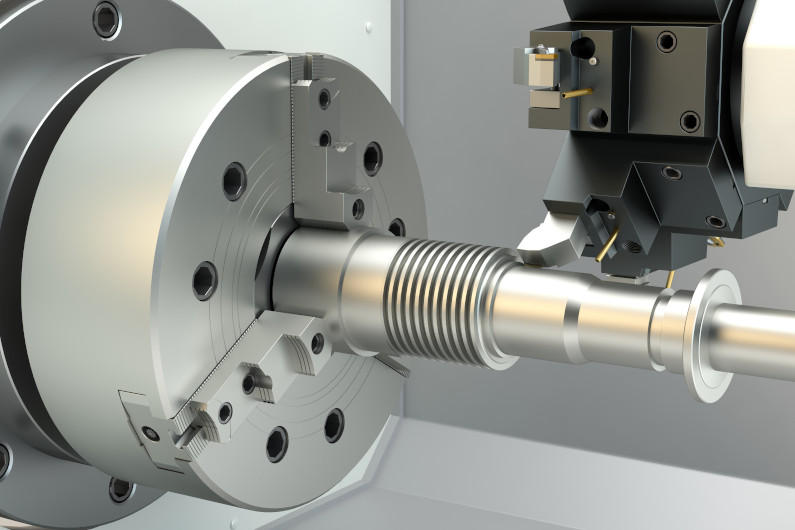
CNC turning primarily removes material from the exterior of a rotating workpiece to create cylindrical shapes, while CNC milling uses rotating cutters to remove material from a stationary workpiece to create complex three-dimensional features. Turning excels at diameters and concentricity; milling excels at multi-axis geometry and features on multiple faces.
A Swiss-type turning machine feeds a long, slender workpiece through a guide bushing while performing primary turning operations and often integrating secondary tools. It is used for long, delicate components requiring high precision, minimal deflection, and excellent concentricity.
Tool wear changes cutting geometry, reducing material removal efficiency and surface quality. Monitoring tools, using wear-resistant materials, optimizing cutting parameters, and implementing tool life management strategies help maintain consistent results.
Feed rate, cutting speed, tool material, tool geometry, coolant effectiveness, and workpiece material all influence surface finish. Proper program optimization and stable machining conditions are essential.
High-volume production, tight tolerances, repetitive operations, long idle times, and the need for consistent part handling indicate strong cases for automation, such as bar feeders, parts catchers, or robotic unload/load systems.


