From idea to market-ready product, our NPI solutions make every stage easier, faster. Discover How We Help

Views: 222 Author: Tomorrow Publish Time: 2025-11-18 Origin: Site
Content Menu
● What is a CNC turning center?
>> Control system and software
>> Turret automation and adaptability
>> Coolant and chip management
● What operations can a turning center perform?
● Advantages of using a CNC turning center
● Choosing the right turning center
● Best practices for setup and programming
● Quality control considerations
● Sustainability and efficiency
● Extended considerations for industry-specific contexts
● Advanced programming and simulation
● Training and operator skills
● Global supply chain implications
● FAQ
>> 1. What defines a CNC turning center?
>> 2. How does live tooling differ from standard turning?
>> 3. What factors influence turning center accuracy?
>> 4. What industries commonly use turning centers?
>> 5. How to choose between 2-axis and multi-axis turning centers?
A CNC turning center is a highly versatile machine tool designed for producing cylindrical and round parts with high precision and repeatability. It combines turning operations with computer numerical control (CNC) to automate tool movement, spindle rotation, and feeding actions. This integration enables complex geometries, tight tolerances, and efficient production workflows. Turning centers are widely used in industries such as automotive, aerospace, medical devices, electronics, and consumer goods, where consistent quality and fast turnaround are essential. This article explains what a CNC turning center is, how it works, key features to consider, common applications, and best practices for setup and maintenance.

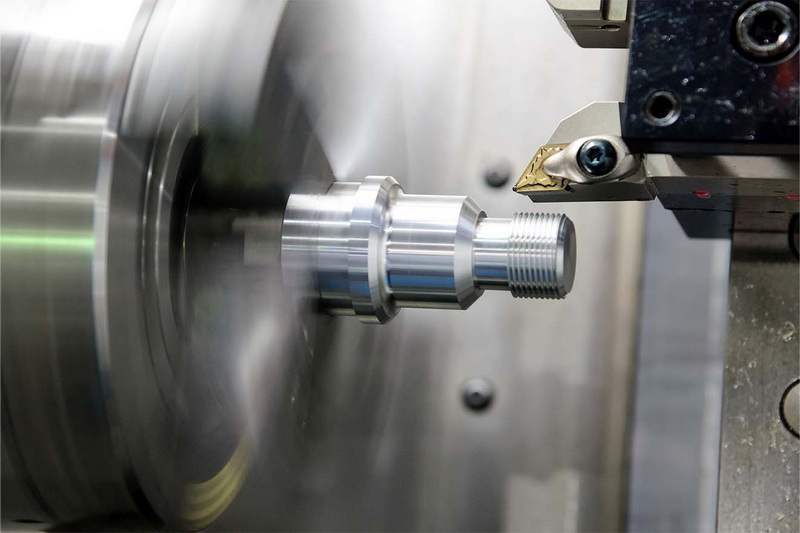
A CNC turning center is a multi-axis machine that primarily performs turning operations, where a workpiece rotates on a spindle while cutting tools move along various axes to shape the material. Unlike traditional lathes, turning centers incorporate CNC controls, automated tool changers, tailstocks, live tooling, and sometimes sub-spindles or second turrets. The combination allows performing drilling, boring, threading, grooving, knurling, milling, and other secondary operations in a single setup. Modern turning centers can synchronize multiple tools and axes to execute complex parts with minimal manual intervention.
The spindle provides rotational motion to the workpiece. It is paired with a chuck or collet to securely hold the workpiece. High-precision spindles come with rigid construction, dynamic balancing, and thermal stability to minimize runout and maintain accuracy over long cycles.
A tool turret holds multiple cutting tools and rotates to switch between tools automatically. Live tooling adds milling-capable axes (C-axis, Y-axis) or rotating tools, enabling milling and more intricate features without reloading the part.
CNC turning centers typically offer 2-, 3-, or more axes. Common configurations include X, Z, and sometimes C or Y axes. Precision linear guides and ball screws ensure smooth, repeatable motion with low backlash.
Numerical control systems (like Fanuc, Siemens, or Haas) interpret programmed instructions and coordinate spindle speed, tool changes, feed rates, and axis movements. A user-friendly interface and advanced programming options enable complex geometries and optimized production cycles.
Automated tool changers (ATCs) allow quick tool exchanges. Some turning centers feature multiple spindles or sub-spindles to perform secondary operations while the main spindle handles the primary turning. Sub-spindles enable turning and secondary milling or part transfer without manual handling.
Chucks, collets, tailstocks, and part transfer systems (robotic arms or conveyors) are used to secure and move parts through the machine. Automation improves throughput and reduces operator intervention, especially in high-volume production.
Effective cooling reduces thermal distortion and tool wear. Chip evacuation systems clear chips from the work area to maintain clearance and reduce downtime.
- Turning: Removing material by rotating the workpiece against a cutting tool to achieve diameters, shoulders, grooves, and contours.
- Facing: Creating a flat surface at the end of the workpiece.
- Drilling, boring, and tapping: Creating and finishing holes, internal features, or threads.
- Milling and contouring: Using live tooling or integrated milling options to produce slots, pockets, bosses, and complex profiles.
- Grooving and parting: Cutting grooves or separating finished parts from the remainder of the stock.
- Threading and knurling: Generating external or internal threads and decorative or functional knurl patterns.
- Finishing operations: Deburring, chamfering, or polishing as part of post-processing.
- Precision and repeatability: CNC control ensures consistent part dimensions across lots.
- Efficiency and automation: ATCs, sub-spindles, and robotics reduce manual handling and setup times.
- Complex geometry capability: Multi-axis configurations enable features that are difficult or time-consuming on manual lathes.
- Reduced labor costs: Fewer manual interventions translate to lower labor requirements.
- Quick changeovers: Modern turning centers support flexible manufacturing and smaller batch runs.
- Required axes and configurations: Determine whether 2-, 3-, or multi-axis setups best fit the parts geometry and secondary operations.
- Spindle speed and torque: Higher speeds improve productivity for small, high-strength materials; more torque suits large or tough materials.
- Tooling and automation: Consider ATC capacity, live tooling options, and sub-spindle availability to support the intended operations.
- Precision and rigidity: Look for high-quality spindles, rigid turrets, and robust workholding to minimize distortion.
- Control system compatibility: Ensure the control language and programming environment align with in-house or supplier capabilities.
- Maintenance and service: Consider aftermarket support, spare parts availability, and remote diagnostics.
- Automotive components: Precision shafts, gears, housings, and valve components.
- Medical devices: Cylindrical implants, housings, and precision fittings requiring tight tolerances.
- Aerospace parts: High-precision shafts, sensor housings, and lightweight yet strong components.
- Electronics enclosures and connectors: Small-diameter parts with fine finishes.
- General mechanical components: Fasteners, bushings, bearings, and precision fittings.
- Clear workholding: Confirm the workpiece is properly clamped to avoid movement during heavy cuts.
- Pre-read the program: Verify tool offsets, spindle orientation, and coordinate frames before starting.
- Use canned cycles and subprograms: Streamline repetitive operations and improve consistency.
- Inspect fixtures and tools: Regularly check tool wear, runout, and tool life to prevent quality deviations.
- Optimize cycles: Balance roughing and finishing passes to minimize cycle time while maintaining surface quality.
- In-process measurement: Use probes or touch-off cycles to verify dimensions during production.
- Post-process inspection: Conduct dimensional checks against tolerance requirements using calipers, micrometers, and CMMs.
- Documentation: Maintain process specifications, tool lists, and setup sheets to ensure traceability.
- Regular lubrication: Keep guideways and ball screws well-lubricated to preserve precision.
- Coolant management: Monitor concentration and filtration to prevent tool corrosion and thermal issues.
- Preventive checks: Schedule routine inspections for spindle bearings, turret indexing, and hydraulic systems.
- Material optimization: Use appropriate feeds, speeds, and cutting strategies to minimize waste and tool wear.
- Energy-aware operation: Optimize idle times, spindle ramping, and coolant usage to reduce energy consumption.
- Reuse and recycling: Manage chips and scrap responsibly, considering recycling options.
- For high-mix, low-volume production common in medtech, emphasis on quick-change tooling and short setup times becomes critical. Implementing modular fixtures and standardized_offset libraries can dramatically reduce downtime between parts.
- In aerospace supply chains, traceability is paramount. Integrated data collection, from tool life to process parameters, supports audits and quality assurance without sacrificing throughput.
- Environmental controls matter in advanced materials like titanium or Inconel. Advanced coolant strategies, flood or mist cooling as appropriate, combined with high-rigidity spindles, help maintain dimensional stability.
- Safety and ergonomics should not be overlooked. Enclosures, chip conveyors, and appropriate guarding protect operators while enabling seamless automation workflows.
- Offline programming with CAD/CAM: Build parts virtually to optimize tool paths, feed rates, and stock removal before touching the machine.
- Simulation for collision detection: Use software to detect potential clashes between tools, turrets, and fixtures, reducing scrap and machine downtime.
- Post-processing and G-code verification: Ensure that generated code aligns with the specific CNC control, including correct tool orientation, offsets, and safety moves.
- Skill development: Operators should be proficient in reading blueprints, understanding GD&T, and interpreting tool wear indicators.
- Routine audits: Regular skill refreshers for programmers and operators help maintain accuracy and safety standards.
- Maintenance culture: Encourage operators to participate in maintenance tasks, fostering ownership of machine health and process stability.
- Total cost of ownership (TCO): Include purchase price, tooling, software licenses, maintenance contracts, energy consumption, and productivity gains in the evaluation.
- Cost-per-part trends: Track throughput and scrap rates to assess economies of scale and inform bidding or contract decisions.
- Depreciation and tax incentives: Leverage applicable allowances for manufacturing equipment to optimize financial planning.
- Lead times and supplier redundancy: For critical components, maintain multiple supplier sources to mitigate delays.
- Spare parts availability: Keep essential items like drive belts, seals, and tool holders on-hand to avoid production stoppages.
- Data security: Ensure robust cybersecurity measures for CNC networks, particularly when using connected tools and remote diagnostics.
- Hybrid machines: Machines that combine additive manufacturing capabilities with traditional subtractive processes open new avenues for complex part architectures.
- AI-assisted optimization: Machine learning models can predict tool wear, optimize cutting parameters, and schedule maintenance ahead of failures.
- Cobotics and collaborative automation: Operators work alongside robotic systems, enhancing safety and productivity on the shop floor.
- Sustainable machining: Developments in dry or near-dry machining, advanced coatings, and energy recovery technologies reduce environmental impact.
A CNC turning center represents a mature, adaptable solution for precision cylindrical machining and complex secondary operations. By leveraging multi-axis capability, automation, and advanced control, manufacturers can achieve tighter tolerances, faster cycle times, and higher overall equipment effectiveness. Selection should align with part geometry, material, required finishes, and production volume, while ensuring robust maintenance and quality control practices.
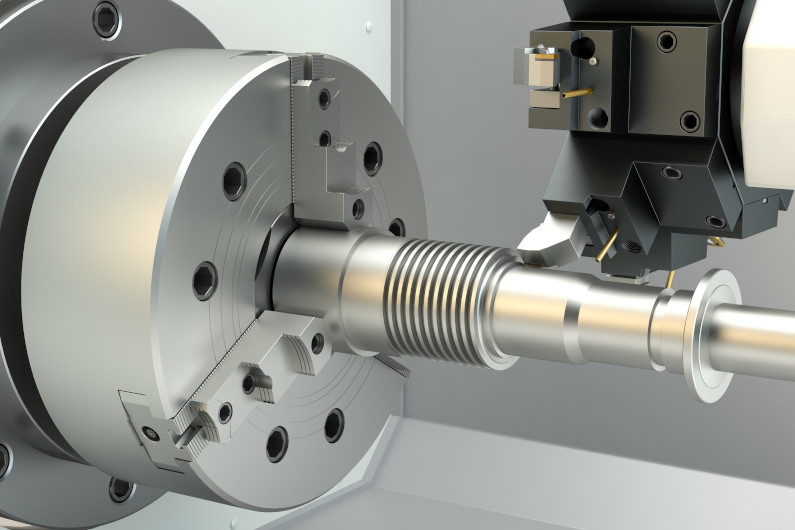
A CNC turning center is a multi-axis machine that rotates the workpiece on a spindle while automated tools execute turning, milling, drilling, threading, and other operations under CNC control, often with automated tool changers and secondary spindles.
Live tooling adds rotating or powered tools to perform milling or drilling while the workpiece spins, enabling more complex features without reloading the part.
Key factors include spindle rigidity, tool condition, proper workholding, thermal stability, control system quality, and precise calibration of axis motion and backlash.
Automotive, aerospace, medical devices, electronics, energy, and general mechanical manufacturing frequently rely on turning centers for high-precision cylindrical components.
If parts require only basic turning with occasional drilling, a 2-axis machine may suffice. For complex geometries, tight tolerances, or higher automation, a multi-axis turning center offers significant productivity benefits.


